Droplet Eye Drops: What Patients Need to Know

“Droplet eye drops” is a general description rather than one specific medicine or diagnosis. Different eye drops have different purposes, including lubrication, allergy relief, infection treatment, and glaucoma management.
Key Takeaways
- “Droplet eye drops” is a general description rather than one specific medicine or diagnosis.
- Different eye drops have different purposes, including lubrication, allergy relief, infection treatment, and glaucoma management.
- Using the correct technique helps a single drop reach the eye and reduces unwanted drainage into the nose and throat.
- Preservative-free drops may be helpful for people who need frequent lubrication or have sensitive eyes.
- Redness with pain, light sensitivity, discharge, injury, or changes in vision needs prompt medical assessment.
Droplet eye drops are liquid preparations delivered one drop at a time to lubricate the eye, treat allergy symptoms, lower eye pressure, fight infection, or support healing after an eye procedure. The right product and technique depend on the cause of the symptoms, so persistent discomfort, redness, pain, or vision changes should be assessed by an eye-care professional.
What Are Droplet Eye Drops?
Droplet eye drops are liquid products placed directly on the surface of the eye, usually one drop at a time. The phrase does not identify one particular medication; it may refer to lubricating drops for dryness, antihistamine drops for allergies, prescription drops for glaucoma, antibiotic drops for selected infections, or other eye treatments. Reading the product label and knowing why the drops were recommended are important because products that appear similar may work in very different ways.
The eye can generally hold only a small amount of liquid at once. One properly placed drop is therefore usually enough, while extra drops often spill out or drain through the tear ducts into the nose. Eye drops should be used only as directed by a clinician or the product instructions. They should not be shared, as sharing can spread infection and may expose another person to a medicine that is not suitable for them.
Choosing the Right Type of Eye Drop
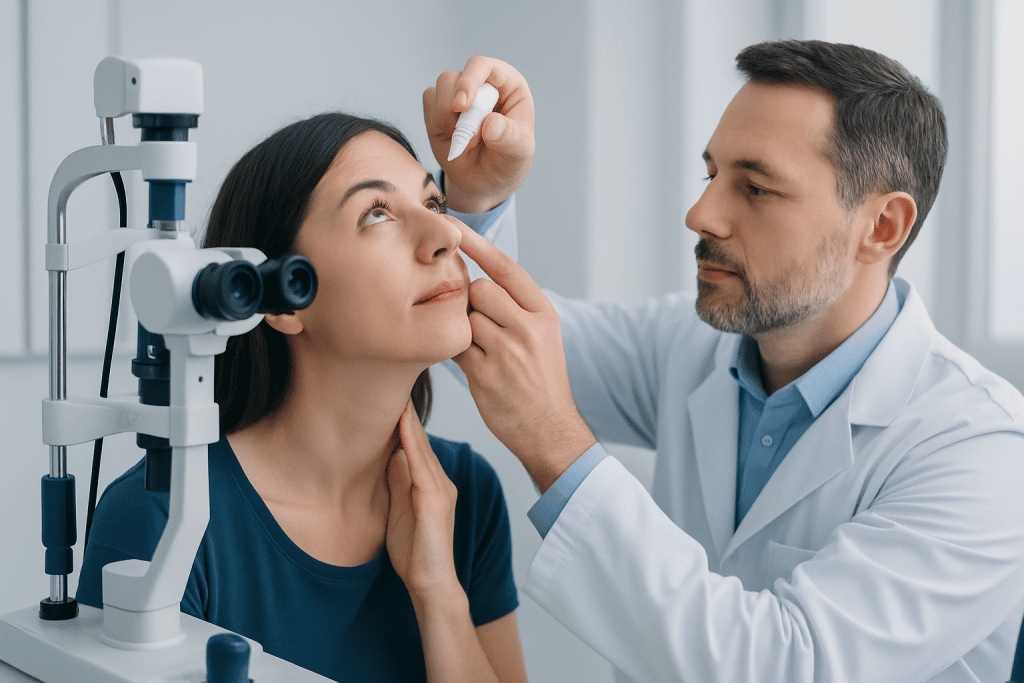
Lubricating drops, often called artificial tears, are commonly used for burning, grittiness, temporary blurred vision, or discomfort related to dry eyes, screen use, wind, air conditioning, or contact lenses. They add moisture to the eye surface but do not treat every cause of irritation. Products vary in thickness, and gels or ointments may blur vision briefly, making them more practical at bedtime for some people.
Other products are designed for specific conditions. Allergy drops may ease itching and watering; antibiotic drops are used only when a clinician suspects or confirms a bacterial infection; and pressure-lowering drops are prescribed for glaucoma. Some “redness-relief” drops narrow surface blood vessels and can cause rebound redness if used repeatedly. Steroid eye drops can be very effective in selected situations but require medical supervision because they may worsen certain infections or raise eye pressure.
Preservatives help prevent contamination in multi-dose bottles, but frequent use may irritate some people, particularly those with significant dry eye. Single-use preservative-free vials may be an alternative for frequent lubrication. Contact lens wearers should check the label carefully: some drops are intended for use with lenses, whereas many medicated drops require lenses to be removed and reinserted only after the advised interval.
How to Use Eye Drops Correctly

Good technique improves comfort and helps the medication remain in contact with the eye. Before applying drops, hands should be washed and dried. The person can sit or lie down, tilt the head back, look upward, and gently pull down the lower eyelid to create a small pocket. The bottle tip should be held close to, but never touching, the eye, eyelid, lashes, fingers, or any other surface.
After one drop is placed in the lower-lid pocket, closing the eye gently for about one to two minutes can help. Pressing lightly with a clean finger at the inner corner of the closed eye, near the nose, may reduce drainage into the tear duct and limit absorption into the rest of the body. Blinking forcefully or squeezing the eyelids may push the drop out and is best avoided.
If more than one type of eye drop is needed, each product should usually be separated by at least five minutes so the first is not washed away. Eye ointment is generally applied after drops because it can form a coating over the eye surface. A clinician or pharmacist can provide individualized instructions, especially for children, older adults, or people using several prescription eye medicines.
Safety, Storage, and Common Side Effects
Mild stinging, watering, or a brief change in vision can occur immediately after some drops are applied. These effects often settle quickly. However, persistent burning, worsening redness, swelling around the eye, rash, severe itching, or ongoing blurred vision may indicate irritation, an allergy, or a problem unrelated to the drops. The product should not be continued without advice if symptoms are worsening.
Eye drops should be stored according to their label, as some have specific temperature requirements. The cap should be replaced promptly, and the nozzle should be kept clean. Multi-dose products have a limited use period after opening; the label, package insert, pharmacist, or prescribing clinician can confirm when a product should be discarded. Single-use vials should generally be thrown away after use, even if liquid remains.
People should tell their clinician about all medicines they use, including tablets, inhalers, supplements, and other eye products. Certain prescription eye drops can have effects beyond the eye, and some may interact with other medicines or be unsuitable during pregnancy, breastfeeding, asthma, heart conditions, or particular eye diseases. Individual advice is especially important for prescription treatments.
Dry Eye, Allergies, and Other Reasons for Symptoms
Eye discomfort is not always caused by the same problem. Dry eye commonly produces a sandy, burning, tired, or fluctuating-vision feeling and may paradoxically cause excess tearing. Environmental factors, prolonged near work, reduced blinking, aging, some medicines, eyelid conditions, and contact lenses can contribute. Lubricating drops may help, but symptoms that continue may need an eye examination to identify the underlying cause.
Allergic eye symptoms often include itching, watering, and redness in both eyes, sometimes alongside sneezing or a runny nose. Avoiding known triggers, not rubbing the eyes, and using appropriate allergy treatment can help. In contrast, thick discharge, eyelids stuck together on waking, marked one-sided redness, or pain may require assessment for infection or another cause. Using leftover antibiotic drops without medical guidance is not recommended.
People with recurrent symptoms may benefit from a structured evaluation for conditions such as dry eye disease, blepharitis, allergies, infection, or glaucoma. An eye professional can determine whether a product is appropriate and whether further care is needed. This is particularly important when symptoms persist despite over-the-counter drops or keep returning after temporary relief.
When to Seek Medical Care
Medical care should be sought promptly for sudden loss of vision, a new curtain or shadow in the vision, severe eye pain, marked light sensitivity, significant swelling, a chemical splash, an eye injury, or a feeling that something is embedded in the eye. Urgent assessment is also appropriate for a painful red eye in a contact lens wearer, as some corneal infections can progress quickly and need timely treatment.
A non-urgent appointment is sensible when dryness, redness, itching, discharge, or blurred vision lasts more than a few days, recurs often, or does not improve with appropriate simple measures. People using prescription eye drops should attend follow-up appointments as advised, since some treatments require monitoring of eye pressure, the cornea, or treatment response. An eye examination can distinguish harmless irritation from conditions requiring targeted care.
Acibadem International’s multidisciplinary specialists and JCI-accredited hospitals support international patients who need evaluation and treatment for eye symptoms or diagnosed eye conditions. A qualified ophthalmologist can advise on the most suitable drops and safe long-term use.
Practical Self-Care for Comfortable Eyes
For mild dryness or screen-related discomfort, regular blinking breaks, adequate hydration, and reducing direct exposure to smoke, wind, fans, and air conditioning may be useful. During close work, briefly looking away from the screen at regular intervals can encourage blinking and reduce eye strain. Humidifying very dry indoor air may also help some people.
Contact lenses should be cleaned, stored, and replaced exactly as directed. Lenses should not be worn overnight unless specifically prescribed for that purpose, and they should be removed if the eyes become painful, red, or unusually sensitive to light. Makeup, creams, and sprays should be kept away from the bottle tip to reduce contamination.
It is helpful to bring all current eye drops to an appointment or keep a written list of their names and frequency. This allows the clinician to identify duplicate ingredients, check whether products are being used correctly, and simplify the routine where possible. Regular eye checks remain important for people with diabetes, glaucoma risk, a family history of serious eye disease, or ongoing visual symptoms.
Frequently asked questions
Are droplet eye drops the same as artificial tears?
Not necessarily. The term “droplet eye drops” can describe any liquid eye product administered as drops, while artificial tears are specifically lubricating drops used to moisturize the eye surface. The label or a pharmacist can clarify what a particular product is intended to do.
How many drops should be used at one time?
For most eye-drop products, one drop in the affected eye is enough because the eye cannot hold much more liquid. Using extra drops usually does not improve the effect and can cause more liquid to run out. Prescription directions should always take priority if they differ.
Can eye drops be used while wearing contact lenses?
This depends on the product. Some lubricating drops are made for use with contact lenses, but many medicated drops and preserved products require lenses to be removed first. The package instructions and an eye-care professional’s advice should be followed.
Why do eye drops sometimes leave a taste in the mouth?
Drops can pass through the tear drainage system into the nose and throat, which can cause a brief taste. Gently closing the eye and pressing the inner corner near the nose for one to two minutes after application may reduce this. A strong or persistent reaction should be discussed with a clinician.
Can redness-relief eye drops be used every day?
Some redness-relief drops are not intended for frequent or long-term use because redness may return or worsen after the effect wears off. Persistent red eyes should be assessed rather than repeatedly treated with cosmetic redness relief. Lubricating or allergy drops may be more appropriate depending on the cause.
When should an opened eye-drop bottle be thrown away?
The safe disposal time varies by product, formulation, and packaging. Many multi-dose bottles should be discarded after a defined period following opening, while single-use vials are generally discarded immediately after use. Checking the label and asking a pharmacist is the safest approach.
References
- American Academy of Ophthalmology
- National Eye Institute
- U.S. Food and Drug Administration
- Mayo Clinic
This article is for general information only and is not a substitute for professional medical advice. Please consult a qualified doctor about your individual situation.
Explore treatments in Turkey — costs, top hospitals & a free quote
JCI-accredited · board-certified surgeons · reply within 24h
Add us as a Preferred Source to see more of our trusted health content across Google Search, AI Overviews and Discover.