Menkes Disorder: Early Diagnosis and Specialist Care

Menkes disorder is usually caused by changes in the ATP7A gene, which affect copper transport in the body. Symptoms often emerge in early infancy and may include feeding problems, low muscle tone, developmental delay, seizures, and sparse or unusual hair.
Key Takeaways
- Menkes disorder is usually caused by changes in the ATP7A gene, which affect copper transport in the body.
- Symptoms often emerge in early infancy and may include feeding problems, low muscle tone, developmental delay, seizures, and sparse or unusual hair.
- Blood tests, hair examination, genetic testing, and specialist assessment help confirm the diagnosis.
- Copper injections may be considered early in life for selected infants, particularly when started before symptoms become advanced.
- Ongoing care focuses on nutrition, seizure management, developmental support, and monitoring for complications.
- Families may benefit from genetic counseling because Menkes disorder is usually inherited in an X-linked pattern.
Menkes disorder is a rare genetic condition in which the body cannot move and use copper normally. It usually begins in infancy and needs prompt assessment by a pediatric metabolic and neurology team, because early treatment and supportive care may improve outcomes for some children.
Overview: what is Menkes disorder?
Menkes disorder, also called Menkes disease, is a rare inherited condition that prevents the body from transporting copper properly. Copper is a trace mineral needed for many enzymes that support brain development, energy production, connective tissues, blood vessels, skin and hair. When copper cannot reach tissues that need it, important body systems may not develop or function as expected.
The condition most often affects boys and usually becomes noticeable during the first months of life. It is caused by variants in the ATP7A gene. The severity can vary, but classic Menkes disorder is a serious condition that requires coordinated specialist care. Early recognition is valuable because it allows families to discuss testing, treatment options, day-to-day support, and future planning as soon as possible.
Menkes disorder is different from simple dietary copper deficiency. Increasing copper in food alone does not correct the underlying transport problem. Care should therefore be guided by clinicians experienced in inherited metabolic and neurologic conditions.
Early signs and symptoms
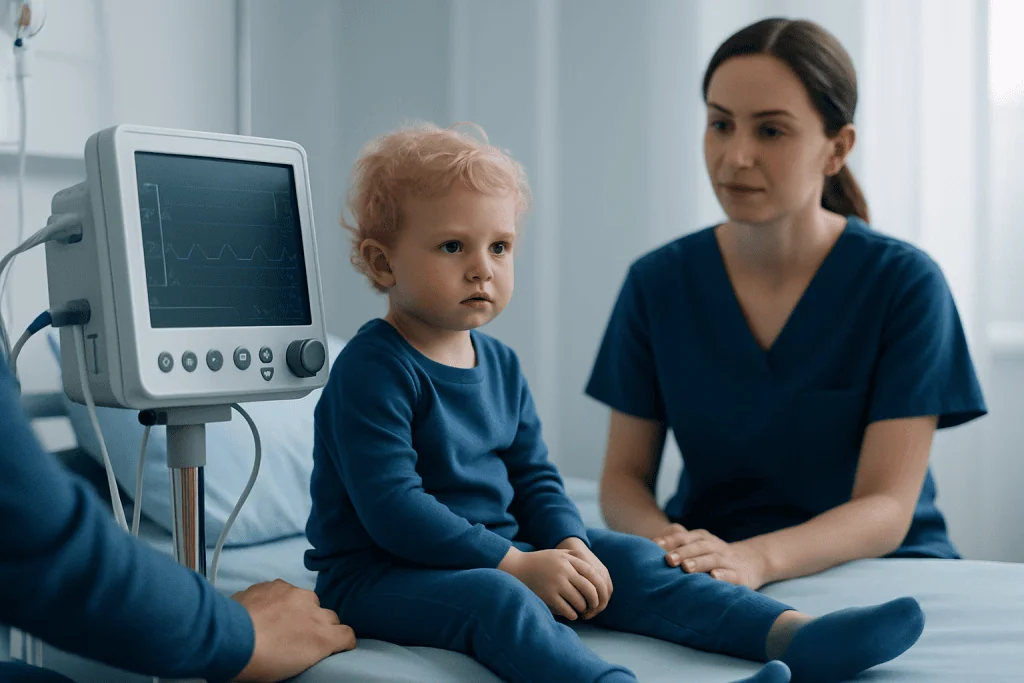
Many babies with Menkes disorder appear well at birth. Symptoms commonly begin between about 2 and 3 months of age, although timing differs from child to child. Early changes can be subtle, such as poor feeding, difficulty gaining weight, unusual sleepiness, low body temperature, or reduced muscle tone. Parents and caregivers may also notice that developmental skills are not progressing as expected.
A characteristic finding is sparse, short, light-colored, brittle, or twisted hair. It may look coarse or feel different from usual hair. Under a microscope, hair can show a distinctive twisting pattern called pili torti. Hair changes alone do not diagnose Menkes disorder, but they can provide an important clue when they occur alongside neurologic or feeding concerns.
As the condition progresses, symptoms may include developmental delay or loss of previously gained skills, weak muscle tone, seizures, irritability, and difficulties with swallowing. Some children develop fragile bones, loose skin or joints, recurrent respiratory infections, or problems involving blood vessels and the urinary tract. Not every child has every feature, and symptoms can overlap with other childhood conditions.
- Feeding difficulties or poor weight gain
- Low muscle tone, weakness, or reduced movement
- Developmental delay or regression
- Seizures or unusual episodes of stiffening, jerking, or staring
- Sparse, brittle, steel-colored, or unusually twisted hair
- Low body temperature or frequent illness
Causes, inheritance, and risk factors

Menkes disorder results from changes in the ATP7A gene. This gene provides instructions for making a protein that helps move copper across cell membranes and distribute it to tissues. When ATP7A function is substantially reduced, copper may build up in some cells, especially in the intestine and kidneys, while the brain and other organs do not receive enough usable copper.
The condition is usually inherited in an X-linked recessive pattern. Because boys have one X chromosome, a disease-causing ATP7A variant on that chromosome can cause Menkes disorder. Girls usually have two X chromosomes and may carry the variant without having classic symptoms, although some carriers can have mild features. In some families, the gene change occurs for the first time in the affected child rather than being inherited from a parent.
A known family history of Menkes disorder or an ATP7A variant is the main recognized risk factor. Genetic counseling can help parents understand inheritance, carrier testing, and reproductive options. When there is a known familial variant, prenatal testing or testing shortly after birth may be discussed with a qualified genetics team.
How Menkes disorder is diagnosed
Diagnosis begins with a careful review of symptoms, developmental history, family history, physical examination, and hair appearance. A pediatrician may refer the child urgently to specialists in genetics, metabolic medicine, neurology, and other relevant fields. Because symptoms can resemble those of other disorders, confirmation with appropriate laboratory and genetic testing is important.
Blood tests may show low levels of copper and ceruloplasmin, a protein that carries copper in the blood. In very young infants, these results can be harder to interpret because copper and ceruloplasmin levels are naturally low early in life. Doctors may repeat tests, assess additional biochemical markers, or use specialized testing depending on the child’s age and clinical situation.
Genetic testing for changes in ATP7A can confirm the diagnosis and help guide family testing. Hair microscopy, brain imaging, electroencephalography (EEG) for seizures, and assessments of bone, vascular, bladder, and nutritional health may also be recommended. A diagnosis can be emotionally difficult for families, and genetic counselors and pediatric support teams can provide clear information at each stage.
Treatment options and ongoing care
There is currently no treatment that completely corrects the underlying genetic cause of classic Menkes disorder. However, early specialist treatment can be important. Some infants may be offered copper replacement by injection, often using copper histidinate where available, because injected copper can bypass some of the intestinal transport difficulty. This approach is most likely to be considered very early in life, and potential benefit depends in part on the specific ATP7A variant and the child’s clinical status.
Copper treatment must be prescribed and monitored by an experienced metabolic specialist. It is not appropriate to give over-the-counter copper supplements as a substitute, since they may not be effective and too much copper can be harmful. Families should discuss expected benefits, limitations, monitoring needs, and potential adverse effects with the child’s treating team.
Supportive treatment is an essential part of care. This may include help with feeding and nutrition, treatment for reflux or swallowing difficulties, anti-seizure medicines when needed, physical and occupational therapy, respiratory care, and management of infections. Some children need input from gastroenterology, orthopedics, urology, cardiology, or palliative care teams, depending on their individual needs.
Care plans should be individualized and reviewed regularly as the child grows. Acibadem International’s multidisciplinary specialists and JCI-accredited hospitals can assess and treat complex pediatric conditions for international patients, in coordination with families and referring clinicians.
Daily care, prevention, and family planning
Menkes disorder cannot currently be prevented after conception when a child has inherited a disease-causing ATP7A variant. It is not caused by a parent’s diet, pregnancy activity, or routine infant care. Families should avoid self-directed mineral supplements, restrictive diets, or unproven therapies and instead seek advice from the child’s medical team.
At home, practical priorities include following the feeding plan, giving prescribed medicines as directed, keeping scheduled monitoring appointments, and recording symptoms such as seizures, breathing changes, vomiting, constipation, sleep changes, and developmental milestones. Therapists can teach families positioning, mobility, and communication strategies that are appropriate for the child’s abilities.
Genetic counseling is an important part of prevention for future pregnancies. A genetics professional can explain whether relatives may be carriers, arrange targeted testing when appropriate, and discuss reproductive options in a confidential, non-directive way. Emotional support, rare-disease organizations, and connections with other families may also help caregivers manage uncertainty and practical demands.
When to seek medical care
Parents or caregivers should arrange prompt medical assessment if an infant has poor feeding, poor weight gain, marked floppiness, developmental concerns, unusual brittle or twisted hair, or a family history of Menkes disorder. These signs are not specific to Menkes disorder, but timely evaluation can identify treatable causes and allow referral to the right specialists.
Urgent medical care is needed for a first seizure, repeated seizures, trouble breathing, blue or gray lips, unusual unresponsiveness, signs of dehydration, or a child who cannot safely feed. Emergency services should be contacted according to local guidance if these symptoms occur. Caregivers should not place anything in a child’s mouth during a seizure and should follow any emergency plan provided by the clinical team.
For families with a known ATP7A variant or a previously affected child, it is sensible to contact a genetics or metabolic specialist before or as soon as a new pregnancy is recognized. Planning ahead can help ensure that appropriate newborn assessment and treatment discussions happen without delay.
Frequently asked questions
Is Menkes disorder curable?
There is no cure that fully corrects the genetic copper-transport problem in classic Menkes disorder. Early copper injection treatment may help some infants, while ongoing medical and developmental support addresses symptoms and complications. The care team can explain what treatment may mean for an individual child.
At what age do symptoms of Menkes disorder start?
Symptoms most often begin in early infancy, commonly after the first few months of life. Some babies may have subtle early signs, while others develop more noticeable feeding, developmental, hair, or neurologic changes later. A known family history may allow testing before symptoms develop.
Can girls have Menkes disorder?
Classic Menkes disorder mainly affects boys because it is usually inherited in an X-linked pattern. Girls can be carriers and often do not have classic disease, though some may have mild symptoms due to differences in X-chromosome activity. Genetic counseling can clarify the implications for each family.
What does Menkes hair look like?
Hair may be sparse, short, coarse, lightly pigmented, brittle, or unusually twisted. It is sometimes described as kinky or steel-wool-like. These hair features are a clue rather than a diagnosis, so medical testing is still needed.
How is Menkes disorder inherited?
Menkes disorder is most commonly caused by a variant in the ATP7A gene on the X chromosome. A carrier mother may pass the variant to a child, although some cases result from a new genetic change. Genetic testing can identify the specific family pattern.
Can a blood test diagnose Menkes disorder?
Blood copper and ceruloplasmin tests can support the diagnosis, particularly in the right clinical setting. Results in young infants require careful interpretation because normal levels are naturally lower at that age. Genetic testing is generally used to confirm an ATP7A-related diagnosis.
References
- National Institute of Neurological Disorders and Stroke
- Genetic and Rare Diseases Information Center
- MedlinePlus Genetics
- GeneReviews
- Orphanet
This article is for general information only and is not a substitute for professional medical advice. Please consult a qualified doctor about your individual situation.
Hair transplant in Turkey — costs, graft counts & a free assessment
JCI-accredited · board-certified surgeons · reply within 24h
Add us as a Preferred Source to see more of our trusted health content across Google Search, AI Overviews and Discover.

More from the Health Library



Related Specialists
Assoc. Prof. Dr. Aysun Işıklar
Internal Medicine
Fzt. Hanife Durak
Physical Medicine & Rehabilitation
Prof. Dr. Ayten Ferahbaş Kesikoğlu
Dermatology
Prof. Dr. Ali Arıcan
Medical Oncology