Bruised Kidney: An Evidence-Based Guide for Patients

A bruised kidney is most often caused by blunt trauma, such as a fall, vehicle collision, contact sport, or direct blow to the flank. Blood in the urine may occur, but its absence does not always rule out kidney injury.
Key Takeaways
- A bruised kidney is most often caused by blunt trauma, such as a fall, vehicle collision, contact sport, or direct blow to the flank.
- Blood in the urine may occur, but its absence does not always rule out kidney injury.
- CT imaging is commonly used when clinicians suspect a significant kidney injury or associated abdominal trauma.
- Many stable, lower-grade kidney injuries are treated without surgery through monitoring, rest, and follow-up.
- Urgent care is important after significant trauma, especially with severe pain, faintness, visible blood in urine, or trouble passing urine.
A bruised kidney, also called a kidney contusion, is an injury caused by a blow or force to the back, side, or abdomen. Many mild injuries heal with observation and rest, but blood in the urine, severe pain, dizziness, or reduced urination requires urgent medical assessment.
What Is a Bruised Kidney?
A bruised kidney is a type of kidney injury caused by blunt force. The medical term is renal contusion. It means the kidney tissue has been injured, often with small areas of bleeding or swelling, without necessarily having a deep tear. The kidneys sit toward the back of the upper abdomen, partly protected by the lower ribs, muscles, and surrounding tissues.
Kidney injuries can range from minor bruising to more serious lacerations, damage to blood vessels, or disruption of the system that collects urine. Clinicians grade kidney trauma according to imaging findings and the person’s overall condition. A bruise is generally at the milder end of this spectrum, although any suspected kidney injury should be assessed in the context of how the trauma occurred and whether other injuries may be present.
It is important not to assume that pain after a blow to the back is only a muscle injury. A careful evaluation can distinguish a bruised kidney from problems involving the ribs, spine, muscles, bowel, spleen, liver, or bladder. In stable people, most minor kidney injuries improve with non-surgical care and appropriate follow-up.
Symptoms and Signs to Notice

Symptoms vary with the severity of the injury. Pain or tenderness in the flank—the area between the lower ribs and hip on either side of the back—is common. The pain may be felt in the back, side, or upper abdomen and can become more noticeable with movement, coughing, or deep breathing.
Blood in the urine, called hematuria, is another possible sign. It may be visible, making the urine pink, red, or tea-colored, or it may only be found on a urine test. However, a person can have a kidney injury without visible blood in the urine, particularly after high-energy trauma. Conversely, blood in urine can also arise from conditions other than trauma and should be evaluated.
Other concerning features may include bruising or swelling over the flank, nausea, vomiting, abdominal fullness, weakness, light-headedness, or a fast heartbeat. Trouble urinating, passing only a small amount of urine, or increasing abdominal pain may indicate a more significant injury or another complication. Symptoms can sometimes evolve over hours, so monitoring after an injury matters.
- Flank, back, or abdominal pain after an impact
- Visible blood in the urine or abnormal urine testing
- Bruising, swelling, or marked tenderness over the side or back
- Nausea, vomiting, dizziness, or feeling faint
- Difficulty urinating or a noticeable reduction in urine output
How a Kidney Becomes Bruised
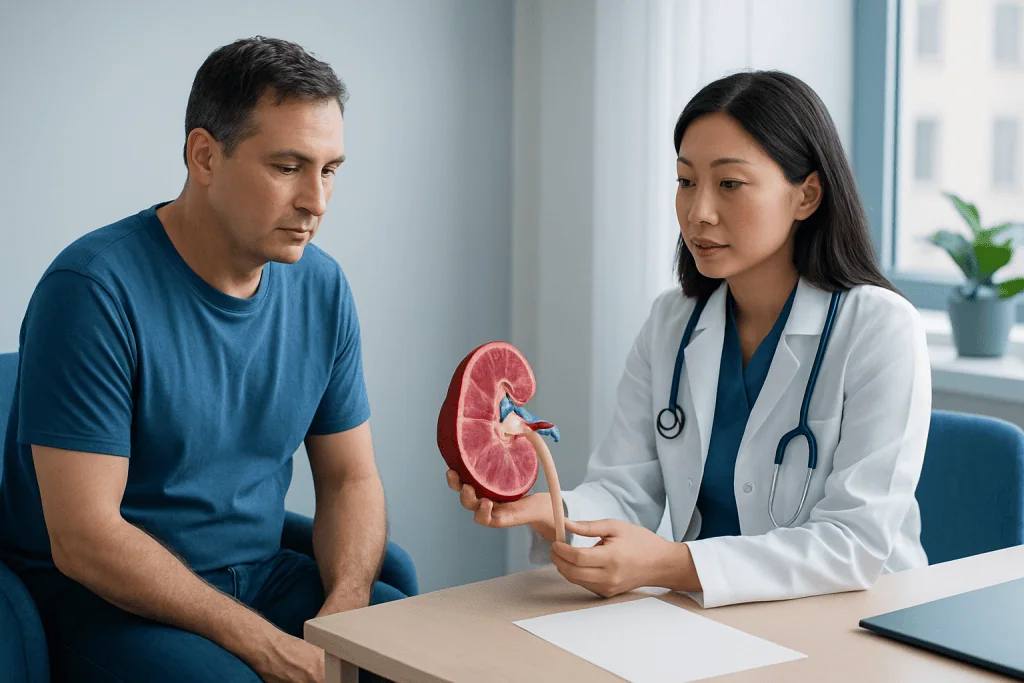
Most bruised kidneys result from blunt trauma. Examples include falls, motor vehicle collisions, bicycle or skiing accidents, contact sports injuries, and a direct blow during work or recreational activity. Rapid deceleration can also injure the kidney even when there is no obvious external wound.
Some people may be more vulnerable to kidney injury after relatively minor trauma. This can include people with a single functioning kidney, a kidney that is positioned unusually, pre-existing kidney abnormalities, kidney stones, or enlarged kidneys caused by certain conditions. Medicines that affect blood clotting can increase the risk of bleeding after an injury and should always be reported to the treating team.
Penetrating injuries, such as stab or gunshot wounds, are managed differently from a typical kidney bruise and need immediate emergency care. Likewise, an injury involving the chest, abdomen, pelvis, or spine may involve more than one organ. The mechanism of injury helps clinicians decide how urgently imaging and observation are needed.
Medical Assessment and Diagnosis
Assessment begins with the person’s stability. Clinicians check blood pressure, pulse, breathing, level of alertness, pain, and signs of ongoing bleeding. They ask how the injury happened, when it occurred, whether there was loss of consciousness, and whether symptoms such as blood in urine or difficulty urinating have developed.
A physical examination may identify flank tenderness, bruising, abdominal guarding, rib injuries, or signs of trauma elsewhere. Urinalysis can detect blood in the urine, while blood tests may assess kidney function and look for evidence of significant blood loss. These tests support, but do not replace, the overall clinical assessment.
For suspected significant kidney trauma in a stable adult, contrast-enhanced CT scanning is commonly used because it can show the kidney, surrounding tissues, urinary collecting system, and other abdominal organs in detail. Ultrasound may be used in selected situations, including follow-up or when radiation exposure is a particular concern, but it may not detect every injury. Imaging decisions are individualized according to symptoms, physical findings, and the force of the trauma.
A history of kidney disease may influence assessment and recovery planning. For general background on long-term kidney problems, readers can review chronic kidney disease.
Treatment and Recovery
Treatment depends on injury severity and whether the person is stable. Many uncomplicated bruised kidneys are managed conservatively, meaning without an operation. This may involve pain control, monitoring of vital signs and urine, repeat blood or urine tests when appropriate, and a period of reduced physical activity. Hospital observation may be recommended after more substantial trauma or if there is visible blood in the urine.
Clinicians may advise avoiding strenuous exercise, heavy lifting, and contact sports until pain has resolved and a treating clinician confirms that return to activity is safe. The timing differs between individuals because it depends on symptoms, imaging findings, and whether blood remains in the urine. It is sensible to ask specifically about work duties, driving, sports, and travel during follow-up.
More serious injuries may need additional treatment. If bleeding continues in a stable person, a minimally invasive procedure called angiographic embolization may be used to block a bleeding blood vessel. Surgery is less common but may be needed for unstable bleeding or complex injury. Urology specialists may also treat urine leakage or obstruction when these complications occur.
People should use pain medicines only as recommended by their clinician. Some medicines may be unsuitable for people with impaired kidney function, dehydration, bleeding risk, or certain other health conditions. Maintaining ordinary hydration is generally reasonable unless a clinician has advised fluid restriction; forcing large amounts of fluid is not a substitute for medical care.
Prevention and Self-Care During Healing
Not all accidents can be prevented, but practical safety measures reduce the risk of serious trauma. Seat belts and appropriate child restraints should be used on every journey. Helmets and protective equipment are important for cycling, skiing, riding sports, and activities with a risk of collision. Workplaces should also follow fall-prevention and protective-equipment guidance.
During recovery, rest should be balanced with the advice provided by the medical team. Gentle daily movement may be appropriate for some people, but activities that could cause another impact should be avoided until clearance is given. Follow-up appointments are important, particularly if initial imaging showed more than a minor injury or if symptoms have not settled as expected.
Patients can help by noting changes in urine color, urine amount, pain, fever, dizziness, and their ability to eat and drink. They should tell clinicians about all regular medicines, including blood thinners, anti-inflammatory medicines, supplements, and herbal products. A clinician may recommend repeat testing or imaging in selected cases to confirm healing and check for complications.
When to Seek Medical Care
Anyone with a significant blow to the back, side, or abdomen should seek prompt medical evaluation, particularly after a vehicle collision, a high fall, a sports collision, or an injury involving high speed. Evaluation is also advisable if pain is persistent or worsening, even when there is no visible bruising.
Emergency medical care is needed for visible blood in the urine after trauma, severe or increasing flank or abdominal pain, fainting, confusion, difficulty breathing, cold or clammy skin, repeated vomiting, inability to pass urine, or very little urine output. These symptoms can reflect internal bleeding, shock, urinary obstruction, or injuries beyond the kidney.
Medical review is also important if fever, worsening pain, new urinary symptoms, or blood in urine develops after an initially minor injury. People with one kidney, known kidney disease, bleeding disorders, or medicines that affect clotting should have a lower threshold for seeking care after trauma. Acibadem International’s multidisciplinary specialists and JCI-accredited hospitals diagnose and treat kidney injuries for international patients when specialist assessment is needed.
Frequently asked questions
Can a bruised kidney heal on its own?
Many mild kidney bruises heal with non-surgical treatment, including monitoring, rest, and clinician-guided pain management. The recovery plan depends on the severity of the injury and any associated trauma. Follow-up is important before returning to strenuous exercise or contact sports.
How long does it take to recover from a bruised kidney?
Recovery time varies widely according to the extent of injury, symptoms, and imaging results. A mild injury may improve over days to weeks, while more significant injuries can require a longer period of restricted activity and follow-up. A treating clinician should advise when normal activities can safely resume.
Does a bruised kidney always cause blood in urine?
No. Blood in the urine is a common sign of kidney trauma, but it may be microscopic and only detected by testing, or it may be absent. The severity of visible blood does not always match the severity of the kidney injury, so medical assessment considers the entire clinical picture.
Can a bruised kidney cause long-term kidney damage?
Most uncomplicated, appropriately managed minor kidney injuries do not lead to lasting loss of kidney function. More severe injuries can occasionally lead to complications such as high blood pressure, scarring, urine leakage, or reduced kidney function. Follow-up helps identify concerns early.
Should a person drink extra water after a kidney injury?
Normal hydration is usually appropriate unless a clinician has given different instructions. Drinking excessive amounts of water does not treat internal bleeding or repair a kidney injury. Anyone who cannot keep fluids down, has reduced urine output, or feels unwell should seek medical care.
Can a person exercise with a bruised kidney?
Strenuous exercise, heavy lifting, and contact sports should generally be avoided after a suspected or confirmed kidney injury until a clinician provides clearance. Returning too early may increase the risk of further injury or bleeding. The safe timing depends on symptoms, examination findings, and, when needed, imaging results.
References
- American Urological Association
- European Association of Urology
- National Institute of Diabetes and Digestive and Kidney Diseases
- Merck Manual Professional Edition
This article is for general information only and is not a substitute for professional medical advice. Please consult a qualified doctor about your individual situation.
Explore treatments in Turkey — costs, top hospitals & a free quote
JCI-accredited · board-certified surgeons · reply within 24h
Add us as a Preferred Source to see more of our trusted health content across Google Search, AI Overviews and Discover.
Check your numbers in seconds
BMI, calories, due date, blood pressure and 30+ more clinical calculators — free, instant, doctor-reviewed ranges.

More from the Health Library



Related Specialists

Prof. Dr. Seyit Ali Gümüştaş
Orthopedic Surgery & Traumatology
Assoc. Prof. Dr. Talat Cem Ovalıoğlu
Neurosurgery
Dt. Bilge Baş
Oral & Dental Health
Dr. Hande Simten Demirel Kaya
Anesthesiology