Foot Eczema Treatment: Early Signs, Risk Factors, and How It Is Treated

Foot eczema can cause itching, dryness, scaling, cracking, redness or small blisters, depending on the eczema type. Sweat, friction, soaps, shoe materials and contact allergens may trigger or worsen symptoms.
Key Takeaways
- Foot eczema can cause itching, dryness, scaling, cracking, redness or small blisters, depending on the eczema type.
- Sweat, friction, soaps, shoe materials and contact allergens may trigger or worsen symptoms.
- Moisturisers and avoidance of known triggers are central parts of foot eczema treatment.
- A clinician may recommend topical anti-inflammatory medicines, patch testing or tests to rule out fungal infection.
- Painful cracks, spreading redness, pus, fever or a rash that does not improve need medical assessment.
Foot eczema treatment usually focuses on restoring the skin barrier, reducing inflammation and identifying irritants or allergens that keep symptoms active. Many cases improve with consistent skin care and prescribed topical treatment, although persistent or infected-looking rashes should be assessed by a clinician.
Foot Eczema Treatment: What Helps First
Foot eczema treatment aims to calm inflammation, relieve itch and help the outer skin barrier recover. The first steps are usually gentle washing, regular use of a fragrance-free moisturiser and reducing exposure to triggers such as harsh cleansers, prolonged dampness, friction or a material that irritates the skin.
If symptoms are more than mild, a doctor or dermatologist may recommend a topical anti-inflammatory medicine for a limited period. The best treatment depends on the pattern of the rash, its location and whether another condition, especially a fungal infection, could be contributing. Eczema is not contagious, but it can be uncomfortable and may recur when triggers remain present.
How Eczema Can Look on the Feet
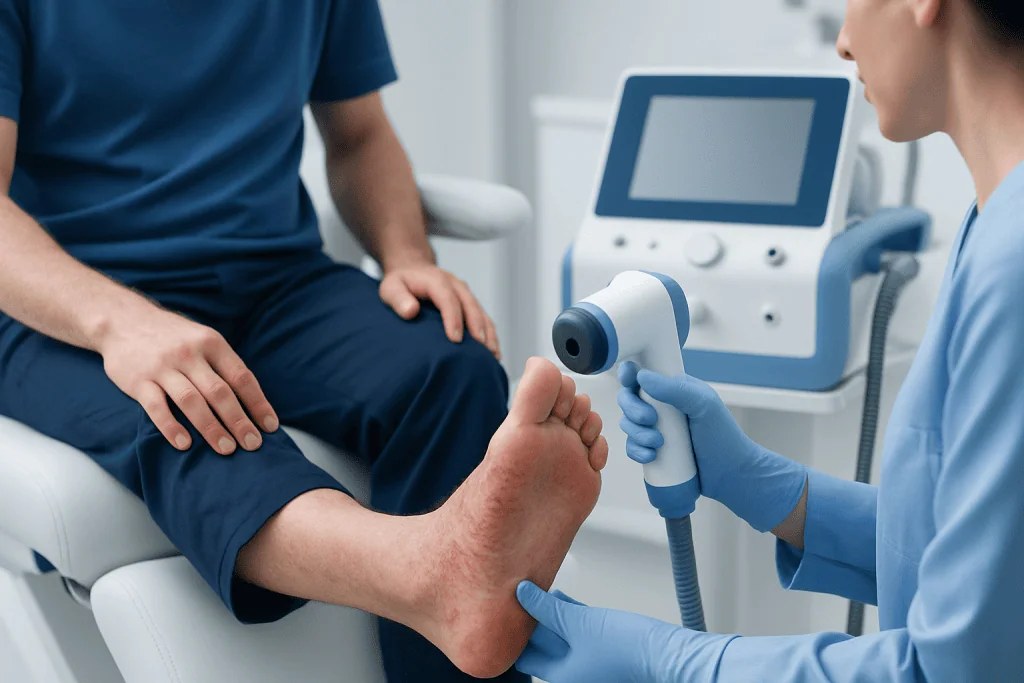
Eczema is a group of inflammatory skin conditions. On the feet, it may affect the soles, heels, toes, tops of the feet or areas where footwear touches the skin. Symptoms can come and go, with quieter periods followed by flares.
Early signs may include itchiness, mild redness, dry or rough skin, tenderness and flaking. As inflammation continues, skin can become thicker, darker or lighter than the surrounding skin, especially after repeated scratching. Painful fissures may develop on dry heels or soles.
Some people develop tiny, intensely itchy fluid-filled blisters on the sides of the feet or toes. This pattern is often called dyshidrotic eczema, or pompholyx. Blisters can later peel, leaving the skin dry, sensitive and prone to cracking.
- Dry, scaly or peeling patches
- Itching or burning sensations
- Red, brown, purple or grey-toned inflamed areas, depending on skin tone
- Small blisters, weeping or crusting during a flare
- Cracks, especially on heels and soles
Triggers, Causes and Risk Factors
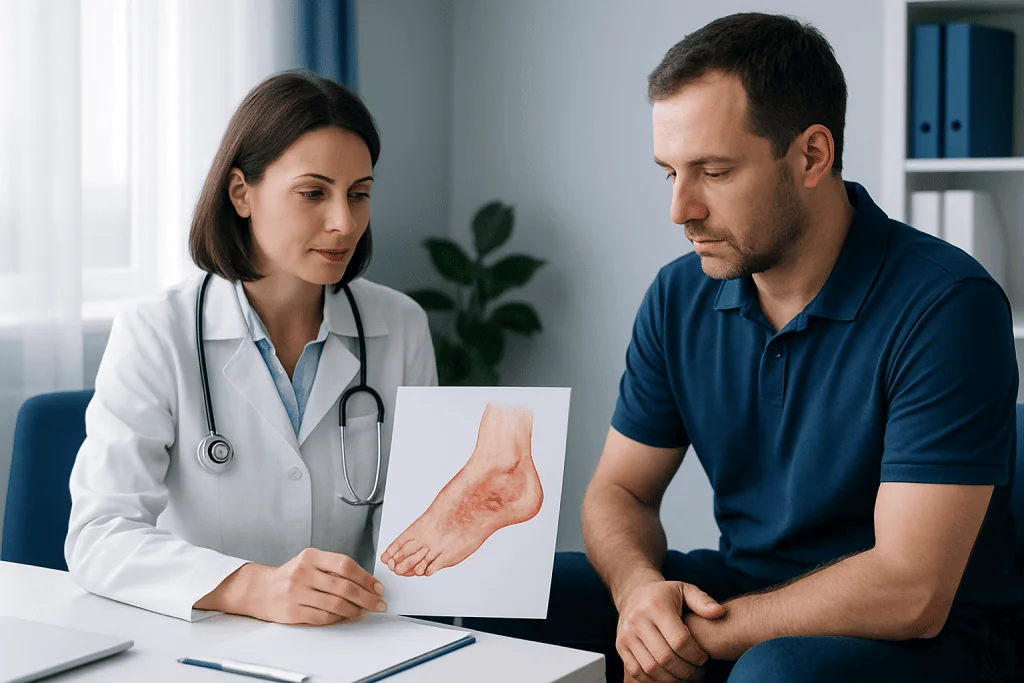
Foot eczema develops when the skin barrier is disrupted and the immune system creates an inflammatory response. There is rarely one single cause. People with a personal or family history of eczema, asthma, hay fever or other allergic conditions may be more likely to develop eczema.
The feet are exposed to particular triggers. Sweaty or non-breathable shoes, repeated rubbing, long periods in wet socks, frequent washing and strong detergents can all weaken the skin barrier. Heat and stress may worsen some eczema flares, including dyshidrotic eczema.
Contact dermatitis is another important possibility. It can occur when skin reacts to substances in footwear, such as rubber compounds, dyes, leather tanning chemicals, adhesives or metal components. Fragrances and preservatives in foot creams, sprays or cleansers can also cause irritation or allergy. A dermatologist can help distinguish eczema from other skin conditions and identify likely triggers.
Why Accurate Diagnosis Matters
A foot rash is not always eczema. Athlete’s foot, also known as tinea pedis, is a fungal infection that can cause scaling, itching and cracks between the toes or on the soles. Psoriasis, bacterial infection, scabies and some inflammatory conditions can also resemble eczema. Using the wrong treatment may delay improvement.
Diagnosis is often based on a discussion of symptoms, medical history, footwear, work and home exposures, and a careful skin examination. A clinician may take a small skin scraping to test for fungus when the diagnosis is uncertain or when scaling is prominent.
Patch testing may be useful when allergic contact dermatitis is suspected, particularly if the rash follows the edges or upper areas of the feet where shoes touch. During patch testing, small amounts of potential allergens are placed on the back under patches and assessed over several days. This can guide practical changes in footwear and personal-care products.
Treatment Options for Foot Eczema
Daily moisturising is the foundation of foot eczema treatment. A thick, fragrance-free cream or ointment can be applied after bathing and at other times when the skin feels dry. Ointments are often useful for very dry, cracked areas, while a lighter cream may feel more comfortable during warm weather. Moisturiser should be used even when the skin appears settled, as this supports the skin barrier.
For active inflammation, clinicians commonly use topical corticosteroids of an appropriate strength for the location and severity of symptoms. These medicines can reduce itching, redness and swelling when used exactly as directed. Other prescription topical anti-inflammatory treatments may be considered for selected people, especially when repeated treatment is needed or steroid use is not suitable.
Wet compresses, protective dressings or treatment for painful fissures may sometimes be advised. If testing confirms a fungal infection, antifungal treatment is needed rather than treating it as eczema alone. If there are signs of bacterial infection, a clinician will decide whether additional treatment is necessary. For persistent, widespread or difficult-to-control disease, dermatology care may include light-based treatment or systemic medicines in carefully selected cases.
Dermatology teams can tailor dermatology care to the appearance of the rash, the person’s triggers and the impact on everyday comfort. Treatment plans should be reviewed if symptoms are not improving, rather than continuing medicines without guidance.
Daily Foot Care and Flare Prevention
Small routine changes can reduce irritation and help prevent future flares. Feet should be washed with lukewarm water and a mild, fragrance-free cleanser only when needed. After washing, they should be patted dry rather than rubbed, with care taken to dry between the toes. Moisturiser can then be applied to dry areas, unless a clinician has advised otherwise for a suspected fungal infection between the toes.
Choose breathable, well-fitting footwear and clean socks that help manage sweat. Changing damp socks promptly and alternating shoes so they can dry fully may be helpful. For people with suspected shoe allergy, avoiding the suspected material while awaiting medical advice can reduce exposure.
Scratching can damage skin and increase the risk of infection. Keeping toenails short, using a cool compress for itch and applying prescribed treatment as directed may make scratching easier to avoid. It can also help to keep a brief symptom diary noting footwear, new products, sweating, stress and the timing of flares.
- Use fragrance-free moisturiser regularly, especially after bathing.
- Avoid very hot water, harsh scrubs and strongly scented foot products.
- Wear shoes that do not pinch, rub or trap excessive moisture.
- Do not share towels, socks or footwear if a fungal infection is possible.
- Seek professional advice before using strong over-the-counter creams on an unexplained rash.
When to Seek Medical Care
Medical assessment is appropriate when a foot rash is new, severe, painful, recurrent or does not improve with gentle skin care. A doctor can determine whether the problem is eczema, fungal infection, contact dermatitis or another condition, and can recommend treatment that fits the diagnosis.
Prompt care is particularly important if there is increasing pain, warmth, swelling, spreading redness, pus, yellow crusting, fever or red streaks from the affected area. These symptoms can indicate a skin infection and should not be managed with home care alone.
People with diabetes, poor circulation, a weakened immune system or reduced sensation in the feet should seek medical advice early for cracks, sores, blisters or any unexplained skin change. Acibadem International’s multidisciplinary specialists and JCI-accredited hospitals diagnose and treat skin conditions for international patients, with referral to appropriate dermatology and related services when needed.
Frequently asked questions
What is the best foot eczema treatment?
The most effective approach usually combines regular fragrance-free moisturising, avoiding personal triggers and using clinician-recommended anti-inflammatory treatment during flares. The right plan depends on whether the rash is eczema alone or whether allergy, fungus or infection is also present.
How can a person tell foot eczema from athlete's foot?
Both conditions can cause itching, scaling and cracks, so they can be difficult to distinguish without an examination. Athlete's foot often affects the spaces between toes or has a more clearly defined scaly edge, but appearances vary. A clinician may perform a simple skin test to check for fungus.
Can shoes cause eczema on the feet?
Yes. Shoes can contribute through friction, heat and trapped sweat, and some people develop contact dermatitis from rubber, leather chemicals, dyes, adhesives or metal components. A pattern that closely matches areas touching footwear may suggest this possibility.
Should moisturiser be used between the toes?
This depends on the skin condition and advice from a clinician. Moisturiser is useful for dry eczema, but keeping the spaces between toes overly moist can encourage fungal growth in some people. If there is peeling, maceration or itch between toes, medical assessment is sensible.
Can foot eczema become infected?
Broken, scratched or cracked skin can allow bacteria to enter, so infection is possible. Increasing pain, warmth, swelling, pus, yellow crusts, spreading redness or fever should be assessed promptly by a healthcare professional.
How long does foot eczema take to improve?
Improvement varies with the severity of the flare, the trigger and how consistently the treatment plan is followed. Some people notice relief within days of appropriate care, while thicker, cracked or longstanding eczema may take longer. A rash that persists or worsens should be reviewed by a doctor.
References
- American Academy of Dermatology Association
- National Eczema Association
- National Health Service
- American Contact Dermatitis Society
- Mayo Clinic
This article is for general information only and is not a substitute for professional medical advice. Please consult a qualified doctor about your individual situation.
Eczema in Turkey — costs, top hospitals & a free quote
JCI-accredited · board-certified surgeons · reply within 24h
Add us as a Preferred Source to see more of our trusted health content across Google Search, AI Overviews and Discover.

More from the Health Library



Related Specialists

Dr. Ahmet Bülent Demirbağ
Otorhinolaryngology
Dr. Ahmet Gülen
Pediatrics
Dr. Turgay Kahraman
Radiology
Asst. Prof. Dr. Harika Bodur Öztürk
Gynecology & Obstetrics