DVT Stockings: A Complete Medical Overview

DVT stockings are usually graduated compression stockings or anti-embolism stockings, chosen according to a person's mobility and clinical needs. They may help reduce venous pooling in the legs, but they cannot safely treat a suspected or confirmed deep vein thrombosis without medical care.
Key Takeaways
- DVT stockings are usually graduated compression stockings or anti-embolism stockings, chosen according to a person's mobility and clinical needs.
- They may help reduce venous pooling in the legs, but they cannot safely treat a suspected or confirmed deep vein thrombosis without medical care.
- Correct fit, compression level and daily skin checks are important for comfort and safety.
- People with poor arterial circulation, significant nerve problems or certain skin conditions may need to avoid compression stockings or use them only under supervision.
- New one-sided leg swelling, pain, warmth, redness, chest pain or sudden shortness of breath needs urgent medical assessment.
DVT stockings are medical compression garments used in specific situations to support blood flow in the legs, particularly during reduced mobility or after certain procedures. They are not suitable for everyone and do not replace medical evaluation, blood-thinning medication, movement, or other clot-prevention measures when these are needed.
What Are DVT Stockings?
DVT stockings are close-fitting leg garments designed to apply controlled pressure to the ankles and lower legs. The term is often used broadly for two different products: anti-embolism stockings, commonly used for people confined to bed, and graduated compression stockings, more often used by people who can walk. Both aim to limit blood pooling in leg veins, but they are not interchangeable.
Deep vein thrombosis (DVT) is a blood clot in a deep vein, most often in the leg. DVT stockings may be included in a clinician-led plan to reduce clot risk for selected people, such as those recovering from surgery or experiencing a period of limited mobility. They do not dissolve an existing clot and should not delay assessment of possible deep vein thrombosis.
Medical teams choose clot prevention based on an individual’s overall risk. Depending on the situation, this can include early walking, leg exercises, intermittent pneumatic compression devices, and medicines that reduce clotting. Stockings are one possible component rather than a universal solution.
How Compression Stockings Support Leg Circulation
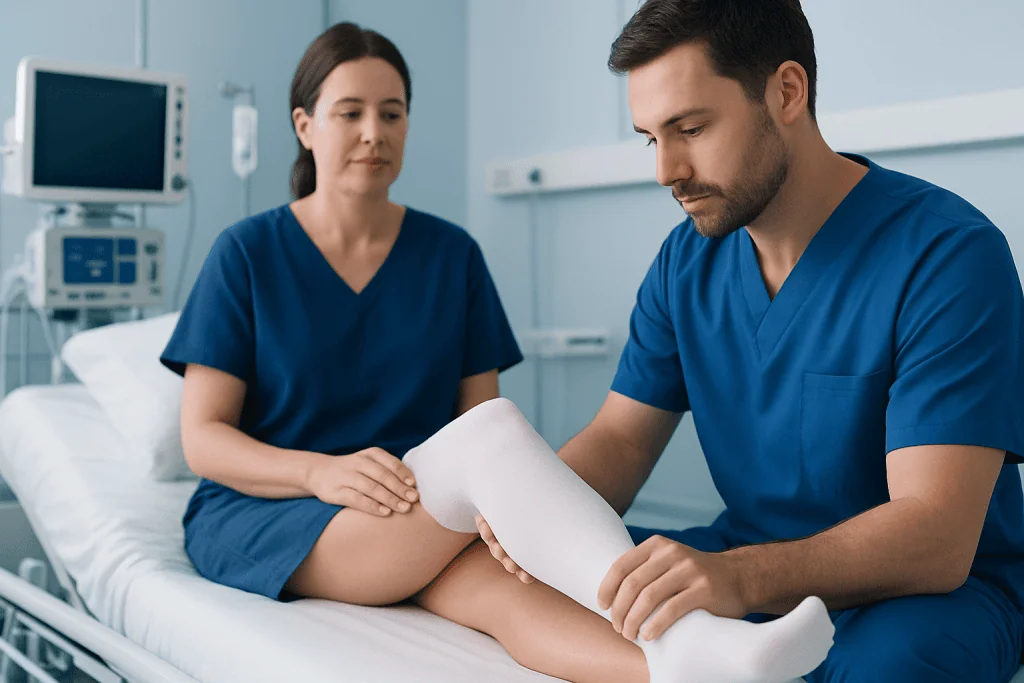
Graduated compression is firmest at the ankle and gradually becomes lighter higher up the leg. This pressure pattern can support the return of blood toward the heart and may reduce swelling and the feeling of leg heaviness. In people who are able to move, the calf muscles also act as a natural pump, making walking and ankle movement important for circulation.
Anti-embolism stockings are generally designed for people lying in bed or with markedly limited movement. Their pressure profile and intended use differ from those of stockings used for everyday venous symptoms. Using the wrong type may mean that the garment does not provide the intended support.
Compression garments are sometimes recommended after a DVT for persistent swelling or discomfort, but routine use for preventing post-thrombotic syndrome is not appropriate for every person. A vascular specialist or treating clinician can advise whether compression is likely to be useful after diagnosis and treatment.
Who May Be Advised to Use DVT Stockings?

A clinician may consider DVT stockings for people whose movement is temporarily reduced, including during recovery from selected operations, illness or injury. Risk is influenced by many factors, such as older age, previous blood clots, cancer, pregnancy or recent childbirth, inherited clotting tendencies, obesity, smoking, dehydration, hormone-containing medicines, and long periods of immobility.
For travel, compression stockings may be considered for some people at increased risk during long journeys. However, most travellers benefit most from practical measures such as regular movement, calf exercises, comfortable clothing and adequate fluids. A person with a history of clots or other major risk factors should discuss travel prevention with a doctor before relying on stockings.
Not everyone should wear compression. Caution or specialist assessment is especially important for people with peripheral artery disease, severely reduced blood flow to the feet, severe heart failure, major leg swelling of uncertain cause, significant diabetic nerve damage, active skin infection, open wounds, or a known allergy to garment materials. An arterial circulation check may be needed before stronger compression is prescribed.
Choosing the Right Type, Size and Compression
The safest choice starts with a clear reason for use. A clinician may specify knee-high or thigh-high length, the type of stocking, and a compression class. Knee-high garments are commonly used when appropriate, while thigh-high stockings may be selected for certain clinical reasons. More coverage is not automatically better, and poorly fitting thigh-high stockings can roll down and create a tight band.
Measurements are usually taken when leg swelling is minimal, often early in the day. The ankle and calf circumference, leg length and sometimes thigh circumference are used to match the manufacturer’s sizing guide. Stockings should feel snug and evenly supportive, but they should not cause pain, numbness, cold toes, skin discoloration or deep marks.
Over-the-counter compression products vary widely in design and pressure. It is sensible to ask a healthcare professional or trained fitter for guidance, particularly after surgery, during pregnancy, following DVT, or when there is diabetes or circulation disease. A fitting review is helpful if body size, swelling or mobility changes.
- Use only the stocking type recommended for the person’s situation.
- Do not fold, roll or bunch the top edge down.
- Ask whether stockings should be removed overnight; instructions differ by product and indication.
- Replace garments when they become loose, damaged or no longer provide even support.
How to Put On and Care for DVT Stockings
Stockings are usually easiest to apply first thing in the morning, before swelling has increased. Hands should be dry, and sharp jewellery or long nails should be removed or covered to protect the fabric and skin. The stocking can be turned inside out to the heel, positioned over the foot and heel, then gradually smoothed upward without pulling forcefully from the top band.
The fabric should lie flat without wrinkles, twists or folds. The heel pocket should sit correctly, and toes should remain comfortable. Stocking applicators, rubber gloves or open-toe styles may make application easier for people with limited hand strength, arthritis or reduced flexibility.
Skin should be checked daily, especially around the heels, ankles, toes and top edge. Wash and dry the stockings according to the manufacturer’s instructions, as regular cleaning helps preserve elasticity and protects skin health. Moisturiser can be used after the stockings are removed, but it should be fully absorbed before they are put on again.
DVT Stockings and Other Blood Clot Prevention Measures
Compression stockings work best when they are part of an individualized plan. When medically safe, getting up and walking soon after surgery or illness is one of the most effective ways to support circulation. While sitting or lying down, ankle pumps, gentle leg movements and changing position regularly may also be advised.
People at moderate or high risk of DVT may need anticoagulant medicines, often called blood thinners. These medicines reduce the chance of new or enlarging clots, whereas stockings primarily provide mechanical support. Only a clinician can determine whether anticoagulation is needed and how long it should be used.
Intermittent pneumatic compression devices may be used in hospital for some patients who cannot receive blood-thinning medicines or who have limited mobility. These sleeves periodically inflate and deflate around the legs. They are different from DVT stockings and should be used according to the care team’s instructions.
When to Seek Medical Care
Urgent medical assessment is needed for possible DVT symptoms, including new swelling in one leg, persistent calf or thigh pain, tenderness, warmth, redness, or a noticeable change in leg size. These symptoms can have other causes, but a blood clot must be ruled out promptly. A person should not start, stop or tighten compression therapy independently when these symptoms occur.
Emergency care is needed for sudden shortness of breath, chest pain that may worsen with breathing, coughing up blood, fainting, severe dizziness or a rapid heartbeat. These can be signs of a pulmonary embolism, where a clot has travelled to the lungs. If emergency symptoms occur, emergency services should be contacted immediately.
Medical advice is also important if stockings cause pain, tingling, numbness, blue or pale toes, worsening swelling, blisters, skin breakdown or rash. At Acibadem International, multidisciplinary specialists and JCI-accredited hospitals can assess and treat venous conditions for international patients, including through appropriate deep vein thrombosis treatment.
Frequently asked questions
Can DVT stockings prevent blood clots?
DVT stockings may help reduce blood pooling in the legs for selected people, particularly during periods of limited movement. Their benefit depends on the type of stocking, the person's health and whether they are used as part of a wider prevention plan. They do not replace walking, prescribed anticoagulants or other preventive measures when these are indicated.
Can compression stockings be worn with an existing DVT?
Some people with a diagnosed DVT may be advised to use compression after assessment and treatment have begun, particularly for symptom relief. The decision should be made by the treating clinician because the correct timing and garment type vary. Anyone with suspected DVT should seek assessment rather than self-treating with stockings.
What is the difference between anti-embolism and compression stockings?
Anti-embolism stockings are generally intended for people who are in bed or have very limited mobility. Graduated compression stockings are often designed for people who are able to walk and may be used for venous symptoms or other clinician-directed purposes. They differ in construction and pressure, so one should not be substituted for the other without advice.
How long should DVT stockings be worn each day?
The schedule depends on why the stockings were prescribed and the specific product. Some people wear graduated compression stockings during the day and remove them at night, while anti-embolism stockings may have different instructions during a hospital stay. A doctor or nurse should provide individual guidance.
Are DVT stockings safe for people with diabetes?
They can be appropriate for some people with diabetes, but extra care is needed when there is reduced sensation, foot ulcers, skin problems or poor arterial circulation. Daily skin inspection is particularly important because pressure injury may be less noticeable. A clinician should confirm whether compression is suitable and what level is safe.
Should stockings be worn on a long flight?
For many healthy travellers, regular walking, calf exercises and avoiding prolonged stillness are sufficient. Compression stockings may be considered for people with higher clot risk, such as those with a previous DVT or major recent surgery, after discussion with a doctor. They should fit correctly and should not be used as the only precaution when medical prevention is needed.
This article is for general information only and is not a substitute for professional medical advice. Please consult a qualified doctor about your individual situation.
Explore treatments in Turkey — costs, top hospitals & a free quote
JCI-accredited · board-certified surgeons · reply within 24h
Add us as a Preferred Source to see more of our trusted health content across Google Search, AI Overviews and Discover.

More from the Health Library

Pectus Carinatum: What Patients Need to Know

Coffee and GERD: An Evidence-Based Guide for Patients

Hearing Doctor — Explained by Medical Evidence, Not Myths

Fludrocortisone — Explained by Medical Evidence, Not Myths

Hernia at the umbilicus: A Complete Medical Guide for Patients