My Tinnitus Suddenly Stopped: What Patients Need to Know

Tinnitus can fluctuate, lessen, or disappear without a clear single reason. A sudden improvement is usually not dangerous, but it does not always identify the cause of tinnitus.
Key Takeaways
- Tinnitus can fluctuate, lessen, or disappear without a clear single reason.
- A sudden improvement is usually not dangerous, but it does not always identify the cause of tinnitus.
- Noise exposure, earwax, ear infections, stress, medications, and hearing changes can all influence tinnitus.
- Sudden hearing loss, severe dizziness, facial weakness, or a pulsing sound require urgent medical evaluation.
- Hearing tests and an ear examination can help clarify persistent, one-sided, or changing tinnitus.
If tinnitus suddenly stops, it is often a reassuring change: the underlying trigger may have settled, or the brain may no longer be noticing the sound as strongly. However, tinnitus that changes alongside sudden hearing loss, dizziness, ear pain, or neurological symptoms should be assessed promptly.
What it means when tinnitus suddenly stops
When someone says, “my tinnitus suddenly stopped,” it commonly means that ringing, buzzing, hissing, or another ear sound has faded after being present for hours, days, or longer. In many cases, this is a positive development. Tinnitus can vary naturally from day to day, and it may settle when a temporary trigger, such as loud noise exposure, stress, poor sleep, congestion, or earwax buildup, improves.
Tinnitus is a perception of sound without an outside sound source. It is not a disease by itself, but a symptom with many possible contributors. Some people experience brief episodes that disappear completely, while others notice periods of quiet followed by recurrence. The return or absence of tinnitus does not necessarily mean that there is permanent damage or that a serious condition is present.
Even after the sound has stopped, it can be useful to note what happened beforehand. Recent concerts, headphone use, upper respiratory infections, changes in medicines, sleep disruption, or emotional stress may offer helpful clues. If there was also a sudden change in hearing, balance, or ear pressure, a clinician should assess the situation rather than assuming the issue has fully resolved.
Why tinnitus can come and go
The auditory system is sensitive to changes in the ears, hearing pathways, and the brain’s attention networks. Tinnitus may become more noticeable in quiet places, during stress, when a person is tired, or after alcohol, nicotine, caffeine, or loud sound exposure. When these influences ease, the tinnitus may seem to stop suddenly.
Temporary changes in the outer or middle ear can also affect sound perception. Earwax, fluid behind the eardrum, nasal congestion, and some ear infections may alter hearing temporarily and make internal sounds more noticeable. Once the blockage or inflammation improves, tinnitus may fade. An ear examination can determine whether a straightforward cause is present.
For some people, the sound has not fully disappeared but has become less intrusive. The brain can gradually reduce its attention to a repetitive sound, particularly when the person is sleeping better, feels less anxious about it, or is using gentle background sound. This process is sometimes called habituation and can occur even when the tinnitus signal remains faintly present.
Common causes and contributing factors

Tinnitus is frequently associated with hearing changes, including age-related hearing loss and noise-related hearing injury. Exposure to loud music, machinery, firearms, or other intense sounds can cause temporary ringing after the exposure. In some cases, the ringing resolves as the ears recover; repeated or severe exposure can increase the chance of longer-lasting symptoms.
Other possible contributors include earwax accumulation, middle-ear conditions, jaw joint problems, head or neck injury, migraine, anxiety, and sleep difficulties. Certain prescription and non-prescription medicines can also be linked with tinnitus in some people. A person should not stop a prescribed medicine without medical advice, but should discuss a new or worsening symptom with the prescribing clinician.
Less commonly, tinnitus may be related to blood-flow changes, especially when it sounds like a heartbeat or pulse. This is known as pulsatile tinnitus and should be evaluated because its causes differ from the more common non-pulsing forms. Persistent tinnitus in one ear may also need assessment, particularly if it is accompanied by hearing loss.
People with ringing, hearing difficulty, or a blocked-ear sensation may benefit from an assessment for hearing loss, since identifying a hearing change can guide appropriate support and follow-up.
How doctors assess tinnitus
A clinician will usually begin by asking when the tinnitus started, whether it is in one or both ears, what it sounds like, and whether it is constant or intermittent. They may ask about noise exposure, recent illness, ear symptoms, medical history, medicines, sleep, mood, and any problems with balance or concentration.
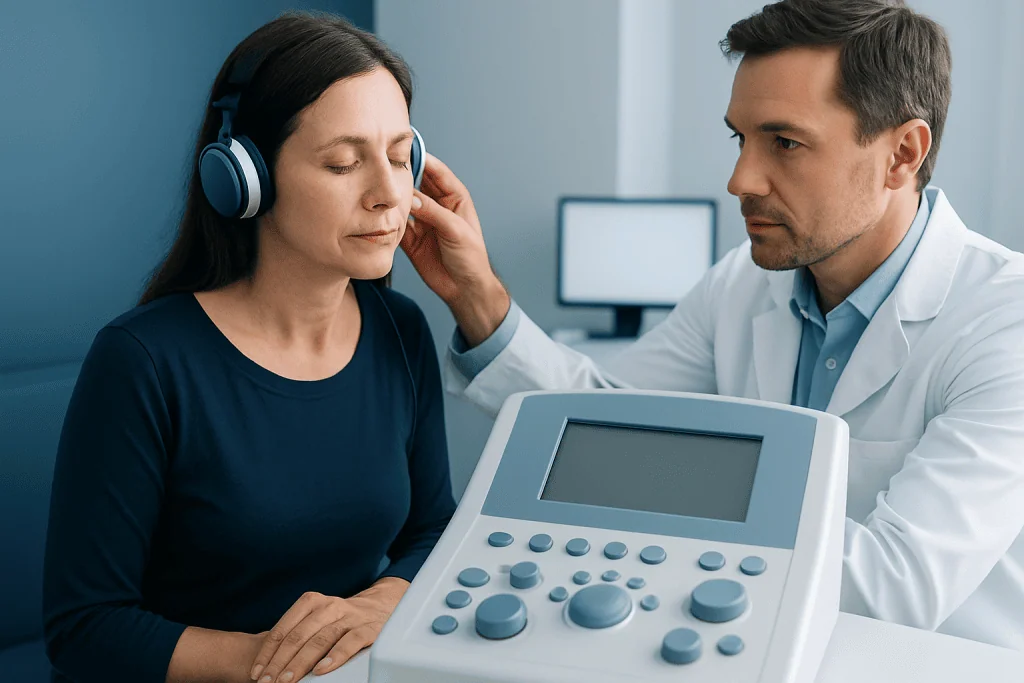
An ear, nose, and throat examination may identify wax, infection, fluid, eardrum changes, or other visible concerns. A hearing assessment, often called audiometry, is commonly recommended when tinnitus is persistent, affects one ear, follows noise exposure, or occurs with hearing concerns. This test measures hearing across different pitches and can help identify patterns that may be linked with tinnitus.
Imaging or additional blood-flow tests are not needed for everyone with tinnitus. They may be considered when symptoms are one-sided, pulsatile, associated with neurological symptoms, or accompanied by other concerning findings. The aim is to investigate selectively and avoid unnecessary testing while ensuring important causes are not missed.
What to do after tinnitus has stopped
If tinnitus has gone away and there are no other symptoms, it is reasonable to protect hearing and observe for recurrence. Avoid further loud noise exposure for a period, use properly fitted hearing protection in noisy environments, and keep headphone volume at a comfortable level. Giving the auditory system time to recover may be particularly important after a loud event.
Supportive habits can also reduce the chance that tinnitus becomes intrusive again. Regular sleep, hydration, physical activity, stress-management practices, and limiting personal triggers may help some people. Triggers vary considerably, so a brief symptom diary can be more useful than making broad restrictions that are difficult to maintain.
If the sound returns, avoid repeatedly checking for it in complete silence. Low-level neutral background sound, such as a fan, soft music, or nature sounds, may make tinnitus less noticeable, especially at bedtime. These approaches do not cure every form of tinnitus, but they can reduce distress while a person seeks appropriate care.
For tinnitus that persists or affects sleep, concentration, or wellbeing, clinicians may recommend hearing evaluation, sound-based strategies, counseling approaches, or management of related hearing difficulties. Hearing aids can be helpful for selected people with both hearing loss and tinnitus by improving access to external sounds.
When to seek medical care
Medical care is recommended when tinnitus is new and persistent, repeatedly returns, affects daily life, occurs mainly in one ear, or is accompanied by noticeable hearing difficulty. A primary care clinician, audiologist, or ear, nose, and throat specialist can determine whether an ear examination and hearing test are appropriate.
Urgent assessment is important if tinnitus occurs with sudden hearing loss, new severe dizziness or loss of balance, weakness or numbness of the face or body, severe headache, confusion, or symptoms after a significant head injury. Sudden hearing loss can require time-sensitive treatment, so it should not be managed by waiting to see whether it improves.
A pulsing, heartbeat-like sound in the ear also deserves prompt medical review, particularly if it is new or persistent. Similarly, ear pain, discharge, fever, or a sensation of significant blockage should be checked, as these symptoms may indicate an ear condition requiring treatment.
Living confidently with changing tinnitus
A change in tinnitus can feel confusing, especially after weeks or months of noticing a sound. When it stops, many people feel relieved but remain concerned that it will return. Focusing on practical hearing protection, healthy sleep, and timely assessment of new symptoms can provide a more useful sense of control than constantly monitoring the ears.
If tinnitus returns, it is helpful to remember that a flare does not automatically mean permanent worsening. Short-term increases are common after stress, illness, fatigue, or loud sound exposure. Still, a change that is abrupt, one-sided, pulsatile, or linked with hearing or balance symptoms should be discussed with a qualified clinician.
Acibadem International’s multidisciplinary specialists and JCI-accredited hospitals diagnose and treat ear and hearing concerns for international patients, including tinnitus that needs further evaluation. The appropriate care plan depends on the person’s symptoms, ear examination, hearing results, and overall health.
Frequently asked questions
Is it good if my tinnitus suddenly stopped?
In most cases, it is reassuring when tinnitus stops, especially if there are no new hearing, balance, or ear symptoms. It may mean a temporary trigger has improved or that the sound has become less noticeable. If it stopped after sudden hearing loss or occurs with other concerning symptoms, medical assessment is still important.
Can tinnitus disappear permanently?
Yes, tinnitus can disappear permanently for some people, particularly when it is linked to a temporary cause such as recent loud noise exposure, earwax, or an ear infection. For others, it may fluctuate over time. Persistent tinnitus can often be managed effectively even when it does not fully disappear.
Why did my tinnitus stop after a few days?
Brief tinnitus may settle as the auditory system recovers from noise exposure, stress, poor sleep, congestion, or another temporary influence. It is not always possible to identify one clear reason. If episodes become frequent, last longer, or occur with hearing changes, a hearing evaluation can be useful.
Can tinnitus come back after it stops?
Yes, tinnitus can return after a quiet period. Recurrence may follow loud sound exposure, illness, fatigue, stress, or changes in hearing. Protecting hearing and discussing repeated symptoms with a clinician can help identify manageable contributing factors.
Should I have my hearing checked if tinnitus has gone away?
A hearing check may be sensible if tinnitus was persistent, occurred in one ear, followed loud noise, or came with difficulty hearing speech or sounds. It is particularly important if there was a sudden drop in hearing. Even if tinnitus has resolved, testing can establish whether hearing is normal or whether follow-up is needed.
What symptoms with tinnitus need urgent attention?
Urgent medical attention is needed for tinnitus with sudden hearing loss, severe vertigo, neurological symptoms such as weakness or facial drooping, or after major head trauma. A new heartbeat-like sound in the ear should also be evaluated promptly. These symptoms do not always indicate a serious cause, but they require timely assessment.
References
- National Institute on Deafness and Other Communication Disorders
- American Academy of Otolaryngology–Head and Neck Surgery
- National Health Service
- Mayo Clinic
- World Health Organization
This article is for general information only and is not a substitute for professional medical advice. Please consult a qualified doctor about your individual situation.
Explore treatments in Turkey — costs, top hospitals & a free quote
JCI-accredited · board-certified surgeons · reply within 24h
Add us as a Preferred Source to see more of our trusted health content across Google Search, AI Overviews and Discover.

More from the Health Library

Parenteral: An Evidence-Based Guide for Patients

Cochlea Function: An Evidence-Based Guide for Patients

Skeletal System: An Evidence-Based Guide for Patients

Melaleuca Oil for Pimples: What Patients Need to Know

Low Acid Coffee: What Patients Need to Know

Blood Thinners and Alcohol: An Evidence-Based Guide for Patients
Otorhinolaryngology Specialists at Acibadem

Dr. Esin Özlem Atmış
Otorhinolaryngology
Prof. Dr. Ferhan Öz
Otorhinolaryngology
Dr. Feyha Kahya Aydoğan
Otorhinolaryngology
Assoc. Prof. Dr. Filiz Gülustan
Ear Nose & Throat