Acl surgery in Turkey: Hospitals, Safety & What to Expect

ACL reconstruction replaces a torn ligament with a graft to help restore knee stability. Not every ACL tear requires surgery; activity goals, knee instability, associated injuries, and overall health guide the decision.
Key Takeaways
- ACL reconstruction replaces a torn ligament with a graft to help restore knee stability.
- Not every ACL tear requires surgery; activity goals, knee instability, associated injuries, and overall health guide the decision.
- The operation is usually performed with minimally invasive arthroscopic techniques, but recovery takes months rather than weeks.
- Rehabilitation is essential to restoring movement, strength, balance, and confidence in the knee.
- International patients benefit from planning travel, accommodation, records transfer, and follow-up care before surgery.
ACL surgery in Turkey typically involves arthroscopic reconstruction of a torn anterior cruciate ligament, supported by preoperative assessment, hospital-based care, and a long rehabilitation program. Safety depends less on location alone and more on appropriate candidacy, experienced orthopedic teams, infection-control standards, clear follow-up arrangements, and commitment to rehabilitation.
ACL Surgery in Turkey: An Overview
ACL surgery in Turkey can be a suitable option for people with a torn anterior cruciate ligament who need knee stabilization and can access an appropriately accredited hospital, an experienced orthopedic team, and a structured rehabilitation plan. The operation is generally called ACL reconstruction because the injured ligament is usually replaced with a tendon graft rather than stitched back together.
The ACL is one of the main ligaments inside the knee. It helps control forward movement and rotation of the shinbone relative to the thighbone. A tear may occur during pivoting sports, sudden changes of direction, awkward landings, or knee trauma. Some people regain good day-to-day function without surgery, while others continue to experience instability that limits sport, work, or ordinary activities.
For international patients, a safe treatment journey includes more than the operation itself. It should include review of imaging and medical history, a discussion of graft choices and expected outcomes, anesthesia assessment, discharge planning, accommodation appropriate for early mobility needs, and a plan for physiotherapy after returning home. ACL surgery and reconstruction care can provide a useful starting point for understanding the procedure pathway.
Who May Benefit From ACL Reconstruction?
An orthopedic surgeon considers surgery individually. ACL reconstruction may be recommended when the knee repeatedly gives way, when a person wishes to return to pivoting or contact sports, or when the tear occurs alongside injuries to the meniscus, cartilage, or other knee ligaments. Persistent instability can increase the chance of further damage during activity, although surgery does not eliminate every future knee risk.
People with lower activity demands, stable knees, or medical reasons to avoid an operation may choose non-surgical care. This often includes supervised physiotherapy, strength and balance training, activity adjustment, and sometimes a brace. A careful examination helps determine whether the knee can function well without reconstruction.
Before recommending surgery, the clinical team reviews the person’s age, activity goals, occupation, knee symptoms, range of motion, swelling, imaging findings, general health, medications, smoking status, and ability to participate in rehabilitation. Surgery may be delayed until swelling has improved and the knee can fully straighten, as operating on a very stiff knee can complicate recovery.
- Recurrent knee buckling or instability during daily movement or sport
- A desire to return to cutting, turning, jumping, or contact activities
- Combined injuries involving the meniscus, cartilage, or other ligaments
- Failure to meet personal function goals with rehabilitation alone
How ACL Reconstruction Works
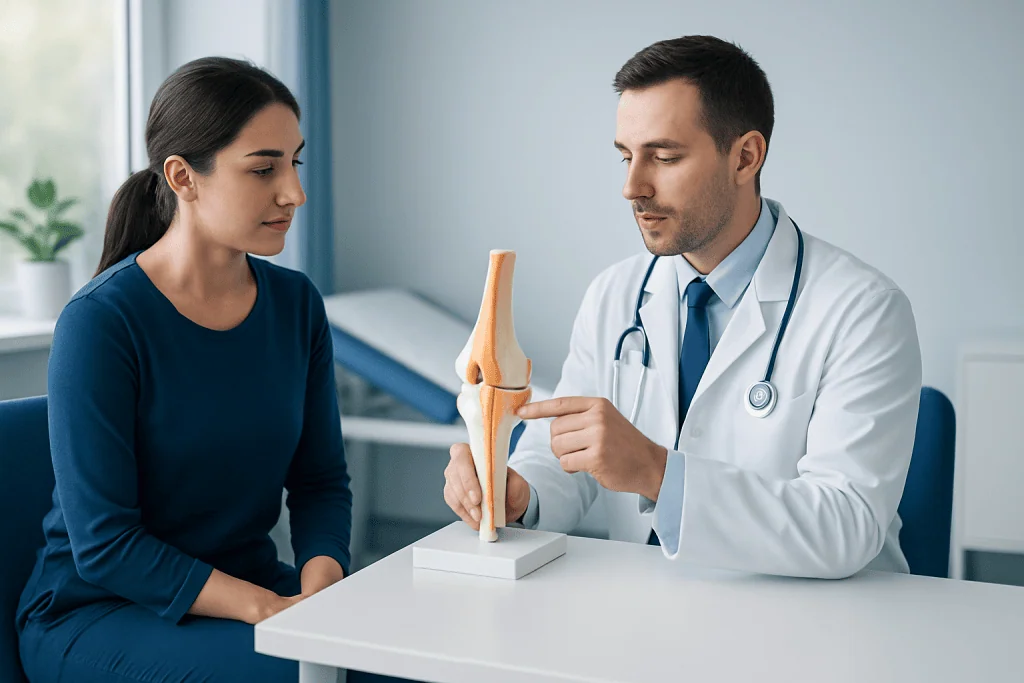
ACL reconstruction is usually performed arthroscopically. This means the surgeon uses a small camera and specialized instruments through several small incisions around the knee. The camera allows the inside of the joint to be assessed, including the torn ACL, menisci, cartilage surfaces, and other structures that may have been injured.
The damaged ACL is replaced with a graft that acts as a scaffold for new ligament-like tissue to develop over time. The graft may come from the patient’s own tendon, such as the hamstring tendon, patellar tendon, or quadriceps tendon. In selected circumstances, donor tissue may be discussed. The most suitable graft depends on age, activity level, anatomy, previous surgery, associated injuries, and the surgeon’s clinical judgment.
Small tunnels are made in the thighbone and shinbone so that the graft can be positioned in the same general path as the original ACL. It is then secured with fixation devices. If a meniscus tear needs repair, it may be treated during the same operation; this can affect weight-bearing restrictions and the rehabilitation schedule.
ACL reconstruction aims to improve mechanical stability and support a return to desired activity when recovery milestones are met. It cannot guarantee return to a particular sport or prevent all later arthritis, pain, or reinjury. The quality of rehabilitation and a gradual, criteria-based return to activity are important parts of the outcome.
What Happens Before, During, and After the Procedure?
Before surgery, patients usually have an orthopedic consultation, physical examination, and knee imaging, often including MRI. The team may request blood tests, anesthesia assessment, and clearance from other specialists when relevant. Patients should provide a complete medication and health history, including allergies, blood-thinning medicines, diabetes, prior blood clots, and previous surgeries.
On the day of surgery, anesthesia is provided so that the patient is asleep or otherwise comfortable and pain-free during the procedure. The operation commonly takes a few hours, though timing varies when other knee structures need treatment. Many patients can leave hospital the same day or after a short stay, depending on their medical needs, pain control, mobility, and travel planning.
Afterward, the knee is dressed and may be supported with a brace depending on the surgical plan. Crutches are commonly needed initially. The care team provides guidance on wound care, pain management, safe movement, exercises, and warning symptoms. Follow-up appointments are used to check healing, remove or review dressings as needed, and adjust rehabilitation.
For people traveling from abroad, it is sensible to arrange accommodation with easy access to elevators, bathroom facilities, and physiotherapy if recommended. Flight timing should be discussed with the surgical team, particularly because mobility is reduced soon after surgery and individual measures may be needed to lower blood-clot risk during travel.
Recovery Timeline and Rehabilitation
Recovery after ACL reconstruction is gradual. Early goals are to control pain and swelling, regain full knee extension, begin safe bending, and activate the thigh muscles. Walking improves in stages, and the use of crutches or a brace depends on the procedure and whether additional repairs, such as meniscus repair, were performed.
During the next weeks and months, physiotherapy progresses toward restoring movement, strength, balance, coordination, and controlled landing mechanics. Rehabilitation should be tailored to the individual rather than based only on calendar dates. A physiotherapist and surgeon may use strength tests, movement assessments, symptoms, and functional tasks to decide when activity can safely advance.
Desk-based work may be possible relatively early for some people, while physically demanding work takes longer. Light exercise is usually reintroduced in phases. Running, jumping, pivoting, and return to sport require more advanced rehabilitation and may take many months. Returning too soon can increase the risk of graft injury or injury to the other knee.
Recovery can be affected by graft type, associated knee injuries, preoperative fitness, adherence to therapy, sleep, nutrition, and overall health. Patients should keep regular contact with their rehabilitation provider, especially after returning home, and share operative records so local clinicians understand the surgical details.
Benefits, Risks, and Safety Considerations
The main potential benefit of ACL reconstruction is improved knee stability. For suitable candidates, it may support return to sport, work, and everyday movement after a well-managed recovery. Treating associated injuries at the same time may also help preserve knee function when clinically appropriate.
Like all surgery, ACL reconstruction has risks. These can include infection, bleeding, blood clots, anesthesia-related complications, wound problems, stiffness, ongoing pain or swelling, numbness near the incision, graft failure, and need for additional treatment. Some people do not regain their previous level of activity despite technically successful surgery.
Hospital safety is supported by thorough assessment, sterile operating practices, qualified anesthesia and surgical teams, clear medication protocols, early movement when appropriate, and prompt follow-up. JCI accreditation is one recognized hospital-quality and patient-safety framework, but patients should also ask practical questions about the surgeon’s experience, rehabilitation support, emergency contact arrangements, and continuity of care after travel.
Acibadem International’s multidisciplinary specialists and JCI-accredited hospitals diagnose and treat ACL injuries for international patients, with care planning that can include orthopedic assessment, surgery, and rehabilitation coordination.
When to Seek Medical Care
A person should seek medical assessment after a knee injury that causes a pop, rapid swelling, inability to continue activity, difficulty bearing weight, locking, or a feeling that the knee is unstable. These symptoms do not always mean an ACL tear, but prompt evaluation can identify ligament, meniscus, bone, or cartilage injuries that need timely care.
Urgent care is important if the knee looks deformed, the foot is cold or numb, there is severe uncontrolled pain, or weight cannot be placed on the leg after significant trauma. After surgery, patients should contact their care team promptly for fever, worsening redness or drainage from the wound, calf pain or swelling, chest pain, shortness of breath, or pain that is not improving as expected.
Anyone considering ACL surgery in another country should have a consultation with a qualified orthopedic specialist before making travel plans. They should also confirm how rehabilitation, records sharing, routine follow-up, and urgent concerns will be managed once they return home.
Frequently asked questions
Is ACL surgery in Turkey safe?
ACL surgery safety depends on the patient’s health, the appropriateness of surgery, the experience of the surgical and anesthesia teams, hospital standards, and rehabilitation quality. Patients should choose a properly accredited hospital, ask about follow-up arrangements, and ensure they have a clear plan for care after returning home.
Does every ACL tear need surgery?
No. Some people can manage an ACL tear with rehabilitation and activity modification, particularly if their knee remains stable and they do not need to return to pivoting sports. Surgery may be considered when instability persists, activity goals require a stable knee, or other structures are injured.
How long does ACL reconstruction recovery take?
Initial recovery occurs over the first several weeks, but full rehabilitation commonly takes many months. Return to running, jumping, pivoting, and sport is based on healing, strength, movement control, and functional testing rather than a fixed date alone.
What type of graft is used for ACL reconstruction?
Common grafts use tendon tissue from the patient, often from the hamstring, patellar tendon, or quadriceps tendon. In selected cases, donor tissue may be considered. The surgeon recommends a graft after considering the patient’s age, activity needs, anatomy, and associated injuries.
Can a person fly after ACL surgery?
Travel timing should be decided with the surgical team because early mobility is limited and long flights can increase concerns about blood clots. Patients may need time for wound checks, early rehabilitation, and safe walking before flying, along with individualized travel precautions.
What should international patients arrange before ACL surgery?
They should arrange transfer of medical records and imaging, clarify the surgical and rehabilitation plan, and discuss accommodation, local mobility, interpreter needs if applicable, and follow-up after returning home. It is also helpful to identify a physiotherapist near home before traveling.
References
- American Academy of Orthopaedic Surgeons
- National Institute for Health and Care Excellence
- OrthoInfo by the American Academy of Orthopaedic Surgeons
- World Health Organization
- The International Society of Arthroscopy, Knee Surgery and Orthopaedic Sports Medicine
This article is for general information only and is not a substitute for professional medical advice. Please consult a qualified doctor about your individual situation.
Joint and spine care in Turkey — expert assessment & treatment
JCI-accredited · board-certified surgeons · reply within 24h
Add us as a Preferred Source to see more of our trusted health content across Google Search, AI Overviews and Discover.