Meniscus tear surgery in Turkey: Hospitals, Safety & What to Expect

Not every meniscus tear needs surgery; treatment depends on the tear pattern, symptoms, knee stability, age, activity needs, and joint health. Arthroscopy uses small incisions and a camera to repair a suitable meniscus tear or remove only the unstable damaged portion when necessary.
Key Takeaways
- Not every meniscus tear needs surgery; treatment depends on the tear pattern, symptoms, knee stability, age, activity needs, and joint health.
- Arthroscopy uses small incisions and a camera to repair a suitable meniscus tear or remove only the unstable damaged portion when necessary.
- Meniscus repair generally protects more natural knee tissue but usually requires a longer period of restricted weight-bearing than partial meniscectomy.
- Rehabilitation is an essential part of recovery and helps restore knee movement, strength, balance, and confidence.
- Patients travelling for care should discuss imaging review, treatment planning, accommodation, follow-up, and rehabilitation before arranging travel.
Meniscus tear surgery in Turkey is usually performed through minimally invasive knee arthroscopy when symptoms persist despite appropriate non-surgical care or when the tear is unlikely to heal on its own. A safe, well-planned experience depends on an individualized diagnosis, an experienced orthopedic team, clear rehabilitation planning, and practical travel support.
Meniscus Tear Surgery in Turkey: An Overview
Meniscus tear surgery in Turkey is commonly considered for people with knee pain, catching, locking, swelling, or reduced function caused by a torn meniscus. The meniscus is a pair of C-shaped cartilage structures that cushion the knee, distribute load across the joint, and contribute to stability. Surgery is not automatically needed after a tear is found on an MRI scan; the decision should be based on symptoms, examination findings, the type of tear, and the condition of the rest of the knee.
When surgery is appropriate, it is usually performed as knee arthroscopy. This minimally invasive procedure allows an orthopedic surgeon to inspect the joint using a small camera and treat the tear through additional small incisions. Depending on the injury, the surgeon may repair the meniscus with sutures or remove and smooth only the unstable torn fragment, known as a partial meniscectomy.
For an overview of indications, techniques, and recovery considerations, patients can review the dedicated meniscus tear surgery treatment page. A consultation remains important because two people with apparently similar MRI findings may need different care plans.
How a Meniscus Tear Is Assessed Before Surgery
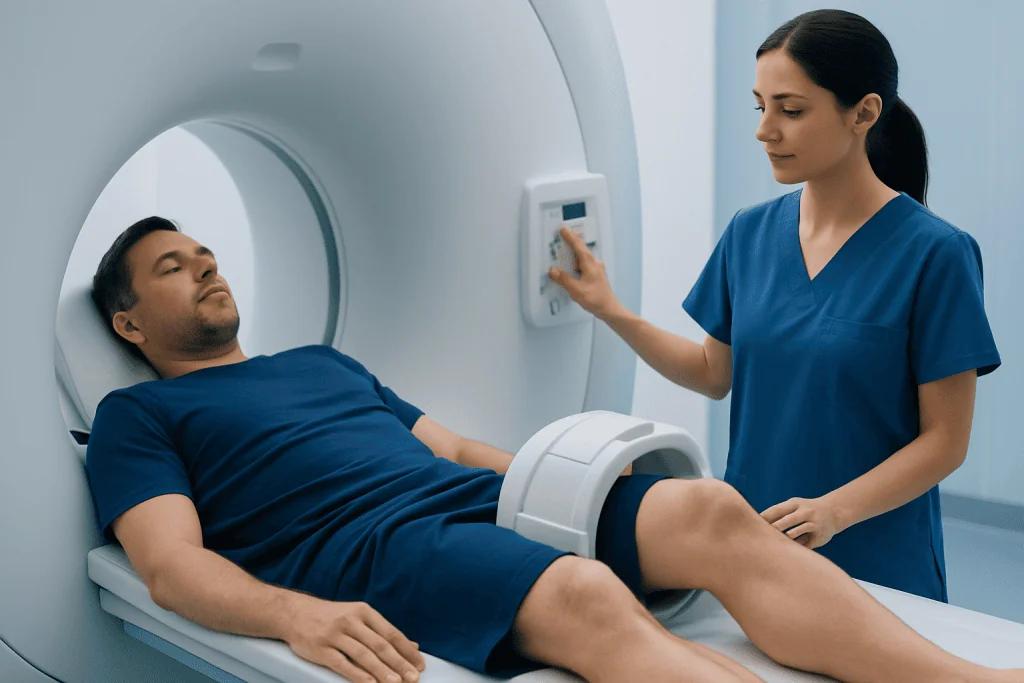
Assessment starts with a detailed discussion of how the knee was injured, the location of pain, swelling patterns, mechanical symptoms, sporting or work demands, and previous knee problems. The orthopedic specialist examines knee movement, tenderness, stability, walking pattern, and signs that another structure, such as a ligament or cartilage surface, may also be affected.
X-rays may be used to assess bone alignment and arthritis-related changes. Magnetic resonance imaging, or MRI, is often helpful for showing the tear pattern and identifying associated injuries. However, MRI results are interpreted alongside symptoms and physical examination rather than used alone to decide on surgery.
A torn meniscus may occur suddenly during a twist, pivot, squat, or contact injury. It can also develop gradually as tissue becomes less resilient over time. Degenerative tears are common in adults with early osteoarthritis, and surgery may be less helpful when pain is mainly related to widespread joint degeneration rather than an unstable meniscal fragment.
Before travelling, patients can usually share imaging reports and relevant medical records for preliminary review. A final decision about surgery should follow an in-person clinical assessment, confirmation of the diagnosis, and discussion of realistic recovery goals.
Who May Be a Candidate for Surgery

Meniscus surgery may be recommended when a tear causes persistent symptoms despite a suitable period of conservative treatment, such as activity adjustment, physiotherapy, pain management, and rehabilitation exercises. It may also be considered sooner when the knee is truly locked, when a displaced tear prevents normal movement, or when a repairable tear occurs alongside an injury such as an anterior cruciate ligament tear.
Meniscus repair is often preferred when the tear is in an area with a better blood supply, such as the outer portion of the meniscus, and when the tissue is healthy enough to hold stitches. Younger or highly active people may be good candidates, but age alone does not determine whether repair is possible. Tear shape, location, duration, tissue quality, and associated knee injuries are all relevant.
Partial meniscectomy may be appropriate when a torn segment is unstable and cannot be repaired. The aim is to preserve as much functioning meniscus as possible because the meniscus helps protect the cartilage surfaces of the knee. Removing the entire meniscus is rarely necessary and is generally avoided where possible.
Some people can manage well without surgery. This can be particularly true when symptoms are improving, there is no locking, knee movement is preserved, and the tear is associated with degenerative joint changes. An orthopedic specialist can explain the likely benefits and limitations of each option.
What Happens During Arthroscopic Meniscus Surgery
Arthroscopic surgery is commonly performed under general anesthesia, although the anesthesia plan is tailored to the individual. Before the procedure, the surgical team confirms the treatment plan, reviews medications and allergies, and takes steps to reduce infection and blood-clot risks. Patients are normally asked to follow preoperative instructions about eating, drinking, and medicines.
During surgery, the surgeon makes small incisions around the knee and introduces an arthroscope, a slim camera that displays the inside of the joint on a monitor. Sterile fluid is used to improve visibility. The surgeon examines the meniscus, cartilage, ligaments, and other joint structures before deciding the safest tissue-preserving treatment.
For a repair, specialized instruments place sutures or fixation devices across the tear so the tissue can heal. For partial meniscectomy, the surgeon carefully trims unstable damaged tissue while preserving the stable rim of the meniscus. Any treatment of associated injuries is discussed in advance when possible, although the full extent of a tear can sometimes only be confirmed during arthroscopy.
Most isolated arthroscopic procedures are day surgery or involve a short hospital stay, depending on medical needs, anesthesia recovery, and travel arrangements. The knee is covered with a dressing, and patients receive individualized guidance on walking aids, pain control, wound care, exercises, and follow-up.
Benefits, Limitations and Possible Risks
The potential benefit of surgery is relief of symptoms caused by an unstable or repairable tear, including catching, locking, and pain with movement. Meniscus repair aims to preserve the tissue’s cushioning function, which may support long-term knee health. Partial meniscectomy can allow earlier recovery when repair is not feasible, but it removes some meniscal tissue and is therefore performed as conservatively as possible.
Results vary. Pain may not fully resolve if it is caused by arthritis, cartilage damage, poor alignment, or another knee condition rather than the meniscus tear alone. A repaired meniscus also needs time to heal and can fail to heal completely, occasionally requiring further assessment or treatment.
As with any operation, arthroscopy carries potential risks. These include infection, bleeding, blood clots, anesthesia-related complications, stiffness, persistent swelling, nerve or blood-vessel injury, and ongoing pain. These complications are uncommon, but patients should understand their individual risk factors, including smoking, diabetes, circulation problems, previous blood clots, and certain medications.
Clear communication with the surgical and anesthesia teams is important. Patients should report all health conditions, supplements, prescribed medicines, and previous reactions to anesthesia. The clinician can explain how risks are reduced and what symptoms require urgent attention after discharge.
Recovery Timeline, Rehabilitation and Travel Planning
Recovery depends mainly on whether the meniscus is repaired or partially removed, as well as the presence of other knee injuries. After a partial meniscectomy, many people begin gentle walking soon after surgery as comfort allows and may return to desk-based activities relatively quickly. Swelling, soreness, and temporary weakness are common during the early healing period.
After meniscus repair, recovery is typically more protective because the repaired tissue needs time to heal. The surgeon may recommend crutches, a brace, limits on bending, or temporary restrictions on weight-bearing. Return to running, pivoting sports, deep squatting, and physically demanding work is gradual and should be based on healing, strength, movement control, and the rehabilitation team’s advice.
Physiotherapy commonly focuses on reducing swelling, restoring safe knee motion, activating the thigh muscles, improving balance, and progressively rebuilding strength. Following the exercise programme consistently is important. Returning to sport too early can place stress on a healing repair or lead to recurrent symptoms.
International patients should plan for enough time in the country for preoperative review, surgery, early postoperative assessment, and clearance for travel. Accommodation needs may include an accessible room, support with luggage, and proximity to appointments. Acibadem International’s multidisciplinary specialists and JCI-accredited hospitals can coordinate diagnosis and treatment planning for international patients, including practical care-pathway arrangements.
When to Seek Medical Care
Medical assessment is advisable after a knee twisting injury followed by significant pain, swelling, difficulty bearing weight, repeated catching, or a feeling that the knee gives way. A prompt orthopedic review is particularly important if the knee becomes locked and cannot fully straighten or bend, as this can indicate a displaced meniscal fragment or another injury requiring timely assessment.
After surgery, patients should contact their surgical team urgently for fever, increasing redness or drainage from the wounds, severe or worsening pain not controlled by the prescribed plan, marked calf swelling, chest pain, shortness of breath, or new numbness or weakness. These symptoms do not always indicate a serious complication, but they should not be ignored.
For less urgent concerns, such as ongoing swelling, stiffness, uncertainty about exercises, or slow progress with walking, patients should contact their orthopedic or physiotherapy team. Early advice can often help adjust rehabilitation safely and address concerns before they interfere with recovery.
Frequently asked questions
Is meniscus tear surgery in Turkey safe?
Safety depends on appropriate diagnosis, experienced orthopedic and anesthesia teams, infection-prevention standards, and a clear postoperative plan. Patients should ask about the hospital’s accreditation, surgeon credentials, anesthesia assessment, rehabilitation arrangements, and how follow-up will be managed after travel. No surgery is risk-free, so individual medical risks should be discussed before treatment.
How long does meniscus surgery take?
An isolated arthroscopic meniscus procedure often takes less than an hour, although the overall time in the hospital is longer because of preparation, anesthesia, and recovery monitoring. Procedures can take longer if there are additional knee injuries or treatments. The surgeon can provide a more accurate estimate after reviewing the case.
What is the difference between meniscus repair and meniscectomy?
Meniscus repair uses sutures or fixation devices to hold a suitable tear together while it heals. Partial meniscectomy removes only the unstable torn part when repair is not possible. Repair usually has a longer recovery period but preserves more meniscal tissue.
How soon can a person walk after meniscus surgery?
Many people can walk with support soon after a partial meniscectomy, depending on pain, swelling, and the surgeon’s instructions. After meniscus repair, crutches and restricted weight-bearing may be needed for a longer period to protect the repair. The exact plan varies by tear type and surgical technique.
How long should an international patient stay in Turkey after surgery?
The appropriate stay depends on the procedure, health status, early recovery, and the surgeon’s advice about flying. Patients generally need time for a postoperative check and to confirm that pain, mobility, wound care, and blood-clot prevention plans are well established. Travel timing should be agreed with the treating team rather than decided independently.
Can a meniscus tear heal without surgery?
Some tears can be managed successfully without surgery, especially when symptoms are mild or improving and the knee is not locked. Tears in the outer meniscus have a better blood supply and may have greater healing potential than tears in the inner portion. A clinician can recommend observation, physiotherapy, or surgery based on the full clinical picture.
References
- American Academy of Orthopaedic Surgeons
- National Institute for Health and Care Excellence
- OrthoInfo – American Academy of Orthopaedic Surgeons
- Mayo Clinic
- World Health Organization
This article is for general information only and is not a substitute for professional medical advice. Please consult a qualified doctor about your individual situation.
Joint and spine care in Turkey — expert assessment & treatment
JCI-accredited · board-certified surgeons · reply within 24h
Add us as a Preferred Source to see more of our trusted health content across Google Search, AI Overviews and Discover.