Rotator cuff surgery in Turkey: Hospitals, Safety & What to Expect

Rotator cuff repair is often performed arthroscopically through small incisions, although open techniques are sometimes needed. Surgery is not required for every tear; symptoms, tear pattern, function, health status and treatment goals guide the decision.
Key Takeaways
- Rotator cuff repair is often performed arthroscopically through small incisions, although open techniques are sometimes needed.
- Surgery is not required for every tear; symptoms, tear pattern, function, health status and treatment goals guide the decision.
- Rehabilitation is essential because repaired tendons need time and progressively guided movement to heal.
- International patients should plan for pre-operative assessment, a suitable post-operative stay, follow-up arrangements and safe travel home.
- All surgery carries risks, including stiffness, infection, blood clots and a recurrent tendon tear, but these can be discussed and managed with the care team.
Rotator cuff surgery in Turkey is typically considered when a shoulder tendon tear causes persistent pain, weakness or loss of function despite appropriate non-surgical care. A safe treatment plan includes specialist assessment, imaging, an individualised surgical approach, rehabilitation and practical planning for recovery before travel.
Overview: rotator cuff surgery in Turkey
Rotator cuff surgery in Turkey can be an option for people with a painful or function-limiting tendon tear who have been assessed by an orthopaedic shoulder specialist. The operation aims to repair torn tendons around the shoulder, reduce pain and improve strength or day-to-day function, while rehabilitation supports healing over the following months.
For international patients, choosing care involves more than selecting a surgical technique. It is important to understand the surgeon’s assessment, hospital standards, anaesthesia planning, imaging review, expected length of stay, rehabilitation needs and arrangements for follow-up after returning home. A reputable programme should give clear information in a language the patient understands and allow time for informed decision-making.
The rotator cuff is a group of four muscles and tendons that helps lift, rotate and stabilise the arm. Tears may occur suddenly after an injury or develop gradually with age-related tendon changes and repeated overhead activity. More background on symptoms and tear patterns is available in rotator cuff tear information.
Who may benefit from surgery?
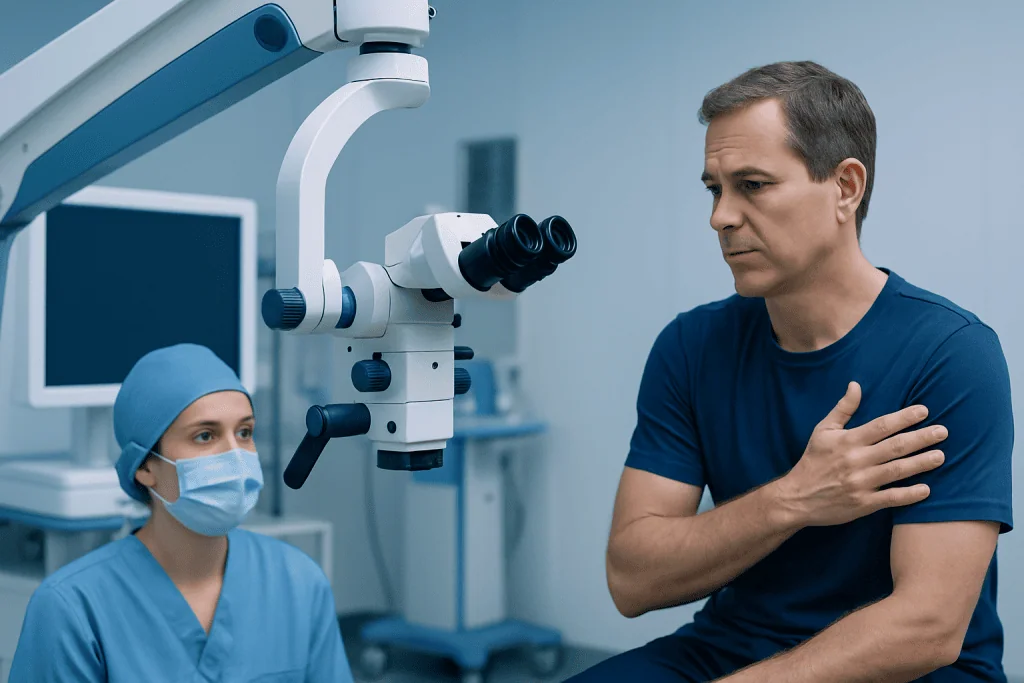
Rotator cuff repair may be considered when pain, weakness or reduced shoulder use continues despite a suitable period of non-surgical treatment. This may include activity modification, pain management, physiotherapy and, in selected cases, an injection. A repair may also be recommended sooner after an acute traumatic tear, particularly when there is substantial weakness or loss of function.
Suitability is individual. The specialist considers the size and location of the tear, tendon quality, muscle changes, shoulder stiffness, symptoms, work or activity requirements, age, general health and personal goals. Imaging such as ultrasound or MRI helps show the tear, but scan results alone do not determine whether surgery is necessary.
Some tears can be managed without surgery, especially if pain is manageable and shoulder function remains acceptable. Conversely, a large tear, a tear that is retracting, or ongoing weakness despite rehabilitation may make surgical repair more appropriate. The decision should be made jointly after the expected benefits and limitations have been discussed.
How rotator cuff repair is performed
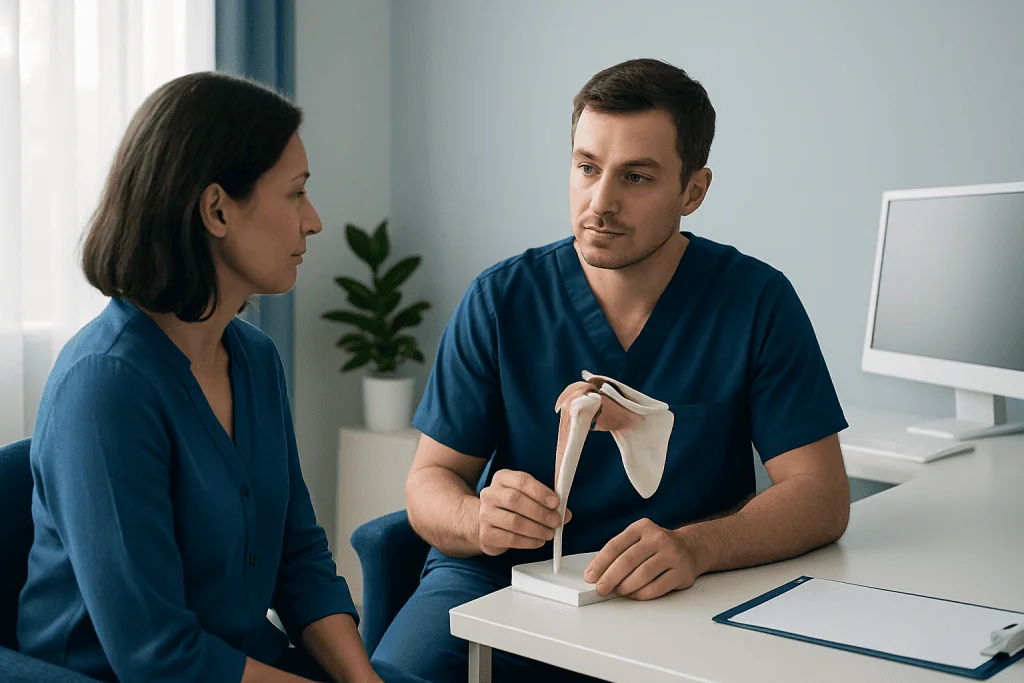
Most repairs are performed with shoulder arthroscopy. Under general anaesthesia, the surgeon makes several small incisions and inserts a narrow camera and specialised instruments into the joint. The camera provides a detailed view of the shoulder structures and helps guide treatment.
Damaged or inflamed tissue may be cleaned away, and the torn tendon is prepared and reattached to the upper arm bone with small anchors and strong sutures. Depending on the findings, the surgeon may also treat related problems, such as inflammation in the bursa or a biceps tendon condition. In some complex, large or revision tears, a mini-open or open technique may be recommended.
The exact procedure depends on the tear and shoulder anatomy. The main rotator cuff surgery treatment page explains the procedure in more detail and can help patients prepare questions for their consultation.
- Before surgery: medical history, examination, imaging review, anaesthetic assessment and medication guidance.
- During surgery: anaesthesia, arthroscopic assessment, tendon repair and wound closure.
- After surgery: recovery-room monitoring, pain-control planning, sling fitting and instructions for home or hotel recovery.
Safety, hospital standards and travel planning
Safety begins with an appropriate clinical assessment and continues through anaesthesia, infection prevention, pain control, physiotherapy and follow-up. Patients should ask whether the hospital follows recognised quality and safety standards, how complications are managed, and who to contact after discharge. JCI accreditation is one internationally recognised framework for hospital quality and patient-safety processes, although it does not replace discussion of an individual patient’s surgical risks.
Before travelling, patients should share relevant medical records, imaging, medication lists, allergies and details of previous shoulder treatments. The final surgical plan may change after an in-person examination or further imaging. Patients should also discuss conditions such as diabetes, heart or lung disease, sleep apnoea, smoking and blood-thinning medication, as these can affect preparation and recovery.
Accommodation should be planned near the hospital for the early post-operative period, with a responsible adult available to assist after anaesthesia. The shoulder will usually be protected in a sling, making luggage handling, dressing, bathing and transport more difficult. Travel home should only be arranged after the treating team confirms that it is appropriate, taking into account comfort, wound care, clot-prevention advice and access to follow-up at home.
Benefits, risks and realistic expectations
The potential benefits of surgery include improved pain control, better shoulder strength and increased ability to perform daily activities. Repair may also help restore function after a traumatic tear. However, improvement is gradual, and the outcome depends on factors such as tear size, tendon and muscle quality, adherence to rehabilitation, smoking status and any other shoulder conditions.
Possible complications include infection, bleeding, reactions to anaesthesia, nerve or blood-vessel injury, shoulder stiffness, persistent pain, blood clots and failure of the tendon to heal or a repeat tear. A repaired tendon is particularly vulnerable during the early healing period, which is why sling use and physiotherapy instructions matter.
Not every patient regains full strength or the same level of overhead activity as before the injury. The surgeon can explain what is realistic for the individual tear and whether alternatives, such as continued rehabilitation, are reasonable. Seeking a second opinion may be useful when the diagnosis, recommended procedure or recovery expectations are unclear.
Recovery timeline and rehabilitation
Recovery after rotator cuff repair takes months rather than weeks. The shoulder is commonly supported in a sling for several weeks, although the exact duration depends on the repair. In the early phase, the priority is protecting the tendon repair, controlling discomfort and maintaining safe movement in the hand, wrist and elbow.
Physiotherapy usually progresses in stages. Early exercises may focus on gentle passive movement, where the therapist or unaffected arm helps move the shoulder. Active movement and strengthening are introduced later, once healing has progressed sufficiently. The treating surgeon and physiotherapist set the schedule because advancing too quickly can place stress on the repair.
Many people gradually return to light daily tasks during the first few weeks, while desk-based work may be possible earlier or later depending on pain, the dominant arm and work demands. Driving, lifting, manual work and sports require specific medical clearance. Full recovery of comfort, mobility and strength can take several months and sometimes longer for larger tears.
International patients should leave enough time for the immediate post-operative review and early physiotherapy instruction before travelling. They should also arrange a written surgical summary, rehabilitation plan, imaging where relevant and contact details for their care team to share with a clinician or physiotherapist at home.
When to seek medical care
Medical assessment is advisable for shoulder pain that does not improve, pain that disrupts sleep, ongoing weakness, loss of movement or difficulty lifting the arm. Prompt review is especially important after a fall, sudden pulling injury or dislocation if the person cannot raise the arm or notices marked weakness.
After surgery, patients should seek urgent medical advice for increasing redness, swelling, drainage or fever; severe or worsening pain not relieved by the prescribed plan; new numbness or colour change in the hand; chest pain; shortness of breath; or one-sided leg swelling. These symptoms do not always indicate a serious complication, but they need timely assessment.
Acibadem International’s multidisciplinary specialists and JCI-accredited hospitals assess and treat shoulder conditions for international patients. A planned consultation can help clarify whether repair, non-surgical care or another approach is appropriate for the patient’s circumstances.
Frequently asked questions
Is rotator cuff surgery in Turkey safe?
Safety depends on the patient’s health, the complexity of the tear, the surgical and anaesthesia team, hospital safety processes and appropriate aftercare. Patients should have a full assessment, understand the plan for follow-up and discuss individual risks before deciding to travel for surgery.
How long should an international patient stay in Turkey after rotator cuff surgery?
The appropriate stay varies according to the procedure, recovery after anaesthesia, wound check requirements and the surgeon’s advice. Patients should avoid arranging return travel too early and should wait for clinical clearance from their treating team.
Is rotator cuff surgery always arthroscopic?
Many rotator cuff repairs are performed arthroscopically using a camera and small incisions. However, some large, complex or repeat tears may require a mini-open or open approach, depending on what offers the most suitable repair.
How painful is recovery after rotator cuff repair?
Discomfort is expected, particularly in the first days and weeks, but the care team provides a pain-management plan tailored to the patient. Pain should gradually improve; severe, escalating or unusual pain should be reported promptly.
When can a person use the arm after rotator cuff surgery?
The arm can usually be used for limited hand, wrist and elbow activities while the shoulder is protected in a sling. Lifting, pushing, pulling and active shoulder movements are restricted initially, with progression guided by the surgeon and physiotherapist.
Can a rotator cuff tear heal without surgery?
Symptoms from some tears can improve with physiotherapy, activity changes and other non-surgical treatment, even though the tendon tear itself may not fully heal. Surgery may be considered when pain or weakness persists, function is significantly affected or the tear has features that make repair more beneficial.
References
- American Academy of Orthopaedic Surgeons
- National Institute of Arthritis and Musculoskeletal and Skin Diseases
- OrthoInfo, American Academy of Orthopaedic Surgeons
- Joint Commission International
This article is for general information only and is not a substitute for professional medical advice. Please consult a qualified doctor about your individual situation.
Rotator Cuff in Turkey — costs, top hospitals & a free quote
JCI-accredited · board-certified surgeons · reply within 24h
Add us as a Preferred Source to see more of our trusted health content across Google Search, AI Overviews and Discover.