Dental implants Risks & Side Effects Explained by Surgeons

Most dental implant side effects, including swelling, bruising and mild discomfort, are temporary and improve during early healing. Important but less common complications include infection, failure of the implant to bond with bone, nerve injury and sinus problems in the upper jaw.
Key Takeaways
- Most dental implant side effects, including swelling, bruising and mild discomfort, are temporary and improve during early healing.
- Important but less common complications include infection, failure of the implant to bond with bone, nerve injury and sinus problems in the upper jaw.
- Smoking, uncontrolled diabetes, untreated gum disease and insufficient bone can increase the likelihood of complications.
- Implant planning commonly uses clinical examination and 3D imaging to assess bone, nerves, sinuses and bite alignment.
- Persistent pain, increasing swelling, fever, pus, numbness or a loose implant should be assessed promptly by a dental professional.
Dental implants are a well-established option for replacing missing teeth, but they involve surgery and can have complications such as pain, swelling, infection, delayed healing, implant failure, or injury to nearby structures. A thorough dental assessment, appropriate technique, and attentive aftercare can help reduce these risks and support a predictable recovery.
Overview: What Are Dental Implants and What Are the Risks?
Dental implants are artificial tooth roots, usually made from titanium or titanium-based materials, placed into the jawbone to support a crown, bridge, or removable denture. They can restore chewing function, appearance and speech after tooth loss. Like any surgical treatment, however, dental implants carry potential risks as well as benefits.
Dental implants risks include short-term effects such as pain, swelling, bruising and minor bleeding, which usually settle as the surgical site heals. Less common complications include infection around the implant, delayed healing, failure of the implant to integrate with the jawbone, nerve irritation or injury, and sinus complications when implants are placed in the upper back jaw.
Risk does not mean that a complication will occur. Careful assessment of oral health, bone quantity, medical history and medications helps the dental team identify factors that may affect safety. For a broader explanation of implant options and planning, patients can review dental implant treatment.
How Dental Implants Work and Who May Be a Candidate
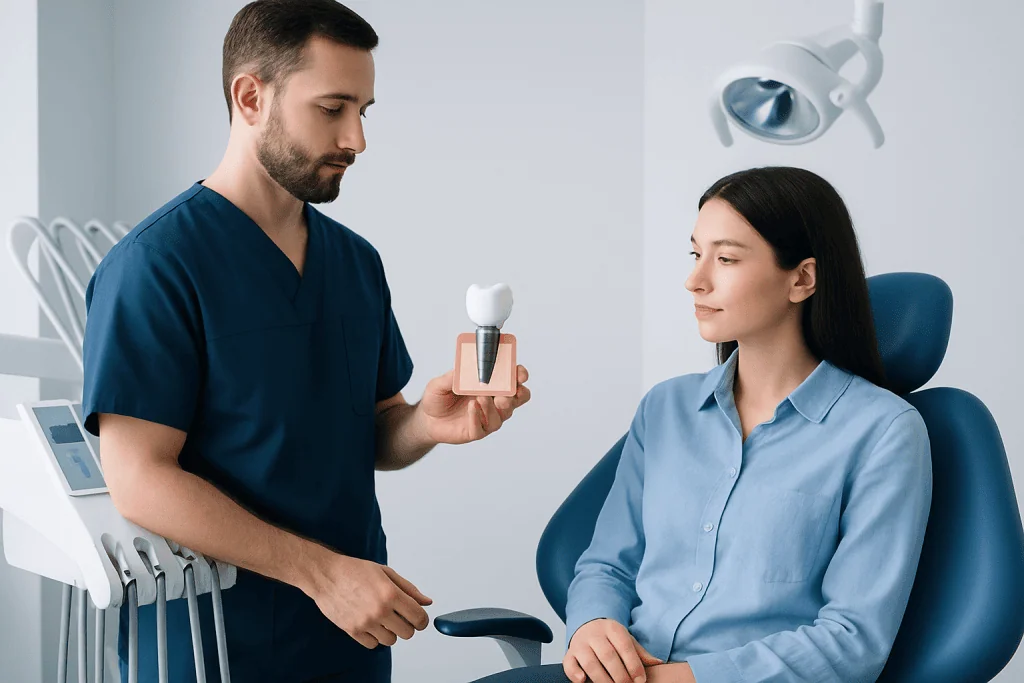
After placement, the implant is intended to heal directly with the surrounding jawbone in a process called osseointegration. Once the implant is stable, a connector called an abutment and a custom-made replacement tooth can be attached. Depending on the treatment plan, this may happen on the day of surgery or after a healing period.
Suitable candidates generally have one or more missing teeth, healthy gums or gum disease that has been treated, and enough jawbone to support an implant. When bone volume is limited, procedures such as bone grafting or a sinus lift may sometimes be considered before or during implant placement. These additional procedures can extend treatment time and introduce their own recovery considerations.
Some health conditions and habits require special attention rather than automatically ruling out treatment. These include smoking or vaping, poorly controlled diabetes, heavy alcohol use, immune-suppressing medicines, previous radiotherapy to the jaw, teeth grinding, and a history of periodontal disease. A dentist or oral and maxillofacial surgeon can assess individual suitability and discuss alternatives when implants are not the best option.
- Good oral hygiene and regular dental care support long-term implant health.
- A stable bite is important because excessive biting forces can damage the implant, crown or surrounding bone.
- Patients should provide a complete list of medicines, allergies and relevant medical treatments before surgery.
What Happens During the Procedure?

Dental implant treatment begins with a consultation, oral examination and imaging. Dental X-rays and, where appropriate, cone-beam computed tomography (CBCT) help the clinician evaluate bone shape and density, the position of nerves in the lower jaw, and the maxillary sinuses in the upper jaw. The plan also considers the final tooth position, gum appearance and how the teeth meet when biting.
During surgery, local anaesthetic is commonly used to numb the area. Sedation may be an option for selected patients, depending on the procedure and clinical setting. The surgeon makes a small opening in the gum, prepares the implant site in the jawbone and places the implant. The gum may then be closed over the implant, or a healing component may remain visible above the gumline.
Healing can take several months, particularly when bone grafting is needed or when the bone requires more time to integrate with the implant. After the implant is stable, the restorative dentist places the abutment and final crown, bridge or denture. The exact sequence varies according to the tooth position, bone condition, gum health and whether immediate loading is clinically appropriate.
Expected Side Effects and Recovery Timeline
It is normal to experience some tenderness, swelling, minor bleeding, bruising or jaw stiffness after implant surgery. Symptoms are often most noticeable in the first few days and then gradually improve. The dental team may recommend pain relief, a temporary soft-food diet, gentle oral hygiene measures and avoiding strenuous activity for a short period.
In the first 24 hours, patients are usually advised not to rinse forcefully, spit repeatedly, smoke, drink alcohol or disturb the surgical area. Cold packs may help limit swelling when used as instructed. Eating soft, nutritious foods and staying hydrated can make early recovery more comfortable while protecting the healing site.
Many people return to routine daily activities quickly, but the jawbone takes longer to heal around the implant. Follow-up visits allow the dental team to check gum healing, implant stability and bite forces. The final restoration may be fitted only after the clinician is satisfied that the implant is ready to support it.
Recovery differs between individuals. More extensive procedures, such as multiple implants, bone grafting or sinus augmentation, may involve more swelling and a longer healing process. Patients should follow their own clinician’s aftercare instructions rather than comparing their recovery with someone else’s.
Potential Dental Implant Complications
Infection can occur shortly after surgery or later around an implant. Early signs can include worsening pain, increasing swelling, persistent bleeding, discharge, an unpleasant taste or fever. A later inflammatory condition around an implant, often called peri-implant disease, may cause bleeding gums, swelling and loss of supporting bone if it is not managed.
Implant failure means that the implant does not integrate adequately with the bone or loses stability after initially functioning well. It may be associated with poor bone healing, infection, smoking, uncontrolled medical conditions, excessive biting pressure or inadequate oral hygiene. A failed implant may need to be removed, and a clinician can discuss whether replacement is appropriate after healing and treatment of contributing factors.
Nerve injury is an uncommon but important risk in the lower jaw, where implants may be near sensory nerves. It can cause numbness, tingling, altered sensation or pain in the lip, chin, tongue or gums. In the upper back jaw, an implant may be close to the sinus, and sinus membrane irritation or perforation can occur. Detailed imaging and careful planning are important safeguards.
Other possible issues include gum recession, aesthetic concerns, loosening or fracture of the crown or connecting parts, bite discomfort, and adjacent tooth problems. These do not always mean that the implant itself has failed, but they should be evaluated so that adjustments or treatment can be provided promptly.
Reducing Risk and Supporting Long-Term Success
Long-term implant health depends on both clinical planning and daily care. Before treatment, active tooth decay and gum disease should be addressed. Patients who smoke are encouraged to discuss stopping, as tobacco exposure can impair healing and is linked with a higher risk of implant-related complications.
After the final tooth replacement is fitted, implants require regular brushing, cleaning between teeth or around the restoration, and professional reviews. The precise cleaning tools depend on the type of crown, bridge or denture. A dentist or dental hygienist can demonstrate a method that cleans effectively without irritating the gums.
People who clench or grind their teeth may benefit from assessment of their bite and, in some cases, a protective night guard. Regular reviews are also useful because inflammation around an implant can be subtle in its early stages. Prompt attention to bleeding gums, persistent bad breath, discomfort or changes in how the teeth bite may help prevent more advanced problems.
Acibadem International’s multidisciplinary dental specialists and JCI-accredited hospitals evaluate and treat dental implant concerns for international patients, including planning, surgical care and follow-up where appropriate.
When to Seek Medical Care
Patients should contact their dental surgeon or dentist if pain, swelling or bleeding is getting worse rather than improving after surgery. They should also seek advice for fever, pus or discharge, a persistent bad taste, difficulty opening the mouth, or symptoms that make eating or drinking difficult.
Urgent dental assessment is appropriate for new or persistent numbness, tingling or burning in the lip, chin or tongue; a feeling that the implant is moving; or a sudden change in the bite. These symptoms may have several causes, but timely review is important.
Emergency medical care may be needed for severe facial swelling, trouble breathing or swallowing, or signs of a serious allergic reaction, such as widespread hives with swelling of the face or throat. These events are uncommon, but they should not be managed at home.
Frequently asked questions
Are dental implants safe?
Dental implants are widely used and are generally considered a safe treatment when they are properly planned and performed by qualified clinicians. As with any surgical procedure, risks exist, and safety depends on factors such as oral health, general health, bone anatomy and aftercare. A personal assessment is needed to understand individual risk.
What is the most common side effect after dental implant surgery?
Temporary swelling, tenderness, mild bleeding and bruising are common after implant placement. These usually improve over the first several days. Pain or swelling that becomes more severe, rather than gradually improving, should be discussed with the dental team.
Can a dental implant fail years later?
Yes. An implant can develop problems years after placement, often due to inflammation around the implant, bone loss, excessive bite forces or changes in general and oral health. Regular dental visits and consistent cleaning help identify concerns early.
Who has a higher risk of dental implant complications?
Risk may be higher in people who smoke, have untreated gum disease, have poorly controlled diabetes, have inadequate bone support or have difficulty maintaining oral hygiene. Teeth grinding and some medicines or medical treatments may also be relevant. These factors should be reviewed before treatment begins.
How can infection around a dental implant be prevented?
Prevention includes treating gum disease before implant placement, following post-operative instructions and maintaining daily cleaning around the implant restoration. Regular professional examinations are important because early inflammation may cause little discomfort. Bleeding, swelling or discharge around an implant should be assessed.
Is numbness after a dental implant normal?
Numbness from local anaesthetic is expected for a limited time after surgery. Numbness, tingling or altered sensation that continues after the anaesthetic should have worn off, or begins later, should be reported promptly to the treating clinician. Early assessment can help determine the cause and appropriate next steps.
References
- American Dental Association
- American Academy of Periodontology
- National Institute of Dental and Craniofacial Research
- Mayo Clinic
- International Team for Implantology
This article is for general information only and is not a substitute for professional medical advice. Please consult a qualified doctor about your individual situation.
Dental Implants in Turkey — costs, top hospitals & a free quote
JCI-accredited · board-certified surgeons · reply within 24h
Add us as a Preferred Source to see more of our trusted health content across Google Search, AI Overviews and Discover.

Dental & Oral Health
Full-scope dental care from implants and aesthetics to oral and maxillofacial surgery.
151 specialists in this unit