

Robotic surgery vs Open surgery: Which Is Right for You?
Robotic surgery is a type of minimally invasive surgery in which the surgeon controls robotic instruments; the robot does not operate independently. Open surgery uses one larger incision and may be preferred when direct access, reconstruction or urgent treatment is needed.
Key Takeaways
- Robotic surgery is a type of minimally invasive surgery in which the surgeon controls robotic instruments; the robot does not operate independently.
- Open surgery uses one larger incision and may be preferred when direct access, reconstruction or urgent treatment is needed.
- For suitable patients, robotic surgery can mean less early pain, reduced blood loss and a shorter hospital stay, but outcomes vary by procedure and person.
- Cancer treatment decisions should prioritize complete and safe treatment of the disease rather than incision size alone.
- Both approaches involve anesthesia, infection, bleeding and blood-clot risks, and some minimally invasive operations need conversion to an open procedure.
- A shared decision with an experienced surgeon is the best way to choose the approach that fits an individual’s needs.
Robotic surgery and open surgery are both established approaches, and the right choice depends on the diagnosis, treatment goal, anatomy, previous operations and the surgical team’s expertise. Robotic surgery may support smaller incisions and a faster early recovery for selected procedures, while open surgery remains the safest or most effective option in many complex situations.
Robotic Surgery vs Open Surgery: The Main Difference
Robotic surgery vs open surgery is not a question of one method being universally better. The appropriate approach is the one that allows the surgeon to treat the condition safely and effectively while considering the person’s anatomy, overall health, prior treatments and recovery needs. For many planned operations, robotic surgery can offer a minimally invasive route; for others, an open operation provides the access and control needed for the best result.
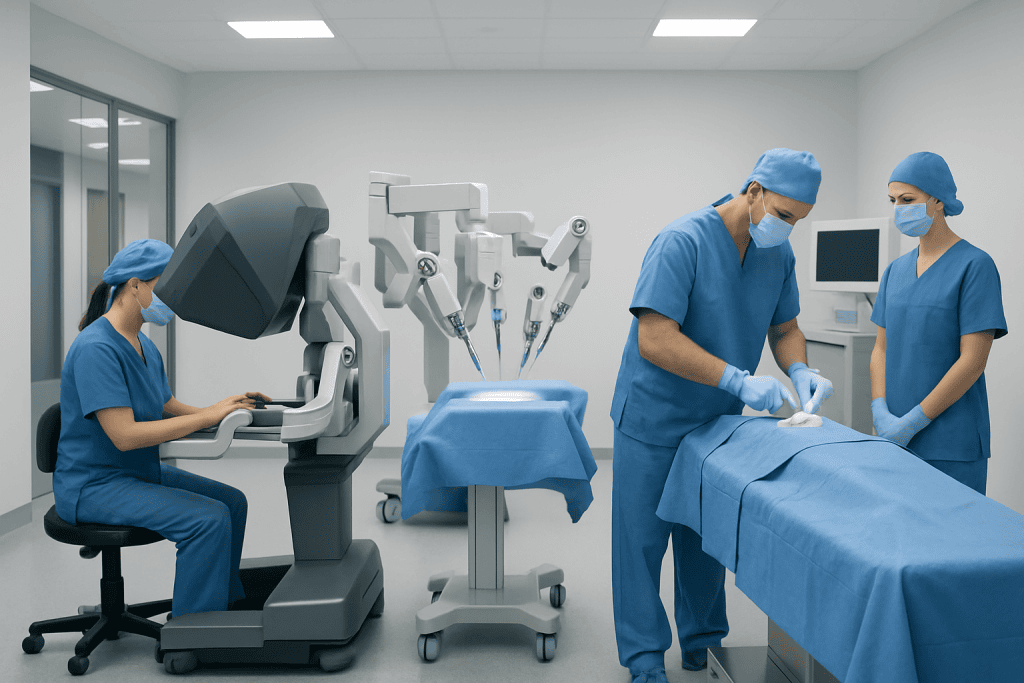
Open surgery involves a surgeon making an incision large enough to see and work directly on the area being treated. Robotic surgery uses a few small incisions, a camera and slender instruments attached to robotic arms. The surgeon sits at a console nearby and directs every movement of the instruments in real time. The system does not make decisions or perform surgery on its own.
Robotic techniques are used in selected urology, gynecology, digestive, thoracic and head and neck procedures, including some operations for cancer. The availability of robotic surgery does not automatically make it the preferred choice. The diagnosis, stage and location of disease, as well as the surgeon’s experience with the specific operation, are more important than the technology alone.
How Each Surgical Approach Works
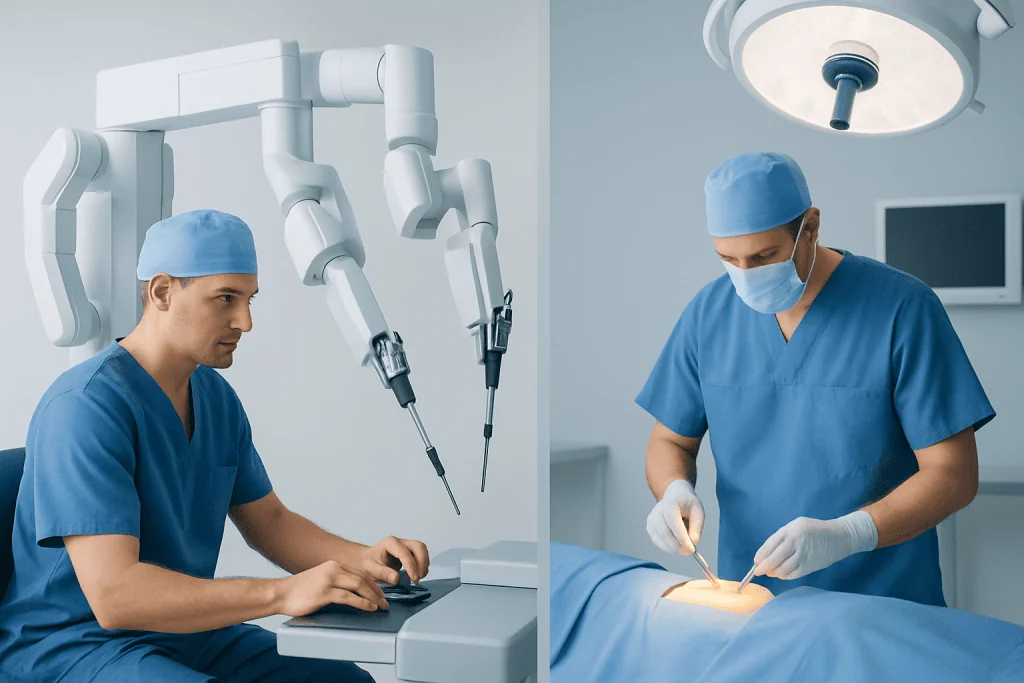
In open surgery, the patient receives anesthesia and the surgeon makes an incision tailored to the body area and operation. This gives direct access to organs, blood vessels and tissues. It can be especially helpful when surgery requires removal of extensive tissue, complex reconstruction, treatment of advanced disease, or rapid control of bleeding.
During robotic surgery, the surgeon usually makes several small openings and introduces a high-definition camera and specialized instruments. The camera can provide a magnified, three-dimensional view, while the instruments can bend and rotate in ways that may be useful in confined spaces. The surgeon controls the system throughout the procedure and the operating-room team remains at the bedside.
Some operations may begin robotically but need to be converted to an open procedure. This is a safety decision rather than a failure. Conversion may be needed if there is bleeding, scar tissue, unexpected anatomy, limited visibility or a need for wider access to complete treatment safely.
Potential Benefits and Limits

For appropriately selected patients, robotic surgery may be associated with smaller scars, less blood loss during some operations, less pain in the early recovery period and a shorter hospital stay. Smaller incisions may also help some people return to gentle daily activities sooner. These potential benefits differ substantially according to the operation and should not be assumed for every person.
Robotic surgery may be particularly useful when precise dissection is needed around delicate structures, such as nerves, blood vessels or organs in a narrow pelvic space. However, a minimally invasive approach can take longer in some settings, requires specialized equipment and depends on a surgeon and team trained in the exact procedure.
Open surgery has important strengths. It gives the surgeon broad direct access and can be the most appropriate approach for large tumors, major trauma, complicated infection, extensive adhesions from previous surgery, or operations involving major reconstruction. Open surgery can also be the safest choice when a person’s medical condition requires the operation to be completed quickly.
For cancer surgery, the central aim is to remove or control the cancer according to accepted oncologic principles while protecting function whenever possible. A smaller incision is valuable only when it does not compromise complete tumor removal, lymph-node assessment when needed, or the overall treatment plan.
Who May Be a Candidate?
Candidacy for robotic surgery is assessed individually. The surgeon reviews the condition being treated, imaging and test results, the size and location of any tumor, previous abdominal or pelvic operations, body habitus, anesthesia risks and the person’s treatment priorities. In some cases, more than one approach is reasonable and the choice can be made together after discussing likely benefits and trade-offs.
People with localized disease and anatomy suitable for small-incision access may be candidates for robotic surgery. For example, it may be considered for certain prostate, kidney, colorectal, gynecologic or chest operations. A diagnosis such as prostate cancer still requires an individualized plan that may include active surveillance, radiation therapy, surgery, systemic treatment or a combination of treatments.
Robotic surgery may not be recommended when disease is widespread, when there is extensive scar tissue, when a large mass requires removal through a wider opening, or when complex reconstruction is anticipated. These factors do not mean treatment is less effective; they guide the team toward the approach most likely to be safe and successful.
- The planned operation and treatment goal
- Location, extent and complexity of the condition
- Previous surgery, radiation or infection in the area
- Heart, lung and other health conditions affecting anesthesia
- The surgical team’s experience with both robotic and open approaches
What Happens Before, During and After Surgery
Before either type of surgery, patients usually have a consultation, physical examination and tests appropriate to the planned procedure. These may include blood tests, imaging, heart or lung assessment, and a review of medicines, allergies and previous anesthesia experiences. The clinical team provides instructions about eating and drinking before surgery, medicines that may need adjustment and planning for support at home.
On the day of surgery, the patient is prepared for anesthesia and positioned carefully to protect pressure points and nerves. In a robotic operation, the surgeon places the camera and instruments through small incisions after creating working space inside the body. In an open operation, the incision is made to provide direct exposure. In both cases, the team monitors vital signs continuously and sends removed tissue for laboratory analysis when appropriate.
After surgery, recovery begins in a monitored area. Pain relief, early movement, breathing exercises, prevention of blood clots and gradual return to drinking and eating are common parts of care. Patients are given clear instructions about wound care, activity limits, follow-up appointments and symptoms that should prompt a call to the surgical team.
For patients considering a robotic approach, robotic surgery treatment information can help explain the technology and the types of operations in which it may be used. A consultation remains essential because the details of each procedure and recovery plan vary.
Recovery Timeline and Everyday Planning
Recovery is influenced more by the type and extent of surgery than by incision size alone. After uncomplicated minimally invasive surgery, some people go home the same day or after a short stay, depending on the operation. Open surgery often involves a longer hospital stay and a more gradual return to normal activity, particularly after major abdominal, chest or cancer operations.
In the first days after either approach, fatigue, soreness, swelling and changes in appetite or bowel habits can occur. Robotic surgery may cause discomfort at the small incision sites and, for some abdominal procedures, temporary shoulder pain from the gas used to create working space. Open surgery generally causes more incision-related discomfort, but pain management plans aim to support safe movement and rest.
Many people can resume light walking and basic self-care relatively early, while heavy lifting, driving, exercise and work should be restarted only when the surgical team advises. Recovery may take weeks, and longer after complex surgery. Follow-up visits assess wound healing, pathology results when relevant, function and the need for additional treatment.
Risks, Safety and Questions to Ask
All surgery carries risks, whether it is robotic or open. These include reactions to anesthesia, bleeding, infection, blood clots, injury to nearby structures, delayed healing and the possibility of needing another procedure. The specific risks depend on the body area and operation; for example, urinary, bowel, sexual-function or breathing changes may be relevant for certain procedures.
Robotic surgery also has the possibility of conversion to open surgery. Open surgery may involve more pain, a larger scar and a longer initial recovery, but it can reduce risk when broader access is necessary. A careful surgical plan includes preparing for both approaches and selecting the route that best supports safe completion of the operation.
Useful questions include: Why is one approach recommended in this case? What are the expected benefits and limitations? How often does the surgeon perform this specific operation using each method? What would make conversion to open surgery necessary? What recovery support, rehabilitation or additional cancer treatment may be needed?
Patients should feel comfortable seeking a second opinion, particularly for major surgery or cancer care. Acibadem International’s multidisciplinary specialists and JCI-accredited hospitals diagnose and treat conditions requiring robotic and open surgery for international patients.
When to Seek Medical Care
Anyone with persistent or worsening symptoms that may require surgery should arrange a medical assessment rather than trying to decide on a surgical method independently. Depending on the condition, concerning symptoms can include unexplained bleeding, a growing lump, persistent pain, difficulty swallowing, ongoing changes in bowel or urinary habits, unexplained weight loss or symptoms that interfere with daily life.
After surgery, patients should contact their surgical team promptly for fever, increasing redness or drainage from a wound, worsening pain that is not controlled by the prescribed plan, persistent vomiting, trouble passing urine, swelling or pain in a leg, or new shortness of breath. Emergency evaluation is appropriate for severe breathing difficulty, chest pain, fainting, uncontrolled bleeding or sudden severe symptoms.
Follow-up is particularly important after cancer surgery because pathology findings and recovery can influence next steps. The surgeon and oncology team can explain whether additional monitoring, chemotherapy, radiation treatment or other care is appropriate for the individual diagnosis.
Frequently asked questions
Is robotic surgery safer than open surgery?
Neither approach is always safer for every person or operation. Robotic surgery can be safe and effective in carefully selected cases, while open surgery may be safer when the surgeon needs wider or faster access. The safest choice depends on the procedure, the patient’s health and the experience of the surgical team.
Does the surgeon control the robot during robotic surgery?
Yes. The surgeon controls the robotic instruments and camera from a console in the operating room. The robotic system cannot perform an operation independently or make treatment decisions.
Will robotic surgery always mean a faster recovery?
Robotic surgery may support a faster early recovery for some procedures because the incisions are smaller. However, recovery also depends on the type of operation, the condition treated, any complications and the person’s general health. Major robotic surgery can still require several weeks of recovery.
Can robotic surgery be changed to open surgery during the operation?
Yes. A surgeon may change to an open approach if it is needed to manage bleeding, scar tissue, unexpected findings or technical difficulty safely. This decision is made to protect the patient and achieve the treatment goal.
Is robotic surgery suitable for cancer treatment?
Robotic surgery is used for selected cancers, including certain urologic, gynecologic, digestive and thoracic cancers. Whether it is appropriate depends on cancer type, location, stage and the need for tissue removal or reconstruction. The priority is effective cancer treatment rather than the size of the incision.
How can a patient choose between robotic and open surgery?
Patients can ask their surgeon why a particular approach is recommended, what alternatives are available and what recovery to expect. It is also reasonable to ask about the team’s experience with the specific procedure and to seek a second opinion for a major operation. Shared decision-making helps align the treatment plan with clinical needs and personal priorities.
References
- World Health Organization
- American College of Surgeons
- National Cancer Institute
- National Health Service
- Society of American Gastrointestinal and Endoscopic Surgeons
This article is for general information only and is not a substitute for professional medical advice. Please consult a qualified doctor about your individual situation.
Explore treatments in Turkey — costs, top hospitals & a free quote
JCI-accredited · board-certified surgeons · reply within 24h
Add us as a Preferred Source to see more of our trusted health content across Google Search, AI Overviews and Discover.

More from the Health Library



Related Specialists

Dr. Gökay Karaça
Radiology
Dr. Ayşe Gökçe Çiçek Çimen
Internal Medicine
Dr. Şaban Selçuk Dinçer
Anesthesiology
Embriyolog Gülsüm Tüysüz
Vitro Fertilization and Reproductive Medicine Center