What Causes Elbow Pain? Common Reasons Explained

Overuse-related tendon conditions are among the most frequent causes of elbow pain. The location of pain, such as the inner, outer or back of the elbow, can help identify the likely source.
Key Takeaways
- Overuse-related tendon conditions are among the most frequent causes of elbow pain.
- The location of pain, such as the inner, outer or back of the elbow, can help identify the likely source.
- Rest, activity modification and guided rehabilitation often help mild or moderate elbow problems.
- Sudden severe pain, deformity, marked swelling, fever or loss of movement should be assessed urgently.
- Persistent elbow pain should be evaluated to rule out nerve, joint or tendon injury.
Elbow pain is often linked to repetitive strain, a minor injury or inflammation of tendons around the joint. It can also arise from arthritis, nerve irritation or, less commonly, an underlying medical condition that needs prompt assessment.
Overview: Understanding Elbow Pain
The elbow is a complex joint where the upper arm bone meets the two forearm bones. Muscles, tendons, ligaments, cartilage, nerves and a small fluid-filled sac called a bursa support its movement. Because the elbow is used in lifting, gripping, reaching and rotating the forearm, pain can develop after repeated strain, an injury or changes within the joint.
Elbow pain may be felt on the outside, inside, front or back of the joint. It may occur only with specific movements, such as shaking hands or turning a door handle, or it may remain present at rest. The pattern of symptoms, recent activities and any associated swelling, weakness, numbness or stiffness can help a clinician identify the cause.
Many cases improve with appropriate self-care and a gradual return to activity. However, pain that persists, follows a significant injury or affects arm function deserves medical attention. A timely assessment can help prevent ongoing strain and guide suitable treatment.
Common Symptoms and Pain Patterns
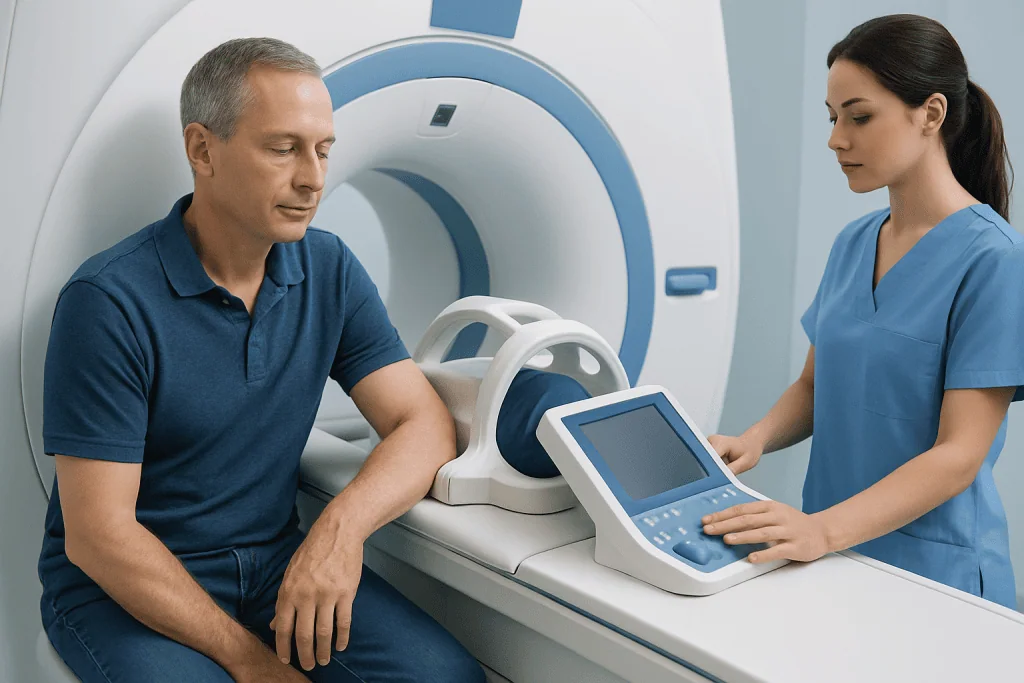
Symptoms depend on the affected structure. Tendon-related pain is commonly worse with gripping, lifting or wrist movements. Pain on the outside of the elbow may travel into the forearm and make it uncomfortable to hold a cup, use tools or type. Pain on the inside may be triggered by throwing, lifting or repeated wrist flexion.
Joint conditions can cause aching, stiffness, swelling, clicking or a feeling that the elbow cannot fully bend or straighten. A direct blow or fall may cause bruising, tenderness and sudden difficulty moving the arm. Nerve irritation may lead to tingling, numbness or burning sensations, often extending into the ring and little fingers.
Some symptoms need earlier assessment. These include a visible change in the shape of the elbow, inability to use the arm after an injury, rapidly increasing swelling, redness and warmth, fever, or weakness that is getting worse. These signs do not always indicate a serious condition, but they should not be ignored.
What Causes Elbow Pain?

Repetitive use is a leading cause of elbow pain. Activities involving frequent gripping, lifting, wrist movements, throwing or use of vibrating tools can overload the tendons that attach muscles to the elbow. This may happen in sports, manual work, gardening, computer-based work or household tasks, particularly when activity increases suddenly.
Lateral epicondylitis, often called tennis elbow, affects tendons on the outer side of the elbow. Despite its name, it can occur in anyone who repeatedly uses the wrist and hand. Tennis elbow commonly causes pain with gripping, lifting or extending the wrist. Medial epicondylitis, sometimes called golfer’s elbow, involves tendons on the inner side of the elbow and may be associated with repeated throwing, lifting or wrist-flexing movements.
Other possible causes include sprains and muscle strains, fractures, dislocation, arthritis, bursitis and tendon tears. Olecranon bursitis causes swelling over the pointed tip at the back of the elbow; it may develop after pressure on the elbow, a blow or inflammation. Arthritis can gradually cause pain and restricted movement, while inflammatory arthritis may affect more than one joint and be associated with prolonged morning stiffness.
Nerve compression is another important cause. The ulnar nerve passes through a narrow area behind the inner elbow, often called the funny bone. Pressure or irritation in this area may cause cubital tunnel syndrome, with tingling or numbness in the little finger and part of the ring finger. Less commonly, pain felt at the elbow may be referred from the neck, shoulder or wrist.
Risk Factors for Elbow Problems
Any person can develop elbow pain, but risk may rise with repetitive activities, poor technique, inadequate recovery time or a sudden increase in training or workload. Jobs that require repetitive gripping, assembly work, lifting, use of hand tools or prolonged leaning on the elbows may contribute. Sports involving racquets, golf, climbing, throwing or weight training can also place repeated stress on the joint.
Previous elbow injuries, reduced shoulder or wrist strength, limited flexibility and poorly fitting sports equipment may increase strain on the elbow. Age-related tendon changes can make tendons less tolerant of repeated loading, although tendon pain is not an inevitable part of ageing.
Some health conditions may also influence symptoms. Osteoarthritis, rheumatoid arthritis, gout and other inflammatory conditions can affect the elbow. Diabetes and thyroid disorders may be associated with some tendon conditions, while nerve problems may be more likely when the elbow is repeatedly bent for long periods or leaned on during work or sleep.
How Elbow Pain Is Diagnosed
A clinician will usually begin by asking when the pain started, whether there was an injury, which movements make it worse and whether there are numbness, weakness, swelling or other joint symptoms. They may ask about work, sport, hobbies, medical conditions and previous injuries. This history often provides important clues about the source of pain.
During the examination, the clinician may check the elbow’s range of motion, strength, tender areas, stability and signs of swelling or inflammation. They may also assess the neck, shoulder, wrist and hand, especially if symptoms suggest nerve involvement or referred pain.
Imaging is not always required for straightforward overuse injuries. An X-ray may help identify a fracture, arthritis or bone changes after trauma. Ultrasound or magnetic resonance imaging may be considered if a tendon tear, ligament injury, fluid collection or another soft-tissue problem is suspected. Blood tests may be appropriate when infection, gout or inflammatory arthritis is a concern.
Treatment Options for Elbow Pain
Treatment is based on the cause, severity and effect on daily activities. For many overuse-related problems, the first step is to reduce or temporarily avoid movements that provoke pain while maintaining gentle, comfortable movement. Complete immobilization is rarely necessary for uncomplicated tendon pain and may lead to stiffness when used for too long.
Cold packs for short periods may help after a recent flare or injury, while some people find heat useful for stiffness before activity. A healthcare professional may recommend pain-relieving medicines or anti-inflammatory treatments when appropriate for the individual’s health history. Braces or straps can sometimes reduce stress during activity, but they should be selected and used with professional advice.
Physiotherapy is often central to recovery. A tailored program may include gradual strengthening of the forearm, wrist and shoulder muscles, flexibility exercises, technique changes and advice on pacing activity. Physical therapy can help restore function and reduce the risk of recurring symptoms. Significant injuries, persistent symptoms or suspected tendon or ligament tears may require assessment by an orthopedic specialist.
In selected cases, clinicians may discuss injections or procedures after considering the diagnosis, expected benefits and possible risks. Surgery is generally reserved for certain fractures, dislocations, major tears, severe nerve compression or symptoms that do not improve with appropriate non-surgical care. Orthopedic surgery may be considered when structural damage requires repair or stabilization.
Prevention and Self-Care
Not every case of elbow pain can be prevented, but gradual progression is helpful. When starting a new activity or increasing training, raising intensity, duration and frequency slowly allows muscles and tendons time to adapt. Taking regular breaks from repetitive work and alternating tasks may also reduce strain.
Good technique matters in sport and manual activities. Appropriate equipment, such as a correctly sized racquet or tools with comfortable grips, can help limit unnecessary load. Strengthening the forearm, shoulder and upper back muscles under guidance may improve support for the arm, while gentle warm-up movements can prepare the body for activity.
People who frequently rest their elbows on hard surfaces may benefit from using padding and avoiding prolonged elbow bending where possible. If pain returns repeatedly, continuing to push through it can delay recovery. A clinician or physiotherapist can help identify contributing movements and create a realistic plan for returning to work, exercise or sport.
When to See a Doctor
Medical advice is recommended when elbow pain lasts more than a few weeks, limits everyday activities, keeps returning or does not improve with rest and simple activity changes. An assessment is also important if there is persistent numbness, tingling, weakness, joint locking, loss of movement or a lump or swelling around the elbow.
Urgent assessment is appropriate after a major fall, collision or twisting injury if the elbow looks deformed, the person cannot move the arm, or there is severe pain and swelling. Prompt care is also needed for redness, heat, marked swelling or fever, particularly if there is a wound near the elbow, as infection may need treatment.
For international patients, Acibadem International’s multidisciplinary specialists and JCI-accredited hospitals can assess and treat elbow conditions, coordinating orthopedic, rehabilitation and imaging care when needed. A qualified clinician can determine whether symptoms are likely to be from a temporary overuse problem or require further investigation.
Frequently asked questions
What is the most common cause of elbow pain?
Repetitive strain affecting the tendons around the elbow is a common cause. This can develop from repeated gripping, lifting, wrist movements, sports or manual work. The exact cause depends on where the pain is felt and which activities trigger it.
Why does the outside of my elbow hurt?
Pain on the outside of the elbow is often related to lateral epicondylitis, also known as tennis elbow. It involves irritation or degeneration of tendons used to extend the wrist and fingers. Pain may worsen when gripping objects, lifting or turning a handle.
Why does elbow pain cause tingling in my fingers?
Tingling in the ring and little fingers may occur when the ulnar nerve is irritated or compressed near the elbow. This may be more noticeable after keeping the elbow bent for a long time or leaning on it. Persistent tingling, weakness or hand clumsiness should be assessed by a clinician.
Can elbow pain go away on its own?
Mild elbow pain from temporary overuse may improve with rest from aggravating activities, gradual return to movement and appropriate self-care. Recovery can take time, particularly with tendon conditions. If pain persists, worsens or affects normal function, medical advice is recommended.
Should I use heat or ice for elbow pain?
Cold packs may help reduce discomfort after a recent injury or activity-related flare, while gentle heat may ease stiffness before movement for some people. Both should be used briefly with a protective layer between the skin and the pack. A healthcare professional can offer individual guidance, especially after an injury.
When is elbow pain an emergency?
Urgent care is needed if elbow pain follows a serious injury and there is deformity, severe swelling, inability to move the arm or loss of sensation. Redness, warmth, significant swelling and fever also require prompt medical assessment because they can indicate infection or inflammation needing treatment.
References
- National Institute of Arthritis and Musculoskeletal and Skin Diseases
- American Academy of Orthopaedic Surgeons
- National Health Service
- Mayo Clinic
- Cleveland Clinic
This article is for general information only and is not a substitute for professional medical advice. Please consult a qualified doctor about your individual situation.
Joint and spine care in Turkey — expert assessment & treatment
JCI-accredited · board-certified surgeons · reply within 24h
Add us as a Preferred Source to see more of our trusted health content across Google Search, AI Overviews and Discover.