

Mons Pubis Male: What Patients Need to Know

The male mons pubis is a normal fatty tissue pad located above the penis and over the pubic bone. Fullness commonly reflects normal body-fat distribution and may become more noticeable with weight gain.
Key Takeaways
- The male mons pubis is a normal fatty tissue pad located above the penis and over the pubic bone.
- Fullness commonly reflects normal body-fat distribution and may become more noticeable with weight gain.
- A prominent pubic fat pad can make more of the penile shaft appear hidden without changing the penis itself.
- Sudden swelling, pain, redness, a growing lump, or a bulge that worsens with coughing needs medical evaluation.
- Healthy weight management, gentle skin care, and properly fitting clothing may improve comfort, but persistent concerns deserve individualized advice.
In males, the mons pubis is the soft, fatty area over the pubic bone and just above the base of the penis. Its size and appearance vary naturally, but new swelling, pain, a firm lump, skin changes, or a groin bulge should be assessed by a healthcare professional.
Mons Pubis in Males: A Brief Overview
The mons pubis male refers to the pad of skin and fatty tissue that lies over the pubic bone, immediately above the penis. It is a normal part of male anatomy. The area helps cushion the pubic bone and contains hair follicles, sweat glands, nerves, small blood vessels, and connective tissue.
There is a wide normal range in how prominent this area looks and feels. Genetics, age, overall body composition, posture, and the amount and distribution of subcutaneous fat can all affect it. A fuller mons pubis alone is usually not a sign of disease, especially when it has developed gradually and there are no concerning symptoms.
Some men notice that fullness in this region covers part of the penile base. This can create the appearance of a shorter visible shaft, sometimes called a buried or concealed penis appearance when it is substantial. It does not necessarily mean that the penis itself has changed in length. A clinician can help distinguish a normal pubic fat pad from conditions that may require treatment.
What May Cause a Prominent or Changed Pubic Area?
The most common reason for a prominent male mons pubis is an increase in fat beneath the skin. Weight gain may enlarge this area, although body-fat distribution differs from person to person. Even at a stable weight, some men naturally store more fat around the lower abdomen and pubic region than others.
Age-related changes can also contribute. Skin and supportive tissues may become less firm over time, while changes in muscle tone and body composition can alter the contour of the lower abdomen and pubic area. Previous abdominal or pelvic surgery, scarring, or swelling after an injury may sometimes change the appearance temporarily or longer term.
Not every change is due to body fat. A groin or lower abdominal bulge may be caused by a groin hernia, while a localized tender bump can arise from an inflamed hair follicle, cyst, or skin infection. Less commonly, fluid buildup, enlarged lymph nodes, or another soft-tissue mass may be responsible. New or asymmetric changes should therefore not be self-diagnosed.
Symptoms and Changes Worth Noticing
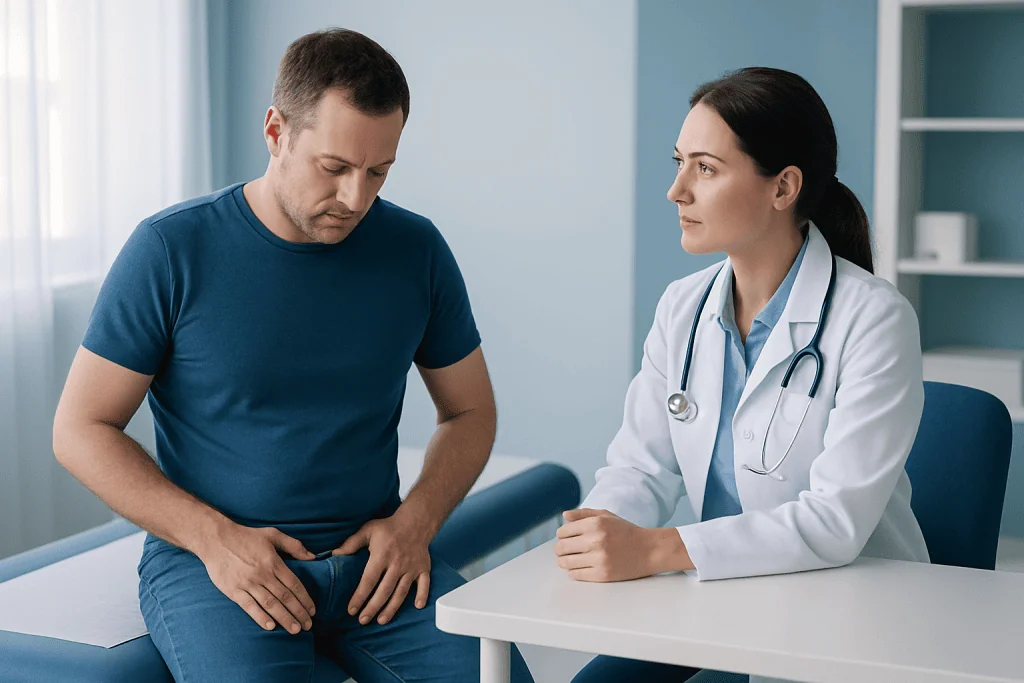
A stable, soft, painless fullness above the penis is often simply normal tissue or a pubic fat pad. It may be more noticeable in certain positions, with tight clothing, or after changes in weight. Some men experience practical concerns such as sweating, chafing, skin irritation, difficulty keeping the area dry, or feeling self-conscious about its appearance.
Features that are less typical of ordinary fat distribution include a new firm lump, marked one-sided enlargement, pain, warmth, redness, drainage, bruising, or a rapid change in size. A groin bulge that appears during coughing, lifting, or straining and reduces when lying down can suggest a hernia.
Changes affecting urination or sexual function also deserve discussion with a clinician. For example, if surrounding tissue makes hygiene difficult, causes repeated rashes, interferes with seeing the penile shaft, or contributes to discomfort during activity, a medical assessment can identify the cause and appropriate options. Erectile difficulties may have separate vascular, hormonal, psychological, or medication-related causes and should not automatically be attributed to the mons pubis.
How Doctors Evaluate the Male Mons Pubis
Evaluation begins with a discussion of when the change was first noticed, whether it has progressed, and whether symptoms such as pain, skin changes, fever, urinary symptoms, or bowel-related symptoms are present. A clinician may also ask about weight changes, past surgeries, injury, medications, and medical conditions that can affect fluid balance or hormone levels.
A physical examination can often clarify whether the area is primarily fatty tissue, skin and soft-tissue swelling, a cyst, an enlarged lymph node, or a hernia. The examination may include the lower abdomen, groin, penis, scrotum, and nearby skin. It is performed respectfully, with privacy and clear explanation.
Imaging is not always needed. If a hernia, mass, fluid collection, or other structural problem is suspected, ultrasound may be used; other imaging may be considered in selected situations. Blood tests are usually reserved for cases in which the history or examination suggests an infection, metabolic condition, or hormonal issue.
Treatment and Practical Management
Management depends on the underlying cause. When the appearance is due to typical fat distribution and there are no symptoms, treatment may not be medically necessary. If a person wishes to reduce overall body fat, gradual nutrition and activity changes can support general health. It is not possible to reliably reduce fat from only one chosen body area through exercise alone.
For skin-fold discomfort, practical measures may help: washing gently, drying the area carefully, changing out of damp clothing, choosing breathable underwear, and reducing friction during activity. A clinician can recommend appropriate treatment if there is a rash, fungal infection, folliculitis, or recurrent irritation. Avoid squeezing lumps or using harsh products on genital-area skin.
If there is significant pubic fullness that contributes to a concealed penis appearance, hygiene problems, or distress, assessment by a urologist, plastic surgeon, or another appropriate specialist may be helpful. Options vary and may include weight management, treatment of related conditions, or carefully selected procedures such as liposuction or reconstructive approaches. Surgery is not suitable for everyone and should follow a full discussion of benefits, limitations, recovery, and risks.
When to Seek Medical Care
Medical care should be sought promptly for sudden or severe groin or pubic pain, a painful bulge that cannot be gently reduced, nausea or vomiting with a groin bulge, fever, spreading redness, or rapidly increasing swelling. These symptoms can indicate a condition that needs urgent assessment, including a complicated hernia or infection.
A routine appointment is appropriate for a lump that persists beyond a short period, unexplained one-sided swelling, recurrent skin infections, a change in the skin such as ulceration or bleeding, or ongoing discomfort. It is also sensible to speak with a doctor if pubic tissue makes hygiene difficult or affects confidence, sexual wellbeing, or daily activities.
For international patients, Acibadem International’s multidisciplinary specialists and JCI-accredited hospitals can assess pubic and groin concerns and coordinate care when treatment is needed. The right clinician may include a primary care doctor, urologist, general surgeon, dermatologist, or plastic surgeon, depending on the findings.
Supporting Long-Term Pubic and Groin Health
Healthy habits can reduce friction and support comfort in the pubic area. These include maintaining a weight that is appropriate for the individual, staying physically active, avoiding tobacco, and choosing clothing that does not cause persistent rubbing or trapping of moisture. Any weight-related goal is best approached gradually and in a sustainable way rather than through restrictive or unproven methods.
Regular self-awareness is useful, but frequent checking can increase worry without improving health. A person can simply note whether the area has changed in size, feel, symmetry, or tenderness. New changes should be discussed with a qualified clinician rather than treated with online remedies or supplements.
Sexual health and body image concerns are common and valid reasons to seek medical advice. A compassionate healthcare professional can explain normal anatomy, check for medical causes of symptoms, and discuss realistic options without judgment.
Frequently asked questions
What is the mons pubis in a male?
In a male, the mons pubis is the padded area of skin and fat over the pubic bone, above the penis. It is a normal anatomical structure and varies considerably in size among individuals.
Why does my mons pubis look large?
A larger-looking mons pubis is often related to normal fat distribution, weight gain, genetics, or age-related changes in skin and body composition. If the change is new, one-sided, painful, or feels like a distinct lump, it should be examined by a clinician.
Can a pubic fat pad make the penis look smaller?
Yes. Fullness above the penis can cover part of the penile base, so less of the shaft is visible externally. This usually changes the visible appearance rather than the actual length of the penis.
Is a lump above the penis always a hernia?
No. Lumps in this area can have several causes, including cysts, inflamed follicles, swollen lymph nodes, fatty tissue, or hernias. A hernia often creates a bulge that becomes more noticeable with coughing, lifting, or straining, but only an examination can confirm the cause.
Can exercise reduce fat only from the mons pubis?
Targeted exercises cannot reliably remove fat from one specific area. Regular activity and balanced nutrition can reduce overall body fat over time, and the pubic region may change as part of that overall process.
When is swelling of the male mons pubis urgent?
Urgent evaluation is needed for severe pain, sudden swelling, fever, spreading redness, vomiting, or a painful groin bulge that cannot be pushed back gently. These symptoms may signal an infection or a hernia complication that requires prompt care.
References
- Mayo Clinic
- Cleveland Clinic
- Urology Care Foundation
- National Health Service
- American College of Surgeons
This article is for general information only and is not a substitute for professional medical advice. Please consult a qualified doctor about your individual situation.
Hair transplant in Turkey — costs, graft counts & a free assessment
JCI-accredited · board-certified surgeons · reply within 24h
Add us as a Preferred Source to see more of our trusted health content across Google Search, AI Overviews and Discover.
Check your numbers in seconds
BMI, calories, due date, blood pressure and 30+ more clinical calculators — free, instant, doctor-reviewed ranges.

More from the Health Library



Related Specialists

Dr. Gülay Beydilli Nacak
Gynecology & Obstetrics
Prof. Dr. Nur Olgun
Pediatric Oncology
Embriyolog Sevda Gökçe
Vitro Fertilization and Reproductive Medicine Center
Dr. Semra Mehmetoğlu
Pediatrics