Closed Rhinoplasty: Internal Incisions and Recovery

Closed rhinoplasty uses incisions inside the nostrils, so it does not leave a scar across the columella, the skin between the nostrils. It may suit people needing limited to moderate reshaping, but open rhinoplasty can offer better visibility for complex nasal-tip or reconstructive work.
Key Takeaways
- Closed rhinoplasty uses incisions inside the nostrils, so it does not leave a scar across the columella, the skin between the nostrils.
- It may suit people needing limited to moderate reshaping, but open rhinoplasty can offer better visibility for complex nasal-tip or reconstructive work.
- Swelling and bruising are most noticeable during the first one to two weeks, while the final contour commonly continues to refine for many months.
- Potential risks include bleeding, infection, breathing changes, uneven contours, scarring inside the nose, and the possibility of revision surgery.
- A consultation with a qualified plastic surgeon or ENT surgeon is essential to assess nasal structure, breathing, medical history, and realistic expectations.
Closed rhinoplasty is a nose reshaping procedure performed through incisions inside the nostrils. It can be an appropriate option for selected people seeking relatively focused cosmetic or functional changes, although the best approach depends on nasal anatomy, goals, and the complexity of surgery needed.
Closed Rhinoplasty at a Glance
Closed rhinoplasty is a surgical technique used to change the shape, size, or proportions of the nose through incisions placed inside the nostrils. Because the incisions are internal, there is no external incision across the columella, the narrow strip of skin separating the nostrils. The procedure may address a nasal hump, width, asymmetry, tip shape, or selected breathing concerns when combined with functional nasal surgery.
The technique is not automatically less invasive or better than open rhinoplasty. Its main difference is the surgical access: in closed rhinoplasty, the surgeon works through the nostrils without lifting the skin of the nose. This can be useful for carefully selected changes, but it gives the surgeon a different level of visibility and control than an open approach.
Rhinoplasty is highly individualized. A safe, satisfactory result depends on balancing a person’s goals with skin thickness, cartilage strength, facial proportions, previous injury or surgery, and the need to preserve or improve airflow. A detailed assessment helps determine whether rhinoplasty surgery using a closed or open technique is the more suitable option.
How Closed Rhinoplasty Works
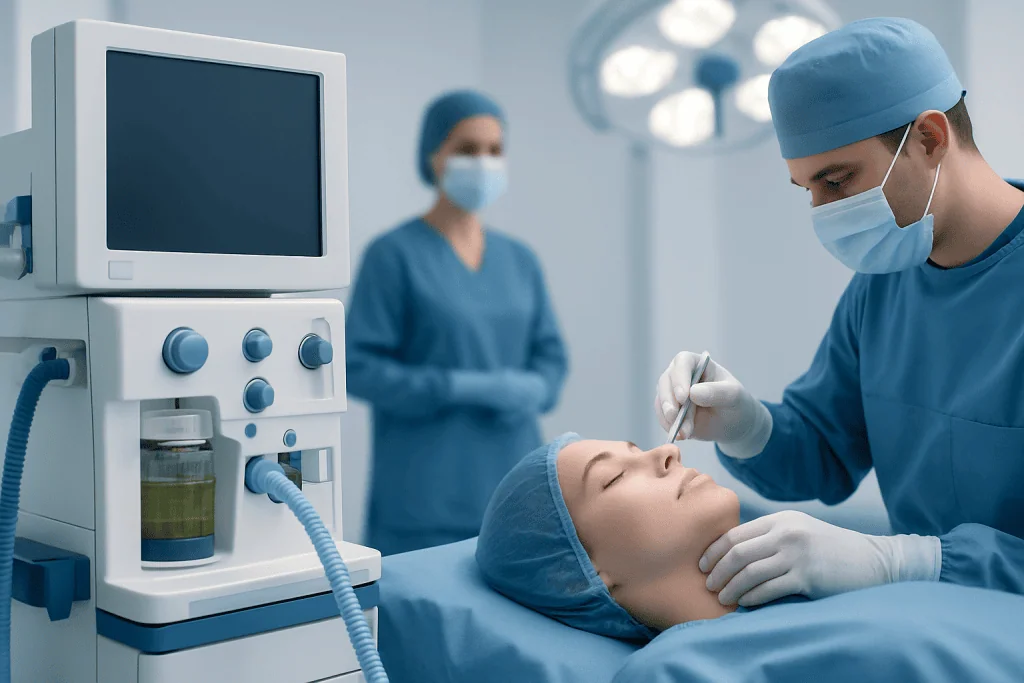
During closed rhinoplasty, the surgeon makes small incisions inside one or both nostrils. Through these openings, they carefully access the bone and cartilage that create the nasal framework. The skin and soft tissue are gently lifted only as much as needed for the planned adjustments, rather than being fully raised from the framework as in most open approaches.
Depending on the treatment plan, the surgeon may smooth or reduce a hump, narrow nasal bones, reshape cartilage, refine the tip, improve symmetry, or use cartilage grafts to provide support. Cartilage may come from the nasal septum, and in more complex cases may be sourced elsewhere. If internal structures are contributing to obstruction, rhinoplasty may be combined with treatment of a deviated septum or enlarged turbinates.
Most procedures are performed under general anesthesia, although anesthesia choices depend on the extent of surgery and the clinical setting. Surgery length varies with the amount of reshaping required, whether functional corrections are included, and whether the procedure is a first operation or a revision.
At the end of surgery, internal incisions are closed with dissolvable sutures or other appropriate materials. A splint is often placed on the outside of the nose to protect the new shape during early healing. Some patients may also need internal supports, depending on the work performed.
Who May Be a Candidate?

Adults with fully developed nasal structures who are in good general health may be considered for closed rhinoplasty. Candidates generally have a specific, realistic concern that can be addressed without extensive exposure of the nasal framework. Examples may include a modest dorsal hump, a need for selected narrowing, or limited contour changes in a nose that has not undergone previous surgery.
Good candidacy also involves emotional readiness and realistic expectations. Rhinoplasty can improve proportion and address structural concerns, but it cannot create perfect symmetry or guarantee a particular appearance. A surgeon will discuss what is anatomically feasible and whether the desired changes can be achieved while maintaining stable support and normal breathing.
Open rhinoplasty may be preferred when substantial tip refinement, major asymmetry correction, complex reconstruction, extensive grafting, or revision surgery is needed. It can provide wider direct visualization of the cartilage framework. The choice is based on surgical needs rather than a general preference for one approach.
People who smoke or use nicotine products may be advised to stop well before and after surgery because nicotine can interfere with circulation and wound healing. Uncontrolled medical conditions, active nasal or sinus infection, certain bleeding disorders, and unrealistic expectations may require treatment, further assessment, or postponement of surgery.
What Happens Before, During and After Surgery
Before surgery, the clinician reviews medical history, medications, allergies, prior nasal trauma or procedures, and breathing symptoms. The assessment includes examination of the external nose and internal nasal passages. Standardized photographs may be taken for surgical planning and comparison during follow-up. Patients should disclose all prescription medicines, supplements, and over-the-counter products, since some can affect bleeding or anesthesia.
On the day of surgery, anesthesia is administered and internal incisions are made. The surgeon then reshapes bone, cartilage, or both according to the agreed plan. If nasal bones are narrowed, controlled bone cuts may be used to reposition them. Structural grafts may be placed when support or contour needs to be strengthened. The exact steps vary considerably from person to person.
Following surgery, patients spend time in a recovery area while the effects of anesthesia lessen. Most are able to return home the same day when appropriate support is available. Written instructions commonly cover pain relief, sleeping position, nasal care, activity restrictions, and follow-up appointments.
It is important not to blow the nose, place pressure on the nose, or resume strenuous activity until the surgeon advises it is safe. Any prescribed medicines should be used exactly as directed. Follow-up visits allow the care team to remove or check splints and monitor healing.
Benefits, Limitations and Possible Risks
A potential benefit of closed rhinoplasty is that all incisions are hidden inside the nostrils. In selected patients, the technique may involve less external tissue disruption and may lead to earlier reduction in some visible swelling. It can effectively address specific aesthetic concerns and, when indicated, can be combined with procedures designed to improve nasal airflow.
However, an internal-incision approach has limitations. The restricted exposure may make certain detailed tip adjustments, significant reconstructions, or complex revision procedures less suitable. The absence of an external incision does not mean that surgery is minor, and it does not eliminate the normal healing process or the possibility of complications.
Possible risks include bleeding, infection, prolonged swelling, temporary numbness, pain, bruising, visible or internal scarring, altered skin sensation, asymmetry, irregular contours, and dissatisfaction with the appearance. Breathing may not improve as expected, and in some cases may worsen if nasal support or internal structures are affected. Anesthesia-related risks are also possible.
Although many concerns resolve as healing progresses, a revision procedure may occasionally be considered after swelling has settled and the tissues have stabilized. Choosing a qualified surgeon, sharing clear goals, and following aftercare advice can help reduce avoidable risks, but no operation can eliminate them completely.
Recovery Timeline and Everyday Care
Recovery varies based on the extent of surgery, individual healing, and whether functional procedures were performed at the same time. In the first several days, congestion, mild discomfort, swelling, and bruising around the eyes are common. The nose may feel blocked because of internal swelling, dressings, or supports. Pain is usually managed with the plan provided by the surgical team.
An external splint is commonly removed after approximately one week, although timing differs between patients. Many people feel comfortable returning to non-strenuous work, school, or social activities after one to two weeks, when much of the early bruising and swelling has improved. The nose will still look and feel different from its eventual result.
Over the following weeks, swelling continues to decrease gradually. Light activity may often be resumed according to the surgeon’s advice, while contact sports, heavy lifting, and activities with a risk of nasal injury usually require a longer pause. Glasses may need to be supported or avoided temporarily if they could place pressure on the healing nasal bridge.
Fine changes can continue for many months, particularly at the tip of the nose and in people with thicker skin. Patients should attend planned follow-ups and avoid judging the final result too early. Protecting the nose from sun exposure and accidental trauma supports healthy healing.
When to Seek Medical Care
Patients should contact their surgical team promptly if they develop increasing rather than improving pain, persistent or heavy bleeding, fever, worsening redness, foul-smelling drainage, or a sudden increase in swelling. Difficulty breathing that is severe or worsening, vision changes, chest pain, fainting, or symptoms of a serious allergic reaction require urgent medical assessment.
Before considering rhinoplasty, people should seek medical evaluation for chronic nasal blockage, frequent nosebleeds, recurrent sinus symptoms, snoring with daytime sleepiness, or breathing difficulty after nasal injury. These symptoms may be related to structural conditions, such as a deviated septum, and may need assessment beyond cosmetic concerns.
For international patients, Acibadem International’s multidisciplinary specialists and JCI-accredited hospitals can assess nasal concerns and provide surgical treatment planning. A consultation can clarify whether closed rhinoplasty, an open technique, or non-surgical management best fits the person’s anatomy and health needs.
Frequently asked questions
What is the main difference between closed and open rhinoplasty?
Closed rhinoplasty uses incisions inside the nostrils, while open rhinoplasty includes a small incision across the columella to lift the nasal skin for broader access. Both techniques can produce effective results, but the appropriate method depends on the complexity of the planned correction and the surgeon’s assessment.
Does closed rhinoplasty leave a scar?
Closed rhinoplasty leaves small scars inside the nostrils, where they are not visible externally. As with any surgery, internal healing and scar formation can occur, but the procedure does not involve the external columellar incision used in open rhinoplasty.
How long does closed rhinoplasty take to heal?
Early bruising and obvious swelling often improve within one to two weeks, and many people return to routine non-strenuous activities during that period. However, the nose continues to settle over months, and final refinement may take up to a year or longer, especially around the tip.
Is closed rhinoplasty painful?
Most patients experience discomfort, pressure, congestion, and tenderness rather than severe pain during the first days after surgery. The surgical team provides an individualized plan for pain relief and aftercare, and symptoms generally improve as early healing progresses.
Can closed rhinoplasty improve breathing?
It can improve breathing when surgery also corrects an internal structural problem, such as septal deviation or narrowing of the nasal airway. Cosmetic reshaping alone does not necessarily improve airflow, so breathing concerns should be assessed specifically before surgery.
Can closed rhinoplasty be used for revision surgery?
It may be possible for selected revision cases, particularly when the needed changes are limited. However, revision rhinoplasty is often more complex because of scar tissue and altered support, and an open approach may provide the surgeon with better access for detailed reconstruction.
References
- American Society of Plastic Surgeons
- American Academy of Otolaryngology–Head and Neck Surgery
- U.S. Food and Drug Administration
- Mayo Clinic
This article is for general information only and is not a substitute for professional medical advice. Please consult a qualified doctor about your individual situation.
Rhinoplasty in Turkey — costs, top hospitals & a free quote
JCI-accredited · board-certified surgeons · reply within 24h
Add us as a Preferred Source to see more of our trusted health content across Google Search, AI Overviews and Discover.

More from the Health Library



Related Specialists

Prof. Dr. Gökhan Pekel
Ophthalmology
Dr. Sercan Başböyük
Anesthesiology
Dr. Melda Koyuncu
Dermatology
Prof. Dr. İftahar Köksal
Infectious Diseases & Clinical Microbiology