Risks of LED Light Teeth Whitening Treatment

Most whitening-related side effects are caused by peroxide-based bleaching gels, not LED light alone. Tooth sensitivity and gum irritation are common, usually short-term effects that should improve after treatment stops.
Key Takeaways
- Most whitening-related side effects are caused by peroxide-based bleaching gels, not LED light alone.
- Tooth sensitivity and gum irritation are common, usually short-term effects that should improve after treatment stops.
- Whitening does not change the color of crowns, veneers, fillings, or dental bonding.
- People with untreated cavities, gum disease, cracked teeth, or significant sensitivity should speak with a dentist before whitening.
- Overusing home whitening products can increase discomfort and may damage or irritate oral tissues.
The main risks of LED light teeth whitening are temporary tooth sensitivity and irritation of the gums or other soft tissues, usually related to the whitening gel rather than the LED light itself. A dental assessment can help identify whether whitening is appropriate and support safer, more predictable results.
What Are the Risks of LED Light Teeth Whitening?
LED light teeth whitening is generally considered low risk when it is properly selected, used as directed, and supervised when appropriate. The most common concerns are temporary tooth sensitivity and irritation of the gums. These effects are typically linked to the bleaching agent, often hydrogen peroxide or carbamide peroxide, rather than to the LED light itself.
The phrase “LED whitening” can be misleading. The light may be included to support or activate a whitening gel, but it does not whiten teeth on its own. The concentration of the gel, how long it stays on the teeth, the condition of the teeth and gums, and how often treatment is repeated have a greater effect on both results and side effects.
Some people may have increased sensitivity to cold, heat, sweet foods, or air for a short period after whitening. Others may notice soreness, whitening, or burning of the gums if gel touches the soft tissues. Persistent pain, swelling, ulceration, or a change in the appearance of the teeth should be evaluated by a dental professional.
How LED Whitening Works and Why Sensitivity Can Occur
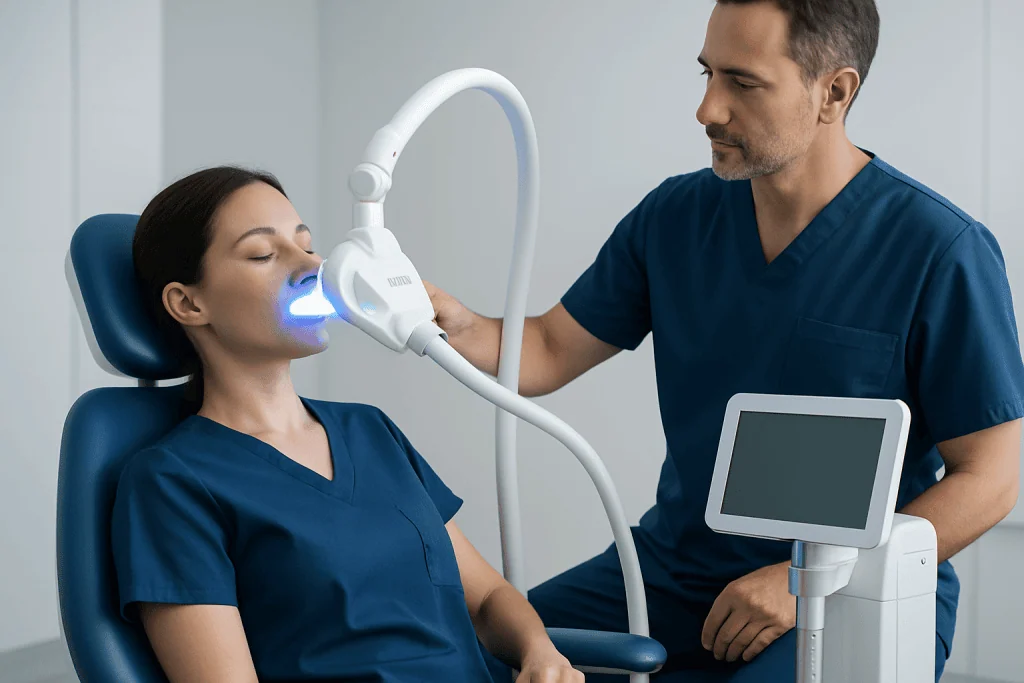
Teeth whitening uses bleaching chemicals that pass through the outer enamel layer and break down colored molecules within the tooth. This can make natural teeth look lighter. Because the whitening agent may temporarily affect the movement of fluid within the tooth, the tooth nerve can become more responsive to triggers such as cold drinks or brushing.
LED devices are often supplied with home whitening kits or used in dental settings. Evidence suggests that light may not always provide a major additional whitening benefit compared with bleaching gel alone. Importantly, light does not eliminate the possibility of sensitivity, and a device should not be viewed as making an unsuitable whitening product safe for every person.
The risk of discomfort can rise when products are used for longer than instructed, applied too often, used with poorly fitting trays, or placed on teeth with existing enamel wear, exposed roots, cracks, cavities, or gum recession. A dentist can identify these issues before treatment and discuss whether professional teeth whitening or a different approach is appropriate.
Common Side Effects and Less Common Problems
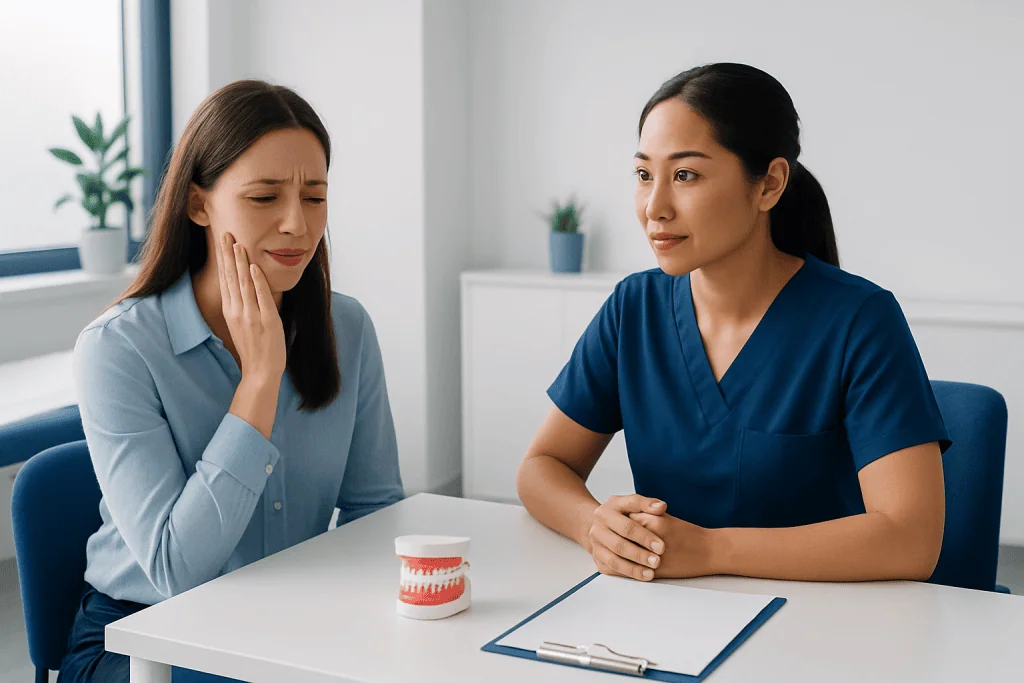
Short-lived tooth sensitivity is the most frequently reported side effect of whitening. It may begin during treatment or within the following day and often settles within a few days after treatment is paused or completed. Using a toothpaste formulated for sensitive teeth and avoiding very cold or hot foods temporarily may be helpful, but ongoing or severe symptoms should not be ignored.
Gum irritation may occur when whitening gel leaks from a tray or is placed directly on the gums. The gums can look pale or white immediately after contact, then feel tender. Mild irritation often resolves after the product is removed and use is stopped. However, chemical burns, persistent soreness, or visible tissue damage require dental advice.
Less common concerns include uneven whitening, particularly around fillings or areas of enamel damage, and irritation of the lips, tongue, throat, or stomach if a product is misused or swallowed. Existing restorations do not whiten, so crowns, veneers, fillings, and bonding may appear darker relative to the newly whitened natural teeth. Whitening may also make pre-existing cracks or worn tooth surfaces more noticeable because of increased sensitivity.
- Temporary sensitivity to temperature or touch
- Gum redness, tenderness, or temporary whitening of the soft tissue
- Uneven shade changes between natural teeth and restorations
- Discomfort made worse by excessive or repeated treatment
Who Should Be Careful Before Whitening?
A dental examination is especially important for people with toothache, untreated decay, gum bleeding, loose teeth, cracked teeth, significant gum recession, worn enamel, or existing sensitivity. Whitening gel can enter a cavity, crack, or exposed root area and cause considerable pain. Treating the underlying dental issue first is safer than attempting to mask discoloration.
People with gum disease should have the condition assessed and managed before cosmetic whitening. Bleeding, swollen, or receding gums can make contact with bleaching gel more likely and more uncomfortable. Oral hygiene care and treatment of inflammation may be recommended before any whitening plan is considered.
Pregnant or breastfeeding people, children and adolescents, and people with extensive dental restorations should ask a dentist for individualized advice before using whitening products. In these groups, evidence, age-related dental considerations, or likely cosmetic benefit may influence the decision. Anyone with a prior allergic reaction to oral-care ingredients should check the product ingredients carefully and seek professional guidance.
Intrinsic tooth discoloration caused by trauma, certain medicines, developmental changes, or root canal treatment may not respond evenly to standard whitening. A dentist can determine the cause of discoloration and discuss suitable options, including smile design when restorative or cosmetic planning is needed.
Safer Use of Home LED Whitening Kits
Home whitening products can be convenient, but their safety depends on choosing a regulated product, following its instructions exactly, and avoiding repeated use beyond the recommended course. More frequent treatment or longer contact time does not necessarily produce better results and can increase sensitivity and gum irritation.
Before beginning, teeth should be clean and the gums should be healthy. The whitening gel should be used only in the amount directed. If a tray is used, it should fit properly; excess gel should be removed rather than allowed to sit on the gums. A person should stop treatment if they develop sharp pain, intense sensitivity, gum burning, swelling, or mouth sores.
It is also sensible to avoid using whitening products immediately after dental treatment unless a dentist advises otherwise. Whitening should not be used to manage dark spots, pain, or changes in a single tooth without assessment, as these may signal a dental problem requiring care. Regular dental checkups support early identification of decay, gum disease, and other issues that can affect whitening safety.
Managing Sensitivity and Protecting Results
If mild sensitivity develops, taking a break from whitening may allow the teeth to recover. A dentist may suggest a lower-strength product, shorter treatment periods, less frequent use, or a toothpaste designed to reduce sensitivity. It is best not to continue treatment through significant discomfort in the hope that it will resolve.
After whitening, reducing exposure to strongly colored foods and drinks for a short time may help limit surface staining. Coffee, tea, red wine, tobacco, and deeply colored sauces can contribute to discoloration over time. Good daily brushing with fluoride toothpaste, cleaning between the teeth, and regular dental visits are more important for maintaining oral health than repeated whitening.
Whitening should complement—not replace—routine dental care. A clean, healthy mouth can improve the appearance of teeth, while professional cleaning may remove some external stains without bleaching. Where tooth color concerns are linked to decay, injury, or restorations, the most appropriate solution may be restorative dental care rather than further whitening.
When to Seek Medical Care
A person should contact a dentist promptly if tooth pain is severe, lasts more than a few days after stopping whitening, wakes them from sleep, or is concentrated in one tooth. These symptoms may reflect an underlying cavity, crack, infection, or other condition that whitening cannot treat.
Dental assessment is also advisable for swollen gums, ongoing bleeding, mouth ulcers, blistering, facial swelling, fever, difficulty swallowing, or signs of an allergic reaction such as widespread rash or breathing difficulty. Breathing difficulty, rapid facial swelling, or trouble swallowing requires urgent medical attention.
For international patients, Acibadem International’s multidisciplinary specialists and JCI-accredited hospitals can assess dental concerns and discuss appropriate treatment options. A dental consultation is particularly useful when sensitivity, gum symptoms, or uneven tooth color persists after a whitening attempt.
Frequently asked questions
Is LED light teeth whitening safe?
LED teeth whitening can be safe when an appropriate product is used correctly and the teeth and gums are healthy. The main side effects usually come from the bleaching gel, including temporary sensitivity and gum irritation. A dentist can help determine whether whitening is suitable for an individual.
Does the LED light itself damage teeth?
LED light used in whitening systems is not generally considered the main cause of tooth damage. Bleaching chemicals, excessive exposure time, and frequent repeated use are more likely to cause sensitivity or irritation. A light device should always be used according to the manufacturer’s instructions.
How long does tooth sensitivity last after whitening?
Mild sensitivity often improves within a day or a few days after whitening is stopped or completed. The exact duration varies with the whitening product, the person’s baseline sensitivity, and the condition of their teeth. Severe, persistent, or one-sided pain should be checked by a dentist.
Can LED whitening whiten crowns, fillings, or veneers?
No. Whitening products change the shade of natural tooth structure, not the color of crowns, veneers, fillings, or bonding. This can lead to an uneven appearance if restorations are visible, so dental advice is useful before whitening.
Can people with sensitive teeth use whitening kits?
People with sensitive teeth may still be candidates for whitening, but they should first discuss it with a dentist. A professional may recommend treating the cause of sensitivity, using a gentler approach, or delaying whitening. Whitening should be stopped if sensitivity becomes significant.
What should someone do if whitening gel burns the gums?
They should remove the gel, rinse the mouth gently with water, and stop using the product. Mild irritation may settle quickly, but persistent pain, ulcers, swelling, or tissue discoloration should be assessed by a dentist. Do not reapply the product until professional advice has been obtained.
This article is for general information only and is not a substitute for professional medical advice. Please consult a qualified doctor about your individual situation.
Teeth Whitening in Turkey — costs, top hospitals & a free quote
JCI-accredited · board-certified surgeons · reply within 24h
Add us as a Preferred Source to see more of our trusted health content across Google Search, AI Overviews and Discover.

More from the Health Library

Tekisin: What Patients Need to Know
What Is Health? A Practical Definition of Physical, Mental, and Social Well-Being

Elaborative Rehearsal — Explained by Medical Evidence, Not Myths

Selena Gomez Illness: A Complete Medical Overview
Hair Follicle Drug Test: A Complete Medical Overview