Genetic Screening for Ovarian Cancer: How It Works, Results and What to Expect

Genetic testing identifies inherited variants; it does not diagnose ovarian cancer or predict with certainty that cancer will develop. Testing is often most useful for people with ovarian cancer, a strong family history of ovarian or breast cancer, or a known familial gene variant.
Key Takeaways
- Genetic testing identifies inherited variants; it does not diagnose ovarian cancer or predict with certainty that cancer will develop.
- Testing is often most useful for people with ovarian cancer, a strong family history of ovarian or breast cancer, or a known familial gene variant.
- A genetic counselor or qualified clinician can explain which test is appropriate and what positive, negative or uncertain results mean.
- Collecting a sample is quick and usually painless, but laboratory analysis and result interpretation can take several weeks.
- A positive result may guide individualized surveillance, risk-reducing options and testing for biological relatives.
Genetic screening for ovarian cancer uses a blood or saliva sample to look for inherited gene variants linked with a higher lifetime risk of ovarian, breast and some other cancers. Results can help a person and their healthcare team make informed decisions about screening, prevention, treatment and family testing.
Overview: what genetic screening for ovarian cancer can tell someone
Genetic screening for ovarian cancer is a test that looks for inherited changes, also called pathogenic variants, in genes associated with a higher risk of ovarian cancer. The best-known genes are BRCA1 and BRCA2, but panels may also include genes linked with Lynch syndrome and other hereditary cancer syndromes. The test is usually performed using a small blood sample or saliva sample.
The test does not look for cancer cells and cannot confirm whether a person currently has ovarian cancer. Instead, it helps estimate inherited susceptibility. A result can support discussions about risk-reduction, follow-up care and, for someone already diagnosed with cancer, whether certain treatments or family testing may be relevant.
Most ovarian cancers are not caused by a known inherited gene variant. Even so, inherited testing is an important part of care for many people with ovarian, fallopian tube or primary peritoneal cancer, as well as for unaffected people with a concerning personal or family history.
How does genetic testing for ovarian cancer work?
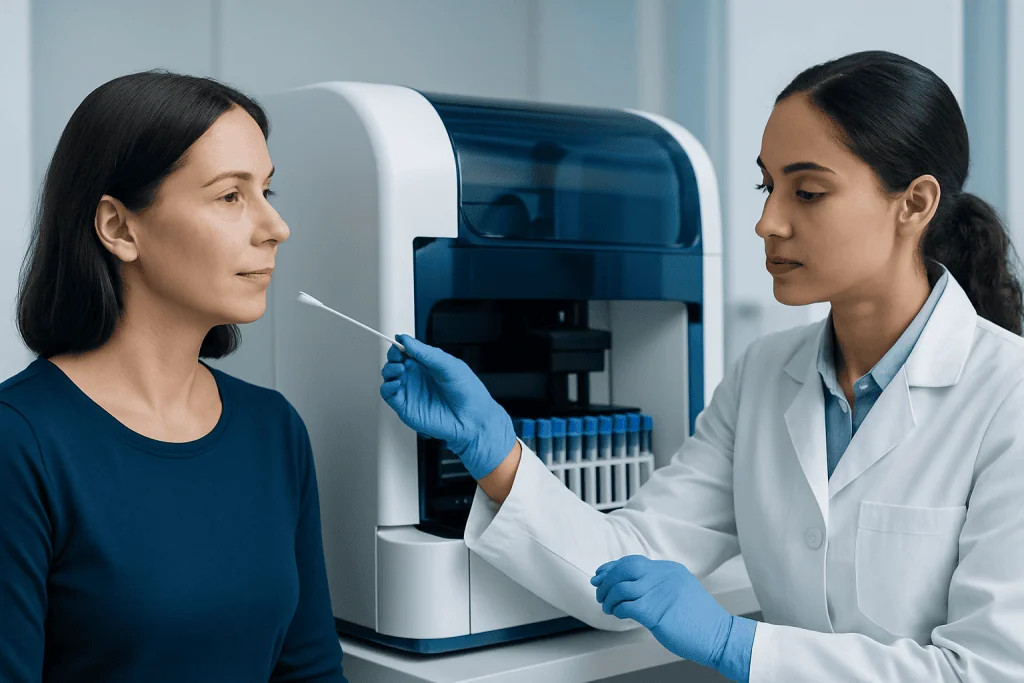
Genetic testing for ovarian cancer examines DNA, the genetic material inherited from biological parents. A laboratory searches selected genes for variants known to be associated with cancer risk. Testing may focus on one known familial variant or use a multigene panel that assesses several hereditary cancer genes at the same time.
The process commonly starts with a review of personal and family history. A clinician or genetic counselor may ask about ovarian, breast, pancreatic, prostate, colorectal and endometrial cancers in close relatives, along with the ages at diagnosis. This information helps determine whether testing is likely to be informative and which genes should be included.
For people with an ovarian cancer diagnosis, testing may involve both germline testing and tumor testing. Germline testing uses blood or saliva to identify inherited variants that may also be present in relatives. Tumor testing examines cancer tissue for changes acquired within the tumor; these changes can sometimes help inform oncology treatment planning. Ovarian cancer care may therefore involve coordination between gynecologic oncology, medical oncology, pathology and genetic counseling.
Who may benefit from testing and what is the biggest indicator of ovarian cancer?

Genetic testing may be considered for anyone diagnosed with epithelial ovarian, fallopian tube or primary peritoneal cancer, regardless of age or family history. It may also be appropriate for people without cancer who have a close biological relative with ovarian cancer, a known inherited cancer-related variant in the family, or a family pattern of related cancers.
There is no single symptom, blood test or inherited factor that is the biggest indicator of ovarian cancer for every person. A strong family history of ovarian cancer or a known pathogenic variant, particularly in BRCA1 or BRCA2, is among the clearest indicators of inherited risk. However, many people diagnosed with ovarian cancer have no known family history, so persistent symptoms and regular medical assessment remain important.
Symptoms that deserve medical review include persistent abdominal or pelvic bloating, pelvic or abdominal pain, feeling full quickly, difficulty eating, or needing to urinate more often or urgently. These symptoms are common and often have non-cancerous causes, but new symptoms that occur frequently or persist should be discussed with a doctor.
- A parent, sibling or child with ovarian cancer may increase concern for inherited risk.
- Several relatives with breast, ovarian, pancreatic or prostate cancer can also be relevant.
- A known BRCA-related or Lynch syndrome variant in a biological relative is a reason to seek genetic counseling.
What happens during the procedure and how long does it take?
Genetic testing itself is straightforward. After informed consent and, ideally, pre-test counseling, a healthcare professional collects a blood sample or provides a saliva collection kit. The sample is labeled and sent to a specialized laboratory. There is typically no fasting, anesthesia or special preparation required unless the care team gives different instructions.
The collection appointment often takes only a short time. A blood draw may cause brief discomfort, while saliva testing is noninvasive. There is no physical recovery period after either method, and most people can return immediately to usual activities.
Before testing, patients should be prepared for the possibility that results may affect biological relatives. Discussing the emotional, practical and privacy implications in advance can help. Genetic counseling also supports informed consent, including an explanation of what the selected test can and cannot identify.
Possible benefits include a clearer understanding of inherited risk, more tailored prevention discussions and useful information for relatives. Limitations include the possibility of an uncertain result and the fact that a negative test does not remove all ovarian cancer risk.
How long does genetic testing for ovarian cancer take?
The sample collection is usually completed in one visit, but the full testing process includes counseling, laboratory analysis and a result review appointment. Timing varies according to the laboratory, the number of genes tested, whether a known family variant is being checked and whether tumor testing is also needed.
In many settings, results from germline genetic testing are available within several weeks. More complex panels or tests that require additional laboratory confirmation can take longer. If a person is making time-sensitive cancer treatment decisions, the oncology team may request an expedited process when appropriate.
Patients can ask the ordering clinician when results are expected and how they will be communicated. A planned discussion is preferable to receiving results without context, because even a clear laboratory report can require careful interpretation based on personal and family history.
How long does it take to get results from genetic cancer testing?
Genetic cancer testing results often take a few weeks after the laboratory receives the sample, although exact timelines differ. Single-variant testing in a family with a known gene change may be faster than a broad multigene panel. Tumor genetic testing can have a separate timeline because it requires adequate tissue and specialized analysis.
Results are generally reported in one of three ways. A positive result identifies a pathogenic or likely pathogenic variant associated with increased risk. A negative result means no relevant variant was found on the test, but it does not necessarily exclude inherited risk, especially when family history remains strong. A variant of uncertain significance means the laboratory does not yet know whether a genetic change affects cancer risk; it should not usually be used alone to make major preventive treatment decisions.
A genetic counselor or specialist can explain what the result means for the individual and for relatives. They may recommend that family members have targeted testing when a clearly harmful inherited variant is identified, rather than automatically ordering broad testing for everyone.
Next steps after results: prevention, monitoring and treatment planning
Follow-up after genetic testing is individualized. For someone with an inherited high-risk variant but no cancer diagnosis, the care team may discuss symptom awareness, appropriate breast and gynecologic risk assessment, reproductive plans and risk-reducing surgery at a suitable time. Decisions should reflect the specific gene, age, health status, fertility wishes and personal preferences.
There is currently no screening test proven to reliably detect ovarian cancer early in average-risk people. For individuals at increased inherited risk, doctors may sometimes use selected monitoring strategies, but these do not replace a detailed prevention discussion. Risk-reducing removal of the fallopian tubes and ovaries may be considered for some high-risk individuals after childbearing is complete; it has important effects, including surgical menopause before natural menopause, that need careful counseling.
For patients diagnosed with ovarian cancer, genetic information may contribute to treatment discussions, including whether ovarian cancer treatment options such as surgery, systemic therapy and targeted approaches are appropriate. Acibadem International’s multidisciplinary specialists and JCI-accredited hospitals diagnose and treat ovarian cancer for international patients, with care plans developed around individual clinical needs.
Healthful habits, such as not smoking, maintaining regular medical care and discussing family history updates with a clinician, support general health. They cannot eliminate an inherited risk, but informed follow-up can help patients make timely, considered choices.
When to seek medical care
A person should speak with a doctor or genetic counselor if they have ovarian cancer, a close biological relative with ovarian cancer, a known familial BRCA or other hereditary cancer variant, or several relatives affected by breast, ovarian, pancreatic, prostate, colorectal or endometrial cancer. It is especially helpful to seek advice before ordering a direct-to-consumer genetic test, as these tests may not assess all clinically relevant genes or variants.
Medical assessment is also appropriate for new, persistent or worsening symptoms such as abdominal swelling, pelvic discomfort, early fullness, changes in appetite or frequent urination. These symptoms usually have causes other than ovarian cancer, but evaluating them promptly can provide reassurance or identify a need for further care.
Urgent medical attention is needed for severe sudden abdominal or pelvic pain, fainting, heavy vaginal bleeding, trouble breathing or other acute symptoms. A healthcare professional can determine the safest next step based on the person’s symptoms and medical history.
Frequently asked questions
Is genetic screening for ovarian cancer the same as ovarian cancer screening?
No. Genetic screening looks for inherited gene variants that may increase future cancer risk. Ovarian cancer screening aims to detect cancer early, often using clinical assessment, imaging or blood tests, but no routine test has been proven to reliably screen average-risk people for ovarian cancer.
Who should consider BRCA testing for ovarian cancer?
Testing is commonly recommended for people diagnosed with epithelial ovarian, fallopian tube or primary peritoneal cancer. It may also be considered for people with a close relative with ovarian cancer, a known family BRCA variant or a family pattern of related cancers. A genetic counselor can help determine whether testing is appropriate.
Does a positive BRCA result mean someone will get ovarian cancer?
No. A positive result means the person has an inherited variant associated with a higher risk than the general population, not a certainty of developing cancer. The level of risk depends on the specific gene and other personal factors, and a specialist can discuss prevention and follow-up options.
What does a negative genetic test result mean?
A negative result means the test did not identify a relevant variant among the genes and changes it assessed. It can be reassuring, but it does not remove all cancer risk. If a family history is strong, a clinician may still recommend follow-up based on that history.
Can genetic testing be done with saliva instead of blood?
Yes. Many germline genetic tests can use either saliva or blood because both contain DNA suitable for analysis. The clinician or laboratory will advise which sample type is preferred in a particular situation.
Should relatives be tested if someone has a positive result?
Biological relatives may be offered genetic counseling and targeted testing when a pathogenic familial variant is identified. Testing can clarify whether they inherited the same variant and may benefit from personalized prevention planning. Relatives should make this decision with a qualified healthcare professional.
References
- National Cancer Institute
- American College of Obstetricians and Gynecologists
- Centers for Disease Control and Prevention
- National Comprehensive Cancer Network
- World Health Organization
This article is for general information only and is not a substitute for professional medical advice. Please consult a qualified doctor about your individual situation.
Ovarian Cancer in Turkey — costs, top hospitals & a free quote
JCI-accredited · board-certified surgeons · reply within 24h
Add us as a Preferred Source to see more of our trusted health content across Google Search, AI Overviews and Discover.

More from the Health Library



Related Specialists

Dr. Aykut Ayyıldız
Anesthesiology
Assoc. Prof. Dr. Tonguç Utku Yılmaz
Kidney Transplant Center
Dr. Atiye Ayral
Physical Medicine & Rehabilitation
Dr. A. Ezgi Sancaklı
Gynecology & Obstetrics