Sever’s Disease Treatment: How It Works, Results and What to Expect
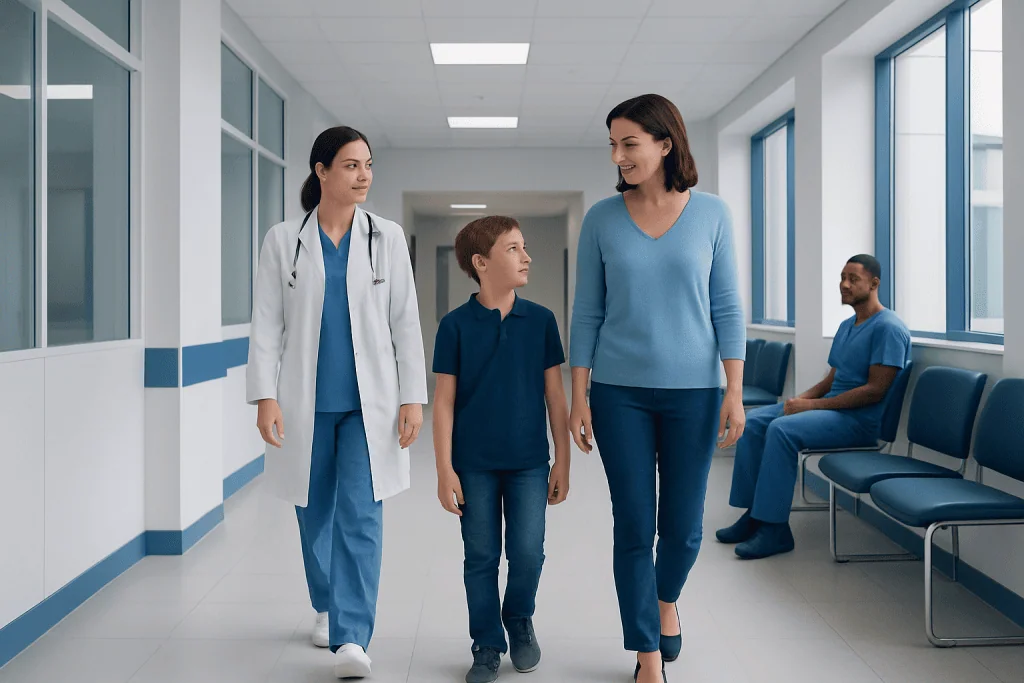
Sever's disease, also called calcaneal apophysitis, is a common cause of heel pain in physically active growing children. Treatment usually combines relative rest, ice, heel support, calf stretching and a gradual return to sport.
Key Takeaways
- Sever's disease, also called calcaneal apophysitis, is a common cause of heel pain in physically active growing children.
- Treatment usually combines relative rest, ice, heel support, calf stretching and a gradual return to sport.
- A walking boot or cast is occasionally used for more severe pain or pain that does not settle with simpler measures.
- The condition resolves as the heel growth plate matures and does not usually cause long-term damage.
- Persistent pain, limping, swelling, fever or inability to bear weight should be assessed promptly by a healthcare professional.
Sever's disease treatment is usually non-surgical and focuses on reducing stress at the growing heel, easing pain and helping a child return to activity safely. Most children improve with temporary activity modification, ice, stretching, supportive shoes and guidance from a clinician when symptoms persist or affect walking.
Overview: How Sever's Disease Treatment Works
Sever’s disease treatment aims to reduce irritation where the Achilles tendon pulls on the heel’s growth area. Despite its name, Sever’s disease is not an infection or a lifelong disease. It is an overuse-related cause of heel pain in children and adolescents who are still growing, medically called calcaneal apophysitis.
The heel bone grows from a region near its back called the calcaneal apophysis. During a growth spurt, this area can be more vulnerable to repeated pulling and impact from running, jumping and sport. Treatment gives the heel time to settle while maintaining comfortable movement and gradually rebuilding activity.
Most children do not need an operation, injection or extensive testing. A care plan is tailored to the child’s pain, walking ability, sport demands and examination findings. The immediate objective is comfort; the longer-term objective is a safe, confident return to usual play and exercise without provoking symptoms.
Who May Benefit From Treatment and Assessment
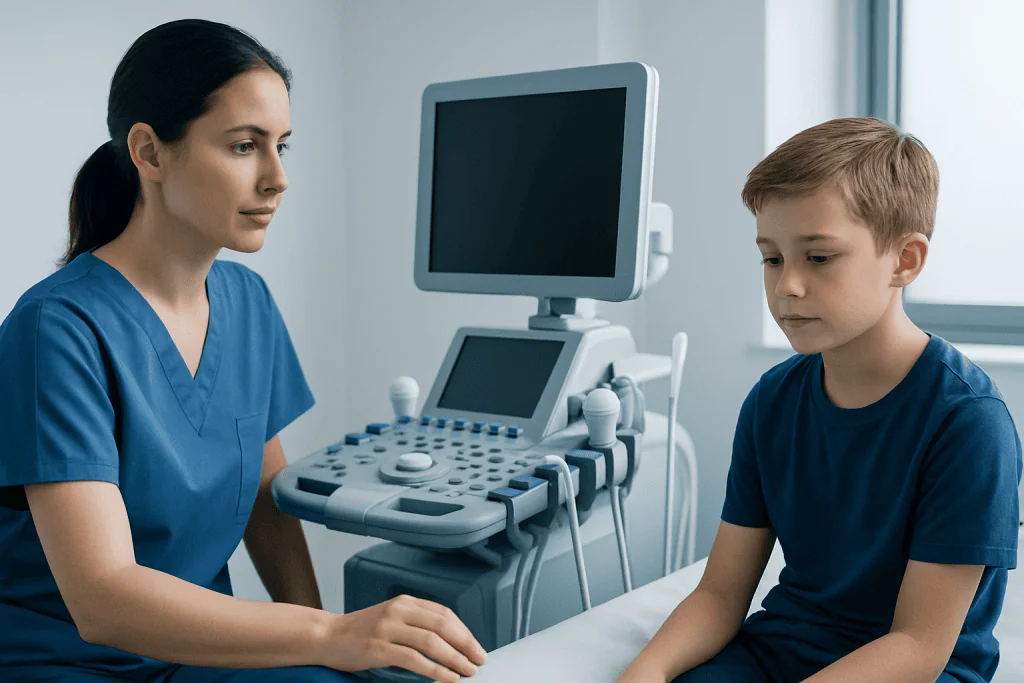
Sever’s disease most often affects children roughly between 8 and 14 years old, particularly during periods of rapid growth. It is common in children who take part in running and jumping sports, such as football, basketball, gymnastics, athletics or dance. Pain may occur in one heel or both, and it often becomes more noticeable during or after activity.
A child is more likely to benefit from a structured treatment plan when heel pain limits sport, causes limping, returns repeatedly, or does not improve after a few days of reducing aggravating activity. Tight calf muscles, a sudden increase in training, hard playing surfaces and footwear with limited cushioning can all contribute.
Not every child with heel pain has Sever’s disease. A clinician will consider other possibilities, including a heel bruise, tendon problem, stress injury, inflammatory condition or, less commonly, infection. An accurate assessment is especially important after an injury or when the symptoms do not follow the typical pattern.
What a Clinical Evaluation Usually Involves
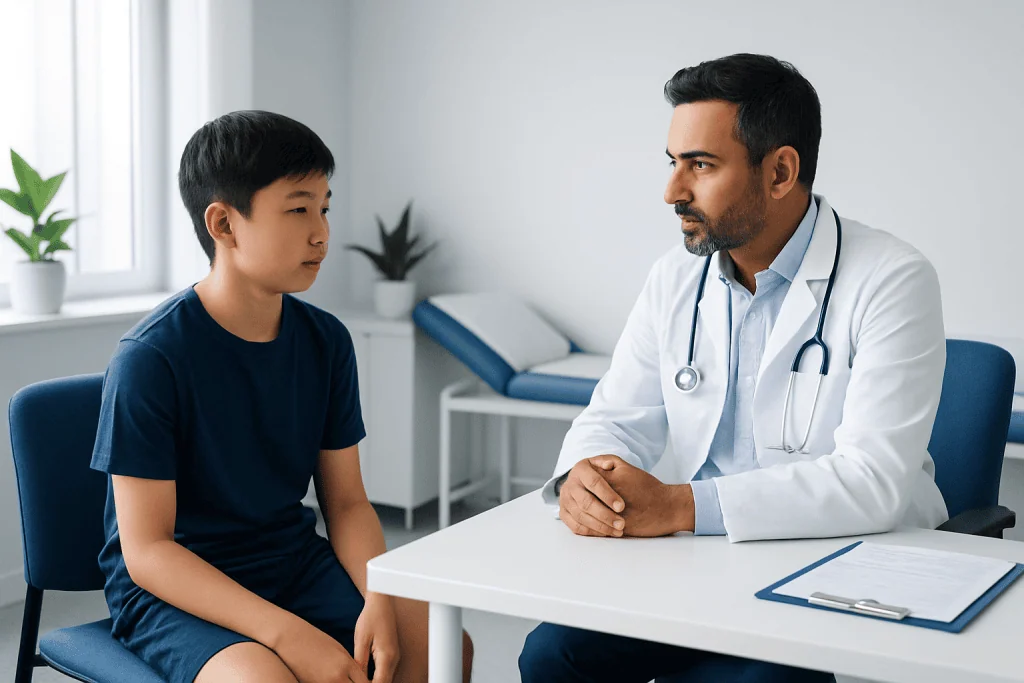
Diagnosis is commonly based on the child’s history and a physical examination. The clinician will ask when pain began, which activities trigger it, whether there has been a recent growth spurt or change in training, and whether the child has had an injury, fever or symptoms elsewhere in the body.
During the examination, the clinician may gently press around the back and sides of the heel, assess the child’s walking pattern and check ankle movement and calf flexibility. Pain with squeezing the sides of the heel can support the diagnosis, although the complete clinical picture matters more than any one finding.
X-rays are not routinely needed to confirm Sever’s disease because growth-plate appearances can vary normally in children. Imaging may be recommended when there was significant trauma, symptoms are unusual, pain is severe or prolonged, or another cause of heel pain needs to be excluded. Further tests are considered only when the history or examination suggests a different condition.
Sever's Disease Treatment Step by Step
Initial treatment usually begins with relative rest. This does not necessarily mean complete inactivity; rather, the child temporarily reduces or pauses activities that cause heel pain, especially running and jumping. Low-impact activities may be suitable if they are comfortable, but this should be individualized with advice from a clinician.
Ice may help relieve discomfort after activity. A cold pack wrapped in a cloth can be placed on the painful area for short periods, avoiding direct contact with the skin. Supportive, well-fitting athletic shoes with cushioning are important. Heel cups, heel lifts or cushioned inserts can reduce strain on the heel and are often useful during everyday walking and sports.
Gentle stretching of the calf muscles and Achilles tendon is commonly included once it can be done comfortably. A clinician or physiotherapist may also suggest exercises that support ankle mobility, lower-limb strength and movement control. This approach is part of physical therapy and rehabilitation when pain is recurrent, flexibility is limited or a child needs a structured return-to-sport plan.
For more substantial pain, a healthcare professional may discuss suitable pain-relief options, taking the child’s age, medical history and other medicines into account. If walking remains painful despite initial measures, temporary immobilization in a walking boot, or rarely a cast, may be considered. This is generally reserved for more severe or persistent cases and is followed by a gradual return to normal activity.
Recovery Timeline, Benefits and Return to Sport
Many children notice improvement within several weeks once painful activities are reduced and supportive measures are used consistently. However, recovery is not identical for every child. Symptoms can return if the child resumes high-impact training too quickly, particularly during an ongoing growth spurt.
The main benefits of treatment are reduced heel pain, more comfortable walking and a safer return to school activities and sport. Because Sever’s disease is linked to the temporary vulnerability of a growing heel, it normally resolves as skeletal growth matures. It does not usually lead to lasting heel damage.
Return to sport should be gradual rather than based only on a calendar date. In general, a child should be able to walk without pain or limping and complete basic sport-specific movements comfortably before returning to full training. A staged increase in duration and intensity helps identify whether the heel is tolerating the workload.
Parents, coaches and children can work together to avoid sudden jumps in training volume. If heel pain returns, reducing the aggravating activity early and reviewing footwear, stretching and recovery routines can often prevent a longer interruption.
Risks, Practical Self-Care and Prevention
The treatments used for Sever’s disease are generally low risk when they are appropriate for the child. The main concern is either continuing painful impact activity and prolonging symptoms, or avoiding all movement for longer than necessary. A clinician can help strike a balance between protecting the heel and maintaining general fitness.
Heel inserts should fit comfortably and should not create new pressure points. Stretching should be gentle and should not cause sharp pain. Pain medicines should only be used as directed by a qualified healthcare professional or according to the product instructions suitable for the child’s age; they should not be used to enable participation through significant pain.
Helpful prevention measures include supportive sports shoes, replacing worn footwear, building training intensity gradually and allowing regular rest days. Children who repeatedly develop symptoms may benefit from an assessment of calf tightness, footwear, training schedule and running or jumping mechanics. These measures can also be discussed within broader pediatric orthopedic care when needed.
For families seeking coordinated assessment, Acibadem International’s multidisciplinary specialists and JCI-accredited hospitals diagnose and treat musculoskeletal conditions in international patients, with care plans based on the child’s individual needs.
When to Seek Medical Care
Medical assessment is advisable when heel pain causes a limp, prevents the child from bearing weight, persists despite reducing activity, repeatedly returns, or interferes with school, sleep or normal daily movement. A clinician can confirm whether the symptoms are consistent with Sever’s disease and recommend the most appropriate treatment plan.
More urgent medical advice is needed if heel pain follows a significant injury, the area is markedly swollen, red or warm, or the child has fever, feels unwell, has numbness, or experiences pain at rest or at night. These features are not typical of uncomplicated Sever’s disease and may need prompt evaluation.
Parents should also seek review if a child has pain in other joints, unexplained weight loss, a rash or prolonged morning stiffness. Although these symptoms often have other explanations, they warrant a careful assessment rather than assuming that all heel pain is due to sport or growth.
Frequently asked questions
What is the fastest way to treat Sever's disease?
There is no single instant treatment, but reducing painful running and jumping, using ice after activity, wearing supportive shoes and considering heel cups often provides relief. Gentle calf stretching and a gradual return to sport are also important. A clinician should assess severe, persistent or recurring symptoms.
Does Sever's disease require surgery?
No. Surgery is not a treatment for Sever's disease because the condition relates to temporary irritation of a growing heel area. Most children improve with non-surgical measures and symptoms usually resolve when skeletal growth is complete.
How long should a child rest from sport with Sever's disease?
The duration depends on pain and function rather than a fixed number of days. High-impact activity is usually reduced until walking, daily activities and basic sport movements can be completed without pain or limping. Return should then be gradual.
Can a child continue playing sports with Sever's disease?
Some children can continue modified activity if it does not increase pain or cause limping, while others need a short break from impact sports. Swimming or cycling may be comfortable alternatives for some children. The plan should be guided by symptoms and, when needed, by a healthcare professional.
Are heel cups effective for Sever's disease?
Heel cups or cushioned inserts can help some children by absorbing impact and reducing pull on the sore heel area. They work best alongside activity adjustment, supportive shoes and flexibility work. A clinician can advise on fit and whether an insert is appropriate.
Will Sever's disease cause permanent heel problems?
Sever's disease does not usually cause permanent damage or long-term heel problems. It is associated with the period when the heel is still growing and generally settles as growth matures. Recurrent symptoms during growth can occur, particularly with high-impact sport, but can usually be managed conservatively.
References
- American Academy of Orthopaedic Surgeons
- American Academy of Pediatrics
- OrthoInfo
- National Health Service
- Mayo Clinic
This article is for general information only and is not a substitute for professional medical advice. Please consult a qualified doctor about your individual situation.
Joint and spine care in Turkey — expert assessment & treatment
JCI-accredited · board-certified surgeons · reply within 24h
Add us as a Preferred Source to see more of our trusted health content across Google Search, AI Overviews and Discover.