Mohs Procedure: An Evidence-Based Patient Guide

Mohs surgery combines tumor removal with immediate microscopic examination of the tissue edges. It is often considered for skin cancers in visible or functionally important areas, such as the face, ears, hands, feet, or genital area.
Key Takeaways
- Mohs surgery combines tumor removal with immediate microscopic examination of the tissue edges.
- It is often considered for skin cancers in visible or functionally important areas, such as the face, ears, hands, feet, or genital area.
- The procedure is usually done with local anesthetic, and the total visit may take several hours because tissue is checked between stages.
- Wound care, activity restrictions, and follow-up are important for healing and for monitoring for future skin cancers.
- Mohs surgery has advantages but also possible downsides, including a long appointment, scarring, bleeding, infection, and the need for reconstruction in some cases.
A Mohs procedure is a specialized outpatient surgery used mainly for certain skin cancers. The surgeon removes the cancer in thin layers and examines each layer immediately, helping preserve as much healthy skin as possible while confirming that cancer cells have been cleared.
Overview: What Is a Mohs Procedure?
A Mohs procedure, also called Mohs micrographic surgery, is a precise technique for removing certain types of skin cancer. During the procedure, the surgeon removes the visible tumor and then takes very thin additional layers of tissue only when needed. Each layer is examined under a microscope while the patient waits, allowing the surgeon to map where cancer cells remain.
This approach differs from standard excision, in which a tumor and a planned margin of surrounding tissue are removed and sent for laboratory analysis later. Mohs surgery examines the full edge and underside of the removed tissue during the visit. It can therefore offer thorough margin assessment while conserving healthy tissue, which is especially valuable in areas where preserving skin is important for appearance or function.
Mohs surgery is most commonly used for basal cell carcinoma and squamous cell carcinoma. It may also be considered for selected other skin cancers, depending on the tumor type, location, size, previous treatment, and pathology findings. A dermatologist or surgical team reviews the individual diagnosis before recommending the most suitable treatment.
How Mohs Surgery Works and Who May Be a Candidate
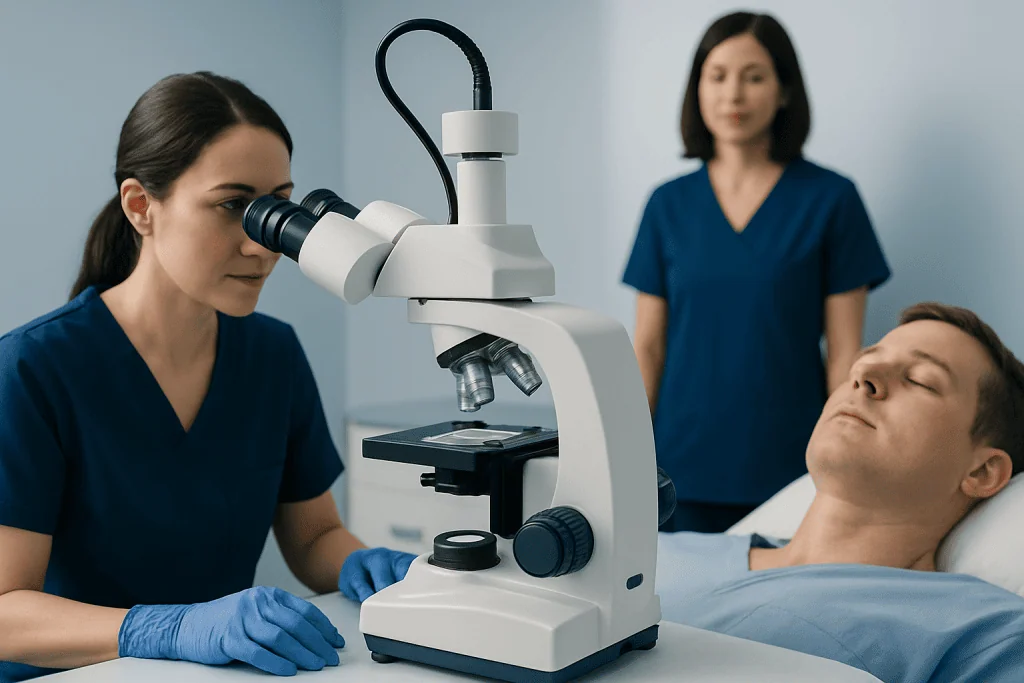
A Mohs procedure is performed by a physician trained in both skin cancer surgery and microscopic interpretation of the tissue removed. The process continues in stages: a layer is removed, processed in an on-site laboratory, examined under a microscope, and followed by removal of another layer only from the area where cancer cells are still found. The process ends when no cancer is seen at the examined margins.
People may be candidates when a skin cancer is located in an area where tissue preservation is particularly important, including the nose, eyelids, lips, ears, scalp, fingers, toes, or genital region. It may also be recommended for cancers that are large, recurrent, rapidly growing, have less-defined borders, have aggressive features under the microscope, or developed in a person with a weakened immune system.
A dermatology consultation includes a Mohs evaluation of the biopsy report, the skin lesion, medical history, medications, allergies, and prior treatment. The clinician also discusses whether Mohs is preferable to standard surgical excision, topical treatment, radiation therapy, or another option. Patients diagnosed with common non-melanoma cancers may find related information useful in basal cell carcinoma and squamous cell carcinoma guidance.
Administrative terminology can be confusing. Mohs documentation requirements and Mohs procedure codes generally concern the clinician’s medical record and billing processes. A Mohs procedure CPT code may reflect the number of stages and tissue blocks examined, but coding does not determine whether the procedure is medically appropriate; that decision is based on clinical findings and pathology.
What Happens During the Procedure?

Most Mohs procedures are performed in an outpatient setting under local anesthetic. Patients are usually awake but should not feel pain in the treatment area. The medical team cleans and marks the site, injects anesthetic, and removes the visible tumor along with a thin layer of surrounding tissue.
The tissue is carefully mapped, frozen, sliced, and examined microscopically. This laboratory phase can take time, so patients usually wait with a dressing in place. If cancer cells are found at a particular edge, the surgeon removes another thin layer from that precise mapped area rather than taking more tissue from the entire wound.
Several stages may be needed, although the number cannot be known in advance. Once the margins are clear, the wound is repaired. Depending on its size and location, it may heal naturally, be closed with stitches, or require a skin flap or graft. In selected cases, a reconstructive surgeon may help plan or perform repair after cancer clearance.
Before the appointment, the care team may advise patients about eating, transport, medications, and whether to pause specific medicines. Blood-thinning medication should never be stopped without instruction from the clinician who prescribed it. Comfortable clothing, a snack, reading material, and the expectation of a variable-length appointment can make the day easier.
Benefits, Limitations, and What Are the Downsides of Mohs Surgery?
The main benefit of Mohs surgery is that it combines careful cancer removal with immediate microscopic margin assessment. By checking tissue during the visit, the surgeon can continue treatment until the examined edges are clear. The tissue-sparing approach can be particularly helpful where even small amounts of removed skin may affect movement, vision, speech, or appearance.
Mohs surgery is not necessary or appropriate for every skin cancer. Many small, low-risk cancers in lower-risk locations can be effectively treated with standard excision or other methods. The choice depends on the pathology report and the patient’s overall circumstances, rather than on a single feature such as lesion size.
What are the downsides of Mohs surgery? The procedure can take much of a day because each stage requires tissue processing and microscopic review. It can leave a scar and may require stitches, a flap, grafting, or additional reconstructive care. Bruising, swelling, tenderness, bleeding, infection, altered sensation, and temporary or lasting changes in nearby function are possible, particularly in delicate anatomical areas.
Although Mohs surgery is designed to fully treat the identified cancer, no treatment can eliminate the possibility of recurrence or of developing a new skin cancer elsewhere. Ongoing skin examinations and sun-protective habits remain important after treatment. Patients should discuss expected benefits, cosmetic considerations, and individual risks with their surgeon before deciding.
Recovery Timeline and Wound Care
Recovery varies according to the size and location of the surgical wound and the type of repair used. Mild discomfort, swelling, bruising, and a small amount of drainage may occur during the first few days. The team provides written instructions about bandage changes, cleansing, pain relief, activity, and follow-up appointments.
Should I use Vaseline or Aquaphor after Mohs surgery? In many cases, clinicians recommend plain petroleum jelly, often known by the brand name Vaseline, to keep a clean wound moist under a dressing. Aquaphor is another petrolatum-based ointment that some clinicians approve, but it contains additional ingredients that may occasionally irritate sensitive skin. The safest choice is to use exactly the product and method recommended by the surgical team, especially if there is a skin allergy, graft, flap, or infection concern.
Stitches are commonly removed within days to a few weeks, depending on the body area and repair. Surface healing may occur over several weeks, while scar remodeling continues for months. Protecting the healing site from direct sun exposure, once permitted by the clinician, may help limit darkening of the scar.
What not to do after Mohs surgery? Patients should avoid strenuous exercise, heavy lifting, bending, swimming, or activities that stretch or bump the wound until their clinician says it is safe. They should not pick scabs, smoke during healing, apply unapproved products, or remove dressings early. Alcohol may increase bleeding risk for some people shortly after surgery, so individualized instructions should be followed.
What I Wish I Knew Before Mohs Surgery
What I wish I knew before Mohs surgery is a common concern, and preparation can make the experience more manageable. The procedure is usually not painful once local anesthetic is working, but patients may feel pressure, pulling, or brief discomfort during anesthetic injections. The waiting periods between stages are a normal part of obtaining microscopic results, so the visit can last longer than a routine appointment.
It is helpful to arrange a ride home if the surgery involves the face, an eye-area dressing, sedating medicine, or a repair that could make driving uncomfortable. Patients should bring a list of medications and allergies, and should tell the team about implanted devices, bleeding conditions, smoking, prior reactions to anesthetics, and any history of wound-healing problems.
The final wound size may be larger than the visible spot because cancer cells can extend beyond what is seen on the skin. This does not mean the procedure has gone wrong; it reflects the purpose of staged margin control. Asking in advance about likely repair options, scar care, work restrictions, and the follow-up plan can support informed expectations.
For patients traveling for care, Acibadem International’s multidisciplinary specialists and JCI-accredited hospitals can assess skin cancer treatment and reconstructive needs for international patients. Where surgery is advised, the planned approach should always follow the pathology diagnosis and an individual medical evaluation.
When to Seek Medical Care
Patients should contact their surgical team promptly if they have bleeding that does not stop with firm, continuous pressure as instructed, worsening rather than improving pain, spreading redness, increasing warmth, pus-like drainage, fever, or a wound that opens. New numbness, difficulty moving a nearby area, or significant swelling should also be discussed without delay.
Urgent medical assessment is appropriate for severe bleeding, signs of a serious allergic reaction such as trouble breathing or swelling of the face or throat, or symptoms of a severe infection. These events are uncommon, but prompt care is important when they occur.
After healing, people should arrange dermatology follow-up according to their clinician’s advice. A new, changing, bleeding, crusting, or non-healing skin spot deserves professional assessment, particularly in someone with a prior skin cancer. Regular self-checks and clinician-led skin examinations can help identify concerns early.
Frequently asked questions
Is a Mohs procedure painful?
A Mohs procedure is usually performed with local anesthetic, so the treatment area should be numb during surgery. Patients may briefly feel stinging with anesthetic injections and may notice pressure or movement during the procedure. Mild soreness afterward is common and should be managed according to the surgical team's instructions.
How long does a Mohs procedure take?
The time varies because tissue must be processed and examined after each surgical stage. Many appointments take several hours, and some take longer when additional stages or a complex repair are needed. The surgeon generally cannot predict the exact duration before examining the tissue margins.
Will Mohs surgery leave a scar?
Any skin surgery can leave a scar, including Mohs surgery. The size and appearance depend on the cancer's extent, body location, healing, and type of repair. Scar appearance often improves gradually over months, and the care team can explain appropriate scar-care options.
Can skin cancer come back after Mohs surgery?
Mohs surgery is designed to confirm clearance of cancer cells at the examined tissue edges during the procedure. However, recurrence is still possible, and a person who has had one skin cancer may develop another in a different area. Ongoing dermatology follow-up and sun protection are therefore important.
Can I shower after Mohs surgery?
Showering guidance depends on the wound location and repair method. Some patients may shower after a short period, while others need to keep the area dry longer, especially after a graft or flap. The surgical team's instructions should take priority over general advice.
Why is Mohs surgery used on the face?
Mohs surgery is often considered for facial skin cancers because it allows detailed margin assessment while aiming to preserve as much healthy tissue as possible. This can be important around the eyes, nose, lips, ears, and other areas where tissue loss may affect appearance or function. The decision still depends on the cancer's specific features and pathology.
References
- American Academy of Dermatology
- National Cancer Institute
- American Cancer Society
- British Association of Dermatologists
- National Comprehensive Cancer Network
This article is for general information only and is not a substitute for professional medical advice. Please consult a qualified doctor about your individual situation.
Oncology care in Turkey — second opinion and treatment plan
JCI-accredited · board-certified surgeons · reply within 24h
Add us as a Preferred Source to see more of our trusted health content across Google Search, AI Overviews and Discover.