Cell Therapy: How It Works, Results and What to Expect

Cell therapy is not one treatment: the cell source, method and expected outcome vary greatly by condition. Some forms, including hematopoietic stem cell transplantation and certain immune-cell therapies, are established medical care for specific diseases.
Key Takeaways
- Cell therapy is not one treatment: the cell source, method and expected outcome vary greatly by condition.
- Some forms, including hematopoietic stem cell transplantation and certain immune-cell therapies, are established medical care for specific diseases.
- Cell therapy results may appear quickly in some blood and immune disorders, but tissue repair and rehabilitation-related outcomes can take months and may be uncertain.
- A careful evaluation is essential to confirm eligibility, review alternatives and identify risks such as infection, immune reactions or treatment-related complications.
- Unregulated clinics may market stem cell treatments without strong evidence; patients should ask about approval status, evidence and follow-up plans.
Cell therapy is a broad medical approach that uses living cells to treat disease, restore blood-forming cells, replace damaged tissue or influence immune activity. It is already established for selected conditions, while many stem-cell-based treatments remain investigational and should be considered only through qualified medical teams and regulated clinical research.
Overview: what is cell therapy?
Cell therapy is a treatment approach in which living cells are given to a person to prevent, treat or help manage a medical condition. Depending on the therapy, the cells may replace cells that no longer work properly, rebuild the blood and immune system, target cancer cells, or deliver signals that support healing. A simple cell therapy explanation is that clinicians use carefully prepared cells as an active part of treatment rather than relying only on medicines, surgery or radiation.
Cell therapy includes several very different treatments. Hematopoietic stem cell transplantation, often called a bone marrow or stem cell transplant, has an established role in certain blood cancers, bone marrow failure disorders and inherited blood or immune conditions. Some cancer treatments use modified immune cells, such as CAR T-cell therapy. By contrast, many treatments promoted as “stem cell therapy” for orthopedic pain, neurological disease, aging or chronic illness are still being studied and may not be proven, approved or appropriate outside well-designed clinical trials.
The expected benefit, safety profile and treatment experience depend on the diagnosis, the type and source of cells, and how they are administered. A qualified specialist can explain whether cell therapy is standard care, an option within a clinical trial, or not currently supported by reliable evidence for a particular condition.
How does cell therapy work?
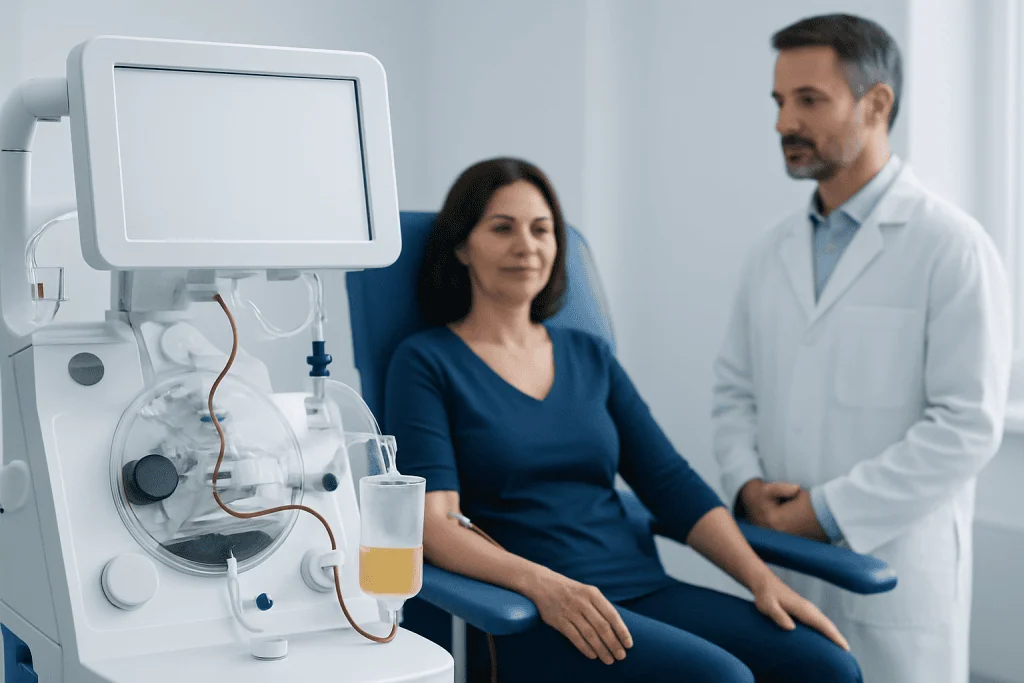
Cell therapy how it works depends on the cells involved. In a hematopoietic stem cell transplant, blood-forming stem cells are infused into the bloodstream after preparative treatment. These cells travel to the bone marrow, where they can begin producing red blood cells, white blood cells and platelets. The cells may come from the patient (autologous transplant) or a carefully matched donor (allogeneic transplant).
In immune-cell therapies, clinicians collect immune cells from the patient, process or sometimes genetically modify them in a specialized laboratory, and then return them by infusion. The aim is to strengthen the immune system’s ability to recognize and attack selected cancer cells. Other investigational cell therapies may seek to replace damaged cells, reduce harmful inflammation or release biological signals that encourage repair.
Not every cell product behaves the same way, and “stem cell” does not automatically mean a treatment can regenerate any organ or cure a disease. The route of administration, cell dose, laboratory quality controls and follow-up requirements are all important. Treatments should be delivered in settings that can provide appropriate testing, monitoring and management of complications.
- Autologous cells: collected from and returned to the same person.
- Allogeneic cells: obtained from another person, usually a matched donor.
- Engineered immune cells: laboratory-prepared cells designed for a specific therapeutic purpose.
Who may be a candidate for cell therapy?

Candidacy is based on the specific disease and treatment goal, not simply on a person’s age or symptoms. For established therapies, specialists consider the diagnosis, disease stage, previous treatments, overall health, organ function, infection status and, where relevant, the availability of compatible donor cells. In cancer care, the tumor type and its molecular features may also influence whether an immune-cell treatment is suitable.
Patients may be considered when conventional treatment has not worked, when cell therapy is known to offer an advantage, or when a clinical trial is investigating a carefully defined use. However, a treatment being available somewhere does not mean it is appropriate for every patient. The potential benefit must be weighed against possible short- and long-term risks and against other evidence-based options.
Evaluation commonly includes a medical history, physical examination, blood testing, imaging or bone marrow assessment when indicated, and consultations with relevant specialists. For people considering a transplant, the assessment may include review of leukemia or other blood disorders and discussion of donor matching. A multidisciplinary team may involve hematology, oncology, infectious diseases, cardiology, rehabilitation and mental health professionals as needed.
What happens during a cell therapy procedure?
The cell therapy timeline begins well before the infusion or procedure. First, the clinical team confirms the diagnosis, discusses treatment aims and alternatives, performs eligibility testing, and obtains informed consent. If the treatment uses the patient’s own cells, cells may be collected from blood or bone marrow. If donor cells are needed, donor selection and matching are completed. Some therapies require laboratory processing that can take days to weeks.
Before cells are given, a patient may need preparative treatment. This can range from relatively simple premedication to intensive chemotherapy, radiation or immune-suppressing medicines, depending on the therapy. Preparative treatment can reduce disease cells, make room in the bone marrow or help the body accept donor cells. The exact plan is individualized and discussed in advance.
In many therapies, the cells are delivered through a vein, much like a blood transfusion. The infusion itself may be short, but observation can last longer because reactions and treatment effects may occur afterward. Some investigational approaches use local injection into a specific tissue; these should only be considered when there is a clear scientific rationale, appropriate oversight and transparent discussion of evidence.
For appropriate patients, stem cell transplantation is a structured hospital-based treatment that includes preparation, cell infusion and close monitoring while the new blood-forming cells establish themselves. The team provides individualized instructions about hospital stay, medicines, infection precautions and planned follow-up.
Results, recovery and the cell therapy experience
Recovery varies widely. After a blood-forming stem cell transplant, blood counts may be low for a period while the transplanted cells begin working, increasing the need for close monitoring and infection prevention. Patients may have regular blood tests, supportive medicines, nutrition guidance and activity advice. Recovery often continues after discharge, with follow-up lasting months or longer.
The cell therapy experience can involve physical and emotional adjustment. Fatigue, changes in appetite, reduced stamina and worry during periods of uncertainty are common concerns for people receiving intensive treatment. Rehabilitation, psychological support and clear communication with the care team can help patients and families manage practical and emotional needs.
How long it takes to see benefit depends on the condition. For immune-cell therapy, early changes may sometimes be assessed within weeks, although imaging and laboratory monitoring are used to confirm response. After stem cell transplantation, blood-cell recovery often begins over weeks, while immune recovery and return to usual activities can take much longer. For tissue-repair applications under research, any improvement may be gradual and cannot be assumed.
Results should be judged using clinically meaningful measures, such as disease control, blood counts, imaging findings, organ function, pain or physical function, rather than marketing claims. A treating team can explain what improvement would reasonably look like, when it may be assessed and what signs would require urgent review.
Benefits, risks and potential downsides of stem cell therapy
The potential benefit of cell therapy is its ability to address disease through living cells. In established settings, it may restore blood formation, offer a route to cure or long-term control for selected blood disorders, or help immune cells attack certain cancers. The benefits are specific to the diagnosis and treatment plan; they should not be generalized to unrelated conditions.
Potential downsides of stem cell therapy include side effects from preparative treatments, reactions during infusion, infections, bleeding caused by low blood counts, organ complications and prolonged fatigue. With donor-cell transplantation, the body may reject donor cells, or donor immune cells may attack the recipient’s tissues, a complication called graft-versus-host disease. Immune-cell therapies can also cause intense immune reactions or neurological side effects that require specialist monitoring.
Another important concern is the use of unregulated or poorly evidenced cell products. Claims that a treatment can cure many unrelated diseases, reverse aging or reliably regenerate tissue should be approached with caution. Patients should ask whether the therapy is approved for their condition, whether it is part of a registered clinical trial, what evidence supports it, how cells are processed, and what emergency and long-term follow-up services are available.
Risks can often be reduced through careful selection, infection screening, laboratory quality standards, experienced clinical teams and scheduled follow-up. Even so, no cell therapy is risk-free, and informed consent should include a balanced discussion of known risks, uncertainties and alternatives.
Practical planning and when to seek medical care
Before proceeding, patients are encouraged to seek a second opinion from a specialist familiar with the relevant condition. They can bring records of previous tests and treatments, ask what the goal of therapy is, and discuss whether standard treatment, transplantation, immune-cell therapy or a clinical trial is most suitable. Planning may also include caregiver support, travel arrangements, vaccination review, dietary advice and work or school adjustments.
When to seek medical care: A person should contact their clinical team promptly for fever, chills, new shortness of breath, chest pain, severe weakness, uncontrolled vomiting or diarrhea, unusual bleeding, confusion, a new rash, or rapidly worsening symptoms after cell therapy. People receiving intensive treatment should follow the emergency instructions provided by their team, because infection and other complications may require rapid assessment.
Anyone considering a stem-cell-based treatment should arrange a medical review before making decisions based on online advertising or testimonials. Acibadem International’s multidisciplinary specialists and JCI-accredited hospitals diagnose and treat appropriate conditions for international patients, including coordinated evaluation for advanced hematology and oncology care.
Long-term care may include cancer surveillance, management of treatment effects and rehabilitation. Depending on the underlying illness, related evidence-based services may include bone marrow transplantation and CAR T-cell therapy when a specialist confirms that they are appropriate.
Frequently asked questions
How long does it take to see results from stem cell therapy?
The timeline depends on the disease and the type of stem cell therapy. After a blood-forming stem cell transplant, early blood-count recovery may begin over weeks, while immune recovery and overall recovery can take months or longer. For experimental tissue-repair treatments, the timing and likelihood of benefit may be uncertain.
How much does one session of stem cell therapy cost?
There is no single cost for a “session” of stem cell therapy because treatments differ substantially in complexity, cell source, hospital stay, laboratory processing, medicines and follow-up. Established treatments such as transplantation are usually multi-step care pathways rather than one isolated session. A hospital can provide an individualized estimate only after reviewing the diagnosis, treatment plan and care needs.
What is the success rate of cell therapy?
There is no universal success rate for cell therapy. Outcomes depend on the specific illness, disease stage, treatment type, donor match where relevant, prior therapy and a person’s overall health. A specialist should explain outcomes using evidence for the exact condition and treatment being considered, including both likely benefits and possible complications.
What are the potential downsides of stem cell therapy?
Possible downsides include treatment-related infections, infusion reactions, low blood counts, fatigue, organ complications and the effects of chemotherapy or immune-suppressing medicines used before some treatments. Donor stem cell transplants may cause graft-versus-host disease, and unproven products may carry uncertain safety and effectiveness. Care at an experienced, regulated center is important.
Is cell therapy the same as stem cell therapy?
Stem cell therapy is one type of cell therapy, but the terms are not identical. Cell therapy can also use immune cells, donor blood-forming cells or laboratory-modified cells. The best treatment approach depends on the medical condition and the available evidence.
Can anyone receive cell therapy?
No. Eligibility requires a detailed medical assessment, because cell therapies can have significant risks and are only appropriate for certain conditions. A specialist considers the diagnosis, prior treatment, general health, organ function and, for some therapies, donor availability or clinical trial criteria.
References
- World Health Organization
- U.S. Food and Drug Administration
- European Medicines Agency
- National Cancer Institute
- European Society for Blood and Marrow Transplantation
This article is for general information only and is not a substitute for professional medical advice. Please consult a qualified doctor about your individual situation.
Oncology care in Turkey — second opinion and treatment plan
JCI-accredited · board-certified surgeons · reply within 24h
Add us as a Preferred Source to see more of our trusted health content across Google Search, AI Overviews and Discover.