Does Laser Removal Cause Cancer: Procedure, Recovery and Results

Laser hair removal uses non-ionizing light and has not been shown to cause cancer. The treatment targets pigment in hair follicles and works in the superficial layers of the skin.
Key Takeaways
- Laser hair removal uses non-ionizing light and has not been shown to cause cancer.
- The treatment targets pigment in hair follicles and works in the superficial layers of the skin.
- Temporary redness, warmth, swelling around follicles, and pigment changes are more common risks than serious complications.
- A clinician should assess changing, bleeding, or unusual skin lesions before laser treatment.
- Several sessions are usually needed because hair grows in cycles.
- Sun protection and following aftercare instructions help reduce irritation and pigment changes.
Does laser removal cause cancer? Current medical evidence does not show that laser hair removal causes cancer when it is performed appropriately by a trained professional. The procedure uses non-ionizing light that acts mainly on hair follicles in the skin and does not have the DNA-damaging properties of ionizing radiation, such as X-rays.
Overview: Does Laser Removal Cause Cancer?
Does laser removal cause cancer? Available evidence does not show that laser hair removal causes cancer. Laser devices used for hair reduction emit non-ionizing light, meaning they do not have enough energy to directly damage DNA in the way that ionizing radiation, including X-rays and gamma rays, can.
In laser hair removal, light is absorbed primarily by melanin, the pigment that gives hair its color. The energy is converted to heat, which damages selected hair follicles to slow or reduce future hair growth. The light is designed to act locally in the skin rather than travel through the body or affect internal organs.
It is still important to distinguish a cosmetic procedure from a skin assessment. Laser treatment should not be used over a mole or other lesion that is new, changing, darkening, bleeding, crusting, or otherwise concerning until it has been evaluated by a qualified clinician. This protects the lesion from being altered or obscured and helps ensure timely diagnosis if needed.
Laser hair removal is commonly used for long-term hair reduction rather than guaranteed permanent removal. Outcomes vary with hair color, skin tone, body area, hormone-related hair growth, device type, and adherence to the treatment plan.
How laser hair removal works and who may be a candidate
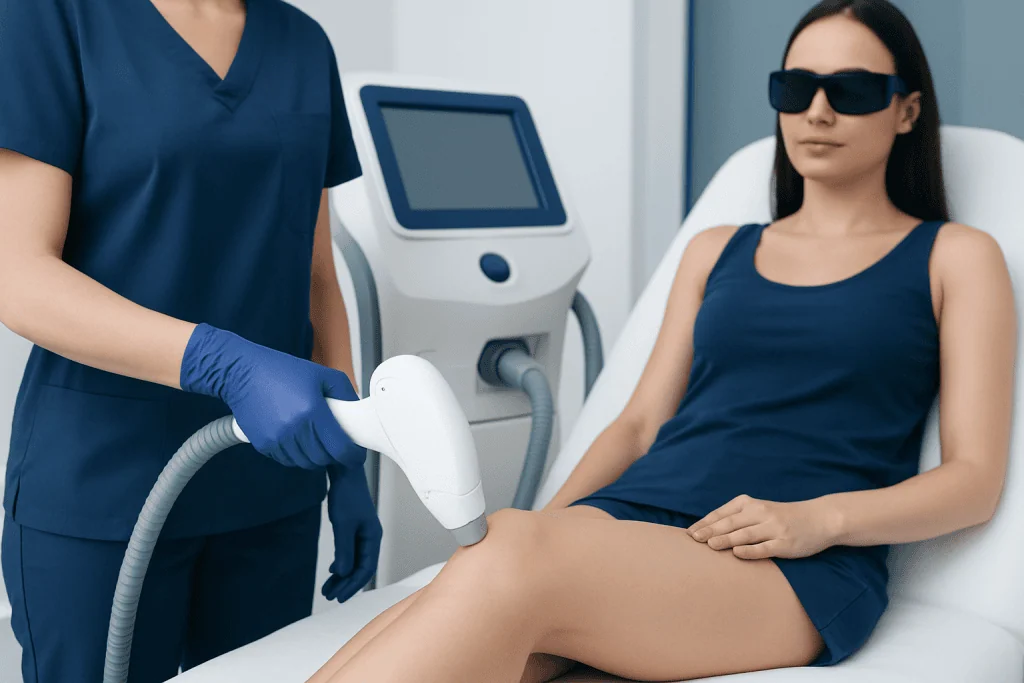
Laser hair removal works through selective photothermolysis. The device delivers a controlled wavelength of light to the skin, where pigment in the hair shaft and follicle absorbs it. Heat then disrupts the follicle’s ability to produce hair. Because skin also contains pigment, the settings must be selected carefully for the individual’s skin tone and hair characteristics.
The procedure is generally most effective for dark, coarse hair because it contains more pigment. Modern devices and experienced clinicians can treat a wide range of skin tones, but the safest device, wavelength, and settings differ from person to person. Very light blond, gray, white, or red hair may respond less well because there is little pigment available to absorb the laser energy.
A consultation is useful for people with darker skin, a history of pigment changes or <a href="https://acibademinternational.com/diseases/keloid-scars/”>keloid scars, frequent cold sores when treating the face, active infection, eczema or psoriasis in the treatment area, or a tendency to tan. Pregnancy is commonly treated as a reason to postpone elective laser hair removal because safety data are limited, rather than because cancer risk is known to be increased.
People taking medicines that increase light sensitivity, using certain acne treatments, or applying irritating skin products may need changes to their treatment schedule. A clinician can review current medicines, skin history, and goals before recommending laser hair removal.
What happens during the procedure

Before treatment, the clinician reviews the target area, skin type, hair characteristics, medical history, and recent sun exposure. The area is usually shaved shortly beforehand so the laser energy can focus on the follicle beneath the skin rather than being absorbed by long visible hair. Waxing, plucking, and electrolysis are generally avoided before treatment because they remove the hair root that the laser needs to target.
Protective eyewear is worn by everyone in the treatment room. Depending on the device and body area, the skin may be cooled with a built-in cooling system, gel, or cool air. Some people feel brief warmth or a quick snapping sensation with each laser pulse. Topical numbing options may be discussed for sensitive areas, but they are not always necessary.
The session length depends on the size of the area. Small areas, such as the upper lip, may take only minutes, while larger areas can take longer. Most people need repeated sessions spaced several weeks apart, since lasers work best when hairs are in an active growth phase and not all follicles are active at the same time.
A qualified practitioner should adjust treatment settings conservatively and monitor the skin response. A test spot may be advised, particularly for darker skin tones, recent tanning, sensitive skin, or a first treatment with a new device.
Can laser hair removal increase your risk of cancer?
There is no established evidence that laser hair removal increases cancer risk. The light used for this purpose is non-ionizing and acts predominantly in the outer skin layers. It does not use the type of radiation known to break chemical bonds in DNA and raise cancer risk.
However, laser treatment is not a substitute for skin cancer screening or a dermatologic examination. A laser can temporarily change the appearance of a pigmented spot, which may make future assessment more difficult. For this reason, practitioners should avoid treating suspicious lesions and should refer a person for medical evaluation when a mole or spot looks unusual.
People with a personal history of skin cancer, many atypical moles, prior radiation therapy to the treatment area, or a condition that makes their skin unusually sensitive should discuss laser treatment with a dermatologist or treating specialist. This conversation is tailored to the individual’s skin history and does not mean laser hair removal is automatically unsuitable.
Regular sun protection remains important regardless of laser treatment. Ultraviolet radiation from sunlight and tanning beds is a known contributor to skin cancer, whereas laser hair removal light is not considered equivalent to ultraviolet exposure.
How long does it take to heal from laser removal?
Recovery from laser hair removal is usually brief. Mild redness, warmth, and small bumps around treated follicles can occur immediately afterward and often improve within several hours to a few days. The treated area may feel similar to mild sunburn during this period.
Hair does not disappear instantly. Treated hairs may shed gradually over one to three weeks, and this can look like regrowth at first. It is usually a normal part of the process. Because follicles cycle through active and resting phases, additional treatments are needed to address hair that was not actively growing during the previous session.
For the first day or two, people are commonly advised to use cool compresses if needed, avoid hot baths, saunas, vigorous exercise, and friction on the area, and use gentle skin-care products. Makeup or fragranced products may irritate freshly treated facial skin, so a clinician may advise waiting until redness settles.
Sun exposure should be minimized before and after sessions. Broad-spectrum sunscreen and protective clothing help lower the chance of post-inflammatory darkening or lightening of the skin. Blistering, significant pain, increasing swelling, or persistent crusting are not expected and should be reported to the treating clinician.
Can laser treatment be cancerous?
Laser treatment itself is not cancerous. Medical lasers are tools that produce focused light, and their effects depend on the wavelength, energy, duration, and tissue being treated. When used appropriately for hair removal, the intended effect is controlled heating of pigmented hair follicles.
The term “laser treatment” covers many different procedures, including hair reduction, scar treatment, resurfacing, treatment of vascular lesions, and some eye procedures. These treatments have different purposes and safety considerations, but they are not generally classified as cancer-causing exposures. Each procedure should still be performed by appropriately trained professionals using suitable equipment and safety protocols.
A key caution is that a laser should not be used to diagnose or remove a suspicious skin lesion without proper evaluation. If a lesion may be cancerous, it may require a clinical examination and sometimes a biopsy. Treating it cosmetically first can delay recognition of an important diagnosis.
Individuals worried about a mole, non-healing sore, scaly patch, or changing spot should seek a dermatology assessment. Early evaluation is often straightforward and can provide reassurance as well as appropriate care if treatment is needed.
Is laser hair removal harmful long term?
For most suitable candidates, laser hair removal has a well-established safety record when performed with appropriate settings and aftercare. Long-term benefits may include reduced unwanted hair, fewer ingrown hairs for some people, and less need for shaving or waxing. Results differ, and maintenance sessions may be necessary over time.
The most important potential longer-term skin effects are pigment changes, especially after sun exposure or when an unsuitable setting is used. Darker patches or lighter patches are usually temporary but can occasionally last longer. The chance can be reduced by choosing an experienced practitioner, avoiding tanning, and following individualized pre- and post-treatment advice.
Less common risks include blistering, crusting, infection, scarring, and paradoxical hair growth, in which finer hair increases in or around a treated area. These risks are uncommon but should be discussed before treatment. Hormonal conditions can also cause new hair growth despite previous successful sessions; for example, polycystic ovary syndrome may contribute to persistent facial or body hair growth.
Acibadem International’s multidisciplinary specialists and JCI-accredited hospitals support international patients who need assessment and treatment planning for skin and hair concerns. A consultation can help clarify expected results, alternatives, and the safest approach for an individual’s skin type and medical history.
When to seek medical care
Medical advice is recommended before laser treatment if there is a changing mole, a lesion that bleeds or does not heal, an unexplained rash, active skin infection, or a history of severe reactions to cosmetic procedures. A dermatologist can assess whether a lesion needs monitoring, testing, or treatment before any cosmetic procedure is considered.
After laser hair removal, contact the treating clinic promptly for severe pain, extensive swelling, blistering, pus, fever, spreading redness, or signs of an allergic reaction. These symptoms are uncommon, but timely review can help prevent complications and guide care.
People should also seek advice if redness, crusting, or pigment changes do not improve as expected. Follow-up is especially important for anyone with a history of keloid scarring, pigment disorders, immune suppression, or medicines that affect healing or sensitivity to light.
A clinician can also help when excess hair growth is sudden or accompanied by irregular periods, acne, scalp hair thinning, or other hormonal symptoms. Identifying an underlying cause can be as important as treating visible hair.
Frequently asked questions
Does laser removal cause cancer?
Current evidence does not show that properly performed laser hair removal causes cancer. The procedure uses non-ionizing light that targets pigment in hair follicles rather than radiation known to damage DNA. Suspicious or changing skin lesions should be examined before treatment.
Can laser hair removal increase your risk of cancer?
Laser hair removal has not been shown to increase cancer risk. Its light energy works locally in the skin and is different from ionizing radiation such as X-rays. Sun protection remains important because ultraviolet light from the sun and tanning beds can increase skin cancer risk.
How long does it take to heal from laser removal?
Most mild redness and follicle swelling improve within hours to a few days. Treated hairs can shed over one to three weeks, which is a normal part of the treatment response. Blisters, worsening pain, or signs of infection should be reviewed by a clinician.
Can laser treatment be cancerous?
Laser treatment is not considered cancerous when appropriately used. However, a laser should not be used over a suspicious mole or skin lesion before medical assessment, because it may alter the lesion’s appearance and delay diagnosis. A dermatologist can determine whether a lesion requires examination or biopsy.
Is laser hair removal harmful long term?
Most people tolerate laser hair removal well over the long term when treatment is selected and performed appropriately. Potential lasting effects are uncommon but can include persistent pigment changes, scarring, or paradoxical hair growth. Individualized settings, experienced care, and sun avoidance help reduce these risks.
Can laser hair removal remove a mole?
Laser hair removal is intended to target hair follicles, not remove moles. A mole should not be treated cosmetically if it is new, changing, irregular, itchy, bleeding, or non-healing. It should first be assessed by a qualified healthcare professional.
References
- American Academy of Dermatology
- U.S. Food and Drug Administration
- National Cancer Institute
- American Society for Dermatologic Surgery
This article is for general information only and is not a substitute for professional medical advice. Please consult a qualified doctor about your individual situation.
Hair transplant in Turkey — costs, graft counts & a free assessment
JCI-accredited · board-certified surgeons · reply within 24h
Add us as a Preferred Source to see more of our trusted health content across Google Search, AI Overviews and Discover.

More from the Health Library



Related Specialists

Dr. Nihan Ölmez
Radiology
Dr. Tural Safarlı
Endocrinology
Dr. Buket Karsavuranoğlu Seven
Internal Medicine
Prof. Dr. Mehmet Cıncık
Vitro Fertilization and Reproductive Medicine Center