Strabismus Surgery Recovery: A Week-by-Week Timeline

Mild pain, scratchiness, tearing, redness, and light sensitivity are common during the first days after surgery. Many adults and children resume gentle routines within several days, but swimming, eye rubbing, and strenuous activity may need to wait.
Key Takeaways
- Mild pain, scratchiness, tearing, redness, and light sensitivity are common during the first days after surgery.
- Many adults and children resume gentle routines within several days, but swimming, eye rubbing, and strenuous activity may need to wait.
- The operated eye can look quite red for 2–4 weeks and sometimes longer; this does not necessarily mean there is a problem.
- Eye alignment may fluctuate as tissues heal, and the final result is often assessed over weeks to months.
- Urgent medical advice is needed for worsening pain, increasing swelling, reduced vision, fever, pus-like discharge, or persistent vomiting.
Strabismus surgery recovery is usually gradual: most people return to light daily activities within a few days, while eye redness, irritation, and changes in alignment can continue to improve for several weeks. Follow-up with an ophthalmologist is important because healing, vision adaptation, and final eye position may take time.
Overview: What to Expect From Strabismus Surgery Recovery
Strabismus surgery recovery usually involves several days of eye discomfort and several weeks of visible redness while the eye muscles and surface tissues heal. Most patients can do light activities fairly soon after surgery, but the appearance and alignment of the eyes may continue to change as healing progresses.
Strabismus, sometimes called squint, occurs when the eyes are not consistently aligned. Surgery adjusts one or more muscles on the outside of the eye to improve alignment. It does not remove the eye or operate directly inside the eyeball, and it is different from surgery for conditions such as amblyopia (lazy eye), although the two conditions can occur together.
Recovery varies with age, the number of muscles treated, the type of strabismus, prior eye operations, and individual healing. The surgeon’s instructions should always take priority over a general timeline, particularly for children or people with other eye conditions.
How Strabismus Surgery Works and Who May Benefit
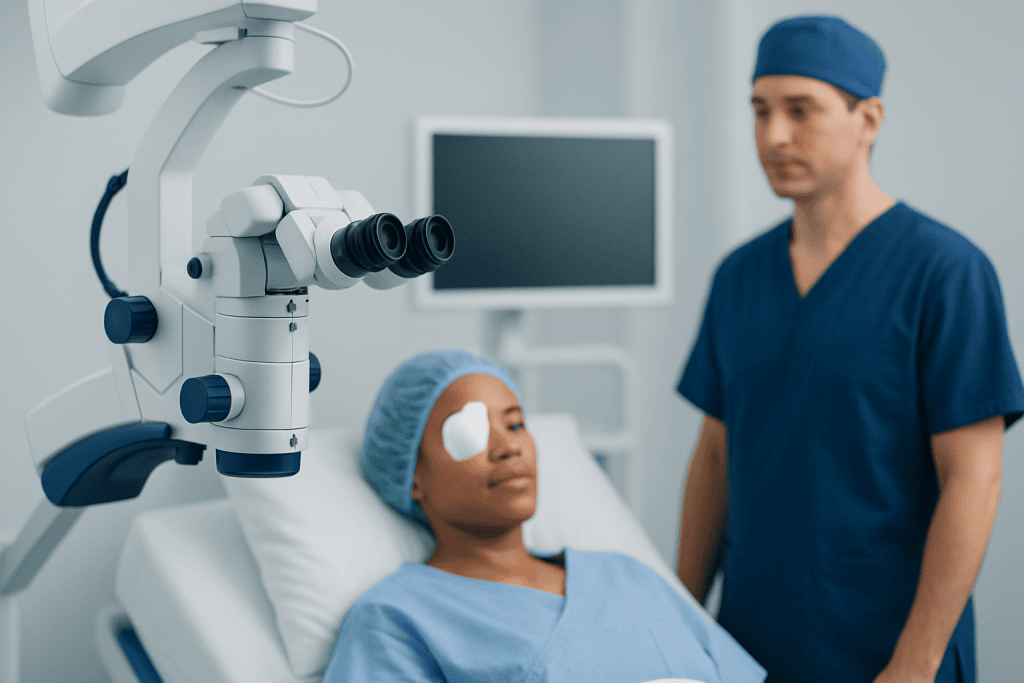
The eyes move because six muscles around each eye work together under control of the brain. In strabismus, the muscles may not be coordinated in a way that keeps both eyes directed at the same point. During surgery, an ophthalmic surgeon may weaken, strengthen, reposition, or adjust selected eye muscles to improve alignment.
The operation may be considered for children or adults whose eye misalignment is persistent, causes double vision, affects binocular vision, produces an abnormal head posture, or creates appearance-related concerns. Some people first need glasses, prism lenses, patching treatment, vision therapy in selected circumstances, or management of an underlying neurological or eye condition.
Preoperative assessment commonly includes visual acuity testing, measurement of eye alignment in different directions of gaze, examination of eye movements, and a review of general health. For some adults, especially those with double vision, temporary prism testing may help the specialist plan treatment and discuss expected visual adaptation.
Patients considering surgery can discuss the purpose, likely benefits, alternatives, and recovery requirements with an ophthalmologist. The relevant procedure is described further through strabismus surgery.
What Happens During the Procedure

Strabismus surgery is commonly performed as a day procedure. Children usually receive general anesthesia, while adults may receive general anesthesia or, in certain settings, local anesthesia with sedation. The anesthesia team reviews fasting instructions, medications, allergies, and health conditions before the operation.
The surgeon makes a small opening in the conjunctiva, the thin clear tissue covering the white part of the eye. The eye muscle is then carefully exposed and repositioned or reattached using fine sutures. The conjunctiva is closed with absorbable stitches, so stitches typically do not need to be removed later.
In selected adults, adjustable sutures may be used. This technique can allow the surgeon to fine-tune muscle position shortly after surgery, once the patient is awake. It is not needed or appropriate for every person.
Although patients may notice bloodshot eyes after surgery, the operation is performed on the muscles and outer tissues rather than the part of the eye responsible for vision. The eye is usually not patched for long, though practices vary according to the surgeon and the individual procedure.
Strabismus Surgery Recovery Timeline: The First Month
Day of surgery to day 3: Sleepiness, nausea from anesthesia, tearing, a gritty feeling, light sensitivity, and mild to moderate soreness can occur. The eye may look red, swollen, or bruised. Prescribed eye drops or ointment and approved pain relief can help; patients should not use unapproved eye drops or medications without checking with their clinical team.
Days 4 to 7: Discomfort usually begins to lessen, although scratchiness and redness remain common. Many patients return to school, desk work, or other quiet activities when they feel ready. Temporary blurred vision, intermittent double vision, or a sensation that the eye is pulling can occur while the brain and eye muscles adapt.
Weeks 2 to 4: The surface of the eye generally becomes more comfortable, but redness can still be noticeable. Dissolving stitches may cause brief irritation as they break down. The eyes may not look perfectly aligned every day during this phase, and follow-up appointments allow the surgeon to check healing and alignment.
Weeks 4 to 8 and beyond: Many people have substantially recovered, though residual redness can take longer to fade in some cases. The surgeon assesses whether alignment is stable and whether glasses, prism lenses, amblyopia treatment, or other visual support is needed. In a minority of cases, further treatment or another operation may be considered if alignment remains unsatisfactory.
Aftercare: Activity, Eye Drops, and Daily Comfort
Patients should use all prescribed drops or ointment exactly as directed and wash their hands before touching the eye area. Rubbing or pressing on the eyes should be avoided. Showering is commonly permitted after a short period, but it is sensible to keep soap, shampoo, and unclean water out of the eyes.
Light walking and gentle daily activity are often appropriate soon after surgery. However, the surgeon may recommend temporarily avoiding strenuous exercise, contact sports, dusty environments, and swimming pools, lakes, or sea water because these activities can irritate the healing eye or increase infection risk. The timing depends on the operation and individual recovery.
Reading, screen use, and watching television do not usually damage the surgical result, but they may feel uncomfortable initially because of dryness, light sensitivity, or blurred vision. Taking regular breaks, using recommended lubricating drops if advised, and resting the eyes can improve comfort.
Children need adult support with drops, hygiene, and avoiding eye rubbing. Parents and caregivers should also attend follow-up visits, as continuing treatment for refractive errors or amblyopia may be important for the best possible visual development.
Benefits, Limits, and Possible Risks
The main aim of surgery is to improve eye alignment. This may support binocular vision, reduce an abnormal head turn, improve comfort from double vision in selected patients, and address the social or emotional effects of visible eye deviation. The expected benefit differs between individuals, particularly when strabismus has been present for many years or vision is reduced in one eye.
It is important to understand that surgery may improve alignment without fully restoring normal binocular vision or eliminating double vision in every case. Glasses may still be needed after surgery, and treatment for refractive errors may remain an important part of eye care.
Possible complications include infection, bleeding, significant scarring, persistent redness, a visible lump around a suture, undercorrection or overcorrection of alignment, and the need for additional surgery. Double vision can occur temporarily and, less commonly, persist. Serious complications affecting vision are rare but require prompt assessment.
Before surgery, the ophthalmologist should explain individual risks based on the type of strabismus, previous operations, eye health, age, and other medical conditions. Clear discussion of realistic goals can help patients and families prepare for recovery.
When to Seek Medical Care
Patients should contact their surgical team promptly if pain becomes more severe rather than improving, if the eye becomes increasingly swollen or red, or if there is thick yellow or green discharge. New or worsening loss of vision, marked sensitivity to light, fever, repeated vomiting, or an injury to the operated eye also needs urgent medical advice.
Some redness, watering, and mild discharge that forms a small crust can be expected early on. However, it is safer to ask the clinical team about symptoms that feel unusual, especially in young children who may not be able to describe changes in vision or pain clearly.
Scheduled follow-up is part of treatment, even when recovery seems uncomplicated. At Acibadem International, multidisciplinary ophthalmology specialists in JCI-accredited hospitals assess and treat strabismus for international patients, including follow-up planning tailored to the individual procedure and travel needs.
Frequently asked questions
How long does it take to recover from strabismus surgery?
Most people feel well enough for quiet daily activities within a few days, while soreness and scratchiness often improve over one to two weeks. Eye redness may remain visible for several weeks, and final alignment is usually evaluated over weeks to months. Recovery can be longer after more complex or repeat surgery.
How painful is strabismus surgery recovery?
Discomfort is usually described as soreness, burning, pressure, or a gritty sensation rather than severe pain. It is often most noticeable during the first few days and generally improves with rest, prescribed drops, and clinician-approved pain relief. Severe or worsening pain should be reported promptly.
When can someone return to school or work after strabismus surgery?
Many people return to school, office work, or other light routines within a few days to about one week, depending on comfort and vision. Jobs involving heavy lifting, dusty environments, driving, or physical activity may require more time. The operating surgeon can provide advice specific to the person’s work and procedure.
Is it normal to have double vision after strabismus surgery?
Temporary double vision can occur as the eyes and brain adapt to the new alignment, particularly in adults. It may improve over days or weeks, but its pattern should be discussed at follow-up appointments. Sudden severe visual changes or persistent troubling double vision should be reported to the ophthalmologist.
How long will the eye stay red after strabismus surgery?
Redness is common and may be pronounced during the first one to two weeks. It often fades gradually over several weeks, although some people notice mild redness for longer. Increasing redness with pain, swelling, or pus-like discharge should be assessed for possible infection.
Can strabismus come back after surgery?
Eye alignment can change over time, and some people develop residual or recurrent strabismus after an initially successful operation. This does not always mean something went wrong; eye growth, visual development, healing, and underlying conditions can influence alignment. Further observation, glasses, prisms, or repeat surgery may sometimes be recommended.
References
- American Academy of Ophthalmology
- American Association for Pediatric Ophthalmology and Strabismus
- National Eye Institute
- NHS
- Mayo Clinic
This article is for general information only and is not a substitute for professional medical advice. Please consult a qualified doctor about your individual situation.
Explore treatments in Turkey — costs, top hospitals & a free quote
JCI-accredited · board-certified surgeons · reply within 24h
Add us as a Preferred Source to see more of our trusted health content across Google Search, AI Overviews and Discover.