Scoliosis: Curve Progression, Bracing, and Surgery Considerations
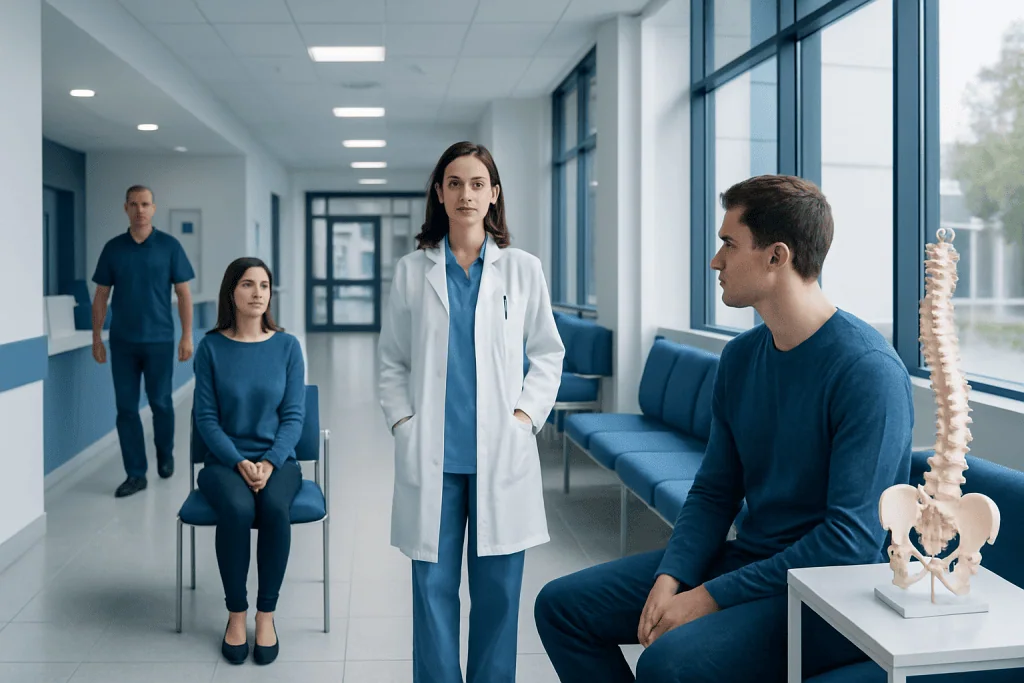
Scoliosis is commonly diagnosed during adolescence, but it can also affect infants, adults, and older people. Curve progression is most likely during rapid growth, which is why regular monitoring is important in growing children.
Key Takeaways
- Scoliosis is commonly diagnosed during adolescence, but it can also affect infants, adults, and older people.
- Curve progression is most likely during rapid growth, which is why regular monitoring is important in growing children.
- Bracing does not straighten the spine permanently, but it can help reduce the risk that a moderate curve will worsen during growth.
- Surgery is usually considered for larger or progressive curves, especially when they may affect posture, function, pain, or future health.
- Most people with scoliosis can stay active, and exercise is generally encouraged as part of overall spine health.
Scoliosis is a sideways curvature of the spine that may remain mild or progress during growth, especially in children and adolescents. Treatment decisions depend on the size of the curve, skeletal maturity, symptoms, overall health, and the risk of future progression.
Overview
Scoliosis is a condition in which the spine curves sideways, often in an S or C shape, and may also rotate. A small spinal curve is common and may not cause symptoms. Larger curves can affect posture, shoulder or hip balance, and in some cases comfort, movement, or breathing capacity.
The most common type is adolescent idiopathic scoliosis, which appears in otherwise healthy children and teenagers, usually around the time of rapid growth. Idiopathic means that no single cause is identified. Scoliosis may also occur in younger children, adults, or people with neuromuscular, congenital, or degenerative spinal conditions.
Management is individualized. Some curves need only observation, while others may benefit from bracing during growth. Surgery is not needed for most people with scoliosis, but it may be recommended when a curve is large, worsening, or likely to cause future problems.
Symptoms and Signs
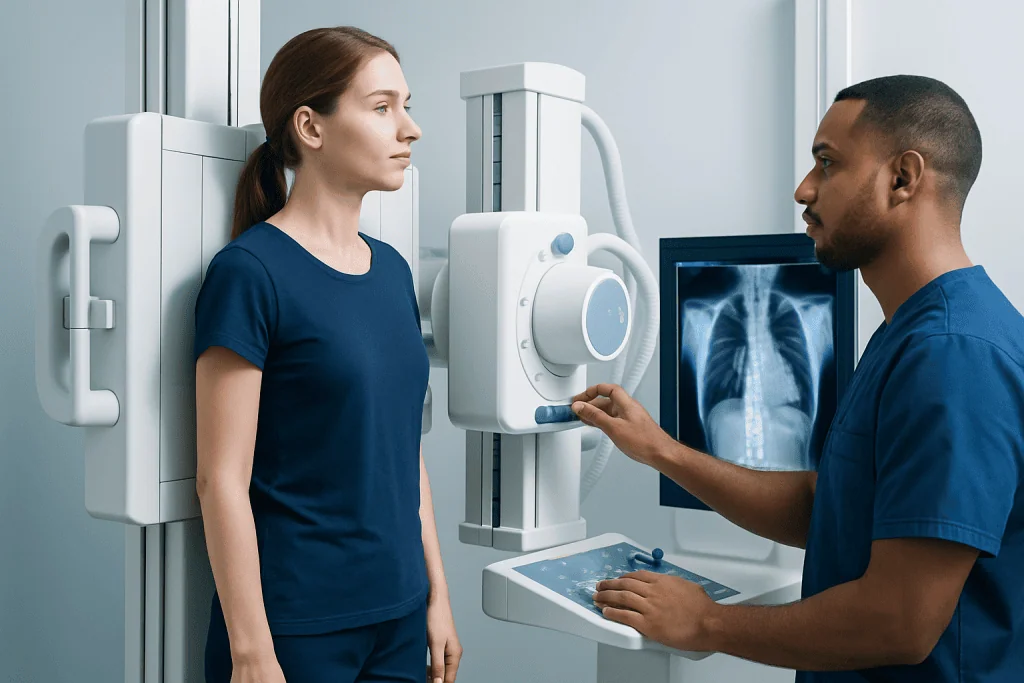
Many people with scoliosis have no pain and first notice a visible change in posture. Parents, teachers, sports coaches, or a pediatrician may observe uneven shoulders, a prominent shoulder blade, an uneven waistline, or one hip appearing higher than the other. Clothing may fit asymmetrically, or the body may seem to lean slightly to one side.
A common screening observation is a rib or back prominence when the person bends forward. This happens because scoliosis often involves rotation of the vertebrae, not only a sideways curve. In mild cases, these findings can be subtle and may be found only during a routine physical examination.
Pain is not the main symptom in many children and adolescents with idiopathic scoliosis. Adults with scoliosis, especially degenerative scoliosis, may be more likely to experience back pain, stiffness, leg symptoms from nerve compression, or reduced walking tolerance. Any new neurological symptoms should be evaluated promptly.
Causes and Risk Factors
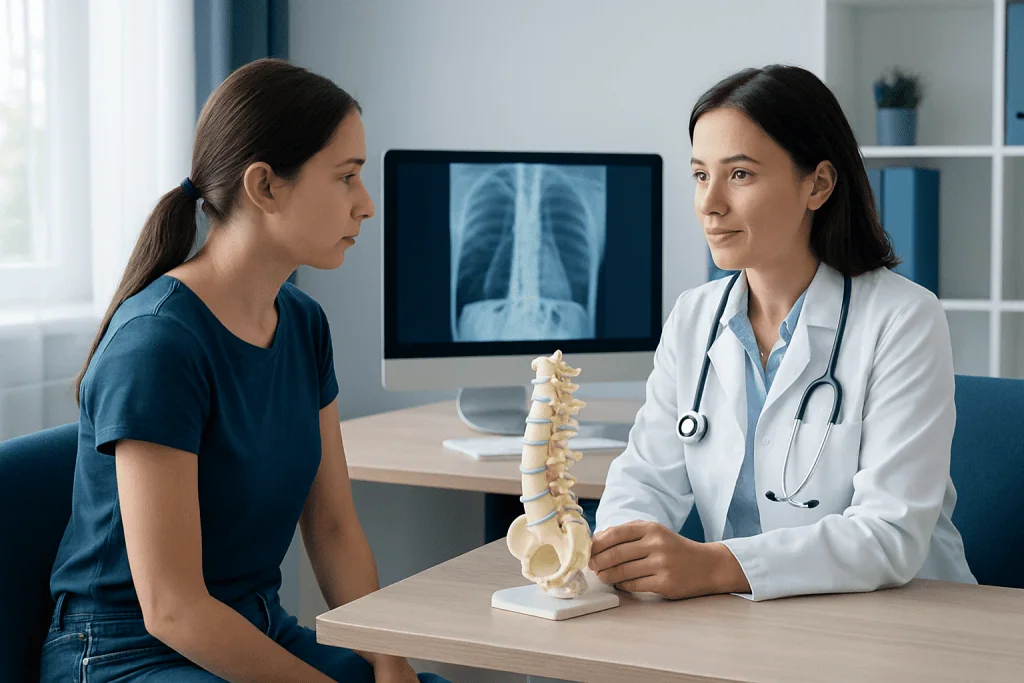
In adolescent idiopathic scoliosis, the exact cause is not known. It is thought to involve a combination of genetic, developmental, and growth-related factors. Having a family history can increase risk, although many children with scoliosis have no relatives known to have the condition.
Several factors influence whether a curve is likely to progress. Age and remaining growth are very important: a curve found early in puberty has more time to worsen than a curve found after growth is nearly complete. Curve size at diagnosis and curve pattern also help specialists estimate the risk of progression.
- Idiopathic scoliosis: the most common type, especially in adolescents.
- Congenital scoliosis: related to spinal bone formation differences present from birth.
- Neuromuscular scoliosis: associated with conditions affecting muscles or nerves, such as cerebral palsy or muscular dystrophy.
- Degenerative scoliosis: develops in adulthood due to age-related disc, joint, and bone changes.
Scoliosis is not caused by poor posture, carrying a backpack, sleeping position, or routine sports participation. These factors may affect comfort, but they do not typically create a structural spinal curve.
Diagnosis and Curve Progression
Diagnosis begins with a medical history and physical examination. The doctor looks at posture, shoulder and pelvis balance, spinal flexibility, and neurological function. The forward bend test can reveal trunk rotation, and a scoliometer may be used to estimate the degree of rotation.
Standing spine X-rays are used to confirm scoliosis and measure the Cobb angle, which describes the size of the curve in degrees. X-rays can also help assess skeletal maturity, often using growth markers such as the Risser sign or other maturity assessments. These findings help guide decisions about observation, bracing, or surgery.
Curve progression means the curve increases over time. In growing children, follow-up visits and repeat imaging may be recommended at intervals based on age, curve size, and growth stage. Doctors try to balance careful monitoring with limiting unnecessary radiation exposure, using modern imaging protocols when available.
MRI or additional tests are not required for every person with scoliosis. They may be considered if the curve pattern is unusual, symptoms are atypical, neurological signs are present, pain is significant, or scoliosis appears at a very young age.
Treatment Options: Observation, Bracing, and Therapy
Observation is appropriate for many mild curves, especially when growth is nearly complete or the risk of progression is low. Observation usually means scheduled clinical exams and X-rays when needed. The goal is to identify meaningful change early while avoiding unnecessary treatment.
Bracing is commonly considered for moderate curves in children and adolescents who are still growing. A brace does not usually make the spine permanently straight, and it is not intended to correct posture for cosmetic reasons alone. Its main purpose is to reduce the chance that the curve will progress to the point where surgery may be considered.
Brace success depends on correct fit, the type and location of the curve, remaining growth, and how consistently the brace is worn according to the treatment plan. Orthopedic specialists and orthotists work together to adjust the brace for comfort and effectiveness. Emotional support is also important, because wearing a brace during adolescence can affect body image, school life, and daily routines.
Physical therapy and scoliosis-specific exercises may help improve posture awareness, strength, flexibility, breathing mechanics, and function. Exercise does not replace bracing when bracing is medically indicated, but it can support overall spine health. Most patients are encouraged to remain active unless a doctor advises specific restrictions.
Surgery Considerations
Scoliosis surgery is usually considered for larger curves, curves that continue to progress despite appropriate non-surgical care, or curves with a high risk of future problems. The decision is not based on the X-ray alone. Doctors also consider age, skeletal maturity, curve pattern, symptoms, balance of the trunk, lung function when relevant, and the patient’s goals and expectations.
The most common operation for significant adolescent scoliosis is spinal fusion with instrumentation. During this procedure, screws, rods, hooks, or other implants are used to guide the spine into a safer alignment, and selected vertebrae are fused so they heal into one stable segment. The aim is to stop progression, improve alignment, and support long-term spinal balance.
As with any major surgery, scoliosis surgery has potential risks, including infection, bleeding, nerve injury, implant-related problems, incomplete correction, or the need for further procedures. These risks are carefully discussed before surgery. Preoperative planning, modern imaging, neuromonitoring, experienced surgical teams, and structured rehabilitation all play important roles in safety and recovery.
Recovery varies depending on the procedure and the individual. Hospital stay, return to school or work, and return to sports are discussed with the surgical team. Patients and families should ask questions about the expected correction, fused levels, mobility after surgery, pain control, follow-up, and long-term activity guidance.
Prevention, Self-care, and When to See a Doctor
Most forms of scoliosis cannot be prevented, but early recognition can make treatment choices simpler. Children and adolescents should attend routine health visits, especially during growth spurts. Families can look for changes such as uneven shoulders, a rib prominence when bending forward, or a noticeable shift in posture.
Self-care focuses on maintaining general health. Regular physical activity, core and back strengthening, flexibility work, good sleep, and a balanced diet support the musculoskeletal system. People with scoliosis should not stop sports or exercise out of fear unless advised by their doctor; activity is usually beneficial for strength, confidence, and wellbeing.
A doctor should be consulted if spinal asymmetry is noticed, if a known curve appears to be changing, or if back pain is persistent. Prompt evaluation is especially important if there is weakness, numbness, changes in walking, bowel or bladder symptoms, unexplained weight loss, fever, or pain that wakes a person from sleep.
International patients who need evaluation or treatment can seek care from qualified orthopedic spine specialists. Acibadem International’s multidisciplinary specialists and JCI-accredited hospitals diagnose and treat scoliosis for international patients, including assessment, imaging, bracing guidance, surgical planning, and follow-up coordination when appropriate.
Frequently asked questions
Does scoliosis always get worse?
No. Many mild curves remain stable, especially after growth is complete. The risk of progression is higher when a child is still growing, the curve is moderate or large, or certain curve patterns are present. Regular follow-up helps doctors identify whether the curve is changing.
Can a brace cure scoliosis?
A brace does not usually cure scoliosis or make the spine permanently straight. Its main goal is to prevent or slow progression while a child or teenager is still growing. Bracing is most effective when it is prescribed for the right curve type and worn as recommended.
Is scoliosis surgery always necessary for large curves?
Not always, but surgery may be recommended when a curve is large, progressing, or likely to cause future problems. The decision is individualized and should include a careful discussion of benefits, risks, alternatives, recovery, and long-term expectations. A spine specialist can explain how the curve size and pattern affect the recommendation.
Can adults develop scoliosis?
Yes. Some adults have scoliosis that began in adolescence, while others develop degenerative scoliosis due to age-related changes in discs and joints. Adult scoliosis is more likely to be associated with back pain, stiffness, or nerve symptoms. Treatment may include exercise therapy, pain management, injections, or surgery in selected cases.
Are sports safe for children with scoliosis?
In most cases, yes. Physical activity is generally encouraged because it supports strength, flexibility, cardiovascular health, and confidence. Some children may need individualized advice after surgery or if they have a specific underlying condition, so activity plans should be discussed with the treating doctor.
How often should scoliosis be checked?
Follow-up frequency depends on age, growth remaining, curve size, and risk of progression. A growing child with a moderate curve may need more frequent reviews than an older teenager with a small stable curve. The treating orthopedic specialist will recommend an appropriate monitoring schedule.
References
- Scoliosis Research Society
- American Academy of Orthopaedic Surgeons
- National Institute of Arthritis and Musculoskeletal and Skin Diseases
- NICE National Institute for Health and Care Excellence
- World Health Organization
This article is for general information only and is not a substitute for professional medical advice. Please consult a qualified doctor about your individual situation.
Joint and spine care in Turkey — expert assessment & treatment
JCI-accredited · board-certified surgeons · reply within 24h
Add us as a Preferred Source to see more of our trusted health content across Google Search, AI Overviews and Discover.

Orthopedics & Spine
Care for bones, joints and the musculoskeletal system, including joint replacement, sports injuries and trauma.
125 specialists in this unit