Ir Biopsy: Procedure, Recovery and Results
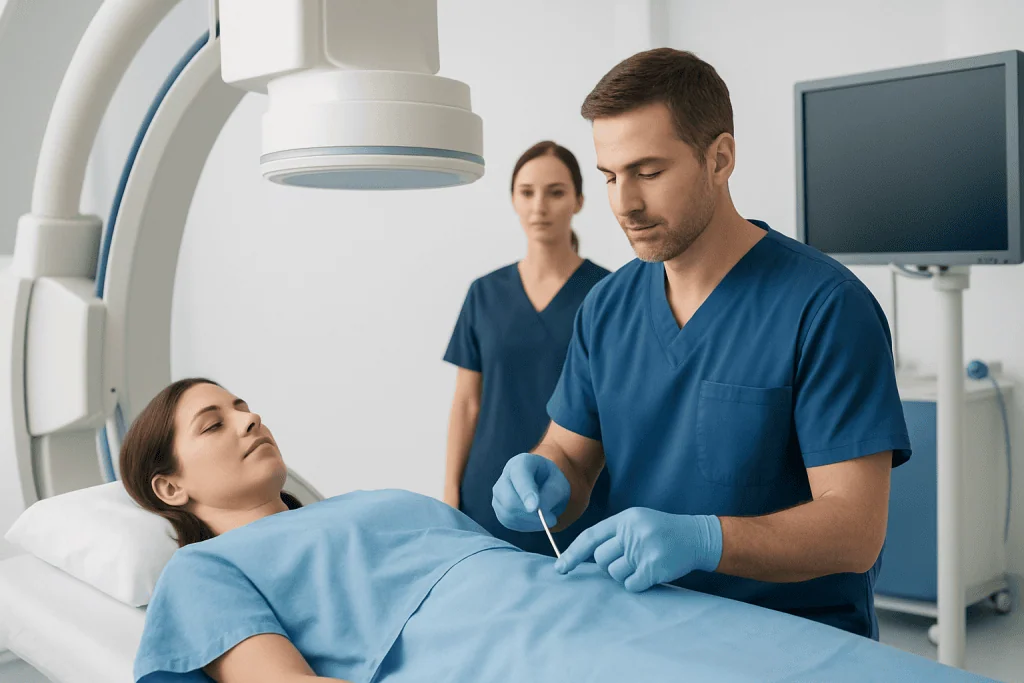
An IR biopsy uses ultrasound, CT, MRI, or X-ray guidance to target an area safely and accurately. Most procedures use local anesthetic, sometimes with sedation depending on the biopsy site and patient needs.
Key Takeaways
- An IR biopsy uses ultrasound, CT, MRI, or X-ray guidance to target an area safely and accurately.
- Most procedures use local anesthetic, sometimes with sedation depending on the biopsy site and patient needs.
- Recovery is often brief, but activity restrictions and observation time vary by the organ biopsied.
- Bruising and temporary soreness are common; serious bleeding, infection, or injury to nearby structures are uncommon but possible.
- The pathology report may take several days or longer, especially when additional laboratory testing is needed.
An IR biopsy is an image-guided procedure in which an interventional radiologist uses a needle to collect a small tissue sample for laboratory testing. It is usually less invasive than an open surgical biopsy and commonly allows patients to return home the same day.
IR Biopsy Overview: What It Is and How It Works
An IR biopsy, also called an interventional radiology or image-guided biopsy, is a procedure used to remove a small sample of tissue or cells from an abnormal area. A specialist called an interventional radiologist uses real-time imaging to guide a thin needle to the planned location. The sample is then examined by a pathologist, who looks for changes such as inflammation, infection, benign disease, or cancer.
Imaging guidance can include ultrasound, computed tomography (CT), fluoroscopy, or magnetic resonance imaging (MRI). The method selected depends on where the area is located and which imaging technique shows it most clearly. IR biopsies are commonly performed for findings in the breast, thyroid, lymph nodes, liver, kidney, lung, bone, soft tissues, and other organs.
Because the tissue is collected through a small skin opening, this approach is generally less invasive than an open biopsy. It can help clarify an imaging finding and guide the next steps in care without requiring a large incision. A biopsy result alone does not determine treatment; it is considered together with symptoms, scans, medical history, and other test results.
Why an IR Biopsy May Be Recommended
A doctor may recommend an IR biopsy when a scan shows a lump, lesion, enlarged lymph node, area of inflammation, or another change that cannot be reliably identified by imaging alone. The goal is not necessarily to confirm cancer. Many biopsies are performed to distinguish benign changes from conditions that need treatment, or to identify the type and severity of an existing condition.
The procedure may be suitable for people when the target area can be reached safely with a needle and imaging guidance. It may be especially useful when a surgical biopsy would involve more tissue disruption, a longer recovery, or general anesthesia. The referring clinician, radiologist, and relevant specialty team decide whether an image-guided approach is appropriate.
Before the procedure, the care team reviews medical history, allergies, medicines, previous imaging, and blood test results when indicated. It is particularly important to discuss blood-thinning medicines, antiplatelet drugs, diabetes medicines, kidney disease, pregnancy or the possibility of pregnancy, and any prior reaction to contrast material or sedation.
- Possible reasons for an IR biopsy include clarifying an abnormal scan result.
- It may help diagnose infection, inflammation, fibrosis, or a tumor.
- It can provide tissue for specialized pathology, genetic, or molecular tests when clinically needed.
- It may help a specialist plan monitoring, medicine, surgery, or cancer treatment.
What Happens During an IR Biopsy?
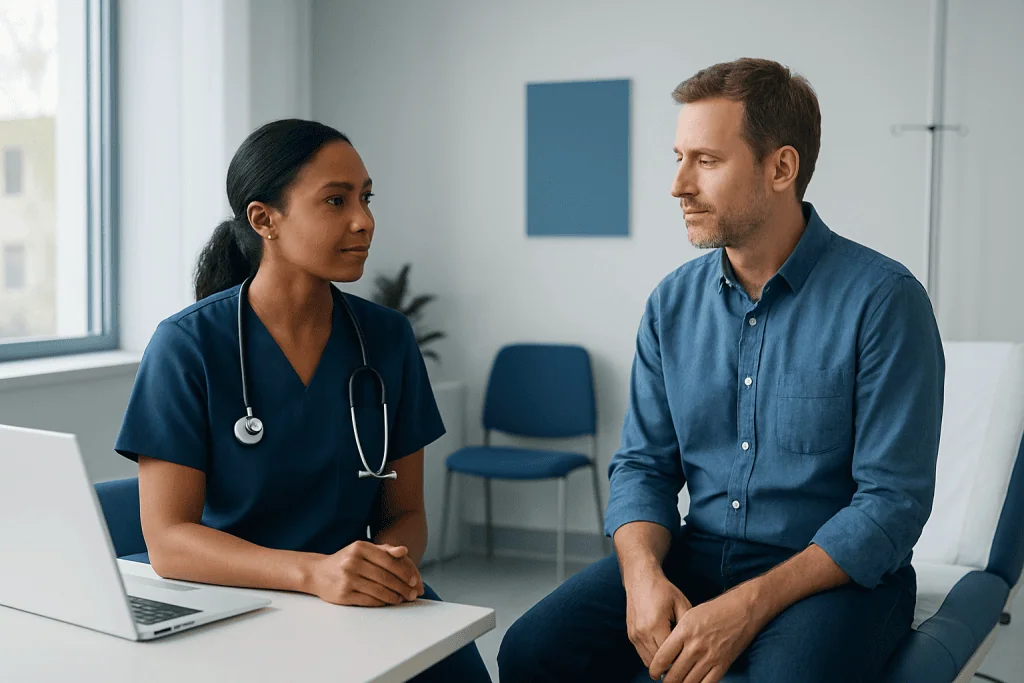
Preparation varies by the body area being biopsied. Some patients may need to avoid food and drink for a period before the appointment, particularly if sedation is planned. Others may be able to eat normally. The hospital provides individualized instructions, including whether certain medicines should be paused or adjusted. Patients should not stop prescribed medicines without advice from their treating clinician.
At the procedure, the patient is positioned so the radiologist can access the target area. The skin is cleaned and covered with sterile drapes. Local anesthetic is injected to numb the skin and deeper tissues. Some people also receive light sedation to improve comfort and reduce anxiety, while others remain awake throughout.
The radiologist identifies the target with imaging and makes a very small skin nick if needed. A biopsy needle is guided into the area, and several small samples may be collected to ensure there is enough tissue for analysis. Patients may feel pressure, pushing, or a brief clicking sensation when a core needle is used, but sharp pain should be reported promptly.
Afterward, the needle is removed, pressure is applied, and a small dressing is placed. Depending on the biopsy location, the team may perform a follow-up scan, such as a chest X-ray after some lung biopsies, to check for an immediate complication. The sample is sent to pathology for detailed examination.
How long is an IR biopsy?
Many IR biopsy procedures take about 30 to 60 minutes, although the full visit is often longer because it includes registration, preparation, consent, imaging review, recovery observation, and discharge instructions. A technically complex biopsy, a deeper target, or a procedure requiring sedation may take more time.
The actual time the needle is in place is usually much shorter than the appointment duration. The radiologist may need to obtain multiple samples, change the needle angle, or use repeated images to confirm accurate positioning. This careful approach helps obtain an adequate sample while protecting nearby tissues.
Patients who receive sedation should expect additional monitoring afterward and should arrange for a responsible adult to take them home. The care team will explain the expected schedule for the individual biopsy site and whether an overnight stay is ever needed.
What is the recovery like after interventional radiology?
Recovery after interventional radiology depends on the procedure and the organ involved, but many biopsy patients go home on the same day. The team monitors blood pressure, pulse, oxygen level, pain, and the biopsy site for a period after the procedure. For certain biopsies, especially of the liver, kidney, or lung, observation may be longer because the team is watching for bleeding or other site-specific concerns.
Temporary soreness, mild swelling, and a small bruise around the needle site are common. These symptoms often improve over a few days. The dressing is usually kept clean and dry according to the discharge instructions. A clinician can advise which over-the-counter pain relief is appropriate, as some medicines may increase bleeding risk.
If sedation was used, patients may feel sleepy, less coordinated, or mildly nauseated for the rest of the day. They should avoid driving, alcohol, operating machinery, signing important documents, and making major decisions until the effects have fully worn off. A family member or friend may be asked to stay with the patient for the first night, depending on the procedure.
Pathology results are not always available immediately. Basic findings may take several days, while special stains, cultures, or molecular tests can extend the timeline. The referring doctor or specialist explains what the results mean and whether any further assessment or treatment is needed.
How many days should I rest after a biopsy?
For many uncomplicated needle biopsies, patients are advised to rest for the remainder of the procedure day and avoid strenuous exercise, heavy lifting, or physically demanding work for at least 24 to 48 hours. However, the appropriate rest period can be longer for biopsies involving organs with a higher bleeding risk or for people with medical conditions that affect healing or blood clotting.
Every patient should follow the specific instructions given by the radiology team. Returning to desk work may be possible the next day for some procedures, while manual work, sports, swimming, and travel plans may need to be delayed. The team can give tailored guidance based on the biopsy site, sedation, symptoms, and individual health needs.
It is sensible to plan a quiet day after the biopsy and to drink fluids and eat as directed. Patients should not remove the dressing early or resume blood-thinning medicine unless they have been told when it is safe to do so. If pain, bruising, or fatigue does not steadily improve, the treating team should be contacted.
Is an IR procedure considered surgery?
An IR procedure is a medical procedure, but an IR biopsy is not usually considered open surgery. It is minimally invasive because it uses a needle-sized access point rather than a larger incision. Most image-guided biopsies are performed with local anesthetic, sometimes with sedation, and generally have a shorter recovery than surgical biopsy.
That said, an IR biopsy is still an invasive procedure and should be approached with the same attention to preparation, consent, and aftercare as other medical interventions. The risks depend on the biopsy location and the patient’s health. Some situations may still require a surgical biopsy if a needle biopsy cannot safely reach the area or does not provide enough diagnostic tissue.
Interventional radiology also performs other minimally invasive procedures, including drainage of fluid collections, vascular treatments, and image-guided tumor therapies. The most suitable approach is determined by the clinical question, imaging findings, and discussion among the patient and care team.
Benefits, Risks and When to Seek Medical Care
The main benefit of an IR biopsy is that it can obtain diagnostic tissue with a small access site and imaging guidance. This may reduce the need for a larger incision, support faster recovery, and help clinicians make more informed care decisions. In some cases, the biopsy can identify a non-cancerous explanation for an abnormal scan and prevent unnecessary treatment.
All biopsies have risks. Common minor effects include tenderness, bruising, and a small amount of bleeding at the skin site. Less common complications can include significant bleeding, infection, damage to a nearby organ or blood vessel, a reaction to medicines or contrast, or a site-specific complication such as a collapsed lung after a lung biopsy. The radiologist discusses relevant risks before consent and takes steps to reduce them.
Patients should seek urgent medical advice after a biopsy if they develop worsening or severe pain, rapidly increasing swelling, heavy or persistent bleeding, fever, chills, redness or drainage from the site, fainting, new shortness of breath, chest pain, or any symptom that concerns them. They should contact the procedure team promptly for questions that are not emergencies.
Acibadem International’s multidisciplinary specialists and JCI-accredited hospitals assess imaging findings and coordinate image-guided biopsy care for international patients when appropriate.
Frequently asked questions
Does an IR biopsy hurt?
Local anesthetic is used to numb the skin and tissues where the needle will pass, so patients should not feel sharp pain during the biopsy. Pressure, pulling, or a brief clicking sensation may occur. Mild soreness afterward is common and usually temporary.
Do I need sedation for an IR biopsy?
Not always. Many image-guided biopsies can be performed with local anesthetic alone, while sedation may be considered for deeper, more complex, or anxiety-provoking procedures. The decision depends on the biopsy site, the expected duration, and the patient’s medical history.
When will IR biopsy results be ready?
Results often take several days because the tissue needs to be processed and examined by a pathologist. Some samples require additional testing, such as cultures, immunostains, or molecular analysis, which can take longer. The doctor who requested the biopsy usually discusses the result and next steps.
Can I drive home after an IR biopsy?
Patients who receive sedation should not drive home and should arrange transport with a responsible adult. Even without sedation, some biopsy sites may require a period of observation or activity restriction. The radiology team will provide specific discharge guidance.
What should I wear for an image-guided biopsy?
Comfortable, loose-fitting clothing is usually helpful, although patients may change into a hospital gown for the procedure. Jewelry and valuables are best left at home unless the team advises otherwise. The hospital may give additional instructions depending on the body area being examined.
Can an IR biopsy show whether a lump is cancerous?
A biopsy can often determine whether sampled tissue contains cancer cells and, if so, identify important features of the tumor. It can also show benign conditions, inflammation, infection, or other tissue changes. Results must be interpreted alongside scans and the patient’s overall clinical situation.
References
- Radiological Society of North America
- Society of Interventional Radiology
- National Cancer Institute
- National Health Service
- American College of Radiology
This article is for general information only and is not a substitute for professional medical advice. Please consult a qualified doctor about your individual situation.
Oncology care in Turkey — second opinion and treatment plan
JCI-accredited · board-certified surgeons · reply within 24h
Add us as a Preferred Source to see more of our trusted health content across Google Search, AI Overviews and Discover.

More from the Health Library


Related Specialists

Miray Karaoğlu
Physical Medicine & Rehabilitation
Prof. Dr. Ahmet Onur Odabaşı
Ear Nose & Throat
Fzt. Ebru Uzun Saral
Physical Medicine & Rehabilitation
Prof. Dr. M.Özcan Erdemli
Anesthesiology