Bls Certification Cost: What Patients Really Pay

BLS is a practical emergency-response course that teaches CPR, use of an automated external defibrillator (AED), and relief of choking. The total BLS certification price can vary because course format, instructor time, equipment, provider policies and renewal requirements differ.
Key Takeaways
- BLS is a practical emergency-response course that teaches CPR, use of an automated external defibrillator (AED), and relief of choking.
- The total BLS certification price can vary because course format, instructor time, equipment, provider policies and renewal requirements differ.
- Many workplaces, healthcare programs and volunteer organizations may cover or subsidize training for eligible participants.
- Hands-on skills practice and assessment are important, particularly when BLS is required for a healthcare role.
- BLS training builds confidence but does not replace calling emergency services or seeking urgent medical care when someone is seriously unwell.
BLS certification price is not fixed: it depends on the training organization, local market, whether the course is online or in person, and whether materials or renewal are included. People should choose a recognized course that meets their employer, school or licensing requirements rather than selecting a course on price alone.
BLS Certification Price: The Answer First
The BLS certification price varies by country, city, training provider and course format. Rather than relying on a single advertised figure, learners should ask what is included: instruction, hands-on skills practice, AED training, course materials, testing, a completion card and any renewal or replacement-card policies.
Basic Life Support (BLS) is a structured emergency-care course commonly required for healthcare professionals, students in health-related programs, first responders and some workplace roles. A valid course should meet the requirements of the learner’s employer, regulator, university or professional body.
BLS is not a treatment for a medical condition. It is training designed to help a bystander recognize a life-threatening emergency, activate emergency services, provide high-quality cardiopulmonary resuscitation (CPR), use an automated external defibrillator (AED) when available, and respond to choking until professional help takes over.
What Can Affect the Total Cost of BLS Training?
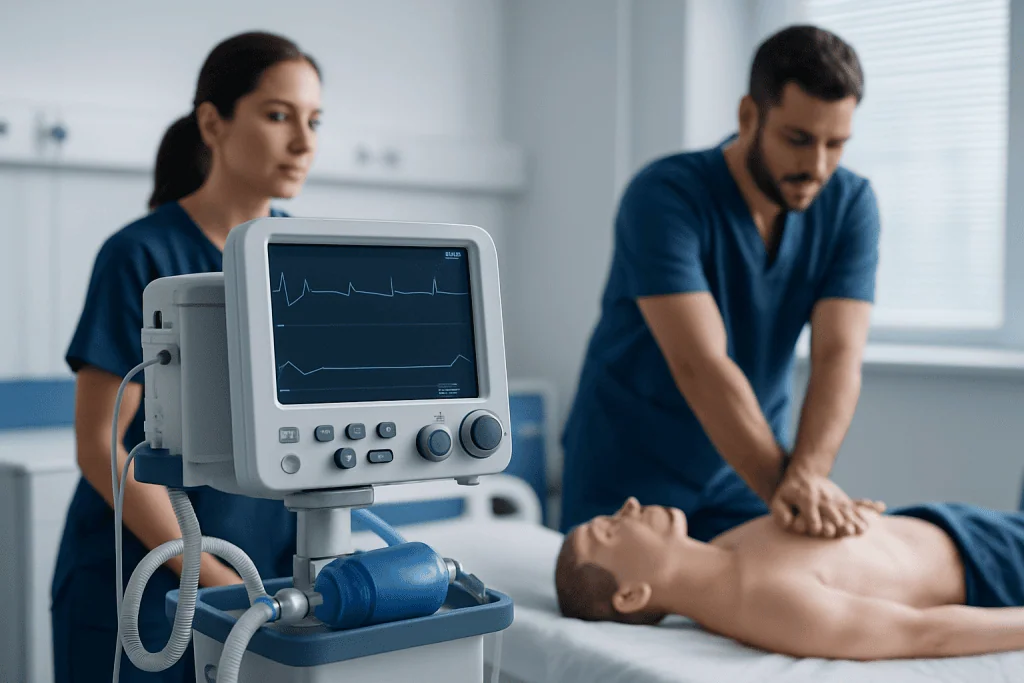
Course fees reflect more than a certificate. In-person training requires an appropriately qualified instructor, manikins, AED training devices, hygiene supplies, space for practice and time for individual skills assessment. Hybrid courses may combine self-paced learning with a required in-person session, while some online-only courses may not satisfy hands-on requirements for clinical or employment purposes.
Before enrolling, learners can confirm the course provider, the credential awarded, the expiry period, whether a skills evaluation is included and whether the certificate is accepted by the organization that requested it. It is also useful to check cancellation, rescheduling and certificate-replacement policies, as these may affect the final amount paid.
- Healthcare-specific BLS courses may differ from general public CPR courses.
- Initial training and recertification courses can have different formats and eligibility rules.
- Group training arranged through an employer may be funded by the organization.
- Travel, parking, course manuals or mandatory add-ons may create additional personal expenses.
Price alone does not show course quality or acceptance. A less expensive certificate may be unsuitable if it does not include the practical component required by an employer or educational institution.
How BLS Training Works: Candidacy and Preparation
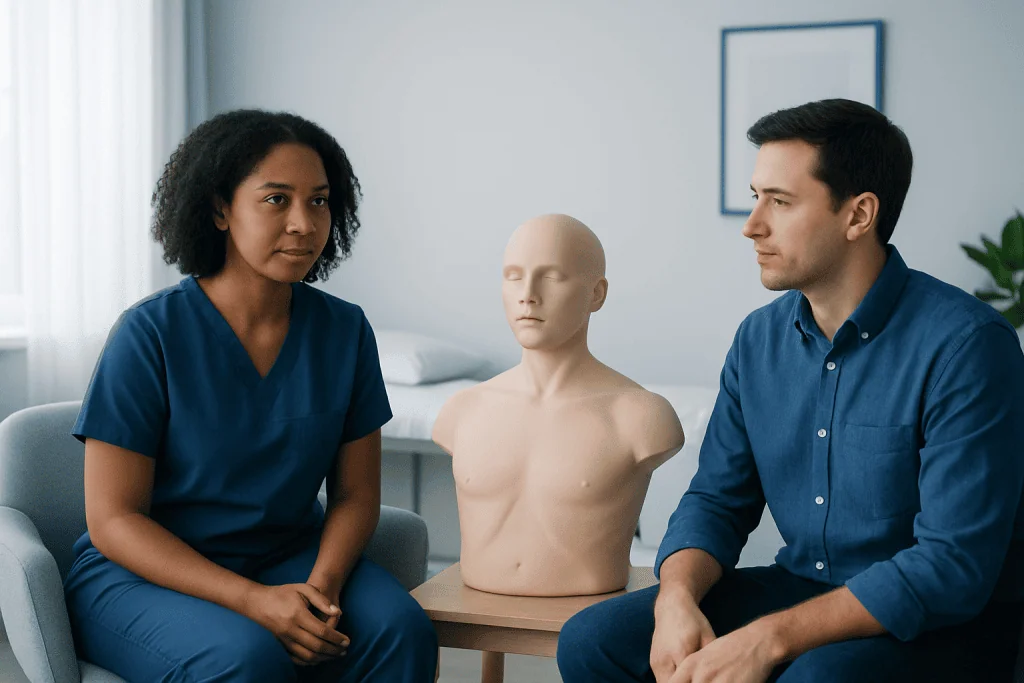
BLS training is appropriate for adults who need recognized emergency-response skills for work, education, caregiving or personal preparedness. It is particularly common for healthcare personnel, although exact requirements vary by profession and region. People should check the required provider and course type before booking.
Most participants do not need special medical screening. However, BLS includes repeated periods of kneeling, bending, chest-compression practice and working on the floor. Someone with pain, limited mobility, a recent injury, pregnancy-related discomfort or another health concern can discuss practical adaptations with the instructor before the session. Training providers may be able to offer modified positioning or breaks while still assessing required skills where possible.
Participants should wear comfortable clothing, arrive on time and bring any required identification or pre-course completion record. Reading the course instructions in advance can clarify whether online learning must be completed before the practical session.
BLS Course Step by Step
A typical BLS course starts with the principles of scene safety and recognizing when a person may be unresponsive or not breathing normally. Learners practise checking responsiveness, calling the local emergency number, asking another person to obtain an AED, and beginning care without unnecessary delay.
Instruction then usually covers adult, child and infant CPR techniques, although the exact content depends on the curriculum. Participants learn coordinated chest compressions and rescue breaths where taught, how to work as part of a team, and how to adapt actions when one rescuer or multiple rescuers are present. The instructor demonstrates each skill and provides feedback during supervised practice.
AED training is a central component. Learners practise turning on the device, applying pads as illustrated, following spoken prompts, keeping people clear during rhythm analysis or shock delivery, and immediately resuming CPR when directed. The course may also include choking response and recovery-position guidance for a breathing but unresponsive person.
To complete training, participants generally undertake a knowledge check and practical skills assessment. Passing is based on demonstrating essential actions safely and correctly, not on prior clinical experience. If someone has difficulty, many instructors provide additional coaching according to their provider’s policy.
Benefits, Limits and Possible Physical Effects
The main benefit of BLS training is preparation. A trained person may be better able to identify cardiac arrest, severe choking or unresponsiveness, contact emergency services promptly and begin recommended care while waiting for an ambulance. Early CPR and AED use can be important links in the emergency-response chain.
Training also has limits. A certificate does not make someone a substitute for emergency clinicians, and real emergencies can be stressful and unpredictable. The safest approach is to follow the emergency dispatcher’s instructions, use available equipment as directed and continue care only within the person’s training and local guidance.
Physical risks from training are usually minor and may include temporary soreness in the hands, wrists, shoulders, knees or back after practising compressions. Learners should tell the instructor if they feel dizzy, develop pain or need to pause. In a real emergency, a rescuer should act in good faith within their training and local laws while prioritizing immediate activation of emergency services.
Can I Get My BLS Certification for Free?
Sometimes. Employers, hospitals, schools, community organizations, volunteer services and public-health programs may provide BLS training without direct cost to eligible staff, students or volunteers. Availability depends on local policies, funding and the role the person will perform.
A free course should still be checked carefully for recognition. The learner should confirm that it includes any hands-on assessment required by their employer or program and that the issuing organization is accepted. Free online educational resources can be valuable for learning, but they may not provide the credential needed for a clinical or workplace requirement.
People who are asked to pay privately can ask their employer, course coordinator or human-resources department whether reimbursement, group sessions or approved lower-cost options are available.
Is Having a BLS Certification Worth It?
For people whose job, professional registration or course requires BLS, certification is often necessary rather than optional. For others, it can be worthwhile as practical preparation for emergencies involving family members, colleagues or members of the public, particularly when the course includes supervised skills practice.
The value depends on whether the credential is current and recognized where it will be used. Skills can fade over time, so refresher training and practice are important. A person should also keep their certificate accessible and note its expiration date, since renewal intervals differ among providers and organizations.
BLS knowledge complements wider heart-health awareness. People can learn more about heart attack symptoms and the importance of emergency action, but suspected cardiac emergencies always require urgent professional assessment.
Is a CPR Instructor a Good Side Hustle?
Teaching CPR or BLS can be a meaningful additional role for a qualified instructor, but it involves more than presenting a short class. Instructors commonly need to meet a training organization’s eligibility standards, complete instructor education, maintain their own credentials, use approved materials and follow quality-assurance procedures.
Potential instructors should consider preparation time, equipment maintenance, venue arrangements, insurance or local business obligations, learner administration and ongoing updates to resuscitation guidance. Demand may vary substantially by location and season, so it should not be viewed as a guaranteed source of income.
For healthcare workers, teaching should never interfere with clinical responsibilities, professional rules or employer policies. Anyone considering this path should obtain current requirements directly from the certifying organization and relevant local authorities.
Is BLS Hard to Pass?
BLS is designed to be learnable for people without advanced medical training. The course focuses on a defined set of practical actions, and instructors normally demonstrate techniques before participants practise them. Learners who engage with the pre-course material, ask questions and take part in hands-on practice are often well prepared for assessment.
Some people find the sequence of actions, compression technique or team communication challenging at first. This is normal. It can help to arrive rested, wear suitable clothing, inform the instructor about physical limitations and request feedback early rather than waiting until the final assessment.
A course completion decision depends on the standards of the individual provider. If a learner does not meet a required skill initially, the provider may offer retraining or a repeat assessment under its own rules.
When to Seek Medical Care
BLS training does not replace medical evaluation. Emergency services should be contacted immediately if someone is unresponsive, has absent or abnormal breathing, collapses suddenly, has severe breathing difficulty, appears to be choking and cannot speak or breathe, or develops symptoms that may indicate a serious heart problem. A person should begin BLS only when it is safe to do so and within the scope of their training while emergency help is being arranged.
After a real emergency, the affected person needs prompt assessment even if they appear to recover. A rescuer who develops ongoing chest discomfort, breathlessness, dizziness, severe muscle or joint pain, or emotional distress after an event should also seek appropriate medical support.
For international patients who need assessment or treatment for heart and emergency-related concerns, Acibadem International’s multidisciplinary specialists and JCI-accredited hospitals provide coordinated care. Preventive care and prompt evaluation of cardiovascular symptoms remain more important than relying on emergency training alone.
Frequently asked questions
What does BLS certification include?
BLS certification usually includes recognition of life-threatening emergencies, activating emergency services, CPR, AED use and choking response. Courses for healthcare personnel may also include team-based resuscitation skills and techniques for adults, children and infants. Exact content depends on the training provider and local curriculum.
How long does a BLS certificate remain valid?
Validity periods vary by certifying organization, employer and country. Many organizations require periodic renewal because resuscitation guidance and practical skills need regular updating. Learners should check the expiration date printed on their credential and their workplace policy.
Can BLS training be completed entirely online?
Some providers offer online learning, but an online-only course may not meet requirements for healthcare employment or clinical training. Many accepted programs require an in-person skills session using manikins and AED training equipment. It is best to verify acceptance before enrolling.
Can I get my BLS certification for free?
Free BLS training may be available through an employer, school, volunteer organization or community program. Eligibility and course availability differ by location. The participant should ensure that the course is recognized by the organization requiring the certification.
Is having a BLS certification worth it?
It is often essential for people in roles that require emergency-response training, including many healthcare positions. For others, it can provide useful confidence and practical skills during a life-threatening emergency. Its value is greatest when the certificate is current and the learner is willing to refresh skills regularly.
Is a CPR instructor a good side hustle?
It can be a meaningful part-time role for people who meet instructor requirements and can maintain high-quality teaching standards. However, it requires current credentials, approved training materials, equipment, administration and awareness of local obligations. Income and demand are not guaranteed.
Is BLS hard to pass?
BLS is structured for learners with varied levels of experience and emphasizes practice with instructor feedback. Some skills may take repetition, especially chest compressions and emergency-response sequencing. Reviewing course material and communicating any physical limitations can make the experience more manageable.
References
- American Heart Association
- American Red Cross
- European Resuscitation Council
- World Health Organization
This article is for general information only and is not a substitute for professional medical advice. Please consult a qualified doctor about your individual situation.
Explore treatments in Turkey — costs, top hospitals & a free quote
JCI-accredited · board-certified surgeons · reply within 24h
Add us as a Preferred Source to see more of our trusted health content across Google Search, AI Overviews and Discover.