Glaucoma Drainage Implant: An Evidence-Based Patient Guide

A glaucoma drainage implant uses a thin tube and a small plate to direct fluid away from the front of the eye. It may be recommended for complex, advanced, or difficult-to-control glaucoma.
Key Takeaways
- A glaucoma drainage implant uses a thin tube and a small plate to direct fluid away from the front of the eye.
- It may be recommended for complex, advanced, or difficult-to-control glaucoma.
- Vision is often temporarily blurry after surgery, while pressure control and healing are monitored over weeks to months.
- No glaucoma drainage device is best for every person; device choice depends on eye anatomy, glaucoma type, prior treatment, and surgical goals.
- Possible complications include pressure that is too high or too low, bleeding, infection, corneal changes, and tube-related problems.
- Regular lifelong glaucoma care remains important because surgery controls pressure but does not restore vision already lost to glaucoma.
A glaucoma drainage implant is a surgical device that helps lower intraocular pressure by creating a new pathway for fluid to leave the eye. It is generally considered when glaucoma remains uncontrolled despite medicines, laser treatment, or previous surgery, and careful follow-up is essential for safe long-term results.
Overview: What Is a Glaucoma Drainage Implant?
A glaucoma drainage implant is a small medical device placed during eye surgery to lower intraocular pressure (IOP), the pressure inside the eye. It is also called a glaucoma drainage device, aqueous shunt, tube shunt, or tube implant. The device does not cure glaucoma or reverse existing vision loss, but lowering pressure can help slow further damage to the optic nerve.
Most glaucoma implant drainage devices have two main parts: a very fine tube and a small plate. The tube sits in or near the front chamber of the eye, where fluid circulates. It directs fluid to the plate, which is positioned beneath the upper eyelid on the outside of the eye. The body forms a controlled reservoir of tissue around the plate, allowing fluid to be absorbed gradually.
This procedure is usually considered when eye drops, laser procedures, or other glaucoma surgery have not controlled pressure adequately, or when they are less likely to work. It is one approach within the broader care of glaucoma, a group of conditions that can damage the optic nerve over time.
Who May Be a Candidate and How the Device Works

An ophthalmologist, often a glaucoma specialist, may discuss a glaucoma drainage implant for people with pressure that remains above their individual target despite treatment. Candidates may include people with advanced open-angle glaucoma, glaucoma after eye injury or inflammation, glaucoma related to diabetes or abnormal blood-vessel growth, congenital or childhood glaucoma, or glaucoma that has persisted after previous surgery.
The goal is to establish an alternative route for aqueous humor, the clear fluid naturally produced inside the eye. In glaucoma, this fluid may not leave the eye efficiently enough, causing pressure to rise. The implant bypasses the eye’s usual drainage pathway. Fluid moves through the tube to the plate area, where it is gradually absorbed by nearby tissues.
Glaucoma drainage implant types include valved and non-valved devices. A valved device is designed to offer resistance to flow immediately after surgery, which may reduce the chance of very low pressure early on. A non-valved device may need to be temporarily tied off or otherwise flow-restricted while healing begins. Each design has potential advantages and limitations, and the surgeon selects the approach based on the individual eye rather than device reputation alone.
Before surgery, the ophthalmologist reviews pressure measurements, optic nerve findings, visual field testing, corneal health, lens status, previous procedures, medications, and general health. The expected benefit must be weighed against the risks, particularly in eyes with scarring, inflammation, reduced vision, or prior operations.
What Happens During Glaucoma Drainage Implant Surgery?
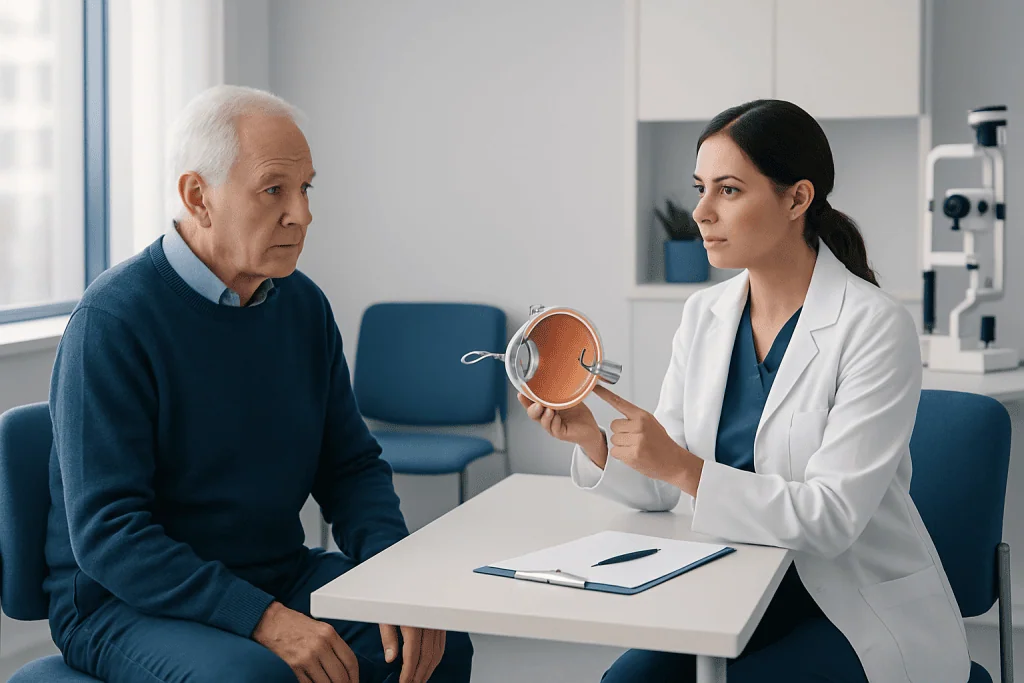
The operation is commonly performed as an outpatient procedure. The eye is numbed with local anesthesia, often with medication to help the patient relax; in some situations, general anesthesia may be appropriate. The surgical team will explain the anesthesia plan in advance.
During surgery, the surgeon makes a small opening in the conjunctiva, the thin clear tissue covering the white of the eye. The plate is secured to the outer surface of the eye, usually in the upper area where it will be covered by the eyelid. A fine tube is placed into the front part of the eye or, in selected cases, into another eye compartment.
The tube is covered with a protective graft and the outer tissue is closed with fine stitches. With certain non-valved devices, the surgeon may use a temporary technique to limit early fluid flow until tissue has healed around the plate. The surgery itself commonly takes about one to two hours, though the total visit is longer because of preparation and recovery from anesthesia.
Afterward, the eye is shielded and the patient receives instructions about prescribed drops, activity limits, and follow-up visits. Glaucoma treatment is individualized, so the surgical plan and postoperative medicines may differ from one person to another.
How Long Does It Take to Recover From a Glaucoma Drainage Implant Surgery?
Glaucoma drainage implant recovery time varies, but many people can resume light daily activities within several days to two weeks if their surgeon agrees. The eye may feel mildly scratchy, watery, or sensitive to light at first, and vision is commonly blurred during the early healing period. Driving, work duties, and screen use should be discussed individually because they depend on vision, comfort, and the type of work.
The deeper healing process takes longer. Pressure can change during the first weeks and months, particularly as tissue develops around the implant plate. With some non-valved devices, pressure may rise temporarily before the device begins to drain more freely. This phase is expected in many cases but requires close monitoring and sometimes temporary adjustment of medicines.
For several weeks, patients are usually advised to avoid rubbing or pressing on the eye, swimming, heavy lifting, strenuous exercise, and activities that could expose the eye to injury or contamination. They should use eye drops exactly as prescribed and attend all follow-up appointments, even if the eye feels comfortable.
Vision may stabilize over several weeks, but the final visual result can take months and is influenced by the underlying glaucoma and other eye conditions, such as cataract, retinal disease, or corneal disease. Surgery aims primarily to preserve remaining vision by lowering pressure; it cannot restore optic nerve damage that has already occurred.
Benefits, Side Effects, and Risks
The main potential benefit of a glaucoma drainage implant is sustained pressure reduction when other measures have been insufficient or are unlikely to provide reliable control. Some people can reduce the number of pressure-lowering drops they use afterward, although many still need drops at some point. Continued examinations are necessary because pressure targets and treatment needs can change over time.
Common short-term glaucoma drainage implant side effects can include redness, irritation, tearing, blurred vision, eyelid swelling, and changes in eye pressure. These symptoms may improve as the eye heals, but persistent pain, worsening redness, or sudden visual changes should be reported promptly.
Less common but important risks include pressure that is too low or too high, bleeding, infection, inflammation, cataract progression, corneal swelling or damage, double vision, scarring around the implant, tube blockage or movement, retinal complications, and the need for additional surgery. Severe loss of vision is uncommon but remains a possible risk of any major eye operation.
A surgeon discusses personal risk based on the condition of each eye. Following medication instructions and attending postoperative checks are among the most practical ways to identify complications early and protect the outcome.
Glaucoma Drainage Implant vs Trabeculectomy
Both a glaucoma drainage implant and trabeculectomy are operations intended to lower eye pressure by creating a new drainage route. In trabeculectomy, the surgeon creates a small controlled opening and a filtering area, often called a bleb, beneath the upper eyelid. In implant surgery, fluid is directed through a tube to a plate under the conjunctiva.
Neither procedure is automatically better for all forms of glaucoma. Trabeculectomy can produce very low pressure in suitable eyes and remains an important option. A tube shunt may be favored when there is a higher risk of scarring, a history of previous eye surgery, certain complex glaucoma types, or other clinical reasons that make trabeculectomy less suitable.
Both procedures require long-term follow-up and may involve postoperative adjustments, medications, or additional treatment. The decision should be made with a glaucoma specialist after discussing the desired pressure range, eye anatomy, prior treatment, visual needs, and the risks most relevant to the individual.
Other therapies may also form part of care, including eye drops, laser procedures, and minimally invasive glaucoma surgery for selected patients. Treatment is not one-size-fits-all, and the best plan can change as glaucoma changes over time.
What Is the Success Rate of a Glaucoma Drainage Implant?
Success is not defined in exactly the same way across studies or for every patient. It commonly means achieving a planned pressure range, with or without glaucoma medicines, while avoiding serious complications or the need for further glaucoma surgery. Reported outcomes therefore differ according to the device used, glaucoma type and severity, past operations, length of follow-up, and the definition of success.
In general, drainage implants are well-established options that can provide meaningful long-term pressure reduction for many people with complex or previously treated glaucoma. However, an implant may gradually become less effective because of scarring around the plate, and some patients continue to require eye drops or additional procedures.
The most useful question is whether the device is likely to help a particular person reach a safe target pressure while balancing risks. The ophthalmologist can explain expected outcomes in the context of the eye’s history rather than relying on a single percentage.
Regular pressure measurements, optic nerve examinations, imaging, and visual field testing remain important after surgery. A pressure reading that appears acceptable is only one part of assessing whether glaucoma is stable.
What Is the New Glaucoma Treatment for 2026? What Is the Best Glaucoma Drainage Device?
There is no single new glaucoma treatment for 2026 that replaces established care for everyone. Research continues into sustained-release medicines, improved laser approaches, minimally invasive procedures, imaging tools, and refinements in surgical devices. Whether a newer option is appropriate depends on the type and stage of glaucoma, pressure level, previous treatment, and the health of the eye.
Similarly, there is no universally best glaucoma drainage device. Valved and non-valved implants have different flow characteristics and may be selected for different clinical situations. The surgeon’s experience, the eye’s anatomy, risk of early low pressure, degree of scarring, and the target pressure all contribute to the choice.
Patients should be cautious about claims that one device or new procedure is best for all people. An informed discussion with a glaucoma specialist should cover expected pressure control, the possibility of ongoing drops, recovery needs, alternative treatments, and the chance that further surgery may be needed.
Acibadem International’s multidisciplinary specialists and JCI-accredited hospitals provide evaluation and treatment planning for international patients with glaucoma, including surgical options when clinically appropriate.
When to Seek Medical Care
Anyone with diagnosed glaucoma should keep scheduled ophthalmology visits, including after surgery. Glaucoma often progresses without pain or obvious symptoms, so regular monitoring is vital even when vision seems unchanged. Do not stop prescribed eye drops unless the treating clinician specifically advises this.
After a glaucoma drainage implant procedure, urgent medical advice is needed for severe or increasing eye pain, a sudden decrease in vision, marked redness or swelling, pus-like discharge, nausea or vomiting with eye pain, a new curtain or shower of floaters, or an eye injury. These symptoms may have causes other than a surgical complication, but they need prompt assessment.
For gradual changes such as increasing blur, discomfort, trouble tolerating drops, or uncertainty about activity restrictions, patients should contact their eye care team. Early communication can help the team decide whether an earlier review is needed.
Frequently asked questions
Does a glaucoma drainage implant cure glaucoma?
No. A glaucoma drainage implant lowers eye pressure to help reduce the risk of further optic nerve damage, but it does not cure glaucoma or restore vision already lost. Lifelong monitoring remains necessary after surgery.
Is glaucoma drainage implant surgery painful?
The operation is performed with anesthesia, so pain during the procedure is minimized. Mild discomfort, a foreign-body sensation, tearing, or light sensitivity can occur during recovery and is usually managed with the postoperative plan. Severe or worsening pain should be reported urgently.
Will eye drops still be needed after a glaucoma drainage implant?
Some people need fewer pressure-lowering drops after surgery, while others continue drops temporarily or long term. The need depends on the pressure response, healing, and the target pressure set by the ophthalmologist. Drops should not be changed or stopped without medical advice.
Can the implant be seen from outside the eye?
The plate is placed under the upper eyelid and is not normally visible. The tube is inside the eye and may be visible to an eye specialist during examination, but it is not usually noticeable to others. Mild redness during healing is common.
How long does a glaucoma drainage implant last?
The device is intended to remain in place long term. Its pressure-lowering effect can last for years, but it may change over time because of healing and scar tissue around the plate. Ongoing follow-up helps detect a reduced effect or other tube-related problems.
Can a person have cataract surgery after a glaucoma drainage implant?
In many cases, cataract surgery can be performed after a glaucoma drainage implant, but planning requires careful assessment by an ophthalmologist. Previous glaucoma surgery can affect the approach and pressure management. The timing and suitability depend on the individual eye.
References
- American Academy of Ophthalmology
- National Eye Institute
- Glaucoma Research Foundation
- European Glaucoma Society
This article is for general information only and is not a substitute for professional medical advice. Please consult a qualified doctor about your individual situation.
Glaucoma in Turkey — costs, top hospitals & a free quote
JCI-accredited · board-certified surgeons · reply within 24h
Add us as a Preferred Source to see more of our trusted health content across Google Search, AI Overviews and Discover.

Ophthalmology
Comprehensive eye care from laser vision correction to retina, cornea and cataract surgery.
75 specialists in this unit