What Happens after Breast Biopsy Is Positive: Procedure, Recovery and Results

A positive biopsy confirms that cancer or another significant abnormality is present in the tissue sample, but it does not by itself determine the full treatment plan. The pathology report identifies the cancer type, grade and key biomarkers such as hormone receptor and HER2 status.
Key Takeaways
- A positive biopsy confirms that cancer or another significant abnormality is present in the tissue sample, but it does not by itself determine the full treatment plan.
- The pathology report identifies the cancer type, grade and key biomarkers such as hormone receptor and HER2 status.
- A biopsy can confirm cancer but usually cannot determine the cancer stage on its own.
- Most needle-biopsy soreness is mild to moderate and improves over several days with basic aftercare.
- Treatment planning commonly involves breast surgery, medical oncology, radiation oncology, radiology and pathology specialists.
When a breast biopsy is positive, it means abnormal cells—most often cancer cells—were found in the sampled tissue. The next steps usually include reviewing the pathology report, identifying the cancer’s characteristics, arranging appropriate imaging or other tests, and meeting a breast cancer care team to plan individualized treatment.
What a Positive Breast Biopsy Means
A positive breast biopsy means that the tissue removed from the breast contains cancer cells or, less commonly, another abnormal condition needing specialist follow-up. For many people, the result follows an unusual finding on a mammogram, ultrasound, MRI or breast examination. Although receiving this news can feel overwhelming, the biopsy result gives the care team essential information for making clear next-step decisions.
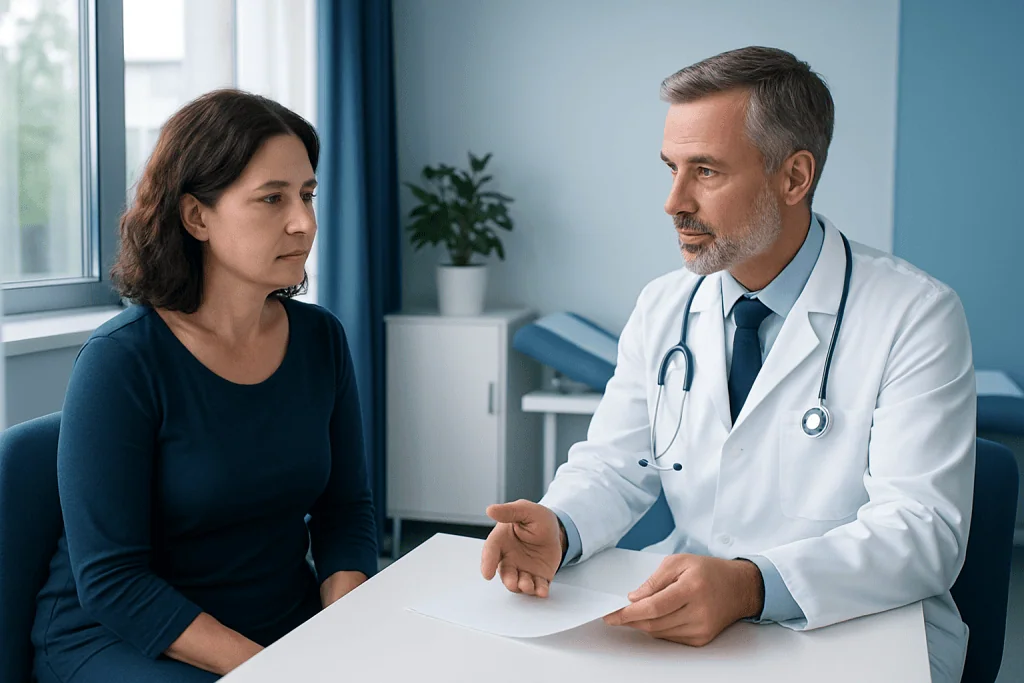
What happens after breast biopsy is positive begins with a detailed pathology review. A pathologist examines the sample under a microscope and may perform laboratory tests to identify the type of cells and their biological features. The clinician then discusses what the result means, whether additional imaging or testing is needed, and which specialists should be involved.
A positive result does not automatically mean advanced cancer or immediate treatment. Many breast cancers are diagnosed before they have spread beyond the breast. Time may be needed for additional pathology testing, consultations and thoughtful treatment planning, and patients are encouraged to ask questions and bring a support person to appointments if helpful.
How Breast Biopsy Works and Who May Need One
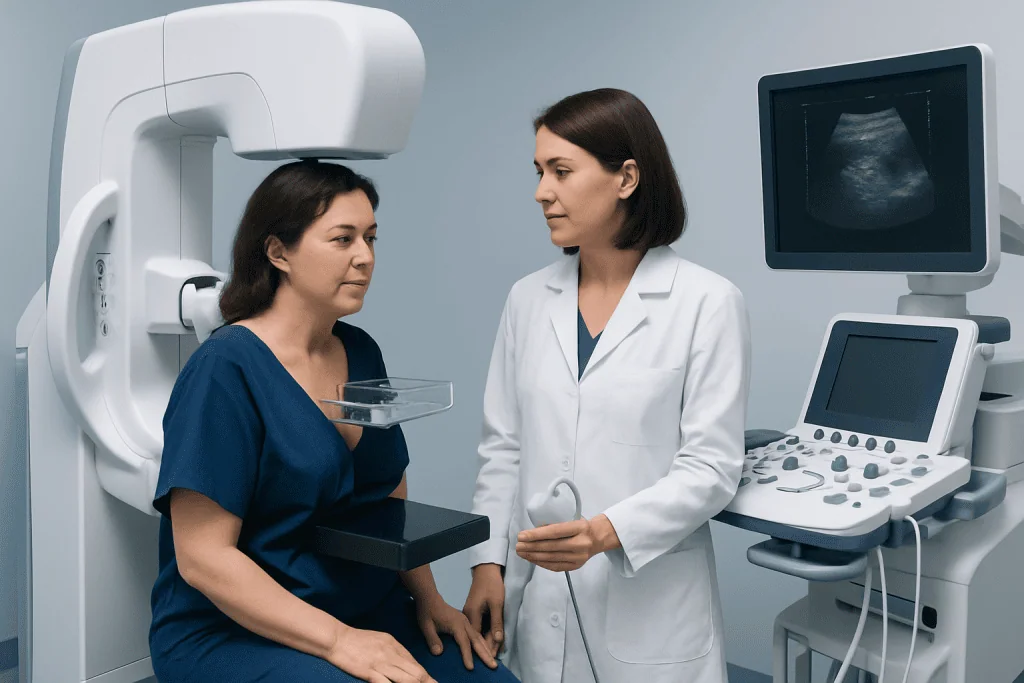
A breast biopsy is a procedure that removes a small sample of breast tissue for laboratory examination. It is recommended when imaging or a clinical examination identifies a change that cannot be reliably classified as benign without examining cells. These changes may include a lump, an area of calcifications on mammography, architectural distortion, an area seen on ultrasound or an MRI finding.
Most biopsies are image-guided needle procedures. Ultrasound-guided core needle biopsy is commonly used when the area can be seen on ultrasound. Stereotactic biopsy uses mammography guidance and is often used for calcifications, while MRI-guided biopsy may be appropriate for an abnormality visible only on MRI. In selected situations, a surgeon may recommend an excisional biopsy to remove all or part of a suspicious area.
Before the procedure, the medical team reviews medicines, allergies, bleeding history and any possibility of pregnancy. Blood-thinning medicines may need individual review; patients should not stop prescribed medication unless instructed by the clinician who manages it. The appropriate biopsy technique depends on the imaging finding, its location and the amount of tissue required for an accurate diagnosis.
The Procedure and the First Days of Recovery
For a needle biopsy, the person usually lies in a position that allows the radiologist to see the target area clearly. The skin is cleaned, local anesthetic is injected and a small opening is made. Using imaging guidance, several tissue samples are collected through a needle. A tiny marker clip may be placed at the biopsy site so that it can be identified on future imaging; it is designed to remain safely in the breast.
Pressure is applied after the samples are taken to limit bleeding, and a dressing or adhesive strips are placed over the small incision. The procedure is commonly completed without general anesthesia. Results may take several days because the tissue must be processed, examined and, when needed, tested for biomarkers.
Afterward, bruising, tenderness, mild swelling and a pulling sensation are common. Patients are usually advised to keep the area clean and dry as directed, wear a supportive bra if comfortable, avoid strenuous upper-body activity briefly, and use a cold pack wrapped in cloth for short periods. The care team provides specific instructions about bathing, dressings and pain relief.
How painful is breast biopsy recovery? Most people describe the recovery as mild to moderately uncomfortable rather than severely painful. Local anesthetic reduces pain during the biopsy, while tenderness and bruising generally improve over a few days; a firm area from a small internal bruise can take longer to settle. Increasing pain, worsening swelling or signs of infection should be reported promptly.
Understanding the Pathology Report After a Positive Result
The pathology report is central to the next stage of care. It may state whether the finding is invasive breast cancer, ductal carcinoma in situ (DCIS), a high-risk lesion or another condition. Invasive cancer means cells have moved beyond the ducts or lobules into nearby breast tissue. DCIS is a non-invasive condition in which abnormal cells are confined to the milk ducts, but it still requires specialist evaluation and treatment planning.
For invasive breast cancer, the report commonly identifies the histologic type, such as invasive ductal carcinoma or invasive lobular carcinoma, and a tumor grade. Grade describes how abnormal the cells look and how quickly they may be expected to grow compared with normal breast cells. Grade is not the same as stage.
Testing for estrogen receptors (ER), progesterone receptors (PR) and HER2 is usually performed because these biomarkers help guide treatment choices. Some cancers are hormone receptor-positive, some are HER2-positive, and some are negative for all three markers, often called triple-negative breast cancer. Additional tests may be requested if results are unclear or if the care team needs more detail.
What is the most common diagnosis found on a breast biopsy? Overall, most breast biopsies do not show cancer. Benign findings such as fibroadenoma, cyst-related changes, fibrocystic changes and other non-cancerous tissue changes are common. Among cancers diagnosed by biopsy, invasive ductal carcinoma is the most common invasive type.
What Happens Next: Confirming Extent and Planning Treatment
After cancer is confirmed, the team reviews the pathology result alongside mammography, ultrasound, MRI or other available imaging. Further tests are chosen only when clinically useful. Depending on the diagnosis and symptoms, this may include breast MRI, assessment of lymph nodes, blood tests, or scans to evaluate whether cancer has spread outside the breast.
Can a breast biopsy tell what stage cancer you have? No. A biopsy can establish the cancer type and provide important biological information, but staging requires a broader assessment. Stage is based on tumor size, whether nearby lymph nodes are involved, whether cancer has spread to distant parts of the body, and relevant tumor biology. Final staging may not be known until surgery and lymph node evaluation have been completed.
A multidisciplinary team may include a breast surgeon, medical oncologist, radiation oncologist, radiologist, pathologist, specialist breast nurse and, when appropriate, reconstructive surgeon or genetic counselor. Together, they consider the size and location of the cancer, lymph node findings, biomarkers, overall health, personal preferences and genetic risk factors. This approach helps ensure that treatment is tailored rather than based on one test result alone.
For people seeking coordinated care, Acibadem International’s multidisciplinary specialists and JCI-accredited hospitals diagnose and treat breast conditions for international patients. A qualified clinician can explain which next steps are appropriate based on the individual pathology report and imaging findings.
Treatment Options Following a Positive Breast Biopsy
Treatment is selected according to the individual diagnosis. Surgery is commonly used to remove the cancer and may involve breast-conserving surgery, also called lumpectomy, or mastectomy. The choice depends on factors including cancer size, number and location of areas involved, breast size, prior radiation, genetic considerations and personal preference. Lymph nodes may be assessed with sentinel lymph node biopsy or other procedures when appropriate.
Some people have surgery first, while others benefit from treatment before surgery, known as neoadjuvant therapy. Systemic treatments can include hormone therapy, chemotherapy, HER2-targeted therapy, immunotherapy or combinations of these approaches. Their role depends particularly on cancer subtype, size, lymph node involvement and the overall treatment goal.
Radiation therapy is often recommended after breast-conserving surgery and may also be advised after mastectomy in particular circumstances. Reconstructive options can be discussed before or after mastectomy when relevant. The care team should explain expected benefits, potential side effects, timing and alternatives so that the patient can participate fully in decisions.
Not every positive biopsy leads to the same pathway. For example, DCIS, invasive cancer and high-risk lesions are managed differently. Obtaining a copy of the pathology report, writing down questions and asking the team to explain unfamiliar terms can make appointments more manageable.
When to Seek Medical Care
Patients should contact the biopsy team or another healthcare professional urgently if they develop heavy or persistent bleeding, rapidly increasing swelling, severe or worsening pain, redness that spreads, warmth at the site, pus-like drainage, fever or chills. These symptoms are uncommon but may indicate bleeding, infection or another complication that needs assessment.
Medical advice is also important if the dressing will not stay in place, if there is an allergic-type skin reaction to adhesive or antiseptic, or if uncertainty about aftercare is causing concern. The clinic that performed the biopsy should provide a contact number and instructions for urgent questions after the procedure.
Once a positive result is communicated, a timely appointment with a breast specialist is appropriate. People should seek prompt medical attention for a new breast lump, nipple discharge that is bloody or spontaneous, persistent breast skin changes, nipple inversion that is new, or enlarged lymph nodes near the underarm or collarbone. These symptoms do not always indicate cancer, but they should be evaluated.
Frequently asked questions
What percentage of biopsies come back positive for breast cancer?
Most breast biopsies are not cancer. The percentage that are positive varies according to why the biopsy was recommended, the imaging findings, age and individual risk factors. A clinician can explain the level of concern associated with a specific imaging result, but only the pathology examination can confirm the diagnosis.
How painful is breast biopsy recovery?
Recovery after a needle breast biopsy is usually associated with mild to moderate tenderness, bruising and swelling. Discomfort is often most noticeable during the first few days and generally improves with rest, supportive clothing, cold packs and the pain-relief advice provided by the care team. Severe, increasing or persistent pain should be discussed with a clinician.
What is the most common diagnosis found on a breast biopsy?
Benign, non-cancerous changes are more common than cancer among breast biopsy results. Common benign diagnoses include fibroadenoma and fibrocystic or other non-cancerous breast changes. When invasive breast cancer is found, invasive ductal carcinoma is the most common type.
Can a breast biopsy tell what stage cancer you have?
A breast biopsy cannot usually determine the complete cancer stage by itself. It identifies the type of cancer and may provide grade and biomarker information, but staging also requires information about tumor size, lymph nodes and whether there is spread beyond the breast. Imaging, surgery and lymph node assessment may contribute to the final stage.
How long does it take to receive breast biopsy results?
Results often take several working days, although timing varies by laboratory and by the tests required. Additional biomarker testing may take longer after cancer has been identified. The biopsy team should explain when and how results will be communicated.
Does a positive breast biopsy always mean surgery is needed?
Not always immediately, but surgery is part of treatment for many breast cancers. Some people receive medicines such as chemotherapy, hormone therapy or HER2-targeted treatment before surgery, while management of certain high-risk or non-invasive findings can differ. The recommended sequence depends on the pathology report, imaging and personal clinical circumstances.
References
- American Cancer Society
- National Cancer Institute
- Centers for Disease Control and Prevention
- Breastcancer.org
- World Health Organization
This article is for general information only and is not a substitute for professional medical advice. Please consult a qualified doctor about your individual situation.
Oncology care in Turkey — second opinion and treatment plan
JCI-accredited · board-certified surgeons · reply within 24h
Add us as a Preferred Source to see more of our trusted health content across Google Search, AI Overviews and Discover.