

7+3 Chemo: How It Works, Results and What to Expect

7+3 chemo usually combines cytarabine for 7 continuous days with an anthracycline chemotherapy medicine for the first 3 days. It is mainly used as induction treatment for newly diagnosed AML in people who are fit enough for intensive chemotherapy.
Key Takeaways
- 7+3 chemo usually combines cytarabine for 7 continuous days with an anthracycline chemotherapy medicine for the first 3 days.
- It is mainly used as induction treatment for newly diagnosed AML in people who are fit enough for intensive chemotherapy.
- Treatment and the early recovery period generally require a hospital stay because blood counts can fall very low.
- Doctors assess response with blood tests and a bone marrow examination, often after blood counts begin to recover.
- Fever during 7+3 chemo needs urgent medical assessment because it can indicate infection when immune defenses are low.
7+3 chemo is a commonly used intensive induction chemotherapy regimen for <a href="https://acibademinternational.com/diseases/acute-myeloid-leukemia/”>acute myeloid leukemia (AML). It aims to destroy leukemia cells, bring the disease into remission and prepare eligible patients for further treatment such as consolidation chemotherapy or stem cell transplantation.
Overview: what is 7+3 chemo?
7+3 chemo is an intensive chemotherapy regimen most often used to treat acute myeloid leukemia (AML). It combines cytarabine, given over 7 days, with an anthracycline medicine, commonly daunorubicin or idarubicin, given during the first 3 days. The main purpose is induction: reducing leukemia cells enough to achieve remission, meaning no leukemia can be detected by standard tests and normal blood-cell production can begin to recover.
AML is a fast-growing cancer of blood-forming cells in the bone marrow. Because leukemia cells can multiply quickly, treatment often starts soon after the diagnosis and treatment plan are confirmed. 7+3 is one established approach, but it is not appropriate for every person with AML. The best regimen depends on age, general fitness, other health conditions, prior treatment, chromosome and gene findings in leukemia cells, and personal goals of care.
Induction treatment is only the first phase of AML care. Even when remission is achieved, microscopic leukemia cells may remain. Further treatment, called consolidation, is usually recommended to lower the risk of relapse. This may involve additional chemotherapy, targeted treatment in selected cases, or a stem cell transplant.
How 7+3 chemo works
Cytarabine interferes with the ability of rapidly dividing cells to copy their DNA. Leukemia cells divide quickly, so they are particularly vulnerable to this effect. Anthracyclines work differently: they damage DNA and disrupt enzymes cancer cells need to divide. Using medicines with different mechanisms can increase the chance of destroying a large number of leukemia cells.
The same properties that make chemotherapy effective can also affect healthy fast-growing cells, especially in the bone marrow, digestive tract and hair follicles. As a result, blood counts commonly decrease after treatment. Low white blood cells raise infection risk, low platelets increase bleeding risk, and low red blood cells can cause tiredness or shortness of breath.
Doctors may add a targeted medicine to induction treatment when leukemia testing identifies a change that is likely to respond to it. The treatment plan is individualized and may change if the leukemia has specific genetic features or if a person has already received certain treatments.
Who may be a candidate for 7+3 chemo?

7+3 chemo is generally considered for adults with newly diagnosed AML who are considered fit for intensive treatment. Fitness is not based on age alone. The hematology team considers heart, lung, liver and kidney function; ability to manage side effects; day-to-day functioning; and whether the potential benefits outweigh the risks.
Before treatment, the team confirms the AML subtype through blood and bone marrow testing. Cytogenetic and molecular tests help predict disease behavior and guide treatment choices. An echocardiogram or another heart assessment may be needed because anthracyclines can affect heart muscle function in some people.
For people who are older, frail, have significant medical conditions, or have AML features that suggest another approach may be better, lower-intensity chemotherapy or targeted therapies may be discussed. A hematologist can explain why a particular regimen is recommended and what alternatives are reasonable.
- Newly diagnosed AML with a plan for intensive induction treatment
- Adequate organ function and general health for close monitoring
- Leukemia test results supporting this treatment approach
- An informed discussion of expected benefits, risks and next treatment steps
What happens during 7+3 chemo?
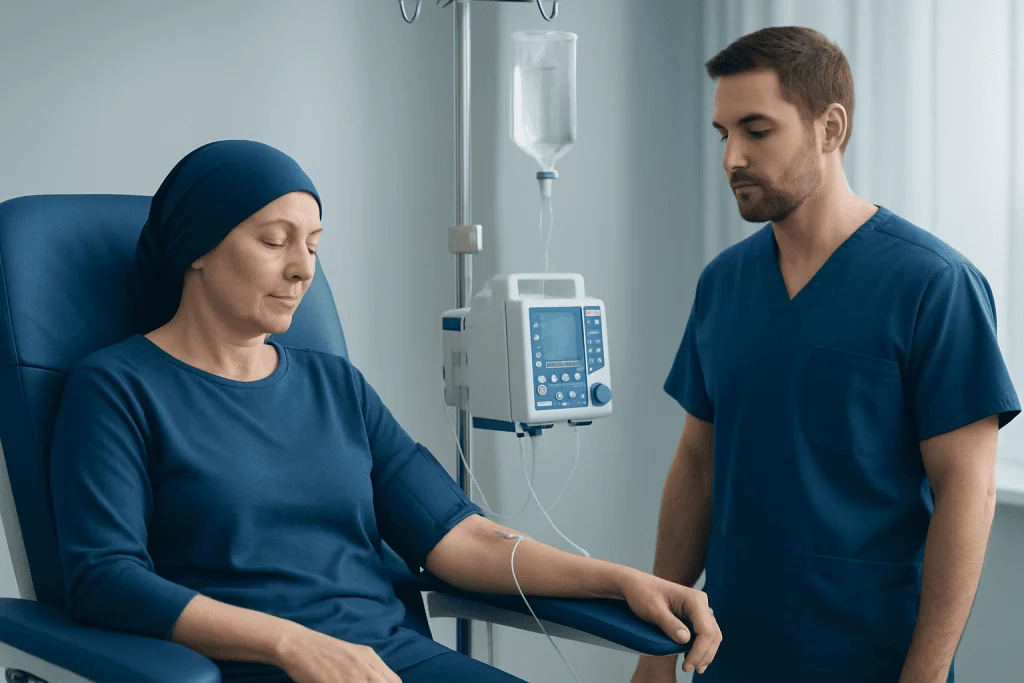
7+3 chemo is usually delivered in hospital. A central venous catheter, such as a PICC line or another central line, may be placed to make repeated blood sampling, chemotherapy, transfusions and intravenous medicines safer and more comfortable. The care team performs baseline blood tests and may provide medicines to prevent nausea and reduce the risk of complications from rapid leukemia-cell breakdown.
Cytarabine is typically given as a continuous intravenous infusion from day 1 through day 7. The anthracycline is usually given by intravenous infusion or injection on days 1, 2 and 3. The exact schedule, supportive medicines and monitoring plan can differ between hospitals and according to the individual treatment plan.
After the chemotherapy ends, the hospital stay continues because blood counts often fall to their lowest levels about one to two weeks after treatment begins. During this period, patients may need transfusions of red blood cells or platelets, preventive or treatment medicines for infection, intravenous fluids, nutritional support and regular assessment by the leukemia care team.
How many days is 7'3 chemo?
The name refers to the initial drug schedule: cytarabine is given for 7 days and an anthracycline is given for 3 days, usually on the first 3 days. In that sense, the chemotherapy administration lasts 7 days.
However, the full treatment episode is longer than one week. Blood counts can remain low for several weeks after the final cytarabine dose, and many people stay in hospital for close monitoring until their counts recover enough and they are medically stable. The length of admission varies with side effects, infection risk, transfusion needs and recovery of the bone marrow.
A bone marrow examination may be performed at a time selected by the hematology team, often during early recovery, to evaluate the response. If leukemia remains, the team discusses whether further induction treatment or a different strategy is appropriate.
Recovery timeline, benefits and possible risks
In the first few days, some people experience tiredness, nausea, appetite changes, mouth soreness, constipation or diarrhea. Hair loss can occur. Side effects are monitored closely, and supportive treatments can help relieve many symptoms. Rest, adequate fluids when permitted, mouth care and early reporting of new symptoms are important parts of recovery.
The period of very low blood counts is often the most medically demanding part of treatment. A fever may be the only early sign of infection, since the body may not be able to produce a typical inflammatory response. Blood product transfusions and infection-prevention measures are common. Recovery of blood counts may take several weeks, although timing differs between individuals.
The potential benefit of 7+3 chemo is that it can induce remission and create an opportunity for curative-intent treatment in appropriate patients. Important risks include serious infection, bleeding, anemia, nausea, mouth inflammation, liver or kidney problems, and heart effects related to anthracyclines. Rarely, complications can be life-threatening, which is why intensive inpatient monitoring is standard.
Before treatment, the clinical team discusses fertility preservation where relevant. Chemotherapy may affect fertility, and options need to be considered before treatment starts whenever possible. Emotional support, dietetic input, social work support and rehabilitation can also be valuable during a prolonged admission.
What is the hardest week of chemo?
There is no single hardest week for everyone. Many people find that the period after chemotherapy finishes is especially challenging, because white blood cells, red blood cells and platelets may fall to very low levels. This is often called the nadir period and commonly occurs around the second week after treatment begins, though the timing varies.
During this phase, fatigue, infection risk, bleeding risk, mouth soreness and reduced appetite may be more noticeable. Hospital monitoring allows the team to identify and treat problems promptly with antibiotics, transfusions, fluids, pain relief, anti-sickness medicines and other supportive care.
Symptoms should not be managed alone. Patients should tell their nurses or doctors about fever, chills, new pain, worsening diarrhea, mouth ulcers, breathlessness, bleeding, confusion or any sudden change in how they feel. Early communication helps the care team respond quickly.
How to know when chemo is working
Feeling better or worse during 7+3 chemo does not reliably show whether treatment is working. Side effects reflect how chemotherapy affects healthy tissues as well as leukemia cells, and some people may feel unwell even when the leukemia is responding well.
Doctors determine response using blood counts, examination findings and, most importantly, a bone marrow assessment. The bone marrow sample is examined for leukemia cells, and specialized tests may look for minimal residual disease, meaning very small amounts of leukemia that standard microscopy may not detect.
Remission is usually assessed after induction and blood-count recovery at a schedule set by the treating team. Results help guide the next step, such as consolidation chemotherapy, a targeted medicine or stem cell transplantation. The team explains what the results mean for the individual rather than relying on symptoms alone.
How many rounds of chemo is normal for stage 3?
AML is not usually described using stage 1, stage 2 or stage 3 in the same way as many solid tumors. Therefore, there is no standard number of chemotherapy rounds for “stage 3” AML. AML treatment is planned in phases according to response, leukemia genetics and the person’s health.
After one induction course such as 7+3 chemo, many patients who achieve remission receive consolidation treatment. The number and type of consolidation cycles vary. Some people receive further high-dose cytarabine-based chemotherapy, while others may be advised to have an allogeneic stem cell transplant because of relapse risk.
For cancers that are commonly staged, such as breast, bowel or lung cancer, a “stage 3” treatment plan is different and depends on the cancer type, surgery, radiation therapy and pathology results. A cancer specialist can explain the intended number of cycles for the specific diagnosis.
When to seek medical care
Anyone receiving 7+3 chemo should follow the emergency contact instructions given by their leukemia team. A temperature at or above the threshold specified by the hospital, chills or feeling suddenly unwell can indicate an infection and requires urgent medical assessment. Patients should not take fever-reducing medicine first unless their treating team has advised them to do so, because it can mask an important symptom.
Urgent medical advice is also needed for unusual bleeding or bruising, black or bloody stools, severe headache, chest pain, shortness of breath, fainting, confusion, persistent vomiting, severe diarrhea, inability to drink fluids, a painful or swollen catheter site, or markedly reduced urination. These symptoms may have several causes, but prompt review is safest during intensive chemotherapy.
Acibadem International’s multidisciplinary hematology and oncology specialists at JCI-accredited hospitals diagnose and treat AML for international patients, including intensive chemotherapy and coordinated supportive care.
Frequently asked questions
Is 7+3 chemo a cure for AML?
7+3 chemo is intended to induce remission in AML, which is an important step toward long-term disease control or cure for some patients. Whether AML can be cured depends on factors such as leukemia genetics, response to induction treatment, consolidation therapy and whether a stem cell transplant is recommended.
Can 7+3 chemo be given as an outpatient treatment?
It is most often given in hospital because it is intensive and causes a predictable period of very low blood counts. Inpatient care allows rapid treatment of infection, bleeding, dehydration and other complications, as well as transfusion support.
Why are blood transfusions often needed during 7+3 chemo?
Chemotherapy suppresses the bone marrow, where red blood cells and platelets are made. Red blood cell transfusions can help treat anemia, while platelet transfusions can reduce the risk of bleeding when platelet counts are low.
Does everyone lose their hair with 7+3 chemo?
Hair thinning or hair loss is common with anthracycline-based chemotherapy, but the degree varies. Hair usually begins to grow back after treatment, although its texture or color may temporarily differ.
Can a person eat normally during 7+3 chemo?
Appetite and taste can change during treatment, and mouth soreness or nausea may make eating difficult. The care team may recommend small frequent meals, safe food-handling practices and support from a dietitian; individualized advice is especially important when immune defenses are low.
What happens after remission is achieved?
Remission is usually followed by consolidation treatment to reduce the chance that AML returns. The next step may include additional chemotherapy, targeted therapy in selected situations or an allogeneic stem cell transplant, depending on relapse risk and overall health.
References
- National Cancer Institute
- American Cancer Society
- Leukemia & Lymphoma Society
- European LeukemiaNet
- National Comprehensive Cancer Network
This article is for general information only and is not a substitute for professional medical advice. Please consult a qualified doctor about your individual situation.
Oncology care in Turkey — second opinion and treatment plan
JCI-accredited · board-certified surgeons · reply within 24h
Add us as a Preferred Source to see more of our trusted health content across Google Search, AI Overviews and Discover.

More from the Health Library



Related Specialists

Dr. Aynur Göksel
Physical Medicine & Rehabilitation
Asst. Prof. Dr. Yiğit Umur Cırdı
Orthopedic Surgery & Traumatology
Dr. Hamdi Tüfekçi
Anesthesiology
Dr. İlker Alver
Neurosurgery