Cancer Screening for Men: How It Works, Results and What to Expect

Cancer screening recommendations for men are individualized by age, health history, family history and risk factors. Common discussions include screening for colorectal, prostate, lung and skin cancers, as well as testing for certain infections linked with cancer risk.
Key Takeaways
- Cancer screening recommendations for men are individualized by age, health history, family history and risk factors.
- Common discussions include screening for colorectal, prostate, lung and skin cancers, as well as testing for certain infections linked with cancer risk.
- An abnormal screening result does not confirm cancer; it usually means further assessment is needed.
- Most screening tests are quick and low risk, but some can produce false-positive results or identify slow-growing cancers that may never cause harm.
- New or persistent symptoms should be assessed promptly rather than waiting for a routine screening appointment.
Cancer screening for men involves selected tests that look for certain cancers before symptoms appear, with recommendations based on age, family history, lifestyle and personal health. Screening is not one universal examination; a clinician helps decide which tests are likely to offer more benefit than harm for each individual.
Overview: how cancer screening for men works
Cancer screening for men is a preventive approach that uses tests to look for early cancer or changes that may become cancer in people who do not have symptoms. Its purpose is to find disease at a stage when treatment may be simpler or more effective. However, not every cancer has a proven screening test, and the best plan differs from one person to another.
A clinician considers age, overall health, tobacco exposure, family history, inherited genetic conditions, previous test results and personal preferences. Screening may include a home stool test, a colonoscopy, a blood test, low-dose computed tomography (CT) of the lungs, or a physical examination. These tests are designed for people without concerning symptoms; symptoms require diagnostic evaluation instead.
Screening results generally fall into three groups: normal, unclear, or abnormal. A normal result lowers the chance of a cancer being present at that time but does not remove all future risk. An unclear or abnormal result often leads to repeat testing, imaging or a biopsy, and most abnormal screening findings do not automatically mean cancer.
What does a cancer screening consist of for men?
A cancer screening visit usually begins with a health review rather than a single all-purpose cancer test. The clinician asks about symptoms, medications, smoking history, alcohol use, past medical conditions and cancer in close relatives. They may also discuss whether genetic counselling or testing is appropriate when there is a strong family pattern of cancer.
For many men, colorectal cancer screening is an important consideration from midlife onward, or earlier when risk is elevated. Options can include stool-based tests that look for hidden blood or altered DNA, and colonoscopy, which allows a doctor to examine the colon and remove certain polyps. The choice depends on risk, access, preferences and the recommended follow-up schedule.
Prostate cancer screening is usually a shared decision. It commonly involves a prostate-specific antigen (PSA) blood test, with or without a digital rectal examination when clinically appropriate. PSA can rise for reasons other than cancer, including benign prostate enlargement, inflammation and recent prostate manipulation, so an elevated result needs careful interpretation. Men may also discuss screening for lung cancer with low-dose CT if they meet age and substantial smoking-history criteria, as well as regular skin checks when they have high sun exposure or a personal or family history of skin cancer.
- Colorectal screening: stool tests or colonoscopy, depending on risk and local guidance.
- Prostate screening: informed discussion about PSA testing and possible follow-up.
- Lung screening: low-dose CT for selected people with a qualifying smoking history.
- Skin assessment: examination of changing or suspicious skin lesions, especially in higher-risk individuals.
Candidacy: who may benefit from screening?

Eligibility for screening is not determined by sex alone. Age-based recommendations are useful starting points, but a person’s individual risk can change when screening should begin and which test is most suitable. A primary care doctor, urologist, gastroenterologist or oncology specialist can help develop a plan that reflects current national guidance and the person’s health priorities.
People at increased risk may need earlier or more frequent assessment. Higher-risk factors can include a parent, sibling or child diagnosed with colorectal, prostate, breast, ovarian, pancreatic or other related cancers; known inherited mutations; inflammatory bowel disease; a history of colon polyps; previous cancer treatment; and long-term tobacco use. Black men may also face a higher risk of developing and dying from prostate cancer in some populations, which can be part of an earlier screening discussion.
Screening may be less helpful when serious illness substantially limits life expectancy or when a person would not be able to undergo follow-up testing or treatment if needed. This does not mean care should stop; rather, the focus may shift toward symptom management and care that supports quality of life. Shared decision-making helps balance potential benefits, limitations and personal values.
The screening process: step by step
First, a clinician reviews risk factors and explains the possible benefits and downsides of each test. Preparation varies. Stool tests are commonly completed at home using a collection kit. Colonoscopy usually requires bowel preparation and sedation planning, while low-dose lung CT generally needs no injections, fasting or recovery time. A PSA test is a standard blood draw.
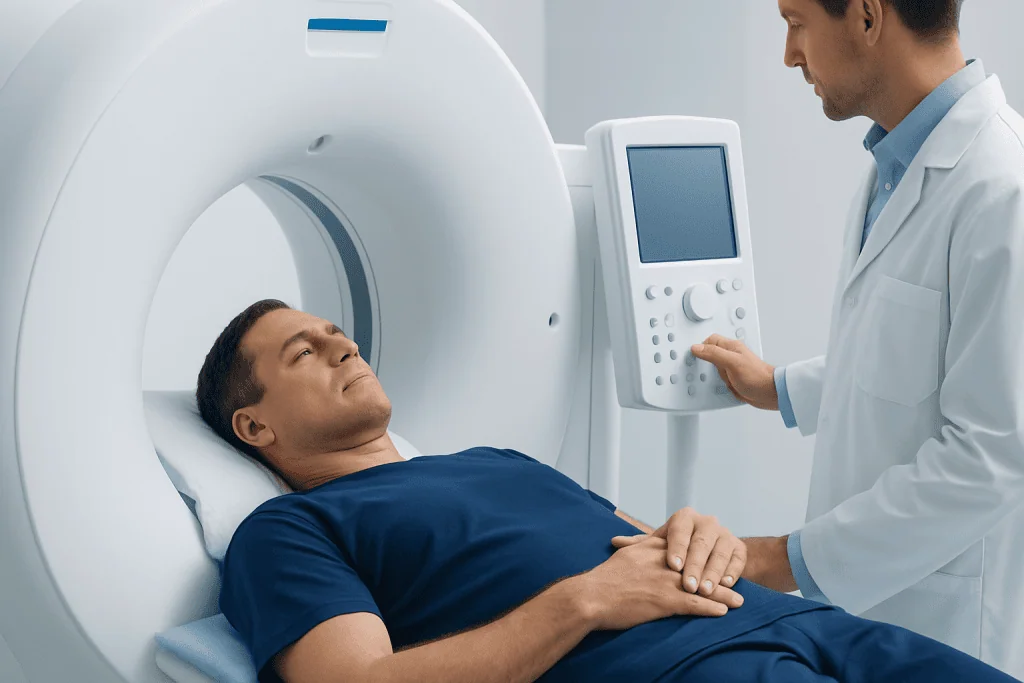
During a colonoscopy, a flexible instrument with a camera is passed through the rectum to inspect the colon while the patient is sedated. If a polyp is found, it may be removed and sent for laboratory analysis. Low-dose CT uses a short scan to create detailed images of the lungs. A digital rectal examination, if performed as part of prostate assessment, involves a clinician gently feeling the prostate through the rectum while the patient is positioned for privacy and comfort.
Following the test, the clinical team explains when and how results will be communicated, and what follow-up may be needed. A positive stool test does not diagnose colorectal cancer; it usually means colonoscopy is required. Similarly, a higher-than-expected PSA may lead to a repeat test, further risk assessment, imaging or, in selected cases, a biopsy rather than immediate treatment.
Do men get erect during a prostate exam?
An erection during a digital rectal examination is possible but uncommon, and it is an involuntary physical response rather than a sign of sexual interest or intention. The examination is brief, clinical and performed to assess the prostate or investigate symptoms. Healthcare professionals understand that bodies can respond unpredictably and aim to preserve privacy and dignity throughout the visit.
Most men do not experience an erection during the examination. They may feel temporary pressure or mild discomfort, but the test should not be painful. If a person feels anxious, embarrassed or uncomfortable, they can tell the clinician, ask what will happen before the examination begins, and request a pause at any time.
A digital rectal examination is not always part of routine prostate cancer screening. Its role depends on symptoms, PSA results, risk factors and the clinician’s judgement. It does not replace discussions about the potential advantages and limitations of PSA-based screening.
How long does it take to get results back from cancer screening?
Result times depend on the screening method and the laboratory or imaging service. A PSA result or routine blood test may be available within days, while home stool-test results often return within several days to a couple of weeks after the sample reaches the laboratory. Imaging results may be reviewed promptly but can take several days to be formally reported.
Colonoscopy findings are often discussed soon after the procedure. If tissue or polyps are removed, laboratory pathology results commonly take longer, sometimes one to two weeks or more depending on the testing required. A clinician should explain the expected timeline and provide clear instructions for receiving the report.
Waiting for results can be stressful. It may help to ask who will contact the patient, what result is considered urgent, and what the next step would be if a finding is unclear. If results are not received within the expected period, contacting the clinic is appropriate.
Is a cancer screening test worth it? Benefits, limits and recovery
For people who meet evidence-based eligibility criteria, cancer screening can be worthwhile because it may detect certain cancers or precancerous changes early. Colorectal screening can identify polyps that can often be removed before they become cancer. Lung screening with low-dose CT can find some lung cancers at an earlier stage in appropriately selected current or former smokers. The value of prostate screening depends more strongly on individual risk and preferences.
Screening also has limitations. Tests can miss cancer, known as a false-negative result. They can identify a finding that is not cancer, known as a false-positive result, which may lead to worry and additional testing. Some detected cancers grow so slowly that they might never have caused symptoms, yet their discovery can lead to further monitoring or treatment. These trade-offs are important to discuss before testing.
Recovery is usually minimal after blood tests, stool tests and CT scans. After colonoscopy, temporary bloating, mild cramping or tiredness can occur, particularly if sedation was used; patients usually need someone to take them home and should follow the unit’s instructions about driving and returning to normal activities. Complications from screening are uncommon but may include bleeding after polyp removal or, rarely, a tear in the colon. Prompt medical advice is needed for severe or persistent pain, fever, heavy bleeding, fainting or worsening symptoms after a procedure.
Where further investigation identifies a cancer, care is tailored to the cancer type, stage and individual goals. Acibadem International’s multidisciplinary specialists and JCI-accredited hospitals support diagnosis and treatment planning for international patients.
When to seek medical care
Routine screening is not a substitute for a medical assessment of symptoms. Men should seek medical care promptly for blood in the stool or urine, a persistent change in bowel habits, unexplained weight loss, a new lump, ongoing pain, a changing mole, persistent cough, coughing up blood, difficulty swallowing, or unusual ongoing fatigue. These symptoms are common and can have non-cancer causes, but they deserve evaluation.
Urinary changes such as difficulty starting urination, weak urine flow, frequent urination or blood in the urine should also be discussed with a doctor. They may relate to benign prostate enlargement, infection, bladder conditions or other concerns. A clinician can decide whether examination, urine testing, blood tests, imaging or referral is needed.
Anyone with a strong family history of cancer, a known hereditary cancer syndrome, or a previous abnormal screening result should arrange a planned conversation with a qualified clinician even if they feel well. The goal is to make a timely, personalized plan rather than to assume the same schedule is right for everyone.
Frequently asked questions
At what age should men start cancer screening?
There is no single age for all cancer screening. Colorectal screening commonly begins in midlife for average-risk adults, while prostate and lung screening decisions depend on age, risk factors and overall health. Men with a strong family history or inherited cancer risk may need earlier discussions with a clinician.
Is a PSA blood test enough to diagnose prostate cancer?
No. PSA is a screening and risk-assessment tool, not a diagnostic test. PSA levels can increase for several non-cancer reasons, so an unexpected result may be checked again or assessed with other tests before a biopsy is considered.
What should men do before a PSA test?
The testing clinic can provide specific preparation instructions, as recommendations may vary. Men should tell the clinician about urinary symptoms, prostate conditions, recent procedures, infections and medicines because these may affect interpretation. It is also useful to discuss whether the test is appropriate before it is ordered.
Can a healthy man have an abnormal cancer screening result?
Yes. A false-positive result means a test suggests a possible abnormality when cancer is not present. This can happen with many screening methods and may require repeat testing, imaging or a procedure to clarify the finding.
Can cancer screening prevent cancer?
Some screening can prevent certain cancers by finding and allowing removal of precancerous changes, such as some colon polyps. Other screening tests aim mainly to detect cancer earlier rather than prevent it. Healthy lifestyle choices, including avoiding tobacco and protecting skin from excessive sun exposure, can also reduce risk.
Should men be screened for testicular cancer?
Routine screening examinations for testicular cancer are not generally recommended for men without symptoms or particular risk factors. However, a new testicular lump, swelling, heaviness, pain or change in size should be assessed promptly by a doctor. Familiarity with what is normal can help a person notice a change.
References
- World Health Organization
- U.S. Preventive Services Task Force
- American Cancer Society
- National Cancer Institute
- European Society for Medical Oncology
This article is for general information only and is not a substitute for professional medical advice. Please consult a qualified doctor about your individual situation.
Oncology care in Turkey — second opinion and treatment plan
JCI-accredited · board-certified surgeons · reply within 24h
Add us as a Preferred Source to see more of our trusted health content across Google Search, AI Overviews and Discover.