Blue Laser Eyes: How It Works, Results and What to Expect
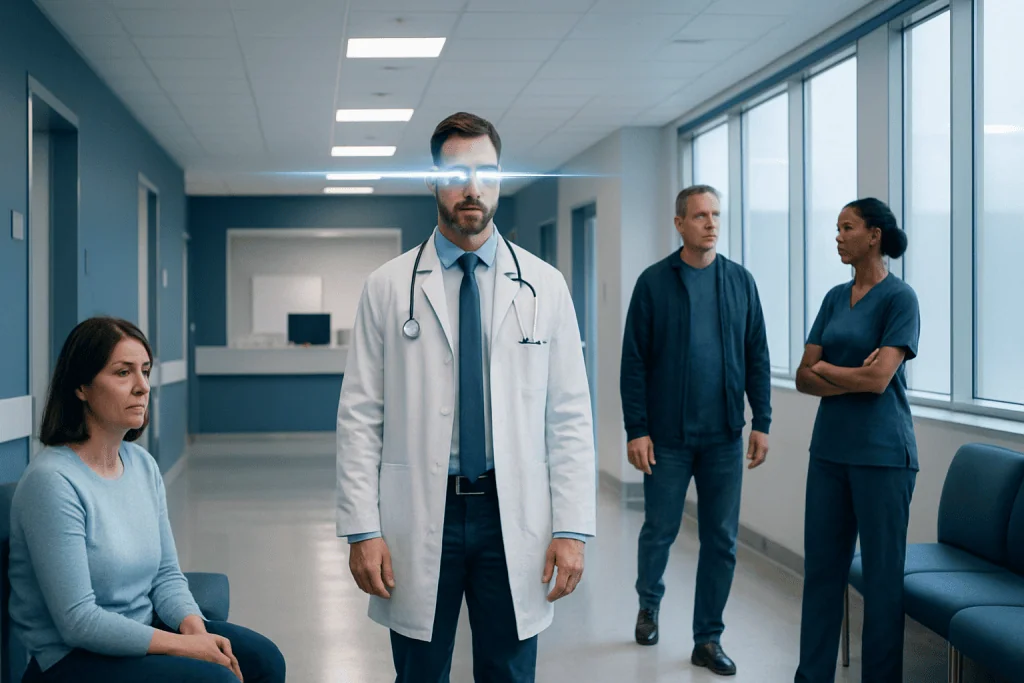
Blue laser eye procedures are designed to change apparent iris color, not correct refractive errors such as short-sightedness or astigmatism. The procedure uses laser energy to target brown iris pigment, but pigment released into the eye may affect drainage structures.
Key Takeaways
- Blue laser eye procedures are designed to change apparent iris color, not correct refractive errors such as short-sightedness or astigmatism.
- The procedure uses laser energy to target brown iris pigment, but pigment released into the eye may affect drainage structures.
- Possible complications include raised eye pressure, inflammation, glare, light sensitivity and glaucoma-related damage.
- Laser vision correction such as LASIK is a different procedure with different goals, evidence and risks.
- Anyone considering eye-color alteration should first have a comprehensive assessment by an ophthalmologist.
Blue laser eyes refers to an experimental approach intended to make brown eyes appear blue by using laser energy to reduce pigment in the iris. Unlike laser vision correction, it does not improve eyesight, and its long-term safety and effectiveness have not been established.
Overview: What Does Blue Laser Eyes Mean?
Blue laser eyes, sometimes called blue laser eye surgery, describes a proposed cosmetic procedure intended to make naturally brown eyes look blue. It is based on the fact that blue irises generally contain less visible melanin pigment than brown irises. The goal is not to add blue pigment; instead, laser energy is used to disrupt pigment in the front layer of a brown iris so that lighter underlying structures become more visible.
This is very different from laser vision correction. Laser eye surgery for refractive errors reshapes the cornea—the clear front surface of the eye—to improve how light focuses on the retina. A blue laser procedure targets the iris, the colored part of the eye, and does not treat blurred vision, reduce a glasses prescription or improve eye health.
The term “blue laser effect on eyes” can also describe the effects of blue-spectrum light from devices or lighting. That is a separate subject from laser iris-color procedures. Blue light exposure may affect comfort and sleep patterns for some people, but ordinary screen use is not the same as having a laser directed at the iris.
How a Blue Laser Eye Procedure Is Intended to Work
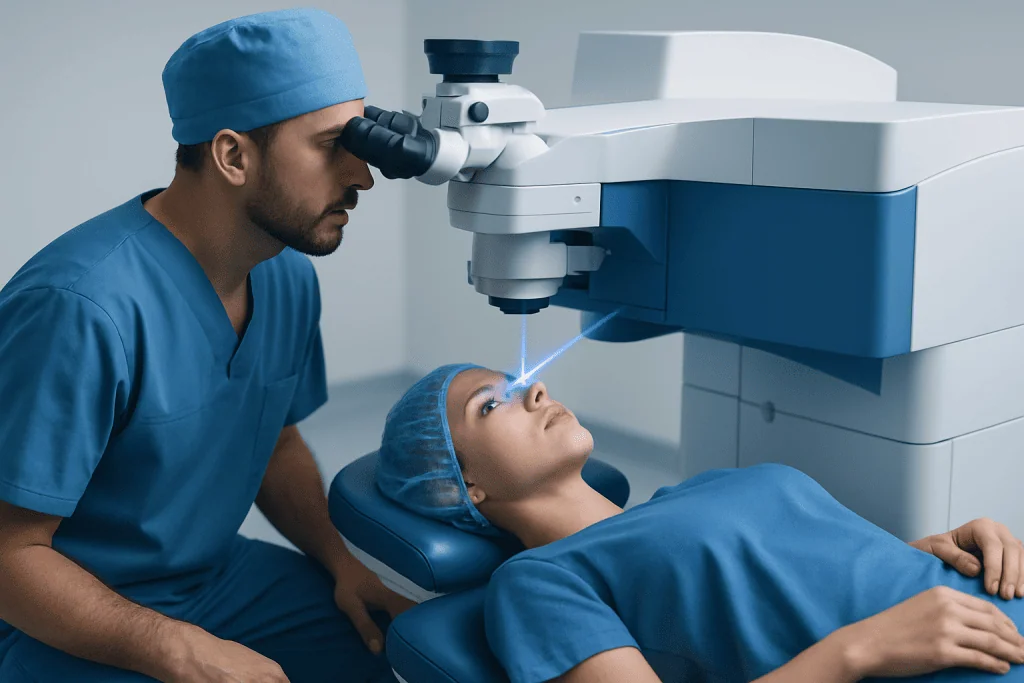
The visible color of the iris depends largely on melanin concentration and the way light scatters in iris tissue. Brown eyes have more melanin in the front layer of the iris. In theory, a carefully selected laser can break down some of this pigment. The body may then clear pigment particles over time, potentially leaving the iris with a lighter, blue-gray appearance.
However, the eye’s internal drainage system is delicate. Fluid normally leaves the eye through the trabecular meshwork, an area near where the iris and cornea meet. Pigment particles released after laser treatment could potentially contribute to blockage or inflammation in this region. This may raise intraocular pressure, a key concern because persistently high pressure can damage the optic nerve.
Reports and promotional descriptions of blue laser in eyes should therefore be viewed carefully. Cosmetic color change is not equivalent to a well-established medical treatment, and apparent short-term color results do not answer important questions about long-term eye pressure, corneal health, retinal health or glaucoma risk.
Who May Be Considered and Who Should Avoid It?

A thorough ophthalmic evaluation is essential before any procedure involving the iris. This assessment may include visual acuity, refraction, corneal thickness and shape, eye-pressure measurement, slit-lamp examination, optic-nerve evaluation and imaging when appropriate. A clinician also reviews eye history, general health, medicines and any previous eye surgery.
People with glaucoma, increased eye pressure, narrow drainage angles, pigment dispersion, uveitis, corneal disease, retinal disease or a strong family history of glaucoma may face particular concerns. Those with unstable vision, significant dry eye symptoms or untreated eye infection also need assessment and management before considering any elective eye procedure.
Cosmetic motivations deserve a careful, unhurried conversation. Eye color is permanent or difficult to reverse once iris pigment has been altered. An ophthalmologist can discuss safer non-surgical ways to change appearance, such as properly fitted cosmetic contact lenses prescribed and monitored by an eye-care professional.
What Happens During the Procedure and Recovery?
A proposed laser iris-lightening procedure is generally described as an outpatient treatment. After examinations and consent discussions, numbing eye drops may be used and the person sits at a laser device while the eye is positioned and kept still. The laser is applied in planned patterns to the iris. Exact protocols vary, and there is no universally accepted standard pathway for this cosmetic approach.
Follow-up is particularly important because changes in pigment release and eye pressure may not be obvious to the person. Follow-up visits may include eye-pressure checks, examination for inflammation and assessment of the cornea, iris and optic nerve. Any prescribed drops should be used exactly as directed by the treating clinician.
Recovery expectations cannot be reliably standardized for blue laser eyes because the approach is not an established routine procedure. After conventional corneal laser vision correction, many people return to light activities within days, although vision and eye-surface comfort may fluctuate during early healing. Recovery after any eye procedure should be individualized by the ophthalmologist rather than based on a fixed online timeline.
Benefits, Risks and the Downsides of Laser Eye Surgery
The potential cosmetic benefit of blue laser eyes is a lighter apparent iris color without an implanted artificial iris. However, a desired color outcome is not guaranteed, and eye color may appear different under different lighting. The degree of change, symmetry between eyes and durability of the effect may be difficult to predict.
The possible downsides of laser eye surgery depend strongly on which procedure is being discussed. With iris-color laser treatment, concerns include inflammation, pigment release, raised eye pressure, damage to drainage pathways, glare, light sensitivity, irregular iris appearance and possible glaucoma-related vision loss. These risks may be especially significant because the procedure is cosmetic and does not provide visual correction.
For established corneal laser vision correction, possible effects include temporary dry eye, halos, glare, fluctuating vision, undercorrection, overcorrection and, less commonly, infection or other sight-threatening complications. A specialist can explain whether glaucoma risk factors or other eye conditions make an elective laser procedure unsuitable.
- New or worsening eye pain, redness or reduced vision requires prompt assessment.
- Severe light sensitivity, flashes, many new floaters or a curtain-like shadow in vision should be treated as urgent symptoms.
- Do not use unapproved drops or attempt to alter eye color through non-medical products.
What Is the Fail Rate of Laser Eye Surgery?
There is no single fail rate for laser eye surgery because outcomes depend on the procedure, the person’s prescription and eye anatomy, the technology used, and the definition of “failure.” For standard refractive procedures such as LASIK, most appropriately selected patients achieve improved uncorrected distance vision, but some still need glasses or contact lenses for particular activities, reading as they age, or residual prescription.
Enhancement treatment may sometimes be considered after refractive laser surgery if healing is complete and enough corneal tissue remains. This decision is based on detailed measurements and should not be assumed in advance. Serious complications are uncommon with modern refractive surgery, but they remain possible and should be part of informed consent.
For blue laser eyes, a meaningful failure rate cannot be stated from established long-term clinical evidence. The color effect may be incomplete or uneven, and the main issue is not simply cosmetic dissatisfaction but the possibility of eye-health complications. This uncertainty is an important reason to seek independent advice from a qualified ophthalmologist.
How Much Does Blue Eye Surgery Cost?
Blue eye surgery costs vary widely by country, clinic, technique, testing requirements, follow-up arrangements and whether complications require additional care. A responsible decision should not be based on price alone, particularly for a procedure involving the iris and possible long-term monitoring.
Cosmetic iris-color laser procedures are generally not covered by health insurance because they are elective and do not treat a medical condition. Patients should ask for clear information about pre-procedure testing, aftercare, the frequency of pressure monitoring, possible medication costs and what follow-up is available if problems develop.
It is wise to be cautious of packages that minimize risks, promise a precise shade of blue, or do not include comprehensive ophthalmology follow-up. An informed consultation should focus first on suitability, evidence, alternatives and safety rather than a quoted figure.
How Long Do You Have to Rest After Laser Eye Surgery?
Rest requirements vary by procedure. Following standard corneal laser vision correction, patients are commonly advised to rest on the day of treatment, avoid rubbing the eyes, use prescribed drops, and attend scheduled reviews. Many can resume desk-based activities relatively soon, but swimming, contact sports, eye makeup and dusty environments may need to be avoided for a period advised by the surgeon.
There is no reliable universal rest schedule for blue laser eyes. Because pigment-related changes and eye-pressure concerns may require monitoring beyond the initial recovery period, a person should follow the treating ophthalmologist’s specific instructions and attend every follow-up appointment even if the eye feels comfortable.
Blurred vision, increasing discomfort, marked redness, discharge or a sudden change in vision should not be managed by simply resting at home. These symptoms need timely medical guidance after any eye procedure.
When to Seek Medical Care
Urgent eye assessment is needed for sudden vision loss, severe eye pain, significant redness, nausea or vomiting with eye pain, new flashes or a sudden shower of floaters, or a dark curtain or shadow in the visual field. These symptoms can occur with a range of eye conditions and should not be assumed to be a normal blue laser eye effect.
A prompt, non-emergency appointment is appropriate for persistent dry eye, glare, halos, headaches associated with visual changes, light sensitivity, or concern about contact lenses or a planned cosmetic eye procedure. People with known glaucoma, diabetes, inflammatory eye disease or previous eye surgery should seek individualized advice before considering elective treatment.
Acibadem International’s multidisciplinary specialists and JCI-accredited hospitals can assess eye concerns and discuss suitable diagnostic and treatment options for international patients. A comprehensive ophthalmology consultation can help distinguish cosmetic goals from procedures that may be appropriate for vision or eye-health needs.
Frequently asked questions
Is blue laser eye surgery approved and safe?
Blue laser eye procedures intended to change iris color should be regarded cautiously because long-term safety evidence is limited and the procedure is not equivalent to established laser vision correction. Pigment released within the eye may affect fluid drainage and eye pressure. A comprehensive assessment by an ophthalmologist is essential before considering any iris-color alteration.
Can a laser permanently turn brown eyes blue?
The intended mechanism is a reduction of brown pigment in the iris, which may be difficult or impossible to reverse. Whether a stable, predictable blue appearance is achieved can vary between individuals. Permanent alteration also means that potential risks must be considered carefully before treatment.
Does blue laser eyes surgery improve vision?
No. A cosmetic iris-color procedure is not designed to correct short-sightedness, long-sightedness, astigmatism or age-related reading difficulty. Laser vision correction works on the cornea, while iris-color procedures target the colored tissue inside the eye.
What are the signs of blue laser eye damage?
Possible warning signs after any eye laser procedure include worsening pain, redness, blurred vision, pronounced light sensitivity, halos, headache with eye discomfort, or nausea. Sudden vision changes, flashes, floaters or a curtain-like shadow require urgent eye assessment. Some complications, including raised eye pressure, may initially have few symptoms, which is why follow-up checks are important.
Can blue light from screens turn eyes blue or damage the iris?
No, blue light from screens does not change iris color or turn brown eyes blue. Screen use may contribute to eye strain or dry-eye symptoms when people blink less, and evening light exposure can affect sleep in some individuals. Regular breaks, comfortable screen settings and management of dry eye symptoms can help.
Are cosmetic contact lenses a safer option for changing eye color?
Properly prescribed and fitted cosmetic contact lenses may avoid surgery, but they still carry risks if used incorrectly. Poorly fitted or non-prescription lenses can cause corneal scratches, infection and reduced vision. Lenses should be obtained through an eye-care professional and cleaned, stored and replaced as instructed.
References
- American Academy of Ophthalmology
- U.S. Food and Drug Administration
- National Eye Institute
- European Society of Cataract and Refractive Surgeons
This article is for general information only and is not a substitute for professional medical advice. Please consult a qualified doctor about your individual situation.
Explore treatments in Turkey — costs, top hospitals & a free quote
JCI-accredited · board-certified surgeons · reply within 24h
Add us as a Preferred Source to see more of our trusted health content across Google Search, AI Overviews and Discover.