Rotavirus Injection: How It Works, Results and What to Expect

Rotavirus vaccines are oral vaccines, not injections, and are given as liquid drops into a baby’s mouth. Vaccination is most effective when all recommended doses are completed within the age limits set by local immunization guidance.
Key Takeaways
- Rotavirus vaccines are oral vaccines, not injections, and are given as liquid drops into a baby’s mouth.
- Vaccination is most effective when all recommended doses are completed within the age limits set by local immunization guidance.
- Mild temporary symptoms, such as fussiness or loose stools, may occur after vaccination.
- A very rare bowel condition called intussusception can occur shortly after vaccination and requires urgent assessment.
- Good hand hygiene remains important because vaccinated babies may pass weakened vaccine virus in stool for a short time.
A rotavirus injection is commonly used to describe rotavirus vaccination, although the vaccine is given as drops by mouth rather than as an injection. It is offered in early infancy to reduce the risk of severe rotavirus gastroenteritis, dehydration and hospital care.
Overview: What Is a Rotavirus Injection?
The term rotavirus injection is often used by parents searching for information about rotavirus immunization. In practice, the rotavirus vaccine is not injected. It is a small amount of liquid placed gently into a baby’s mouth during a routine vaccination visit. It helps protect against rotavirus, a highly contagious virus that can cause vomiting, watery diarrhea, fever and dehydration.
Rotavirus illness is especially important in infants and young children because fluid loss can develop quickly. Vaccination does not necessarily prevent every infection, but it greatly reduces the likelihood of severe disease, emergency treatment and hospitalization. The vaccine is designed for early infancy, when children are most vulnerable to serious complications.
Different vaccine products have different dose schedules. A pediatric clinician will advise which product is used locally and when each dose should be given. Because there are upper age limits for starting and finishing the series, families should try to keep routine infant vaccination appointments whenever possible.
How the Rotavirus Vaccine Works
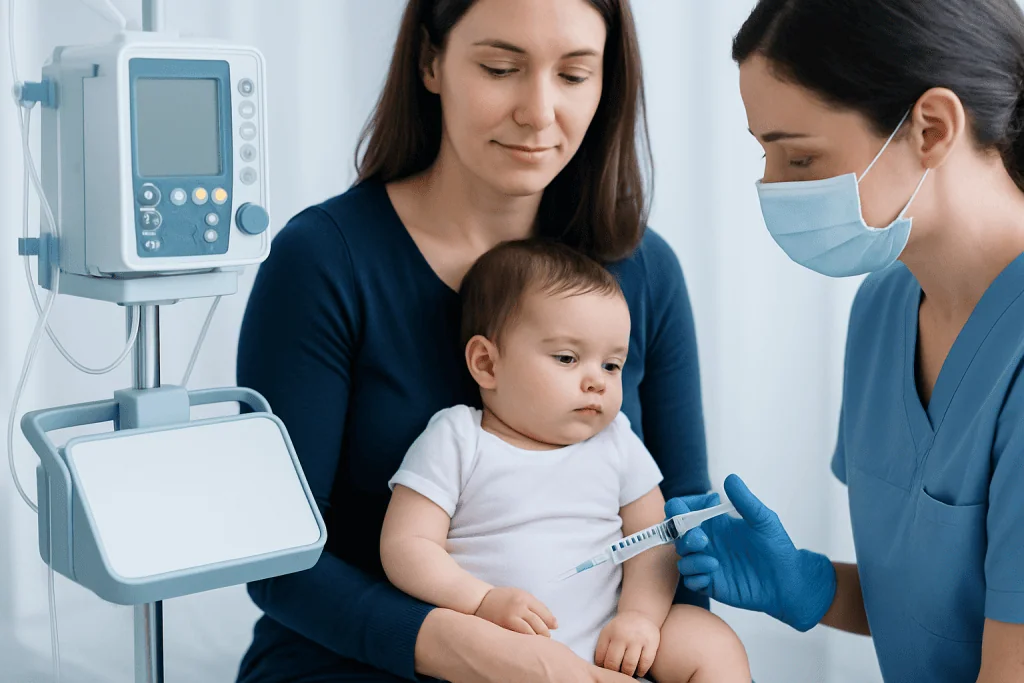
Rotavirus vaccines contain weakened forms of rotavirus that stimulate the immune system without causing typical severe rotavirus illness. After the drops are swallowed, they act mainly in the gut, where natural rotavirus infection begins. The baby’s immune system learns to recognize rotavirus and develops protection against future exposure.
Protection is strongest after the recommended vaccine series has been completed. The vaccine is particularly effective at preventing the most serious outcomes of rotavirus infection, including significant dehydration and the need for hospital care. It is still possible for a vaccinated child to have diarrhea from rotavirus or another cause, but illness is generally less severe.
Rotavirus vaccination is part of routine preventive pediatric care in many countries. It complements, rather than replaces, basic infection-control measures such as careful handwashing after diaper changes and before preparing food.
Who Can Receive It and When Is It Given?

Rotavirus vaccination is intended for infants, usually beginning in the first months of life. The exact number of doses and timing depend on the vaccine brand and the national childhood immunization schedule. A clinician checks the baby’s age, medical history and prior vaccine doses before giving it.
Most healthy infants can receive the vaccine. However, it may not be appropriate for a baby who has had a severe allergic reaction to a previous rotavirus vaccine dose or one of its ingredients. It is also generally avoided in babies with a history of intussusception, a type of bowel blockage, or certain rare immune system conditions such as severe combined immunodeficiency.
Parents should tell the pediatric team about any current illness, vomiting, diarrhea, immune condition, bowel problem, medications and previous vaccine reactions. A mild cold is often not a reason to delay vaccination, but a clinician may advise waiting if a baby is moderately or severely unwell, especially if there is ongoing vomiting or diarrhea.
- Vaccination starts and ends within defined infant age ranges.
- The number of doses depends on the vaccine product used.
- Missed or delayed doses should be discussed promptly with a pediatric clinician.
What Happens During the Procedure?
The appointment is brief and is usually combined with other routine infant vaccines. After confirming the baby’s identity, age, health history and consent, a healthcare professional places the measured vaccine liquid into the side of the baby’s mouth. This method helps the baby swallow the drops comfortably.
The baby does not need fasting, anesthesia or special preparation. Feeding can usually continue as normal before and after the appointment unless the clinician gives different advice. If a baby spits up or vomits shortly after receiving the drops, an extra dose is not routinely given at the same visit; the healthcare professional will document the dose and explain the next steps.
Parents are usually asked to remain briefly after routine vaccination so the baby can be observed for an immediate allergic reaction, although serious immediate reactions are very uncommon. The clinician will also provide the date for the next scheduled dose, if another dose is needed.
How Long Does It Take for the Rotavirus Vaccine to Work?
The immune response begins after the first dose, but protection builds as the vaccine series is completed. A baby should not be assumed to have full protection immediately after one dose. The recommended schedule is designed to provide meaningful protection during the early months and years when severe rotavirus disease is most likely.
Even after vaccination, parents should continue to watch for signs of dehydration if a baby develops vomiting or diarrhea. Rotavirus is not the only cause of gastroenteritis, and babies can still become ill from other viral, bacterial or feeding-related causes of diarrhea.
Keeping each scheduled appointment is the most reliable way to help a baby receive the intended benefit. If there is uncertainty about whether a dose was given or which vaccine product was used, the child’s vaccination record and pediatric clinician can clarify the plan.
Benefits, Expected Recovery and Possible Side Effects
The main benefit of rotavirus vaccination is lower risk of severe rotavirus diarrhea and its complications. This includes less risk of dehydration, intravenous fluid treatment and hospital admission. For most babies, there is no recovery period beyond ordinary post-vaccination observation and a return to normal feeding and daily routines.
Some infants may be temporarily irritable or may have mild diarrhea, vomiting or a low-grade fever. These symptoms are usually short-lived. Parents can offer usual feeds and monitor wet diapers, alertness and comfort. A clinician should be contacted if symptoms are persistent, worsening or concerning.
A rare risk is intussusception, in which part of the bowel slides into another section and causes obstruction. This is most likely to occur within about a week after a vaccine dose, particularly early doses. Urgent medical assessment is needed for repeated episodes of intense crying or apparent abdominal pain, repeated vomiting, a swollen abdomen, unusual sleepiness or weakness, or stool containing blood or mucus.
Acibadem International’s multidisciplinary pediatric specialists and JCI-accredited hospitals support international patients with childhood vaccination planning and assessment of digestive symptoms when needed.
Can I Kiss My Baby After the Rotavirus Vaccine?
Yes. Kissing, cuddling, breastfeeding and everyday close contact with a baby are safe after rotavirus vaccination. The vaccine is given by mouth, and ordinary family affection does not create a meaningful risk of passing vaccine virus through saliva.
For a short time after vaccination, weakened vaccine virus can be present in the baby’s stool. Careful handwashing with soap and water after every diaper change is therefore sensible. This is especially important if someone in the household is pregnant or has a weakened immune system, although routine family contact can generally continue normally.
Parents who live with someone who is severely immunocompromised should mention this to the baby’s clinician. The healthcare team can provide individualized advice while considering the important protection vaccination offers the infant.
How Soon Does Diarrhea Start After Rotavirus Vaccine?
If mild loose stools occur after rotavirus vaccination, they may begin within the first few days after the dose. Many babies have no digestive symptoms at all. Mild diarrhea should not automatically be assumed to be caused by the vaccine, as infants can develop loose stools for many common reasons.
Parents should pay more attention to hydration and the baby’s general condition than to stool frequency alone. Continuing breast milk or usual formula feeds is generally appropriate unless a clinician advises otherwise. Signs that a baby may not be getting enough fluid include fewer wet diapers, a very dry mouth, no tears when crying, unusual sleepiness or poor feeding.
Prompt medical advice is appropriate for frequent vomiting, persistent diarrhea, fever in a young infant, blood in the stool, marked lethargy or any concern that the baby is becoming dehydrated. These symptoms can have causes unrelated to vaccination and should be assessed safely.
Why Do People Refuse Rotavirus Vaccines?
People may decline rotavirus vaccination for different reasons, including uncertainty about whether it is necessary, concern about side effects, misinformation about vaccines, cultural beliefs or difficulty attending appointments. Some parents are also confused by the term “rotavirus injection” and may not realize that the vaccine is given orally.
A balanced conversation with a pediatric clinician can help families make an informed decision. Clinicians can explain the risk of serious rotavirus illness in infants, the expected benefits of vaccination, the uncommon risks and the reasons for the age limits. Reliable public-health sources are preferable to social media posts or unverified online claims.
Parents are encouraged to raise questions openly. Vaccine decisions are best made using the child’s medical history, local immunization recommendations and clear information from qualified healthcare professionals.
When to Seek Medical Care
Parents should seek urgent medical care if a baby develops signs that could suggest intussusception after rotavirus vaccination: repeated severe crying with drawing up of the legs, repeated vomiting, abdominal swelling, unusual weakness or sleepiness, or blood- or mucus-streaked stool. These symptoms are uncommon, but they need prompt assessment.
Medical advice is also important for signs of dehydration or significant illness, such as poor feeding, far fewer wet diapers than usual, dry mouth, no tears, persistent vomiting, ongoing diarrhea, a high or persistent fever, or a baby who is difficult to wake. Very young infants should be assessed promptly when parents are concerned.
For non-urgent questions about dose timing, expected mild symptoms or household hygiene, families can contact their pediatric clinic. A healthcare professional can confirm whether the baby should continue with the planned vaccine schedule.
Frequently asked questions
Is rotavirus vaccination an injection?
No. Despite the common search term “rotavirus injection,” rotavirus vaccine is given as liquid drops by mouth. It is usually administered during a routine infant vaccination appointment.
How long does it take for the rotavirus vaccine to work?
Some immune protection begins after the first dose, but protection develops more fully as the recommended vaccine series is completed. The exact schedule depends on the vaccine product and local immunization guidance.
Can I kiss my baby after the rotavirus vaccine?
Yes. Kissing, cuddling and breastfeeding are safe after vaccination. Because weakened vaccine virus may be passed in stool for a short time, careful handwashing after diaper changes is recommended.
How soon does diarrhea start after rotavirus vaccine?
Mild loose stools, if they occur, may start in the first few days after vaccination. Persistent diarrhea, vomiting, poor feeding or signs of dehydration should be discussed with a healthcare professional.
What are the most important side effects to watch for?
Most babies have no serious problems, though mild irritability, loose stools, vomiting or fever can occur. Rarely, intussusception may develop; urgent care is needed for repeated severe crying, vomiting, abdominal swelling, unusual lethargy, or bloody or mucus-containing stool.
Why do people refuse rotavirus vaccines?
Reasons can include concerns about side effects, misinformation, uncertainty about need, cultural beliefs or missed access to vaccination services. Discussing concerns with a pediatric clinician can help parents understand both the benefits and uncommon risks.
References
- World Health Organization
- Centers for Disease Control and Prevention
- European Centre for Disease Prevention and Control
- American Academy of Pediatrics
- National Health Service
This article is for general information only and is not a substitute for professional medical advice. Please consult a qualified doctor about your individual situation.
TAVI in Turkey — costs, top hospitals & a free quote
JCI-accredited · board-certified surgeons · reply within 24h
Add us as a Preferred Source to see more of our trusted health content across Google Search, AI Overviews and Discover.