Oil Drop Cataract: An Evidence-Based Patient Guide

Oil drop cataracts describe a characteristic central lens appearance rather than a separate type of eye infection or injury. They may occur with myotonic dystrophy and should prompt a clinician to consider the person’s overall health and family history.
Key Takeaways
- Oil drop cataracts describe a characteristic central lens appearance rather than a separate type of eye infection or injury.
- They may occur with myotonic dystrophy and should prompt a clinician to consider the person’s overall health and family history.
- Symptoms can include blurred or hazy central vision, glare, reduced contrast and changing prescription needs.
- No vitamin, supplement or approved eye drop has been proven to reverse an established cataract.
- Cataract surgery replaces the cloudy natural lens with an artificial intraocular lens and is the established effective treatment when vision is affected.
- Urgent assessment is needed for sudden vision loss, severe eye pain, marked redness or flashes and a curtain-like shadow in vision.
An oil drop cataract is a distinctive central clouding of the eye’s natural lens that may affect reading, contrast and clarity of vision. It is sometimes associated with myotonic dystrophy, but cataract surgery can usually restore vision when the opacity becomes functionally significant.
Overview: what is an oil drop cataract?
An oil drop cataract is a descriptive term for a particular appearance of lens clouding seen during an eye examination. The opacity is usually central and may look like a round, shimmering or droplet-like area within the lens. Like other cataracts, it interferes with the passage of light to the retina and can make vision less sharp.
Oil drop cataracts are clinically important because they can be associated with myotonic dystrophy, an inherited condition that may affect muscles, the heart, breathing and other body systems. Having this lens appearance does not by itself diagnose myotonic dystrophy, and not everyone with a cataract has an underlying genetic condition. An ophthalmologist considers the complete eye examination, symptoms, medical history and family history.
Management is guided by how much the cataract affects daily activities rather than by its appearance alone. Monitoring may be appropriate when vision remains comfortable and functional; cataract surgery is considered when blurred vision, glare or reduced contrast begins to limit reading, driving, work or other valued activities.
Oil drop cataract symptoms and visual effects
Early oil drop cataract symptoms can be subtle. A person may notice that letters seem less crisp, bright light is uncomfortable, or vision is hazy despite using the usual glasses or contact lenses. Because the central part of the lens is involved, tasks that depend on detailed central vision, such as reading faces, using a screen or reading fine print, may become more difficult.
Other possible symptoms include glare around lights, poorer night vision, faded or yellowed color perception, reduced contrast and a prescription that seems to change more often than expected. Cataracts generally develop gradually and are usually painless. They do not typically cause eye redness, discharge or sudden complete vision loss.
Symptoms can differ between the two eyes. An eye examination is needed to confirm whether a cataract is responsible, as dry eye, refractive error, retinal disease, glaucoma and other eye conditions can also affect vision.
- Blurred, dim or cloudy central vision
- Glare or halos, particularly with headlights or bright sunlight
- Difficulty reading or seeing detail in low-contrast settings
- Frequent changes in glasses prescription
- Reduced confidence with night driving
Causes, associations and risk factors

Cataracts form when proteins in the natural lens change and clump together, reducing its transparency. Aging is the most common reason cataracts develop overall. However, oil droplet cataracts may appear earlier than typical age-related cataracts and have a recognized association with myotonic dystrophy, particularly myotonic dystrophy type 1.
Doctors may ask about muscle stiffness or weakness, difficulty releasing a hand grip, daytime sleepiness, heart rhythm concerns, early balding, diabetes, fertility concerns or relatives with similar symptoms. These features do not mean that a person has myotonic dystrophy, but they may help determine whether referral for neurological assessment, genetic counseling or cardiac evaluation is appropriate.
Other factors that can contribute to cataract development include diabetes, long-term corticosteroid use, previous eye injury or surgery, radiation exposure, smoking, heavy alcohol use, prolonged ultraviolet exposure and certain eye diseases. A cataract may have more than one contributing factor, so an individualized review is useful.
How an oil drop cataract is diagnosed
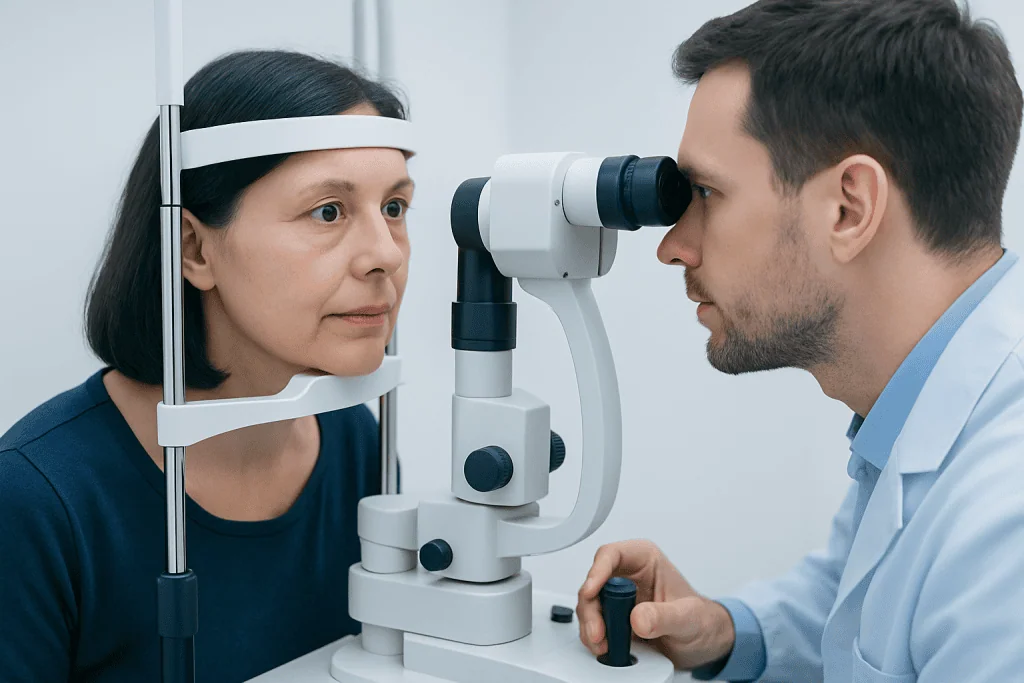
An optometrist or ophthalmologist diagnoses a cataract through a comprehensive eye examination. Visual acuity is measured, the need for updated glasses is assessed and the eye is examined with a slit lamp, a microscope that allows detailed inspection of the cornea, lens and other front-eye structures.
Dilating drops may be used to widen the pupil so the clinician can examine the lens and retina more completely. Additional tests may include pressure measurement, corneal measurements and imaging of the retina or optic nerve when another cause of reduced vision is possible. Before surgery, detailed measurements help select the power and type of artificial lens.
When the appearance or age of onset raises concern for myotonic dystrophy or another systemic condition, the eye specialist may recommend communication with a primary care clinician, neurologist, cardiologist or genetic specialist. This broader evaluation supports safe, coordinated care and does not necessarily mean a serious diagnosis is present.
Oil drop cataract treatment: do drops, vitamins or surgery help?
There is currently no approved eye drop, vitamin or supplement that has been shown to dissolve or reverse an established cataract. Better lighting, glare-reducing sunglasses, updated glasses and magnifying aids may improve comfort for a time, but they do not remove lens clouding. Claims that non-prescription drops can cure cataracts should be discussed with an eye professional before use.
What is the new treatment for cataracts in 2026? The core effective treatment remains cataract surgery. Ongoing advances include improved preoperative imaging, laser-assisted steps in selected cases, refined intraocular lens designs and approaches that can reduce dependence on glasses for some people. These technologies may not be appropriate for everyone and do not replace careful examination, lens selection and surgical expertise.
Which vitamins prevent cataracts? No vitamin reliably prevents cataracts. A balanced eating pattern that includes fruits, vegetables and other nutrient-rich foods supports general eye and overall health, while not smoking, managing diabetes and protecting the eyes from ultraviolet light may help reduce modifiable risk. Supplements should not be considered a substitute for eye care or recommended medical treatment.
Do eye drops for cataracts really work? Eye drops can be useful for conditions such as dry eye, allergy, infection or glaucoma, but they do not clear a cataract. A clinician can advise whether another eye condition is contributing to symptoms and whether drops are appropriate for that separate problem.
Oil drop cataract surgery: how it works, candidacy and recovery
Cataract surgery is considered when visual symptoms affect a person’s quality of life, safety or ability to complete important daily tasks. The decision is personal and is not based on reaching a particular level of visual acuity alone. People with possible myotonic dystrophy may benefit from coordinated preoperative assessment, particularly if they have known heart, breathing or anesthesia-related concerns.
During the usual procedure, performed with local anesthetic and often with light sedation, the surgeon makes tiny incisions in the eye. Ultrasound energy is commonly used to break up and remove the cloudy lens through a process called phacoemulsification. The surgeon then places a clear artificial intraocular lens in the lens capsule. Learn more about cataract surgery.
Most patients return home the same day. Vision may begin improving within days, though it can fluctuate early on and may take several weeks to stabilize. Prescribed drops protect against infection and control inflammation; the care team gives individual instructions about eye shielding, bathing, exercise, lifting and follow-up visits.
The potential benefits are clearer vision, less glare and improved ability to perform daily tasks. Complications are uncommon but can include infection, inflammation, pressure changes, retinal swelling, retinal detachment, lens-related issues or a later clouding of the lens capsule. Prompt follow-up and reporting unusual symptoms help protect vision.
What doctors do not always tell you about cataract surgery
What doctors don’t tell you about cataract surgery? A good cataract consultation should include a transparent discussion of practical expectations. Surgery removes the cloudy lens, but it does not cure unrelated eye conditions such as macular degeneration, diabetic retinal disease, glaucoma or optic nerve damage. These conditions may limit how much vision improves after surgery.
Choosing an intraocular lens involves trade-offs. Some people choose a standard monofocal lens and may still need glasses for near work or distance. Multifocal or extended-depth-of-focus lenses can reduce dependence on glasses for selected patients, but may cause halos, glare or reduced contrast in some settings. Astigmatism-correcting lenses may help appropriate candidates.
A person should also know that a common later change called posterior capsule opacification can blur vision months or years after surgery. It is not a new cataract and can often be treated with a brief laser procedure. Asking about the lens plan, expected need for glasses, other eye disease and the recovery plan supports informed decisions.
When to seek medical care
Arrange a routine eye examination if vision gradually becomes blurred, glare makes driving uncomfortable, reading becomes difficult or a glasses prescription no longer provides clear vision. Adults with myotonic dystrophy or a family history suggestive of this condition should also discuss regular eye monitoring with their clinician.
Seek urgent medical care for sudden loss of vision, a curtain or shadow across the visual field, new flashing lights with many floaters, severe eye pain, significant redness, nausea with eye pain, or vision changes after an eye injury. These symptoms are not typical of a simple cataract and can indicate another condition that needs prompt assessment.
Acibadem International’s multidisciplinary specialists and JCI-accredited hospitals can evaluate cataracts and coordinate eye care with relevant medical specialties for international patients. A personalized consultation can clarify whether monitoring, visual aids or surgery is the most suitable next step.
Frequently asked questions
Are oil drop cataracts always caused by myotonic dystrophy?
No. Oil drop cataracts are associated with myotonic dystrophy, but the eye finding alone does not establish that diagnosis. An ophthalmologist may review symptoms, family history and the age at which the cataract developed to decide whether further medical evaluation is appropriate.
Can an oil drop cataract go away on its own?
An established cataract does not usually clear on its own. Mild symptoms may be managed temporarily with updated glasses, stronger lighting and glare reduction, but these measures do not remove the lens opacity. Surgery is the definitive treatment when vision is significantly affected.
Is oil drop cataract surgery different from standard cataract surgery?
The surgical method is often similar to standard cataract surgery, with removal of the cloudy lens and insertion of an artificial lens. The medical assessment may require additional planning if there is known or suspected myotonic dystrophy or another systemic condition. The surgeon and anesthesia team can tailor care to the person’s health needs.
How quickly does vision improve after cataract surgery?
Many people notice improvement within a few days, although vision may be variable during early healing. Full stabilization can take several weeks and depends on the eye’s health, the procedure and the lens selected. Follow-up appointments allow the care team to monitor healing and address concerns.
Can cataracts return after surgery?
The removed natural lens cannot develop another cataract. However, the thin capsule that supports the artificial lens can become cloudy later, causing symptoms similar to a cataract. This can often be treated with a short outpatient laser procedure.
Should people with myotonic dystrophy have regular eye examinations?
Yes, regular eye examinations are generally advisable because cataracts and other eye concerns can occur in myotonic dystrophy. The appropriate interval depends on age, symptoms and examination findings. Coordinated care with the person’s medical team is especially helpful when surgery is being considered.
References
- American Academy of Ophthalmology
- National Eye Institute
- Mayo Clinic
- Myotonic Dystrophy Foundation
- World Health Organization
This article is for general information only and is not a substitute for professional medical advice. Please consult a qualified doctor about your individual situation.
Explore treatments in Turkey — costs, top hospitals & a free quote
JCI-accredited · board-certified surgeons · reply within 24h
Add us as a Preferred Source to see more of our trusted health content across Google Search, AI Overviews and Discover.