

Flexor Hallucis Longus Tendonitis Treatment: How It Works, Results and What to Expect

The flexor hallucis longus tendon moves the big toe and helps support push-off during walking, running and dancing. Treatment commonly starts with reducing aggravating activity, footwear changes, ice, rehabilitation and a gradual return to loading.
Key Takeaways
- The flexor hallucis longus tendon moves the big toe and helps support push-off during walking, running and dancing.
- Treatment commonly starts with reducing aggravating activity, footwear changes, ice, rehabilitation and a gradual return to loading.
- Recovery varies with symptom severity, activity demands and whether the tendon can rest and rebuild strength.
- Pain that persists, worsens, causes locking or limits walking should be assessed by a qualified clinician.
- Surgery is uncommon but may be considered for selected persistent cases, particularly when a tendon is trapped or damaged.
Flexor hallucis longus tendonitis treatment aims to settle tendon irritation, restore comfortable big-toe and ankle movement, and gradually return a person to daily activity or sport. Most people improve with non-surgical care, while ongoing symptoms, tendon catching or structural problems may require assessment by a foot and ankle specialist.
Overview: How flexor hallucis longus tendonitis treatment works
Flexor hallucis longus tendonitis treatment works by reducing irritation in the tendon, addressing the movement or loading factors that caused it, and progressively rebuilding the tendon’s ability to tolerate activity. The flexor hallucis longus (FHL) is a long tendon that travels from the lower leg behind the inner ankle and into the underside of the big toe. It bends the big toe and contributes to balance and push-off with every step.
Symptoms often develop after repeated loading, especially with running, hill walking, jumping, dancing on the toes or sports requiring strong push-off. Treatment is tailored to the person’s symptoms, physical examination findings, activity goals and any contributing foot or ankle alignment issues. Early care is usually conservative and does not involve an operation.
The purpose is not complete long-term avoidance of movement. Instead, a clinician or physiotherapist helps a person find an appropriate level of activity that does not repeatedly flare symptoms, then increases load in a planned way as pain and function improve.
What does flexor hallucis longus tendonitis feel like?
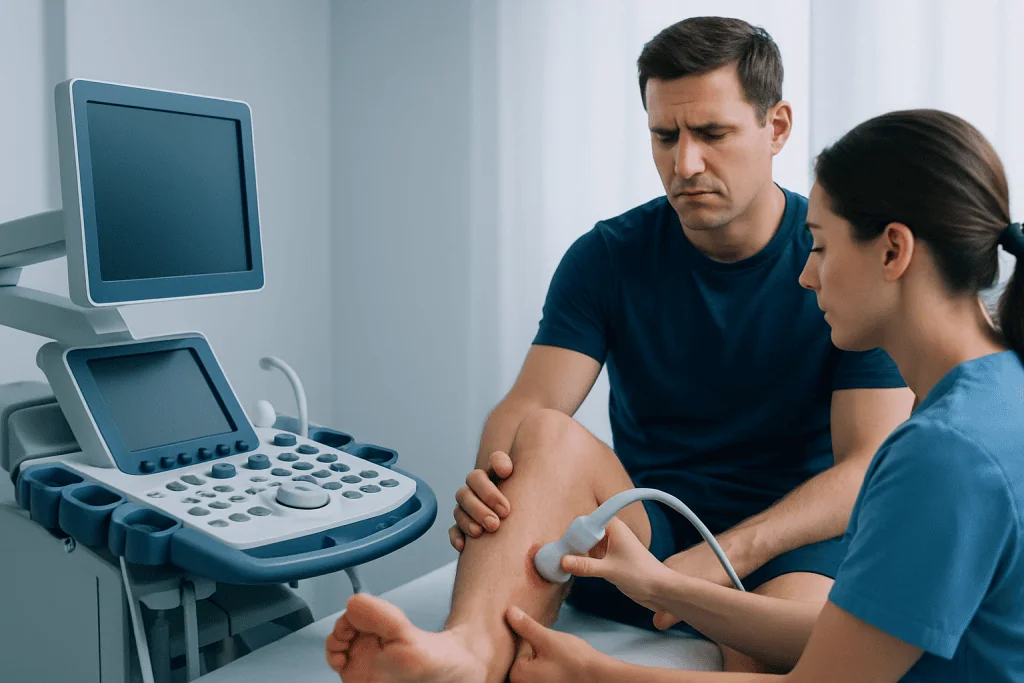
FHL tendonitis commonly causes an aching, sharp or pulling pain behind the inside of the ankle, along the arch, or under the big toe. The pain may become more noticeable during push-off while walking or running, when rising onto the toes, climbing stairs, pointing the foot, or bending the big toe.
Some people notice stiffness after rest, tenderness when pressing along the tendon’s course, or a feeling of weakness during push-off. Dancers may experience pain when working in a pointed-foot position. In some cases, the tendon can feel as though it clicks, catches or briefly locks as the big toe moves; this can suggest irritation within the tendon’s sheath and deserves clinical assessment.
FHL symptoms can overlap with other causes of foot and ankle pain, including plantar fascia problems, arthritis of the big-toe joint, stress injuries, nerve irritation and other tendon conditions. For this reason, persistent pain should not be self-diagnosed solely by its location.
Candidacy and diagnosis: who benefits from treatment?

Conservative flexor hallucis longus tendonitis treatment is appropriate for many people with activity-related FHL pain, particularly when symptoms are recent or mild to moderate. It is relevant to recreational runners, dancers, athletes, people who work on their feet, and anyone whose footwear, training load or foot mechanics may be increasing strain on the tendon.
A clinician will ask about the onset of pain, recent changes in training or footwear, previous injury and medical conditions that can affect tendons. The examination may include observing walking, testing big-toe and ankle movement, feeling for tenderness, and checking calf strength, foot posture and ankle stability.
Imaging is not always needed. However, ultrasound or magnetic resonance imaging may be useful when the diagnosis is unclear, symptoms have not improved, a tear or tendon entrapment is suspected, or another injury needs to be excluded. Assessment may also identify related problems such as plantar fasciitis, which can cause pain in a nearby area but requires a different management approach.
Step-by-step: non-surgical treatment options
Initial treatment usually begins with relative rest. This means reducing or temporarily stopping the movements that reproduce pain, such as sprinting, jumping, repeated hill work, deep toe-pointing or long walks, rather than necessarily becoming completely inactive. Lower-impact activity may be possible if it does not cause worsening pain during or after exercise.
Supportive, well-fitting shoes with a stable sole may reduce strain during walking. Depending on the examination, a clinician may recommend an insole, orthotic support, temporary taping, a walking boot, or another device to reduce tendon loading for a short period. Cold packs may ease discomfort after activity when used with a protective cloth barrier. Medicines for pain or inflammation may be appropriate for some people, but should be selected with a pharmacist or clinician based on individual health needs.
Rehabilitation is central to lasting improvement. A physiotherapist may use gentle range-of-motion work, calf and foot strengthening, gradual FHL-loading exercises, balance training and guidance on running, dance or sport technique. The aim is to improve the tendon’s capacity without repeatedly overloading it. physical therapy and rehabilitation can also help identify training errors and create a safe return-to-activity plan.
For symptoms that do not settle, a specialist may consider further imaging or selected interventions. Injections around tendons require careful diagnosis and technique because some injections may weaken tendon tissue or carry other risks. Surgical treatment is not routine, but may be considered when there is persistent pain despite well-conducted conservative care, significant tendon catching, a structural blockage, or a confirmed tendon tear.
Surgery: how it works, possible benefits and risks
If surgery is recommended, the exact procedure depends on the reason symptoms continue. A foot and ankle surgeon may release a tight tendon sheath, remove tissue or a bony structure that is irritating the tendon, or repair damaged tendon tissue where appropriate. Some procedures can be performed using minimally invasive techniques, while others require an open incision.
Before surgery, the care team reviews symptoms, examination results, imaging, activity goals and non-surgical treatment already attempted. The expected benefit is reduced mechanical irritation and improved tendon movement, which may make rehabilitation more effective. Surgery is generally considered only when its potential benefits outweigh the risks for the individual.
Risks can include infection, bleeding, scar sensitivity, stiffness, numbness or irritation of nearby nerves, persistent pain, blood clots, and a delayed or incomplete return to prior activity. Tendon healing also takes time, and surgery does not replace the need for a structured rehabilitation program. A specialist can explain the procedure-specific risks, expected restrictions and alternatives.
Recovery timeline and return to activity
How long it takes for flexor hallucis longus tendonitis to heal depends on the degree of tendon irritation, how long symptoms have been present, daily loading demands and adherence to rehabilitation. Mild, early symptoms may begin improving over several weeks with appropriate activity modification and exercise. More established tendon problems may require several months of progressive rehabilitation before high-impact activity is comfortable again.
Recovery is usually guided by function rather than a fixed calendar. Useful milestones can include walking without a limp, reduced tenderness, comfortable big-toe movement, improving calf and foot strength, and the ability to perform sport-specific tasks without a significant pain increase later that day or the next morning.
Return to running, jumping or dance should be gradual. A common approach is to increase one variable at a time, such as duration, distance, speed or intensity, while monitoring symptoms. A sudden return to previous training volume can trigger a flare. After surgery, the recovery plan may include a period of protection followed by rehabilitation; the timeline varies by procedure and must be individualized.
Is walking good for foot tendonitis?
Walking can be helpful or aggravating depending on the severity of foot tendonitis and the amount of pain it produces. Short, comfortable walks in supportive shoes may maintain general movement and circulation when they do not increase symptoms during the walk or cause a meaningful flare afterward. However, limping through pain or continuing long walks despite worsening symptoms can delay recovery.
A person should reduce walking distance, pace, hills or uneven surfaces if these clearly trigger pain. When even everyday walking is painful, a clinician may recommend temporary support such as a boot, brace, taping or crutches, depending on the diagnosis. Low-impact alternatives may sometimes be used while the tendon settles, but should be discussed with a healthcare professional.
The best level of activity is individualized. Pain is useful feedback, but it is not necessary to avoid all movement. A physiotherapist can help set practical limits and choose exercises that support recovery without placing excessive strain on the FHL tendon.
What happens if foot tendonitis is left untreated? When to seek medical care
Foot tendonitis that is repeatedly aggravated may become more persistent and harder to settle. Ongoing pain can lead a person to change how they walk, which may place strain on the knee, hip, other foot structures or the opposite leg. Continued overload may also reduce tendon capacity and, in uncommon cases, contribute to more significant tendon damage.
Medical assessment is advisable when pain is severe, follows a sudden injury, prevents normal walking, causes marked swelling or bruising, or is associated with a pop sensation. Prompt care is also important for redness, warmth, fever, numbness, color changes in the foot, an open wound, or calf swelling. People with diabetes, reduced circulation, inflammatory arthritis or nerve problems should seek advice early for new foot pain.
A clinician should also evaluate symptoms that do not improve with sensible activity changes, pain that returns repeatedly, or catching and locking around the ankle or big toe. Acibadem International’s multidisciplinary specialists and JCI-accredited hospitals can assess foot and ankle tendon conditions and coordinate treatment for international patients.
Frequently asked questions
How long does it take for flexor hallucis longus tendonitis to heal?
Mild cases may improve over several weeks when the aggravating activity is reduced and rehabilitation begins. Longer-standing or more severe symptoms can take several months to settle, especially before returning to running, jumping or dance. A gradual return plan helps reduce the chance of recurrence.
What happens if foot tendonitis is left untreated?
Continued overload can allow tendon pain and stiffness to become more persistent. A person may compensate by limping or changing movement patterns, potentially causing discomfort elsewhere. Persistent symptoms should be assessed so that another injury or structural cause is not missed.
What does flexor hallucis longus tendonitis feel like?
It often feels like pain, tenderness or tightness behind the inner ankle, along the arch, or beneath the big toe. Symptoms may be worse during push-off, toe-standing, running, stairs or pointing the foot. Clicking or locking of the big toe or ankle should be evaluated by a clinician.
Is walking good for foot tendonitis?
Comfortable, limited walking may be reasonable if it does not worsen pain during activity or afterward. Walking through increasing pain, limping, steep hills or long distances can aggravate an irritated tendon. The appropriate activity level depends on the diagnosis and symptom severity.
Do I need an MRI for FHL tendonitis?
Not always. Many cases can be diagnosed through medical history and physical examination. Ultrasound or MRI may be helpful when symptoms persist, the diagnosis is uncertain, a tendon tear is suspected, or surgery is being considered.
Can flexor hallucis longus tendonitis heal without surgery?
Yes. Most people are managed without surgery using activity modification, footwear support and a structured rehabilitation program. Surgery may be considered only when symptoms remain disabling despite appropriate conservative care or when there is a mechanical tendon problem.
References
- American Academy of Orthopaedic Surgeons
- American Orthopaedic Foot & Ankle Society
- National Institute of Arthritis and Musculoskeletal and Skin Diseases
- Mayo Clinic
This article is for general information only and is not a substitute for professional medical advice. Please consult a qualified doctor about your individual situation.
Joint and spine care in Turkey — expert assessment & treatment
JCI-accredited · board-certified surgeons · reply within 24h
Add us as a Preferred Source to see more of our trusted health content across Google Search, AI Overviews and Discover.

More from the Health Library



Related Specialists

Asst. Prof. Dr. Berkhan Yilmaz
Aesthetic Plastic & Reconstructive Surgery
Prof. Dr. Nadiye Köroğlu
Gynecology & Obstetrics
Dr. Özgün Özçelik
Radiology
Prof. Dr. Alper Özkan
Cardiology