Monoclonal Infusion: Procedure, Recovery and Results

Monoclonal antibodies are targeted medicines used across cancer, inflammatory, autoimmune, allergic and infectious conditions. A monoclonal infusion is usually given through a vein in an infusion unit, hospital or clinic and may take from minutes to several hours.
Key Takeaways
- Monoclonal antibodies are targeted medicines used across cancer, inflammatory, autoimmune, allergic and infectious conditions.
- A monoclonal infusion is usually given through a vein in an infusion unit, hospital or clinic and may take from minutes to several hours.
- The treatment schedule, expected benefits and monitoring needs depend on the specific antibody and the condition being treated.
- Most side effects are mild or manageable, but allergic and infusion-related reactions require prompt assessment.
- Monoclonal antibodies do not universally weaken immunity; their immune effects vary substantially by medicine.
A monoclonal infusion is an intravenous treatment that delivers laboratory-made antibodies designed to recognize a specific target in the body. The procedure is commonly performed in an outpatient infusion setting, with observation afterward to check for infusion-related reactions and support a safe recovery.
Overview: what is a monoclonal infusion?
A monoclonal infusion is a procedure in which a person receives a laboratory-made antibody through a vein. These medicines are designed to attach to a particular protein, cell, virus component or inflammatory signal. By acting on a defined target, monoclonal antibody infusion therapy can help the immune system recognize a threat, block an unwanted immune pathway, slow the growth of certain cells or deliver treatment more precisely.
Monoclonal antibodies are not one single type of treatment. They are used in many areas of medicine, including cancer care, rheumatology, gastroenterology, dermatology, neurology, allergy care and infectious diseases. The goals may include controlling inflammation, preventing complications, reducing symptoms, treating cancer or lowering the risk of severe illness in selected infections.
The details of a monoclonal antibody infusion treatment depend entirely on the medicine prescribed. Some treatments are given once, while others are repeated every few weeks or months. Some antibodies are infused intravenously, whereas others are given by injection under the skin. A clinician can explain why a particular medicine is recommended, what it targets and what results are realistic for the individual condition.
How monoclonal infusion therapy works and who may be a candidate
Antibodies are proteins naturally made by the immune system to recognize specific substances. Monoclonal antibodies are produced in laboratories to recognize one chosen target. For example, a medicine may block a chemical messenger that drives inflammation, attach to a marker on cancer cells, prevent a virus from entering cells, or reduce the activity of a particular immune cell type.
Candidacy is based on the diagnosis, disease severity, previous treatments, medical history and the expected balance of benefit and risk. Before recommending monoclonal infusion therapy, the treating team may review medications, past allergic reactions, pregnancy or breastfeeding considerations, vaccination history and current or recent infections. Certain medicines also require blood tests or screening for infections before treatment begins.
It is important to tell the care team about fever, cough, diarrhea, painful urination, shingles, a non-healing wound or other signs of infection before an appointment. Some monoclonal antibodies can affect infection risk or may need to be delayed during an active infection. The prescriber will also consider whether other targeted medicines, chemotherapy, corticosteroids or immune-suppressing treatments are being used.
- People with cancer may receive antibodies that target cancer cells or support immune responses against them.
- People with autoimmune or inflammatory conditions may receive antibodies that reduce overactive immune signaling.
- People with certain allergies or severe asthma may receive antibodies that target pathways involved in allergic inflammation.
- Selected people with infectious diseases may receive antibodies that directly neutralize a virus or another disease-related target, when an effective product is available and indicated.
Step by step: what happens during a monoclonal infusion

Before the visit, the clinic may provide instructions about eating, drinking, regular medicines and arrival time. At check-in, a nurse commonly confirms identity, reviews symptoms and medications, and measures temperature, blood pressure, pulse and oxygen level when appropriate. Blood tests may be taken before some infusions to make sure treatment can proceed safely.
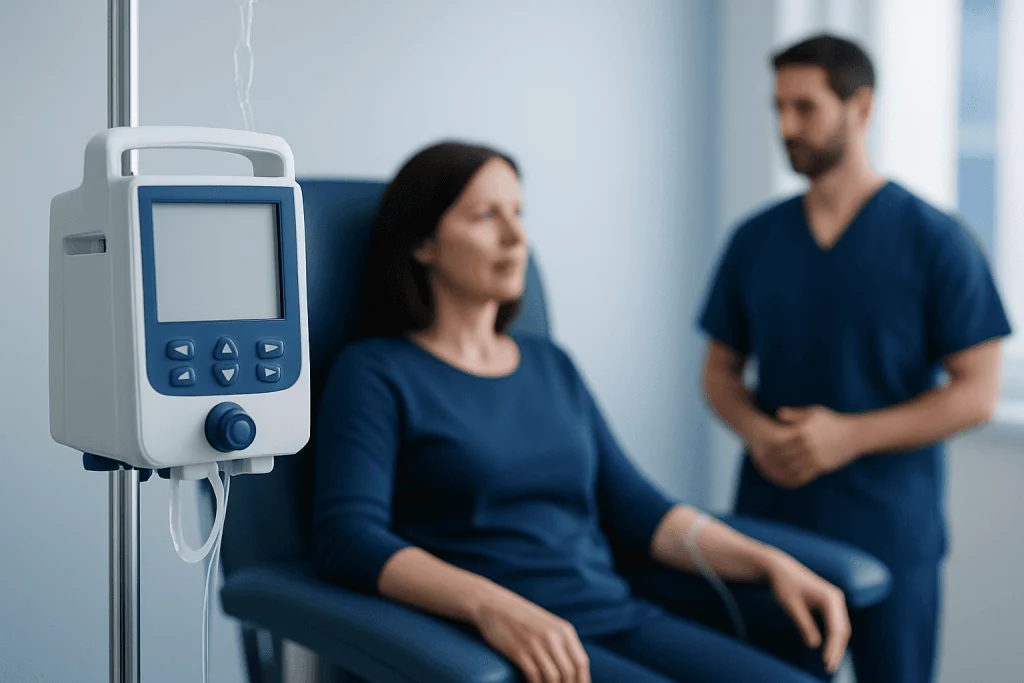
An intravenous line is placed in a vein, usually in the arm or hand. The medicine is then delivered slowly through the line using an infusion pump. Depending on the specific antibody, the first infusion may be given more slowly than later doses because the team wants to observe for an infusion reaction. The total visit can include preparation, infusion time and a monitoring period afterward.
Monoclonal antibody infusion premedication is not needed for every medicine or every person. When appropriate, the clinician may prescribe medicines beforehand to reduce the chance or intensity of an infusion reaction. These may include an antihistamine, fever-reducing medicine, corticosteroid or other medication based on the treatment protocol and the person’s history.
During the infusion, staff monitor for symptoms such as itching, rash, flushing, chills, fever, chest discomfort, shortness of breath, dizziness or changes in blood pressure. If symptoms occur, the infusion may be slowed or stopped while the team provides assessment and treatment. Many reactions can be managed promptly, but severe symptoms need urgent care.
Recovery timeline, benefits and expected results
Most people go home on the same day after a monoclonal infusion. If the person feels well and has no concerning symptoms after the observation period, normal light activities can often be resumed. It may be sensible to plan a quieter day after a first infusion, particularly if fatigue, headache or mild flu-like symptoms have occurred previously.
Short-term effects such as tiredness, headache, nausea, body aches, mild fever or soreness around the IV site may resolve within a day or several days. The care team should provide clear instructions about whom to contact if symptoms worsen, persist or interfere with daily activities. People should not start over-the-counter medicines for new symptoms without checking whether they are suitable with their treatment plan.
Results vary widely. Some people notice improvement quickly, while others need several doses before benefits become clear. In inflammatory diseases, clinicians may track symptoms, physical findings and laboratory markers over weeks to months. In cancer care, response is assessed using clinical review, blood tests and imaging at intervals selected by the oncology team.
Monoclonal antibodies are often one component of a broader treatment plan. Follow-up visits are important for checking treatment response, reviewing side effects, discussing vaccinations and deciding whether the schedule should continue, change or stop. Acibadem International’s multidisciplinary specialists and JCI-accredited hospitals provide diagnosis and treatment planning for international patients receiving complex infusion-based care.
Risks, side effects and long-term safety
Like all medicines, monoclonal antibodies can cause side effects. The most common effects depend on the individual product but may include infusion reactions, fatigue, headache, nausea, fever, chills, rash, muscle or joint aches, diarrhea, constipation or changes in blood test results. Some effects happen during or soon after treatment, while others can develop days or weeks later.
Serious reactions are uncommon but possible. These may include a severe allergic reaction, a marked drop or rise in blood pressure, breathing difficulty, severe skin reactions, organ inflammation, blood-count changes or serious infections. The precise risks are different for each antibody, which is why patients receive medicine-specific information and monitoring plans.
How long do monoclonal antibodies stay in your body? Many monoclonal antibodies remain in the body for weeks to months because they are large proteins that are cleared relatively slowly. Their half-life differs by medicine, dose, the condition being treated and individual factors. A clinician or pharmacist can explain the expected duration for a specific treatment, including how long its effects on immune pathways may last.
What are the long-term side effects of monoclonal antibodies? Long-term side effects depend on which immune target the medicine affects and how long treatment continues. Possible concerns for some products include an increased susceptibility to particular infections, reactivation of certain dormant infections, altered blood counts, autoimmune effects or effects on organs that require periodic monitoring. Long-term use is generally reviewed regularly so that benefits, risks, laboratory results and preventive care can be reassessed.
COVID-19 antibodies and effects on the immune system
What are the side effects of monoclonal antibody infusion for COVID? When COVID-19 monoclonal antibodies are authorized and active against circulating variants, possible side effects can include nausea, headache, dizziness, rash, chills, fever and infusion-related reactions. Rarely, a serious allergic reaction can occur. Availability and recommendations for COVID-19 antibody treatments change as the virus evolves, so current local public health and clinician guidance is essential.
COVID-19 monoclonal antibodies should not be confused with COVID-19 vaccines. Vaccines help the body develop its own immune response, whereas monoclonal antibodies provide prepared antibodies that may offer temporary, target-specific protection or treatment when an effective product is available. They do not replace recommended vaccination or other preventive measures unless a clinician advises otherwise.
Do monoclonal antibodies weaken your immune system? Not all monoclonal antibodies weaken immune defenses. Some mainly target cancer cells, inflammatory signals or allergy pathways without broadly suppressing immunity. Others reduce the activity of immune cells or immune signals and can increase the chance of certain infections; the degree of risk varies by drug and person.
People receiving an immune-modifying monoclonal antibody should ask their specialist about infection precautions, vaccines, travel plans and when to report symptoms. Live vaccines may not be appropriate during treatment with some medicines, while inactivated vaccines may still be recommended. The timing of vaccination may need to be coordinated with the infusion schedule.
When to seek medical care
Urgent medical assessment is needed during or after an infusion for trouble breathing, wheezing, swelling of the lips, tongue or throat, fainting, severe dizziness, chest pain, a widespread blistering rash, severe vomiting or a rapidly worsening reaction. These symptoms may indicate a serious allergic or infusion-related response and should not be managed at home.
The treating team should be contacted promptly for a fever, chills, persistent cough, new shortness of breath, painful urination, severe diarrhea, unusual bleeding or bruising, marked weakness, yellowing of the eyes or skin, or a new painful rash. These symptoms do not always mean the medicine is responsible, but they need timely evaluation, especially for people receiving treatments that alter immune function.
Patients should keep all scheduled follow-up and laboratory appointments, even when they feel well. The infusion team can help distinguish expected short-lived effects from symptoms that need treatment, and can adjust future visits when necessary. Anyone who has had a previous infusion reaction should tell the team before the next monoclonal infusion so that monitoring and premedication can be considered.
Frequently asked questions
How long does a monoclonal infusion take?
The infusion itself may take from a short period to several hours, depending on the medicine and whether it is a first dose. The overall appointment is longer because it can include check-in, IV placement, preparation and observation afterward.
Can a person drive home after monoclonal antibody infusion therapy?
Many people can travel home after treatment, but this depends on how they feel, the medicines used and whether premedication causes drowsiness. It is often practical to arrange a companion or transport for a first infusion or if sedating medication is planned.
Is monoclonal infusion therapy the same as chemotherapy?
No. Some monoclonal antibodies are used to treat cancer and may be given alongside chemotherapy, but they work differently. Monoclonal antibodies target specific molecules or cells, while chemotherapy generally affects rapidly dividing cells more broadly.
What should a person tell the infusion team before treatment?
They should report allergies, previous infusion reactions, all prescription and non-prescription medicines, supplements, current symptoms and any recent infection. They should also discuss pregnancy plans, breastfeeding, recent vaccines and upcoming surgery or dental procedures when relevant.
Can monoclonal antibodies cause an allergic reaction?
Yes, allergic and infusion-related reactions are possible, although many are mild and treatable. The infusion setting is designed for monitoring, and staff can slow or stop treatment and provide care if symptoms develop.
When will monoclonal antibody treatment start working?
The timing depends on the medicine and condition. Some treatments may have effects within days, while others require repeated doses over weeks or months before measurable improvement is seen. The specialist will describe how response will be monitored.
References
- U.S. Food and Drug Administration
- National Cancer Institute
- Centers for Disease Control and Prevention
- MedlinePlus
- World Health Organization
This article is for general information only and is not a substitute for professional medical advice. Please consult a qualified doctor about your individual situation.
Explore treatments in Turkey — costs, top hospitals & a free quote
JCI-accredited · board-certified surgeons · reply within 24h
Add us as a Preferred Source to see more of our trusted health content across Google Search, AI Overviews and Discover.
Check your numbers in seconds
BMI, calories, due date, blood pressure and 30+ more clinical calculators — free, instant, doctor-reviewed ranges.