Fracture and Treatment: How It Works, Results and What to Expect

Most fractures heal when the bone is properly aligned, stabilized and protected during recovery. Treatment ranges from splints and casts to surgical fixation with plates, screws, rods or external frames.
Key Takeaways
- Most fractures heal when the bone is properly aligned, stabilized and protected during recovery.
- Treatment ranges from splints and casts to surgical fixation with plates, screws, rods or external frames.
- Healing time varies by bone, fracture pattern, age, circulation, smoking status and other health conditions.
- Early follow-up is important because alignment, skin condition, nerve function and healing progress may need monitoring.
- Urgent assessment is needed for an open fracture, deformity, loss of circulation or sensation, or severe worsening pain.
Fracture and treatment begins with confirming the type and location of a broken bone, then keeping it stable while the body repairs it. Care may include a splint or cast, realignment, surgery, pain management and rehabilitation, depending on the injury and the person’s overall health.
Fracture and Treatment: How It Works
A fracture is a break, crack or crush injury in a bone. Fracture and treatment focuses on restoring the bone to a safe position, keeping it stable while new bone forms, controlling pain and swelling, and helping the person regain strength and movement. Many fractures can heal without an operation, while unstable, displaced or complex breaks may require a procedure to realign and fix the bone.
The first priority is to protect the injured area and check for problems involving the skin, blood vessels, nerves and nearby joints. A clinician may use a splint initially because swelling is common soon after an injury. Once swelling settles, a cast, brace or other form of support may be used. Treatment is individualized: a small, stable fracture may need simple immobilization, whereas a fracture affecting a joint or causing deformity may need more active correction.
Bone healing is a biological process, but it works best when the broken ends have adequate blood supply and are held sufficiently still. Follow-up examinations and imaging allow the orthopedic team to confirm that alignment remains acceptable and that healing is progressing as expected.
Symptoms, Causes and When to Seek Medical Care
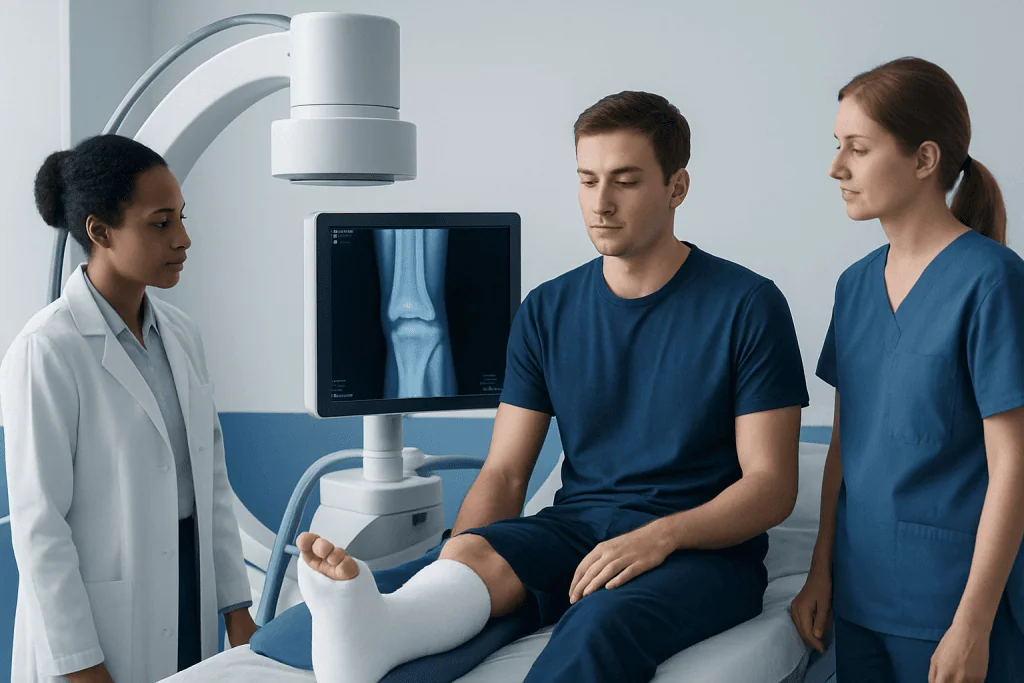
Fractures often cause pain, swelling, bruising, tenderness and difficulty using or putting weight through the injured body part. The area may look crooked, shortened or unusually positioned. Some fractures, particularly stress fractures or fractures in older adults with fragile bones, can cause more subtle symptoms such as gradually worsening pain with activity.
Common causes include falls, sports injuries, road traffic collisions, workplace injuries and direct impacts. Bones can also fracture more easily when they have been weakened by osteoporosis, certain cancers, long-term use of some medicines, poor nutrition or other medical conditions. A stress fracture can develop when repetitive loading exceeds the bone’s ability to adapt and repair.
When to seek medical care: Prompt medical assessment is appropriate after a significant injury, persistent focal bone pain, inability to bear weight, or suspected fracture. Emergency care is needed if bone is visible through the skin, bleeding is difficult to control, the limb looks severely deformed, fingers or toes become pale, blue, cold, numb or weak, or pain and swelling rapidly increase. Until assessed, the area should be kept still; a person should not try to straighten it themselves.
Assessment and Candidacy for Different Treatments
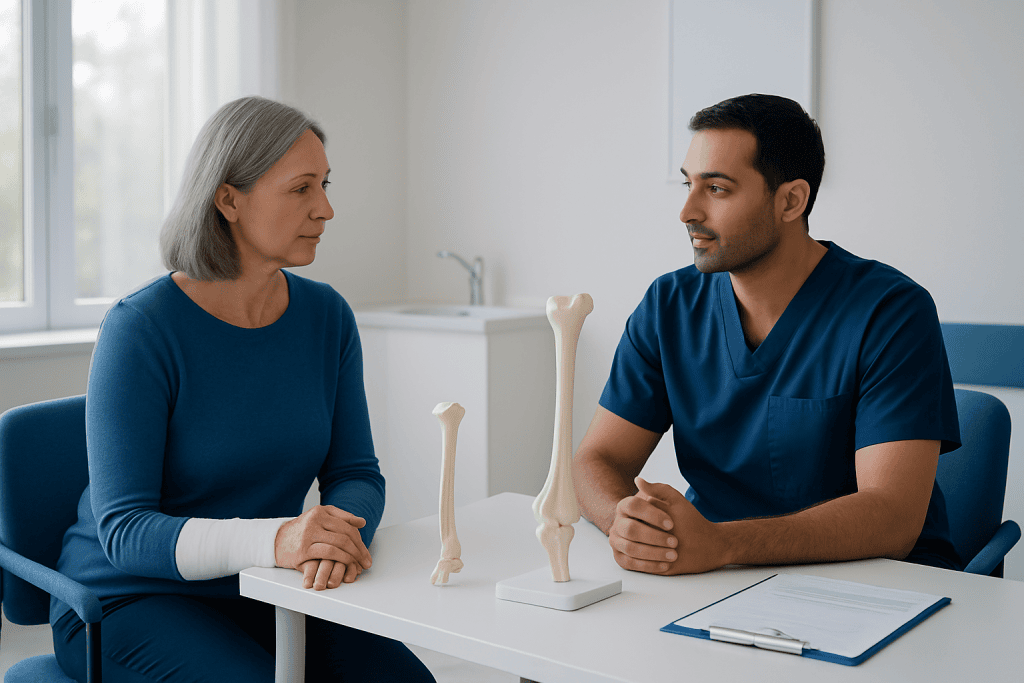
Diagnosis begins with a history of the injury and a physical examination. The clinician checks tenderness, alignment, skin integrity, circulation, sensation and movement. X-rays are the usual first imaging test. A CT scan may provide more detail for complex fractures or injuries involving joints, while MRI can help identify some stress fractures or associated soft-tissue injuries that are not clear on an X-ray.
The choice of treatment depends on the bone involved, the location and pattern of the break, whether the fragments are aligned, the condition of the skin and soft tissues, and whether nerves or blood vessels may be affected. A person’s age, activity needs, bone health, smoking status and medical conditions also influence planning. Children may have different treatment needs because their bones are still growing.
Non-surgical care is often suitable for stable fractures that can remain in a good position with immobilization. A procedure may be recommended when the fracture is displaced, unstable, open, involves an important joint surface, has multiple fragments, or cannot be maintained in alignment using a cast or brace. Orthopedic specialists may also investigate an unexpected low-impact fracture for underlying bone weakness.
Treatment Step by Step: From Stabilization to Fixation
Initial care commonly includes protecting the injury with a splint, elevation where appropriate, and pain relief recommended by a clinician. A closed reduction may be performed when bone fragments need to be moved back into a better position without making a surgical incision. This is done with appropriate pain control or anesthesia, followed by repeat imaging and immobilization.
For non-operative treatment, a cast, removable boot, brace or sling holds the bone in a protected position. The person receives instructions about activity, weight-bearing, cast care and follow-up. Not all fractures should be kept completely still for the same length of time; clinicians balance protection of the bone with safe movement of surrounding joints and muscles.
If surgery is needed, the procedure is often called open reduction and internal fixation. Through an incision, the surgeon aligns the bone and secures it with implants such as plates, screws, pins, wires or an intramedullary rod. In selected severe injuries, an external fixator may stabilize the bone from outside the body, sometimes temporarily while soft tissues recover. Orthopedic surgery may also include bone grafting or other reconstructive techniques when there is bone loss or delayed healing.
After either type of treatment, follow-up appointments assess pain, wound or cast condition, alignment and healing. Physiotherapy may begin early for unaffected joints and progress as the fracture becomes stable enough for more movement, strengthening and functional training.
Recovery Timeline, Benefits and Possible Risks
Recovery differs widely. Simple fractures in healthy adults may show early healing within several weeks, but full strength and confidence can take longer. Fractures of larger bones, joints, the pelvis or spine, as well as complex injuries, may require months of recovery. Children often heal faster than adults, but they still need follow-up when a growth plate may be involved.
The main benefit of appropriate fracture treatment is to allow the bone to unite in a position that supports comfortable function and reduces the risk of long-term deformity or joint problems. Rehabilitation helps limit stiffness, muscle weakness and loss of balance. Return to work, driving, sport or heavy lifting should be guided by the treating team rather than by pain alone.
Possible complications include skin irritation or pressure problems from a cast, stiffness, infection after an open injury or surgery, blood clots after some lower-limb injuries, delayed union, nonunion and malunion. Hardware can occasionally irritate nearby tissues. Although these issues are not inevitable, attending follow-up visits, reporting new symptoms and following activity restrictions can help clinicians identify concerns early.
Smoking and nicotine exposure can slow bone healing and increase some surgical risks. Good nutrition, including sufficient protein and nutrients needed for bone health, supports recovery. People should ask their clinician before using supplements or anti-inflammatory medicines regularly, particularly after surgery or if they have other health conditions.
What Are the 5 Stages of Bone Fracture Healing?
Fracture healing is often described in five overlapping stages rather than as a strictly timed sequence. First, bleeding around the break forms a hematoma, or blood clot. Inflammation follows, bringing cells and signals that begin the repair process. This early phase is a normal response to injury and is one reason swelling and tenderness occur.
Next, a soft callus develops as fibrous tissue and cartilage bridge the fracture area. This is gradually replaced by a hard callus of immature bone, giving the fracture more stability. Finally, remodeling reshapes and strengthens the new bone over months or sometimes longer, adapting it to the forces placed upon it.
These stages can overlap, and their timing varies according to the fracture, blood supply, stability and individual health. X-rays may not show every early biological change, so clinicians combine imaging findings with symptoms and examination when judging progress.
How Many Days Should I Rest for a Bone Fracture?
There is no single number of days that applies to every bone fracture. The injured bone generally needs protection from painful impact, twisting and loading until a clinician confirms that it is stable enough for more activity. Some people may need only short-term rest from a specific activity, while others require weeks of restricted weight-bearing or use of a cast, brace, crutches or sling.
Rest does not always mean complete bed rest. Prolonged inactivity can contribute to stiffness, muscle loss and blood-clot risk in some people. The treating clinician may recommend safe movement, exercises for unaffected areas, and gradual rehabilitation while protecting the fracture. Weight-bearing and exercise should only increase according to the plan provided by the orthopedic team.
A sudden increase in pain, swelling or loss of function after activity should be discussed with a healthcare professional. Returning to contact sport, running, heavy work or lifting too early can increase the risk that a healing fracture shifts or fails to unite properly.
What Is the Hardest Bone Fracture to Recover From? Does a Fractured Bone Ever Fully Heal?
There is no single “hardest” fracture for every person. Recovery can be particularly demanding when a break involves a major joint, the pelvis, spine, femur, tibia, heel bone or multiple bones, or when it is open, severely displaced or associated with nerve, blood-vessel or soft-tissue injury. Fractures with limited blood supply, such as some fractures of the scaphoid in the wrist or neck of the femur, can also have a greater risk of delayed healing.
Many fractured bones do fully heal, especially when they are appropriately aligned and stabilized and the person follows the recovery plan. “Fully healed” can mean the bone has united and daily activities are comfortable, but strength, flexibility and endurance may continue improving for months. Some people retain stiffness, altered sensation, reduced movement or post-traumatic arthritis, particularly after a joint injury.
Persistent pain at the fracture site, failure to regain function, or imaging that shows poor progress may indicate delayed union or nonunion and should be assessed. Acibadem International’s multidisciplinary specialists and JCI-accredited hospitals support diagnosis, fracture treatment and rehabilitation planning for international patients.
Frequently asked questions
How is a fracture diagnosed?
A clinician diagnoses a suspected fracture through an examination and imaging, most often an X-ray. CT or MRI may be used when the fracture is complex, involves a joint, is difficult to see on X-ray, or may be a stress fracture. The examination also checks circulation, sensation and skin condition around the injury.
Can a fracture heal without a cast?
Yes, some stable fractures can heal with a removable brace, boot, sling or carefully guided activity modification rather than a traditional cast. The right support depends on the bone, fracture pattern and risk of movement. A clinician should confirm the plan because inadequate stabilization can affect healing.
How long does pain last after a fracture?
Pain is usually most noticeable soon after the injury and commonly improves as swelling reduces and the bone becomes more stable. Mild discomfort, stiffness or aching with activity may continue during rehabilitation. Worsening pain, new numbness, fever, or pain that is not controlled by the agreed plan should be discussed with a clinician.
What foods help a broken bone heal?
A balanced diet with enough protein, calories, calcium and vitamin D supports normal bone repair. Good sources may include dairy or fortified alternatives, leafy vegetables, beans, fish, eggs and other protein-rich foods, depending on dietary needs. A healthcare professional can advise people with nutritional restrictions, kidney disease or known vitamin deficiencies.
Can I exercise with a broken bone?
Some movement and rehabilitation exercises may be encouraged, but the type and timing depend on the fracture and treatment method. Exercises may focus on uninjured joints, mobility, balance or gradual strengthening while the fracture remains protected. High-impact activity or weight-bearing should not restart until the treating clinician advises that it is safe.
What are signs that a fracture may not be healing properly?
Possible signs include persistent or increasing pain at the break, continued abnormal movement, inability to progress with function, or worsening deformity. These symptoms do not always mean a serious problem, but they deserve medical review. Follow-up imaging helps determine whether the bone is healing, healing slowly or needs further treatment.
References
- American Academy of Orthopaedic Surgeons
- National Institute of Arthritis and Musculoskeletal and Skin Diseases
- National Health Service
- OrthoInfo – American Academy of Orthopaedic Surgeons
- World Health Organization
This article is for general information only and is not a substitute for professional medical advice. Please consult a qualified doctor about your individual situation.
Joint and spine care in Turkey — expert assessment & treatment
JCI-accredited · board-certified surgeons · reply within 24h
Add us as a Preferred Source to see more of our trusted health content across Google Search, AI Overviews and Discover.