Best Endometriosis Specialist in Usa: An Evidence-Based Patient Guide

Choosing an endometriosis specialist should be based on relevant expertise, communication, treatment goals, and access to multidisciplinary care rather than rankings alone. Symptoms may include pelvic pain, painful periods, pain during sex, bowel or bladder symptoms, fatigue, and difficulty becoming pregnant.
Key Takeaways
- Choosing an endometriosis specialist should be based on relevant expertise, communication, treatment goals, and access to multidisciplinary care rather than rankings alone.
- Symptoms may include pelvic pain, painful periods, pain during sex, bowel or bladder symptoms, fatigue, and difficulty becoming pregnant.
- Imaging can help assess some forms of endometriosis, but surgery is not always needed simply to make a diagnosis.
- Treatment is individualized and may include pain management, hormonal therapy, fertility care, surgery, or a combination of approaches.
- Complex surgery should be planned by experienced teams when endometriosis may involve the bowel, bladder, ureters, diaphragm, or other organs.
There is no single universally “best” endometriosis specialist in the USA. The most appropriate clinician is typically a gynecologist with dedicated experience in endometriosis, particularly complex or deep disease, who can coordinate fertility, pain, bowel, urinary tract, and pelvic-floor care when needed.
How to Find the Best Endometriosis Specialist in USA
For someone searching for the best endometriosis specialist in USA, the most helpful answer is that there is no single doctor who is best for every person. Endometriosis varies widely in location, severity, symptoms, fertility goals, prior treatments, and impact on daily life. A strong choice is a gynecologist with focused endometriosis experience who listens carefully, explains options clearly, and works with other specialists when disease may affect organs beyond the reproductive system.
It can be useful to look for a clinician who regularly evaluates and treats endometriosis, has experience with minimally invasive surgery when surgery is appropriate, and is comfortable discussing both medical and surgical choices. People with suspected deep disease, previous unsuccessful surgery, significant bowel or urinary symptoms, or fertility concerns may benefit from a referral to a center with gynecologic surgeons, reproductive endocrinology specialists, colorectal surgeons, urologists, radiologists, pain specialists, and pelvic-floor physiotherapists.
Before an appointment, patients may wish to prepare a symptom diary, prior scan reports, operative notes, pathology reports, medication history, and questions about future pregnancy. It is reasonable to ask how often the clinician treats endometriosis, how they approach disease outside the pelvis, what support is available for pain and fertility, and how treatment decisions are shared with the patient.
Understanding Endometriosis and Its Symptoms
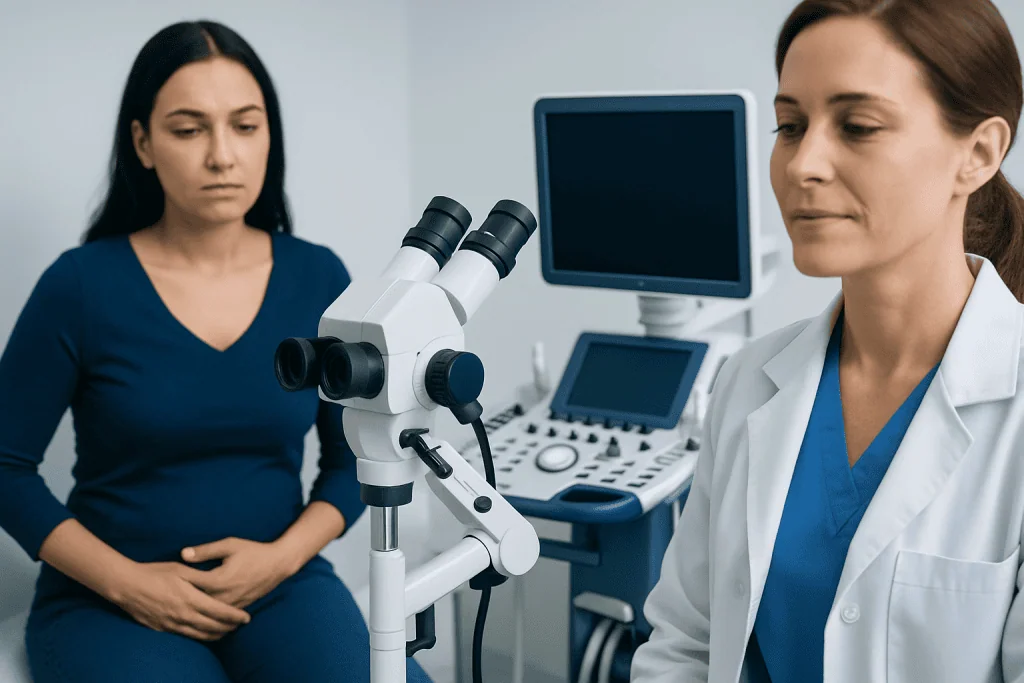
Endometriosis is a chronic inflammatory condition in which tissue similar to the lining of the uterus grows outside the uterus. It commonly affects the ovaries, fallopian tubes, pelvic lining, and tissues behind the uterus, but it can also involve the bowel, bladder, ureters, diaphragm, or other areas. The condition is benign, meaning it is not cancer, but symptoms can be substantial and deserve appropriate assessment and care.
Symptoms do not always reflect the amount of disease present. Some people have severe pain with limited visible disease, while others have extensive endometriosis with few symptoms. Common concerns include painful menstrual periods, ongoing pelvic pain, pain during or after sex, pain with bowel movements or urination during menstruation, heavy or irregular bleeding, bloating, nausea, fatigue, and difficulty conceiving.
- Pelvic pain that interferes with school, work, sleep, relationships, or daily activities
- Period pain that does not improve enough with usual self-care measures
- Cyclical bowel, bladder, chest, shoulder, or leg pain
- Infertility or recurrent symptoms after previous treatment
A thorough evaluation also considers other causes of pelvic pain, including adenomyosis, fibroids, ovarian cysts, pelvic inflammatory disease, irritable bowel syndrome, bladder pain syndrome, and pelvic-floor muscle dysfunction. More than one condition can be present at the same time.
What Is the Best Doctor to See for Endometriosis?

The best doctor to see for endometriosis is often an obstetrician-gynecologist or minimally invasive gynecologic surgeon with a specific clinical focus on endometriosis. A primary care clinician or general gynecologist may begin the assessment, arrange initial testing, and start treatment. Referral to a dedicated specialist is particularly appropriate when symptoms are severe, diagnosis is uncertain, treatment has not helped, fertility is a priority, or complex disease is suspected.
For individuals trying to conceive, a reproductive endocrinologist and infertility specialist may be an important part of care. For pain that persists despite gynecologic treatment, support from pain medicine, pelvic-floor physical therapy, mental health professionals, gastroenterology, urology, or nutrition specialists may also be useful. This does not mean symptoms are “all in the mind”; it recognizes that chronic pelvic pain can involve several body systems.
When imaging or symptoms suggest bowel, bladder, or ureter involvement, a specialist team can help plan treatment safely. The right team should explain which clinician is responsible for each part of care and ensure that the proposed plan matches the patient’s symptoms, priorities, and plans for pregnancy.
Who Are Some of the Best Endometriosis Experts in the USA?
It is not possible to identify a single definitive list of the best endometriosis experts in the USA, because there is no universally accepted ranking system that measures outcomes for every clinician and every type of endometriosis. A well-qualified expert may be found in academic medical centers, high-volume minimally invasive gynecologic surgery programs, fertility centers, and regional referral services.
Rather than relying only on online lists or titles, patients can assess whether a clinician’s practice fits their needs. Helpful indicators include regular treatment of endometriosis, experience with laparoscopic and robotic approaches where appropriate, willingness to discuss nonsurgical care, access to multidisciplinary surgical support, and transparent conversations about expected benefits, limits, recovery, and risks.
Patients may also seek a second opinion when major surgery is recommended, symptoms continue after treatment, or treatment choices do not feel aligned with their goals. A second opinion can clarify the diagnosis and options; it does not necessarily mean that the first recommendation was wrong.
Diagnosis and Treatment Planning
Endometriosis is diagnosed through a careful clinical history, pelvic examination when appropriate, and imaging. Ultrasound is often the first imaging test and can identify ovarian endometriomas and some signs of deep endometriosis. Magnetic resonance imaging may be used to map suspected deep disease or help plan complex surgery. A normal scan does not exclude superficial endometriosis.
Laparoscopy, a type of keyhole surgery, can directly view the pelvis and allow tissue sampling or treatment. However, current care does not require surgery for every person before treatment can begin. In many cases, clinicians can make a working diagnosis based on symptoms and examination, then offer medical treatment while monitoring the response.
Treatment planning should consider symptom severity, age, medical history, medication tolerance, findings on imaging, previous procedures, and whether pregnancy is desired now or in the future. The goals may include improving quality of life, managing pain, protecting organ function, treating infertility, reducing recurrence risk, or avoiding unnecessary procedures.
What Is the Gold Standard for Treating Endometriosis?
There is no single gold-standard treatment that is right for every person with endometriosis. Evidence-based care is individualized. Hormonal treatments are commonly used to reduce pain by suppressing menstrual cycling, while nonsteroidal anti-inflammatory medicines and other pain-management strategies may be considered when clinically suitable. Hormonal treatment prevents pregnancy while it is being used, so it is not the preferred approach for someone actively trying to conceive.
Surgery may be considered for persistent symptoms, an endometrioma, suspected deep disease affecting organs, infertility in selected circumstances, or when diagnosis remains uncertain. When surgery is chosen, the aim is usually to remove or treat visible disease while preserving healthy tissue and protecting organs. The appropriate surgical technique depends on disease location, surgeon expertise, and the individual’s goals.
Endometriosis surgery is often performed through laparoscopy under general anesthesia. Small incisions are made in the abdomen, a camera is inserted, and instruments are used to assess and treat disease. If endometriosis affects the bowel, bladder, or ureters, other surgical specialists may participate. Laparoscopy can offer less postoperative pain and faster recovery than open surgery, but it still carries risks and should be recommended only after informed discussion.
After uncomplicated minimally invasive surgery, many people return home the same day or after a short stay. Light activity may resume gradually over days to weeks, while full recovery varies according to the extent of surgery and whether other organs were treated. Possible risks include bleeding, infection, blood clots, injury to nearby organs, anesthesia complications, adhesions, and persistence or recurrence of symptoms. Follow-up care may include hormonal treatment when pregnancy is not currently desired.
Who Is Considered the Best Endometriosis Specialist in the World?
No individual clinician can be considered the best endometriosis specialist in the world for all patients. Endometriosis care is highly individualized, and a clinician’s suitability depends on the type of disease, the patient’s symptoms, surgical needs, fertility plans, location, and access to a coordinated team.
For complex disease, the strongest care model is usually a multidisciplinary service rather than one doctor working alone. A specialist should have appropriate training, clear communication, and access to advanced imaging, pathology, anesthesia, pelvic surgery, fertility support, pain management, and colorectal or urologic expertise when needed.
International patients may also consider how follow-up will be arranged after returning home. Acibadem International’s multidisciplinary specialists and JCI-accredited hospitals diagnose and treat endometriosis for international patients, with care planning tailored to clinical findings and personal goals.
When to Seek Medical Care
Medical assessment is appropriate for pelvic pain, painful periods, pain during sex, bowel or bladder symptoms related to menstruation, or difficulty conceiving. It is especially important to seek care when symptoms are worsening, interrupting normal activities, not improving with initial treatment, or occurring after previous endometriosis surgery.
Urgent assessment is needed for sudden severe abdominal or pelvic pain, fainting, fever with significant pelvic pain, heavy bleeding, vomiting that prevents fluids from being kept down, or possible pregnancy with pain or bleeding. These symptoms can have causes other than endometriosis and should not be managed by self-diagnosis.
While waiting for an appointment, a symptom record can be useful. Recording the timing of pain, menstrual bleeding, bowel and urinary symptoms, medications used, and the effect on daily activities can help the clinician identify patterns and discuss practical next steps.
Frequently asked questions
How do I choose an endometriosis specialist?
Look for a gynecologist with regular experience in endometriosis assessment and treatment, especially if symptoms are complex or prior treatment has not helped. Ask about their approach to hormonal management, minimally invasive surgery, fertility preservation, pain care, and collaboration with colorectal or urologic specialists when needed. The best choice should also communicate clearly and respect the patient’s priorities.
Do I need surgery to be diagnosed with endometriosis?
Not always. A clinician may make a working diagnosis based on symptoms, examination, and imaging, then begin treatment without surgery. Laparoscopy may be helpful when symptoms continue, imaging suggests a problem requiring surgery, fertility planning calls for it, or there is diagnostic uncertainty.
Can ultrasound detect endometriosis?
Ultrasound can identify ovarian endometriomas and may detect signs of some deep forms of endometriosis when performed by an experienced clinician. However, a normal ultrasound does not rule out the condition, particularly superficial endometriosis. Further evaluation may include magnetic resonance imaging or specialist review.
Does endometriosis surgery cure the condition?
Surgery can reduce symptoms and remove visible disease, but it cannot guarantee that symptoms will never return. Endometriosis can recur or persist, and pain may have more than one cause. Ongoing follow-up and, when suitable, hormonal treatment can be part of longer-term management.
Can endometriosis affect fertility?
Endometriosis can make conception more difficult for some people, but many people with the condition become pregnant naturally or with fertility treatment. The most suitable approach depends on age, ovarian reserve, fallopian tube status, partner factors, disease severity, and how long pregnancy has been attempted. A fertility specialist can provide individualized guidance.
Should I get a second opinion before endometriosis surgery?
A second opinion can be valuable before extensive surgery, particularly when bowel, bladder, ureter, or diaphragm involvement is suspected. It may also help when symptoms have continued after previous treatment or fertility is a major concern. Seeking another expert view can support informed decision-making.
References
- American College of Obstetricians and Gynecologists
- European Society of Human Reproduction and Embryology
- National Institute for Health and Care Excellence
- World Health Organization
- American Society for Reproductive Medicine
This article is for general information only and is not a substitute for professional medical advice. Please consult a qualified doctor about your individual situation.
Endometriosis in Turkey — costs, top hospitals & a free quote
JCI-accredited · board-certified surgeons · reply within 24h
Add us as a Preferred Source to see more of our trusted health content across Google Search, AI Overviews and Discover.

Gynecology & Obstetrics
Women’s health across pregnancy, gynecologic surgery and high-risk pregnancy care.
187 specialists in this unit