What Is Uv Radiation: How It Works, Results and What to Expect
UV radiation is invisible energy beyond the violet end of visible light. UVA, UVB and UVC rays differ in how they travel and affect the body.
Key Takeaways
- UV radiation is invisible energy beyond the violet end of visible light.
- UVA, UVB and UVC rays differ in how they travel and affect the body.
- Most UV exposure comes from the sun, and exposure can occur even on cool or cloudy days.
- Too much UV radiation raises the risk of sunburn, premature skin aging, eye damage and skin cancer.
- Consistent sun protection and avoiding indoor tanning are the most effective ways to reduce preventable UV damage.
UV radiation, or ultraviolet radiation, is invisible energy that comes mainly from sunlight and can also be produced by artificial sources such as tanning beds and some medical devices. Small, carefully managed exposures may have specific medical uses, but unprotected exposure can damage the skin and eyes over time.
Overview: What Is UV Radiation?
UV radiation, short for ultraviolet radiation, is a form of electromagnetic energy that is not visible to the human eye. It comes primarily from the sun, although certain artificial sources, including tanning devices, welding equipment, some lamps and medical phototherapy units, can also emit UV rays. The amount reaching a person depends on time of day, season, altitude, latitude, weather conditions and reflective surfaces such as water, sand, snow and concrete.
Some UV exposure helps the body make vitamin D in the skin, but intentional unprotected exposure is not necessary for most people to meet vitamin D needs. Dietary sources and supplements, when advised by a clinician, can provide vitamin D without the skin and eye risks associated with excessive sunlight. UV radiation can also be used under medical supervision in selected skin conditions, where the type, dose and schedule are carefully controlled.
UV exposure has effects that may not be immediately noticeable. Sunburn can develop within hours, while changes such as wrinkles, uneven pigmentation and some skin cancers may emerge after repeated exposure over many years. Protecting the skin and eyes regularly is therefore important throughout life.
The Main Types of UV Radiation and How They Work
Ultraviolet radiation is commonly divided into UVA, UVB and UVC. These groups differ mainly by wavelength, which influences how deeply they penetrate and how they interact with the skin and eyes. All forms of UV radiation can be harmful in sufficient amounts, although everyday exposure patterns vary.
UVA has a longer wavelength and reaches deeper into the skin than UVB. It contributes to tanning, premature skin aging, pigment changes and damage to cellular DNA. UVA is present throughout daylight hours and can pass through window glass, so it may be relevant during driving or sitting near sunny windows. UVB is more strongly associated with sunburn and plays an important role in the development of skin cancer. Its intensity often rises around midday and can be substantial during summer, at high altitude or near reflective surfaces.
UVC has the shortest wavelength and is generally absorbed by the Earth’s atmosphere before it reaches the ground from the sun. However, artificial UVC sources may be used for certain disinfection purposes. Direct exposure to UVC devices can injure the skin and eyes and should only occur under appropriate safety controls.
- UVA: penetrates more deeply and contributes to aging-related skin changes and cancer risk.
- UVB: is a major cause of sunburn and contributes to skin cancer risk.
- UVC: is filtered from natural sunlight by the atmosphere but may come from specialized artificial sources.
Where UV Exposure Happens and Who May Be More Vulnerable

Sunlight is the main source of UV radiation for most people. UV levels are usually higher between late morning and mid-afternoon, but meaningful exposure can still occur outside these hours. Cloud cover can reduce visible brightness without fully blocking UV rays. Snow, water, pale sand and light-colored surfaces can reflect UV radiation and increase exposure to the face, eyes and areas of uncovered skin.
People with fair skin, light-colored eyes, freckles, a history of sunburn or a personal or family history of skin cancer may be particularly susceptible to UV-related damage. However, people of every skin tone can develop UV injury and skin cancer. Darker skin contains more melanin, which provides some natural protection, but it does not eliminate risk.
Certain medicines and skin-care products can make the skin more sensitive to sunlight. Examples include some antibiotics, acne treatments, anti-inflammatory medicines, diuretics and medications that affect the immune system. A pharmacist or doctor can explain whether a prescribed medicine requires additional sun precautions. People with photosensitive conditions or a history of skin cancer should also ask their clinician for individualized guidance.
Medical Uses of UV Radiation: How Phototherapy Works
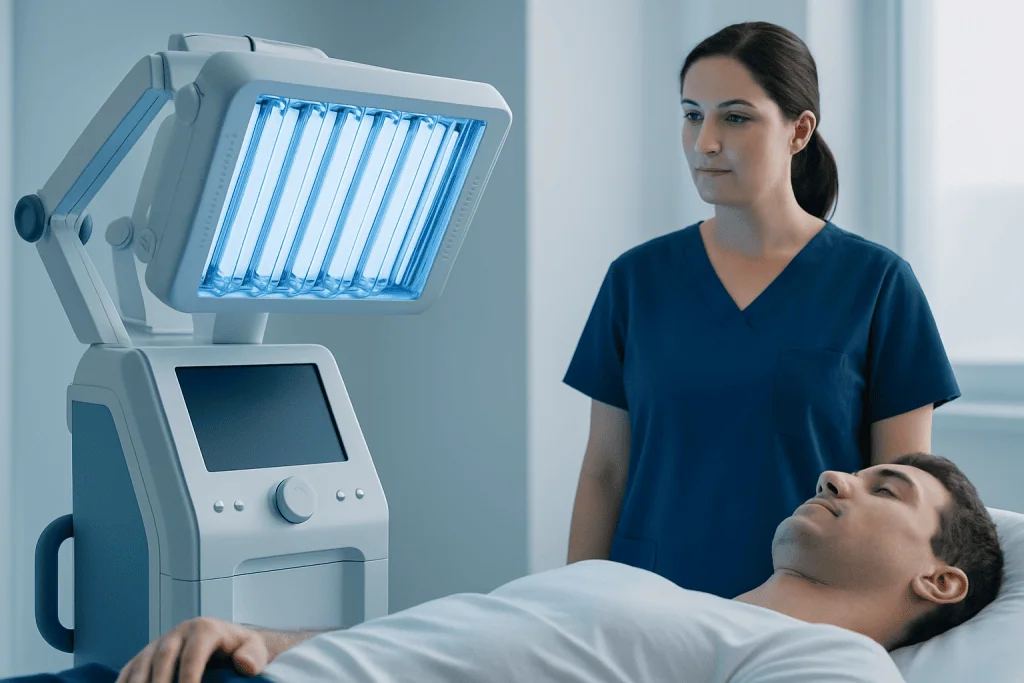
In dermatology, carefully measured ultraviolet light may be used as phototherapy for selected inflammatory skin conditions. Unlike recreational tanning, medical phototherapy is prescribed, delivered with calibrated equipment and supervised by trained professionals. The aim is to influence immune activity in the skin and slow excessive skin-cell turnover, not to produce a tan.
Depending on the diagnosis, a clinician may use narrowband UVB, broadband UVB or UVA combined with a light-sensitizing medicine, known as PUVA. These approaches may be considered for conditions such as psoriasis, eczema, vitiligo or itching related to certain skin disorders when appropriate. Treatment selection depends on the condition, its severity, previous treatments, skin type, medical history and potential risks. Related conditions may include psoriasis and vitiligo.
Before medical phototherapy, a dermatologist reviews the person’s skin history, medications and any prior skin cancers or light sensitivity. Protective eyewear is required, and sensitive areas may be covered when clinically appropriate. Treatment plans are individualized, usually involving repeated short sessions over several weeks or longer, with regular monitoring for response and side effects.
What to Expect During and After Medical Phototherapy
A phototherapy appointment commonly begins with confirmation of the treatment plan and a check for new symptoms, medication changes or recent sunburn. The person may stand in a light cabinet or receive targeted treatment to a smaller area. The exposure itself is usually brief, but preparation, positioning and safety checks can make the appointment longer. Staff determine the starting dose and adjust it carefully over time.
Results are gradual rather than immediate. Some people notice improvement after several sessions, while others require a longer course or may not respond sufficiently. The expected outcome depends on the underlying condition. Even when symptoms improve, follow-up may be needed to decide whether treatment should continue, taper or be replaced by another approach.
After a session, the skin may feel warm, dry or mildly itchy. A clinician may recommend fragrance-free moisturizer and advice about avoiding additional UV exposure, especially if a person is receiving PUVA. Redness that resembles a sunburn, blistering, significant pain or eye symptoms should be reported promptly. For patients considering dermatologist-directed light treatment, medical phototherapy can provide a controlled option when it is clinically suitable.
Benefits, Risks and Limits of UV Exposure
The main benefit of ordinary sunlight is that it can contribute to vitamin D production. It can also support daily routines and time outdoors, which may benefit general well-being. However, these benefits do not require prolonged direct sun exposure, tanning or sunburn. The safest balance is to enjoy outdoor activities while using protective measures.
Excess UV radiation can cause short-term effects such as sunburn, skin irritation and eye discomfort. Long-term or repeated exposure can lead to wrinkles, rough texture, loose skin, dark spots and other signs of photoaging. It also damages genetic material within skin cells, increasing the likelihood of skin cancers, including melanoma and non-melanoma skin cancers.
UV radiation can harm the eyes as well as the skin. Repeated exposure may contribute to conditions involving the cornea, lens or surrounding tissues. Sunglasses that block both UVA and UVB, together with a broad-brimmed hat, help protect the eyes. Indoor tanning devices are not a safe alternative to sunlight because they emit UV radiation and can increase skin cancer risk.
Prevention and Everyday UV Self-Care
Daily protection is the most reliable way to reduce UV-related damage. Checking the local UV Index can help a person plan outdoor time, but protection remains useful whenever daylight exposure is expected. The goal is not to avoid outdoor activity completely, but to limit unnecessary direct exposure and prevent burning.
Useful steps include seeking shade when UV levels are strongest, wearing tightly woven clothing that covers the arms and legs when practical, and choosing a wide-brimmed hat. Broad-spectrum sunscreen protects against both UVA and UVB. It should be applied generously to exposed skin and reapplied according to the product instructions, especially after swimming, sweating or towel drying. Lip balm with sun protection can help protect the lips.
Children need consistent sun protection because early-life sunburn can add to lifelong UV damage. Infants should be kept out of direct sun as much as possible, using shade and protective clothing. Parents and caregivers can discuss sunscreen choices for young children with a pediatric clinician. Anyone using photosensitizing medicine should follow the additional precautions recommended by their prescriber.
When to Seek Medical Care
Medical advice is appropriate for a severe or widespread sunburn, blistering, fever, chills, dizziness, confusion, dehydration, severe headache or significant eye pain after UV exposure. Urgent evaluation is especially important for symptoms of heat illness or for burns affecting a young child, an older adult or a person with a condition that weakens the immune system.
A dermatologist should assess a new, changing or unusual skin lesion, including a mole that changes in size, shape, color or sensation; a sore that does not heal; or a spot that repeatedly bleeds or crusts. Early assessment does not mean cancer is present, but it allows concerning changes to be evaluated appropriately. People with previous skin cancer, many atypical moles or immunosuppression may need scheduled skin checks.
Acibadem International’s multidisciplinary specialists and JCI-accredited hospitals can evaluate UV-related skin concerns and provide dermatology care for international patients. A qualified clinician can also advise whether supervised phototherapy or another treatment approach is appropriate for an individual’s condition.
Frequently asked questions
What is UV radiation in simple terms?
UV radiation is invisible energy that comes mainly from the sun. It can also come from artificial sources such as tanning beds and some medical or industrial equipment. Too much exposure can damage the skin and eyes.
Can UV radiation pass through clouds and windows?
UV rays can pass through clouds, so sun protection may still be needed on overcast days. UVA can pass through standard window glass, while most UVB is blocked. Car and building windows may therefore not provide complete UVA protection.
Is tanning a sign that the skin is healthy?
No. A tan is the skin’s response to UV injury and indicates that pigment-producing cells have reacted to radiation. It does not reliably protect against further skin damage or skin cancer.
Is medical phototherapy the same as using a tanning bed?
No. Medical phototherapy uses a prescribed type and dose of ultraviolet light for a diagnosed condition, with clinical monitoring and protective measures. Tanning beds are not a medical substitute and expose users to UV radiation without the same therapeutic oversight.
How can someone tell if a sunscreen protects against UVA and UVB?
Look for the words “broad spectrum” on the product label, which indicates protection against both UVA and UVB rays. A water-resistant product can be helpful for swimming or sweating, but it still needs to be reapplied as directed.
Can people with darker skin get sun damage or skin cancer?
Yes. Melanin offers some natural protection, but people with darker skin can still experience sun damage, pigment changes, eye effects and skin cancer. Regular protection and evaluation of changing skin lesions remain important for everyone.
References
- World Health Organization
- American Academy of Dermatology Association
- U.S. Food and Drug Administration
- Centers for Disease Control and Prevention
- American Cancer Society
This article is for general information only and is not a substitute for professional medical advice. Please consult a qualified doctor about your individual situation.
Explore treatments in Turkey — costs, top hospitals & a free quote
JCI-accredited · board-certified surgeons · reply within 24h
Add us as a Preferred Source to see more of our trusted health content across Google Search, AI Overviews and Discover.