Genetic Screening Companies: How It Works, Results and What to Expect

Genetic screening can estimate risk or identify inherited variants, but it does not always diagnose a condition. Tests may use saliva, cheek swabs, or blood samples, with turnaround times ranging from days to several weeks.
Key Takeaways
- Genetic screening can estimate risk or identify inherited variants, but it does not always diagnose a condition.
- Tests may use saliva, cheek swabs, or blood samples, with turnaround times ranging from days to several weeks.
- A positive result usually indicates increased risk or carrier status and should be reviewed with a clinician or genetic counselor.
- A negative result does not eliminate all genetic or health risks, especially when a test examines only selected variants.
- Privacy, unexpected findings, emotional impact, and uncertain results are important considerations before testing.
Genetic screening companies offer DNA tests that may identify inherited variants linked with certain health conditions, carrier status, medication response, or family relationships. The value of a result depends on the type of test, the laboratory’s quality standards, personal and family history, and interpretation by a qualified healthcare professional.
Overview: what genetic screening companies do
Genetic screening companies analyze a DNA sample to look for changes, called variants, in genes or chromosomes. Depending on the service, testing may assess the chance of developing an inherited condition, identify whether someone carries a variant that could be passed to children, help explain symptoms, or provide information about how the body may process certain medicines. Some companies provide direct-to-consumer tests, while others work through hospitals, clinics, or specialist laboratories.
Not all genetic tests answer the same question. Screening is usually performed in people without symptoms to identify possible risk, whereas diagnostic genetic testing is used to investigate a suspected condition or explain a person’s symptoms. A result from a consumer test can be useful starting information, but medically important findings often need confirmation in an accredited clinical laboratory before healthcare decisions are made.
Genetic information is personal and can have implications for biological relatives. Before choosing a company or test, it is helpful to understand what the test includes, what it cannot detect, how data are stored or shared, and whether genetic counseling is available. A healthcare professional can help select a test that matches the individual’s health question and family history.
Who may consider genetic screening?
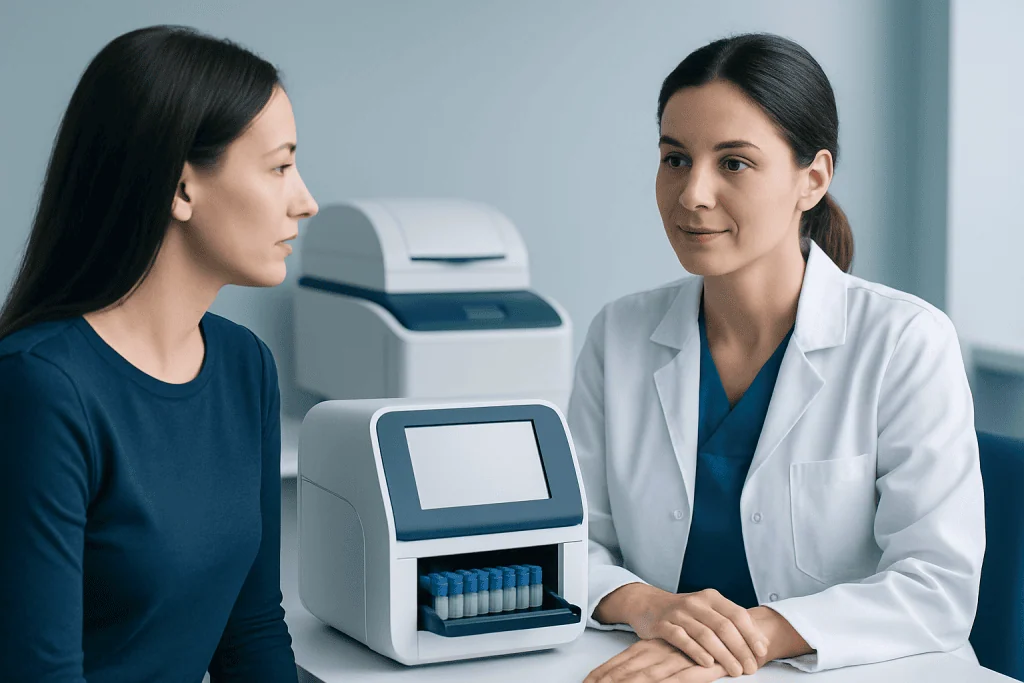
Genetic screening may be considered by people with a close relative who has a known inherited condition, an early-onset cancer, repeated pregnancy losses, a child with developmental concerns, or a family history that suggests an inherited disease. It can also be relevant before or during pregnancy, when prospective parents want to understand carrier status for certain recessive conditions.
People who have symptoms may need diagnostic testing rather than broad screening. For example, unexplained muscle weakness, recurrent blood clots, early heart disease, neurological changes, or multiple family members with the same condition may prompt a clinician to recommend a focused gene panel or other test. Testing is most informative when it begins with the family member who has the condition, when possible.
Screening is not automatically necessary for everyone. The most appropriate test depends on age, ancestry, medical history, reproductive plans, known family variants, and the reason for testing. Pre-test discussion with a doctor or genetic counselor can clarify whether testing is likely to be useful and what results may mean.
How genetic screening works: from company selection to sample analysis

Choosing among genetic screening companies involves more than comparing the range of reports offered. Individuals should check whether the laboratory is appropriately accredited or regulated for their country, whether clinical confirmation is available, which genes and variants are analyzed, and whether a qualified clinician or genetic counselor can review the findings. A clear privacy policy should explain storage, security, research use, deletion options, and any choices about sharing de-identified data.
The procedure itself is usually straightforward. After consent is completed, the person provides a saliva sample, cheek swab, or blood sample. The sample is labeled and sent to a laboratory, where DNA is extracted and analyzed with a method suited to the question. Some tests examine a limited set of common variants; others assess many genes or, in selected clinical settings, larger portions of a person’s genetic code.
Laboratory specialists compare the detected DNA sequence with reference information and classify relevant variants using scientific evidence. The report may identify a pathogenic or likely pathogenic variant, a negative finding, a variant of uncertain significance, or a result with limited relevance to health. The analysis is only as comprehensive as the method and genes included, so a test cannot identify every possible genetic cause of disease.
- Preparation: Usually no fasting, medication changes, or recovery arrangements are needed.
- Collection: Saliva or cheek-swab kits are painless; blood collection may cause brief discomfort or a small bruise.
- Analysis: The laboratory reviews selected genetic information and quality-checks the result.
- Follow-up: A clinician or genetic counselor explains whether confirmation, family testing, monitoring, or other care is appropriate.
How long does it take to get results from genetic screening?
Results from genetic screening may be available within a few days to several weeks after the laboratory receives an adequate sample. The timing depends on the collection method, shipping, the complexity of the analysis, laboratory workload, and whether the result needs additional review or confirmation.
Tests that check a small number of common variants are often completed more quickly than comprehensive panels, chromosome studies, or sequencing tests. In a hospital setting, urgent testing may sometimes be prioritized when it could immediately affect care, but routine genetic testing commonly takes longer than standard blood tests.
If a result is unexpected, uncertain, or potentially important for medical management, the laboratory may perform extra verification before issuing a final report. People should ask the ordering clinician or company when results are expected and how they will be communicated. Waiting can be difficult, but a careful interpretation process is important for reliable reporting.
What results do you get from genetic testing?
Genetic testing reports can provide several types of results. A positive or pathogenic result means that a variant known, or strongly expected, to be associated with a condition was identified. This may confirm an inherited diagnosis in the right clinical setting, show increased susceptibility to a condition, or indicate carrier status. It does not always predict when symptoms will begin, how severe they will be, or whether they will occur at all.
A negative result means that the test did not find the specific variant or variants it was designed to detect. This can be reassuring, particularly when a known family variant was tested for, but it does not rule out every possible genetic explanation or remove non-genetic health risks. A negative result on a limited direct-to-consumer panel is different from a negative result on a broad clinical test.
A variant of uncertain significance, often called a VUS, is a DNA change whose health impact is not currently known. It should generally not be used alone to make major medical or reproductive decisions. As scientific knowledge develops, a VUS may later be reclassified, so keeping contact details updated with the testing service or clinician can be helpful.
What happens if genetic test results are positive?
A positive result should be reviewed in the context of the person’s health, family history, and the test’s limitations. The next step may be confirmation with a clinical laboratory, especially if the finding came from a direct-to-consumer test. A doctor, medical geneticist, or genetic counselor can explain whether the result indicates a diagnosis, increased risk, carrier status, or a finding with uncertain personal implications.
Follow-up may include more detailed assessment, preventive screening, specialist referral, discussion of treatment options, or testing for relatives who may also be affected or at risk. The plan varies greatly by gene and condition. For some inherited cancer risks, for example, care may include individualized surveillance; for reproductive carrier findings, couples may discuss family-planning options with a specialist.
A positive result is information, not a prediction of a fixed future. Many genes have variable effects, and lifestyle, age, environment, and other genetic factors can influence health outcomes. It is reasonable to take time to ask questions, seek counseling, and make decisions with qualified professionals rather than acting on a report alone.
Is there a downside to genetic testing?
Genetic testing can offer useful information, but it also has limitations and potential downsides. Results may create worry, guilt, uncertainty, or concern about relatives. A person may learn unexpected information, such as a risk unrelated to the original reason for testing, carrier status, or findings that raise questions about biological family relationships.
Testing may also produce unclear or incomplete answers. Some variants are not yet understood, and many genetic tests do not evaluate all genes or all types of DNA changes. A result can be misinterpreted when it is viewed without medical history, which may lead to unnecessary anxiety or inappropriate changes in health behavior.
Privacy and data handling are important considerations, particularly for tests bought online. Before consenting, individuals should read how genetic data may be stored, used for research, shared, or deleted, and should understand the protections that apply in their country. Genetic counseling before and after testing can help people weigh the benefits and limitations in a balanced way.
Recovery, benefits, and next steps after testing
There is usually no recovery period after genetic screening. Saliva and cheek-swab collection do not cause physical after-effects. Following a blood draw, minor tenderness or bruising at the collection site can occur and usually settles quickly. Normal daily activities can generally continue immediately.
The potential benefit of appropriate testing is more informed care. Results may guide earlier monitoring, clarify a diagnosis, help avoid unnecessary tests, support family planning, or enable relatives to consider targeted testing. However, genetic information is one part of health assessment and should be considered alongside symptoms, examination findings, lifestyle factors, and other medical tests.
For people seeking clinically guided testing, genetic testing services can provide a structured route from pre-test assessment through interpretation and follow-up. Acibadem International’s multidisciplinary specialists and JCI-accredited hospitals support diagnosis and treatment planning for international patients when inherited conditions are suspected.
When to seek medical care
People should speak with a doctor or genetic counselor before testing if they have a close relative with a known genetic condition, several relatives with the same cancer or serious illness, a family member diagnosed at an unusually young age, or a known disease-causing variant in the family. Medical guidance is also important for those considering reproductive carrier screening or testing during pregnancy.
Prompt medical assessment is appropriate for symptoms such as unexplained weakness, fainting, severe shortness of breath, progressive neurological changes, a new breast lump, unexplained weight loss, or any other concerning symptom. Genetic testing should not delay evaluation or treatment for active symptoms.
Anyone who receives a positive, uncertain, or unexpected result should arrange professional review rather than trying to interpret it alone. A clinician can determine whether confirmatory testing, specialist assessment, screening, or discussion with relatives is appropriate.
Frequently asked questions
Are genetic screening companies the same as medical genetic clinics?
No. Some genetic screening companies sell tests directly to consumers, while medical genetic clinics provide testing as part of healthcare assessment and follow-up. Clinical testing is more likely to include test selection based on medical history, genetic counseling, and interpretation by a qualified healthcare professional.
Can a saliva test be as accurate as a blood test for genetic screening?
For many DNA analyses, saliva and cheek-swab samples can provide DNA suitable for reliable testing. Accuracy depends more on the laboratory method, sample quality, and the specific test than on whether saliva or blood was used. Some clinical tests may still require blood or another sample type.
Should a direct-to-consumer genetic result be confirmed?
Potentially important health findings from direct-to-consumer testing should usually be discussed with a doctor or genetic counselor and confirmed through a clinical laboratory. Consumer tests may assess only selected variants and are not designed to diagnose every genetic condition. Confirmation helps ensure that medical decisions are based on a validated result.
Will a negative genetic test mean that a person will not develop the condition?
Not necessarily. A negative result means no relevant variant was found by that particular test, but it may not assess every possible genetic cause. Environmental factors, lifestyle, age, and untested genes can still influence disease risk.
Do relatives need testing after a positive genetic result?
In some situations, relatives may be offered targeted testing for the same familial variant. This can help clarify who may benefit from monitoring or preventive care. The decision is personal, and a genetic counselor can help explain which relatives may be relevant and how to share information sensitively.
Can genetic screening predict how severe a disease will be?
Sometimes genetic findings provide clues about disease course, but they often cannot predict severity with certainty. The effects of many variants vary between individuals, even within the same family. A clinician can explain what is known about a specific result and what remains uncertain.
References
- World Health Organization
- National Human Genome Research Institute
- Centers for Disease Control and Prevention
- American College of Medical Genetics and Genomics
- National Society of Genetic Counselors
This article is for general information only and is not a substitute for professional medical advice. Please consult a qualified doctor about your individual situation.
Explore treatments in Turkey — costs, top hospitals & a free quote
JCI-accredited · board-certified surgeons · reply within 24h
Add us as a Preferred Source to see more of our trusted health content across Google Search, AI Overviews and Discover.