2026 Prostate Biopsy Codes: Procedure, Recovery and Results

Prostate biopsy coding is based on the sampling technique, route, imaging guidance, pathology services, and the care setting. A prostate biopsy usually takes less than an hour, while preparation, observation, and recovery instructions add time to the visit.
Key Takeaways
- Prostate biopsy coding is based on the sampling technique, route, imaging guidance, pathology services, and the care setting.
- A prostate biopsy usually takes less than an hour, while preparation, observation, and recovery instructions add time to the visit.
- Most people return to light daily activities within 24 to 48 hours, although blood in urine, stool, or semen can last longer.
- Biopsy results commonly take several days to around two weeks, depending on laboratory processing and whether additional testing is needed.
- Fever, worsening pain, inability to urinate, or heavy bleeding after a biopsy need prompt medical assessment.
2026 prostate biopsy codes are billing and documentation codes that vary according to how prostate tissue is sampled, such as a transrectal or transperineal approach and whether ultrasound or MRI guidance is used. A prostate biopsy is commonly recommended when PSA results, examination findings, or imaging suggest that prostate cancer should be assessed more closely.
Overview: what 2026 prostate biopsy codes mean
2026 prostate biopsy codes describe the clinical services involved in obtaining prostate tissue and examining it in a laboratory. They are primarily used by healthcare professionals, insurers, and medical facilities for documentation and billing. The correct code is not determined by a patient alone: it depends on the route of biopsy, the number and type of services performed, imaging guidance, anesthesia, pathology, and local coding rules.
In practical terms, a prostate biopsy removes very small tissue samples from the prostate so a pathologist can look for cancer and other changes under a microscope. A urologist may advise this test after a raised or changing prostate-specific antigen (PSA) level, an abnormal digital rectal examination, or a suspicious area seen on multiparametric MRI.
People searching for CPT codes for biopsy of the prostate or asking, “What is the procedure code for prostate biopsy?” should confirm details with the treating facility, coding office, or insurer. Code sets and coverage policies can be revised, and the same patient visit may involve separate professional, facility, imaging, anesthesia, and pathology components.
Who may need a prostate biopsy and how it works
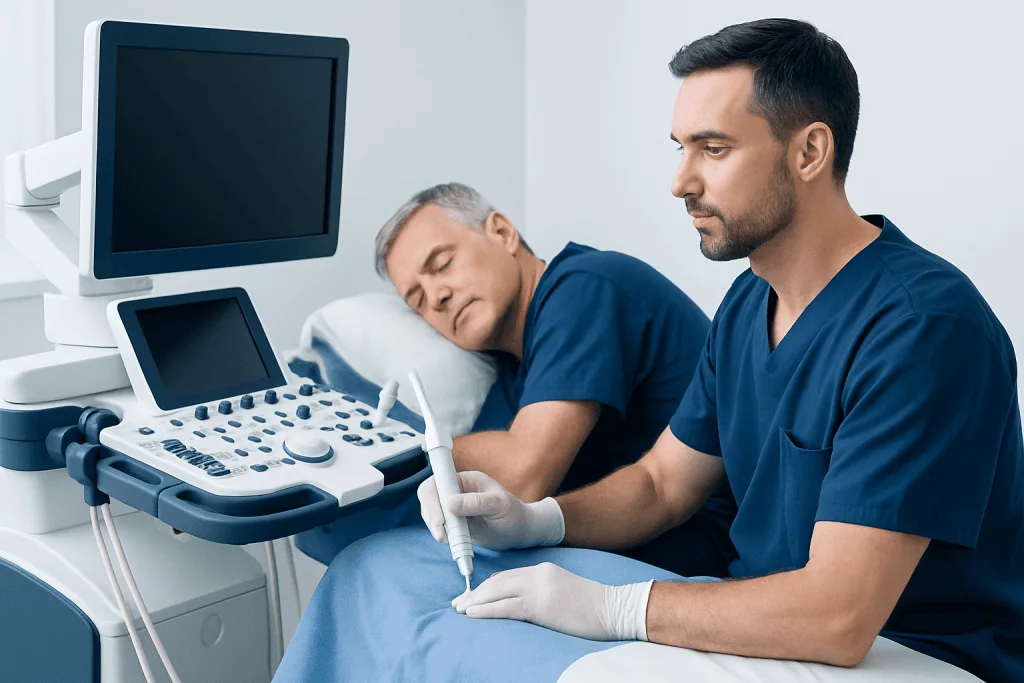
A biopsy is not automatically needed because of one abnormal PSA result. PSA can rise for several reasons, including benign prostate enlargement, inflammation, urinary infection, recent ejaculation, cycling, or instrumentation of the urinary tract. A urologist considers the PSA trend, age, general health, family history, examination findings, prostate size, MRI findings, and personal preferences before recommending a biopsy.
Modern assessment often uses MRI before biopsy when appropriate. MRI can identify areas that may need targeted sampling and can sometimes help a clinician decide whether biopsy is necessary. However, MRI does not detect every cancer, so the decision is individualized. More information about evaluation and care pathways is available through prostate cancer care.
There are two main routes. In a transrectal ultrasound-guided biopsy, a needle passes through the rectal wall into the prostate. In a transperineal biopsy, the needle passes through the skin between the scrotum and anus. Both methods can obtain systematic samples, and MRI-visible areas may also be sampled with targeted techniques. The choice depends on clinical circumstances, available expertise, infection-prevention practices, and the patient’s needs.
The benefit of biopsy is that it can confirm or exclude cancer and provide details, such as tumor grade and extent, that guide future decisions. A biopsy also has limitations: it samples part of the gland and can occasionally miss a small or difficult-to-reach cancer. A negative result is therefore interpreted alongside PSA, MRI, and ongoing clinical follow-up.
Step-by-step: what happens during a prostate biopsy
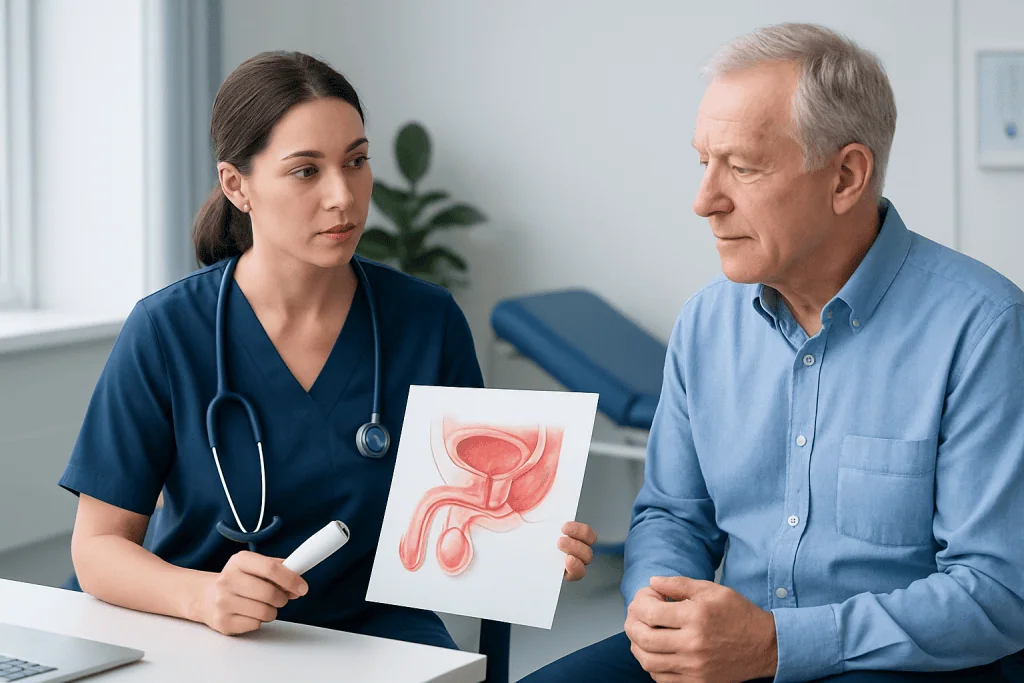
Before the procedure, the clinical team reviews medications, allergies, bleeding history, infection risk, and any heart, lung, or kidney conditions. Patients should specifically ask about blood-thinning medicines, antiplatelet medicines, diabetes medicines, and supplements, as some may need temporary adjustment under the guidance of the prescribing clinician. The team may request a urine test or treat a suspected urinary infection before proceeding.
On the day, the patient changes into a gown and is positioned to allow access to the prostate. Local anesthetic, sedation, or general anesthesia may be used depending on the biopsy route, the planned extent of sampling, and individual needs. Ultrasound commonly provides real-time guidance; when MRI-targeted biopsy is planned, MRI information may be combined with ultrasound guidance or used with an in-bore MRI technique.
After cleaning the area, the urologist inserts a thin biopsy needle through the selected route and takes multiple small core samples. People may hear a clicking sound as each sample is taken. The sampling itself is usually brief, but the full appointment includes preparation and recovery observation. Tissue is labeled and sent to a pathology laboratory for analysis.
It is reasonable to ask the team which approach is planned, what type of anesthesia will be used, whether targeted and systematic samples will both be taken, and how medications should be managed before and after the procedure. Patients considering coordinated evaluation can discuss prostate biopsy services with a qualified urology team.
What are the new prostate biopsy codes for 2026?
There is no single universal “new prostate biopsy code” that applies to every biopsy in 2026. Prostate biopsy codes are selected according to the procedure actually performed. Relevant coding may distinguish transrectal from transperineal needle sampling, image guidance, MRI targeting or fusion services, anesthesia, specimen handling, and pathology interpretation.
Because Current Procedural Terminology (CPT) coding is updated and interpreted within a wider reimbursement framework, a code number alone cannot reliably describe a person’s expected coverage or out-of-pocket cost. Medicare, private insurers, national health systems, and hospitals may apply their own coverage criteria, prior-authorization rules, modifiers, and documentation requirements.
For an accurate answer about 2026 CPT codes for biopsy of the prostate, patients can request the planned procedure description from their urologist and ask the hospital billing department which codes are expected to be submitted. They should also ask their insurer whether preauthorization, referral documentation, or use of a particular facility is required. The final submitted codes may differ if clinical circumstances change during care.
Pathology is an essential but separate part of the process. Laboratory evaluation may include microscopic examination and, when appropriate, additional stains or molecular tests. These services can be reported separately from the procedure itself, which is another reason a single code rarely tells the whole story.
What is the normal recovery time for a prostate biopsy?
Most people recover sufficiently for light daily activities within 24 to 48 hours. The exact recovery time depends on the biopsy route, type of anesthesia, number of samples taken, other medical conditions, and whether any complication occurs. A person who receives sedation or general anesthesia needs someone to take them home and should avoid driving, alcohol, important decisions, and potentially hazardous tasks for the period advised by the care team.
Mild soreness in the pelvic or perineal area, brief fatigue, and a small amount of blood in the urine are common after a biopsy. After a transrectal procedure, a small amount of rectal bleeding may occur. Blood in semen is also common and can persist for several weeks; it may make semen look red, brown, or rust-colored. These changes are usually temporary, but the care team should be contacted if they are heavy, worsening, or concerning.
Patients are commonly advised to drink fluids unless they have been given fluid restrictions, rest on the day of the procedure, and avoid strenuous activity or heavy lifting for a short period. The timing of returning to exercise, sexual activity, work, and travel should follow the individual instructions provided by the urology team. Antibiotics, if prescribed, should be taken exactly as directed.
Follow-up is important even when recovery feels uncomplicated. The clinical team will discuss pathology results, review whether the samples explain the PSA or MRI findings, and recommend surveillance, repeat testing, additional imaging, or treatment only when indicated.
What percent of prostate biopsies come back positive?
The percentage of prostate biopsies that identify cancer varies widely between populations and settings. It is influenced by why the biopsy was recommended, the PSA level and trend, MRI findings, age, family history, prior biopsy history, prostate size, and the use of targeted sampling. For this reason, an individual’s likelihood cannot be estimated accurately from a single overall percentage.
In contemporary practice, MRI and risk-based assessment may help select people most likely to benefit from biopsy. This can change the proportion of positive biopsies compared with older studies in which biopsies were performed using different criteria. A positive result does not automatically mean that immediate treatment is needed, because some prostate cancers grow slowly and may be monitored safely with active surveillance.
If cancer is found, the pathology report typically describes the grade group or Gleason score, the number of samples containing cancer, and how much cancer is present in each involved sample. These results are considered with PSA, imaging, symptoms, overall health, and personal priorities to plan next steps.
If no cancer is found, the result is reassuring but not always final. A urologist may recommend continued PSA monitoring, repeat MRI, or, less commonly, another biopsy if concern remains because of persistent changes in PSA or imaging findings.
How soon do prostate biopsy results come back?
Prostate biopsy results often return within several business days to around two weeks. Timing depends on the laboratory, the number of specimens, local workflow, and whether the pathologist needs extra tests or a specialist review. The urology office should explain how and when the patient will receive results before the procedure.
Pathology reporting is detailed work. The pathologist examines each tissue core under a microscope and may need to compare findings, order immunohistochemical stains, or request a second opinion in difficult cases. Waiting can understandably feel stressful, but a longer turnaround does not by itself indicate a particular result.
At the results appointment, patients may find it helpful to ask for a copy of the pathology report and clarification of unfamiliar terms. Key questions include whether cancer was identified, the grade group if it was found, whether additional tests are needed, and what follow-up schedule is appropriate. A patient should contact the clinic if the expected reporting timeframe has passed without an update.
Risks, benefits, and when to seek medical care
Prostate biopsy is generally a short, established diagnostic procedure, but it has potential risks. These include temporary bleeding, blood in urine or semen, discomfort, urinary symptoms, infection, urinary retention, and rarely more significant bleeding or infection. Infection risk and preventive measures vary by biopsy route and local protocols; the urologist can explain the approach recommended for the individual.
When to seek medical care: Patients should contact the treating team urgently or seek emergency assessment for fever or chills, feeling severely unwell, worsening pelvic pain, inability to pass urine, heavy bleeding, large blood clots, dizziness, or symptoms that do not improve as expected. These symptoms may need prompt evaluation, particularly because infection after a biopsy can become serious if not treated quickly.
Before going home, patients should ensure they understand their written aftercare plan, including which symptoms are expected, when to restart medicines, and whom to call after hours. Acibadem International’s multidisciplinary specialists and JCI-accredited hospitals support diagnosis and treatment planning for international patients, with urology, radiology, pathology, and oncology input when needed.
For people diagnosed with prostate cancer, care may range from active surveillance to surgery, radiation therapy, or systemic treatment depending on the cancer and the person. The appropriate plan should be made with a qualified multidisciplinary team after a careful review of pathology and imaging.
Frequently asked questions
What is the normal recovery time for a prostate biopsy?
Most people can return to light activities within 24 to 48 hours after a prostate biopsy. Minor soreness and small amounts of blood in urine, stool, or semen can last longer, particularly blood in semen. Recovery instructions differ according to the biopsy method and anesthesia used.
What percent of prostate biopsies come back positive?
There is no single percentage that applies to everyone. The likelihood of cancer being found depends on PSA results, MRI findings, age, family history, prostate size, previous biopsies, and the reason for testing. A urologist can provide a more personalized estimate using these factors.
What are the new prostate biopsy codes for 2026?
There is not one universal 2026 prostate biopsy code. Coding depends on the biopsy route, use of ultrasound or MRI guidance, targeting method, anesthesia, pathology services, and payer requirements. The urology office and billing department can provide the planned procedure description and expected submitted codes.
How soon do prostate biopsy results come back?
Results commonly take several business days to around two weeks. Additional laboratory tests or specialist pathology review can extend the timeframe. The urology team should advise the expected result date and arrange follow-up.
Is a prostate biopsy painful?
The procedure can cause pressure, brief discomfort, or soreness, but anesthesia is used to reduce pain. Some people have local anesthetic only, while others may receive sedation or general anesthesia depending on the technique and clinical circumstances. The care team can explain what to expect for the planned biopsy.
Can a prostate biopsy miss cancer?
Yes, a biopsy can occasionally miss a cancer because it samples small areas of the prostate rather than the entire gland. A negative result is interpreted alongside PSA trends, examination findings, and MRI results. If concern remains, a urologist may recommend monitoring, repeat imaging, or another biopsy.
References
- American Urological Association
- National Cancer Institute
- European Association of Urology
- Centers for Disease Control and Prevention
- College of American Pathologists
This article is for general information only and is not a substitute for professional medical advice. Please consult a qualified doctor about your individual situation.
Oncology care in Turkey — second opinion and treatment plan
JCI-accredited · board-certified surgeons · reply within 24h
Add us as a Preferred Source to see more of our trusted health content across Google Search, AI Overviews and Discover.