

Wound Care During the Journey Home

Wound care during the journey home means protecting the surgical or treatment site, keeping it clean and dry as instructed, and watching for signs of infection or bleeding while you travel. At Acibadem in Turkey, patients receive discharge guidance on dressing care, hygiene, activity limits, medications, and when to seek medical help after leaving the hospital.
Your journey home is an important part of recovery, especially if you are travelling with an incision, dressing or healing wound. This guide helps you prepare, protect your wound in transit and stay connected with your care team after you return home.
At a glance
- Best time to plan: Before discharge, while your care team can review your travel route
- Most important documents: Discharge report, wound care instructions, medication list and follow-up plan
- Carry-on essentials: Dressings, hand hygiene supplies, prescribed medicines and emergency contacts
- Main travel priorities: Keep the wound clean, dry, protected and easy to check
- When to seek help: Fever, spreading redness, worsening pain, bleeding, discharge or wound opening
Before You Leave the Hospital
Before you begin your journey home, ask your discharge nurse or doctor to show you exactly how your dressing should look, how often it should be changed and what is considered normal for your stage of healing. It is helpful to take notes or ask your companion to record the explanation, if hospital policy allows. You should leave with written instructions in a language you understand, including what to do if the dressing becomes wet, loose or stained during travel.
If you are an international patient at Acibadem International, the patient care team can help coordinate discharge documents, translated summaries where appropriate, and follow-up communication channels. Use this moment to confirm who you should contact after arrival home, what photos may be useful for remote review, and whether you need to see a local doctor within a specific number of days.
Do not feel rushed to leave with unanswered questions. Your travel day may include airport security, long sitting periods, hotel transfers and changes in temperature, all of which can affect comfort and wound protection. A short final check before departure can prevent confusion later.
Packing a Wound Care Carry-On
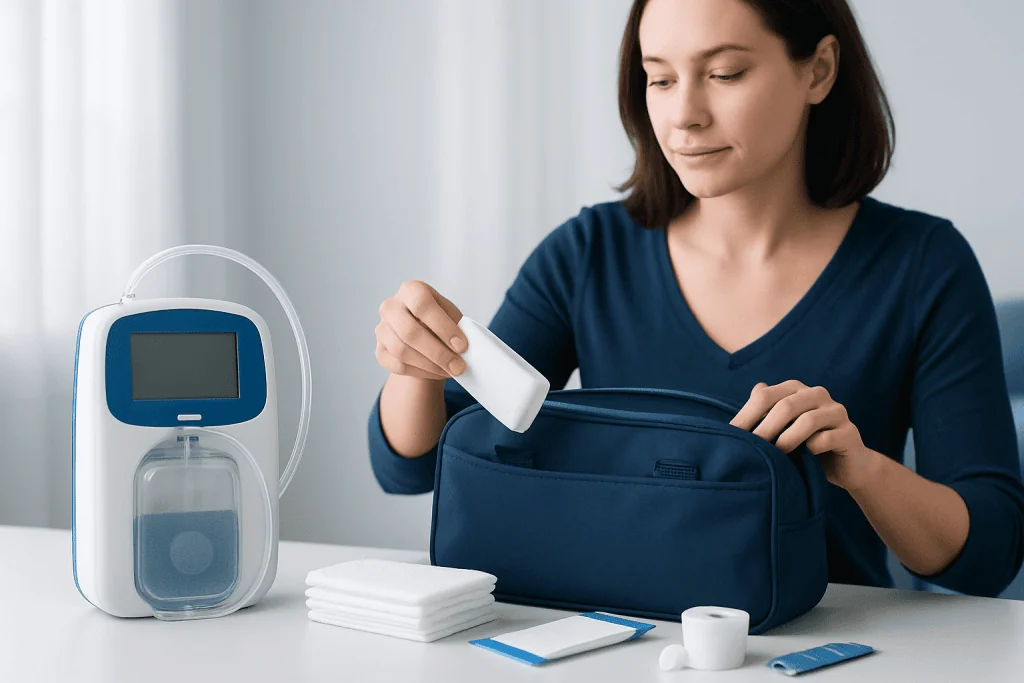
Your wound care items should travel with you in your carry-on bag, not in checked luggage. Checked bags can be delayed, lost or exposed to heat and handling that makes supplies harder to use. Keep everything in a clean pouch that is easy to reach without unpacking your whole suitcase.
Pack more than you expect to need, especially for long-haul flights or journeys with connections. Include the exact type of dressing recommended by your care team whenever possible, as different dressings are not always interchangeable. If you have liquid antiseptics, creams or sprays, check airline security rules and ask the hospital team whether there are suitable travel-size options.
- Prescribed medicines in original packaging
- Clean dressings and medical tape recommended by your team
- Alcohol-based hand gel and disposable gloves, if advised
- Small clean disposal bags for used dressings
- A copy of your discharge report and medication list
- Emergency contact numbers for your hospital and local doctor
Keeping the Wound Clean and Protected in Transit
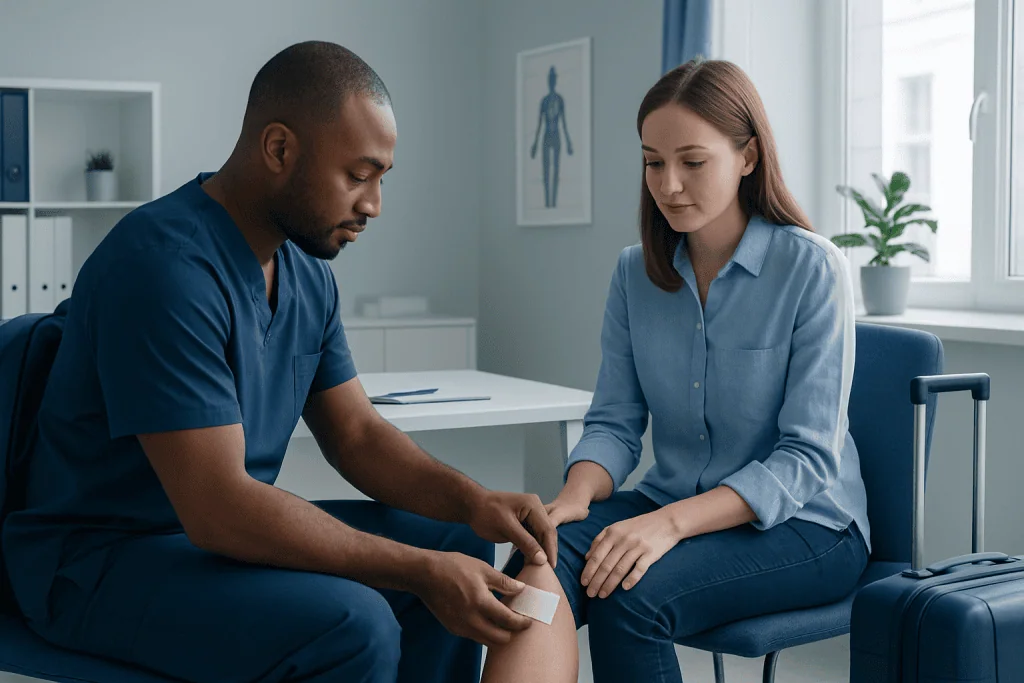
During travel, your main goal is simple: keep the wound clean, dry and protected from friction. Avoid touching the dressing unless you need to check it or change it according to your instructions. Before any contact with the wound area, wash your hands thoroughly or use hand gel, then prepare a clean surface for supplies.
Clothing matters more than many patients expect. Choose loose, breathable layers that do not rub against the wound or pull on stitches, staples or adhesive dressings. If the wound is in an area affected by seat belts, waistbands, bra straps or compression garments, ask your care team before discharge how to protect the area without restricting circulation.
Try to avoid changing a dressing in an airport restroom unless it is necessary. If you must change it, use a clean disposable barrier, keep supplies away from wet surfaces and discard used materials safely. If the dressing is only slightly marked and your instructions say this is expected, it may be better to leave it undisturbed until you reach a cleaner environment.
Managing Flights, Transfers and Long Sitting Times
Long journeys can increase swelling and discomfort, particularly after surgery or procedures involving the legs, abdomen or chest. Follow the mobility advice given by your medical team, including whether you should walk at intervals, do gentle ankle movements or keep a limb elevated when possible. Do not add compression socks, braces or tight bandages unless they have been specifically recommended for you.
Plan airport transfers so you are not carrying heavy bags or rushing through terminals. Request wheelchair assistance if walking long distances may strain the wound or make you unstable. International patient services at Acibadem International can often help you think through transport, accommodation and timing so the return trip is less physically demanding.
Keep hydration, meals and medication timing in mind, especially across time zones. Set alarms for antibiotics, pain medicines or other prescribed treatments, and clarify before departure what to do if a dose is delayed during travel. If you feel faint, unusually short of breath, confused or suddenly unwell, ask airline or airport staff for medical assistance immediately.
What Is Normal and What Needs Urgent Attention
Some mild tenderness, bruising, tightness or small spots on a dressing may be expected, depending on your procedure and healing stage. Your own discharge instructions are the most important guide because different wounds heal differently. If you are unsure whether a change is normal, it is reasonable to contact your care team and describe what you see.
Seek medical advice promptly if you notice fever, chills, increasing redness, warmth, swelling, worsening pain, unpleasant smell, pus-like discharge, heavy bleeding, blackened skin edges or the wound opening. These signs do not always mean there is a serious problem, but they should not be ignored, especially when you are far from the hospital where you were treated.
If you are in transit and symptoms are significant, do not wait until you reach your final destination. Use airport medical services, emergency services or a nearby hospital. Your discharge documents can help a local clinician understand what treatment you had and how the wound has been managed so far.
Follow-Up After You Arrive Home
Once home, settle into a clean, calm routine for wound checks and dressing changes. Choose a consistent time of day, use good lighting and compare the wound with the instructions you received. If your team has asked for photos, take them in the same lighting and distance each time, without filters, and include the date when sending them securely.
Arrange any local follow-up appointment before you need it, rather than waiting until a concern develops. This is especially important if you have sutures or staples to remove, a drain site to monitor, or a dressing that requires professional review. Your Acibadem International coordinator can help clarify the recommended timing and what information your local doctor may need.
Recovery continues after the flight ends. Rest, nutrition, hydration, medication adherence and avoiding smoking can all support healing. Follow your activity restrictions carefully, and ask before resuming swimming, strenuous exercise, lifting heavy objects or exposing the wound to sun.
Step by step
- Confirm your discharge instructions. Before leaving the hospital, ask your care team to review dressing changes, showering rules, medication timing and warning signs. Make sure the instructions are written down and that you know who to contact after you travel.
- Prepare your carry-on wound care kit. Pack clean dressings, prescribed medicines, hand hygiene supplies and your medical documents in a carry-on bag. Keep supplies organized so you can reach them without searching through luggage in a public place.
- Plan a low-stress route home. Allow extra time for airport procedures, transfers and rest breaks. If walking long distances may strain your wound, request assistance in advance and avoid carrying heavy bags.
- Protect the dressing during travel. Wear loose clothing and avoid pressure, rubbing or pulling around the wound area. Do not remove the dressing just to check it unless your care instructions say to do so.
- Monitor for changes. Check for increased redness, swelling, pain, discharge, bleeding or fever. If symptoms are concerning, seek help during the journey rather than waiting until you arrive home.
- Reconnect with follow-up care. After arrival, contact your designated hospital coordinator or local doctor as planned. Share updates or photos only through the communication method recommended by your care team.
Your checklist
- Discharge report and wound care instructions
- Medication list with doses and timing
- Enough prescribed medicines for the full journey plus extra buffer
- Clean dressings and tape recommended by your care team
- Hand gel, soap wipes or other hygiene supplies
- Loose clothing that does not rub the wound
- Emergency contact details for the hospital and local services
- Follow-up appointment date or plan
- Travel assistance arranged if mobility is limited
Key takeaways
- Keep wound care supplies and documents in your carry-on bag, not checked luggage.
- Your main travel goals are cleanliness, dryness, protection and easy monitoring.
- Ask for clear written instructions before discharge, including warning signs and follow-up timing.
- Plan airport assistance, transfers and rest breaks to avoid unnecessary strain.
- Seek medical help promptly for fever, spreading redness, worsening pain, discharge, bleeding or wound opening.
Frequently asked questions
Can I change my dressing during a flight?
Only change it during a flight if your instructions require it or if the dressing becomes wet, loose, heavily soiled or uncomfortable. Airplane restrooms are cramped and not ideal for wound care, so prepare supplies carefully and clean your hands before and after. If the issue is not urgent, it may be safer to wait until you reach a cleaner, private space.
Should I pack wound care supplies in checked luggage?
No, essential wound care supplies should stay in your carry-on bag. Checked luggage may be delayed or unavailable when you need it. Keep medicines in original packaging and carry your discharge documents in case airport staff or local clinicians need to understand your situation.
What should I do if my dressing gets wet on the journey?
Follow the instructions given by your care team, because some dressings must be changed if wet while others have specific handling rules. In general, a wet dressing can irritate the skin and may not protect the wound properly. Use clean hands, clean supplies and contact your care team if you are unsure.
How do I know if redness around the wound is serious?
Mild redness can occur around some healing wounds, but redness that spreads, becomes hot, painful or is accompanied by fever should be checked promptly. Marking the edge of redness with a clean pen is sometimes suggested by clinicians to track spread, but ask your care team first. When travelling, it is better to seek advice early rather than wait.
Can I shower when I get home?
Showering depends on your wound type, dressing and stage of healing. Follow the discharge instructions exactly, including whether the wound must stay dry and whether waterproof protection is allowed. Avoid baths, pools, saunas and swimming until your doctor confirms it is safe.
Who should I contact after returning to my country?
Use the follow-up plan provided at discharge, which may include your Acibadem International coordinator, your treating department or a local physician. Keep your discharge report, medication list and photos available if a remote review is planned. For urgent symptoms, contact local emergency services rather than relying only on remote messages.
Add us as a Preferred Source to see more of our trusted health content across Google Search, AI Overviews and Discover.
More Patient Guides

At Acibadem, How We Prepare Your Discharge Papers and Medical Records
Discharge papers and medical records at Acibadem are prepared before you leave, with summaries, prescriptions and follow-up documents for your return home…
8 min read
Returning Home with a PICC Line or Port After Treatment in Turkey
Returning home with a PICC line or port after treatment in Turkey means planning dressings, documents, flights, and follow-up before you travel.
9 min read
Flying Home with a Cast, Brace, or Limited Mobility After Treatment in Turkey
Flying home with a cast, brace, or limited mobility after treatment in Turkey is possible with airline clearance, airport support, and a…
9 min read