

Managing Pain on the Flight Home After Treatment

Managing pain on the flight home after treatment usually involves following your doctor’s medication plan, staying hydrated, moving gently when allowed, and positioning your body to reduce strain on the treated area. At Acibadem in Turkey, discharge planning for international patients includes guidance on pain control during travel, activity limits, warning signs to watch for, and when to seek medical…
Your flight home is an important part of recovery, and a little planning can make it calmer, safer, and more comfortable. This guide explains how to prepare for pain control, mobility, medication timing, and follow-up before you leave Turkey.
At a glance
- Best time to plan: Before discharge and again 24 hours before travel
- Carry-on priority: Medication, documents, wound supplies, water, snacks, comfort items
- Key support: Your treating doctor, international patient services, airline assistance
- During the flight: Take medication as advised, change position, hydrate, ask for help early
- Urgent concerns: Severe chest pain, breathing difficulty, heavy bleeding, sudden leg swelling, confusion
Before you leave the hospital: make pain control part of your travel plan
Your journey home starts before you reach the airport. At discharge, ask your doctor or nurse to explain what level of pain is expected during travel, what would be unusual, and how to use your prescribed medication during the door-to-door journey. The goal is not to be completely pain-free at every moment, but to keep pain controlled enough for you to breathe comfortably, move safely, rest, and communicate clearly.
Ask for a simple medication schedule that covers the hours before the airport, the waiting time, the flight, and the transfer after landing. If you are crossing time zones, confirm whether you should follow Turkey time until you arrive or adjust gradually to your home time. This is especially important if you have several medicines with different timing, such as pain relief, antibiotics, blood thinners, stomach protection, or regular long-term medication.
At Acibadem International, international patient teams can help coordinate discharge instructions, translation support, and travel documents so you do not have to manage everything alone. Before you go, make sure you know who to contact if pain increases while you are still in Turkey and who to contact after you return home.
Pack your carry-on for comfort, not just convenience
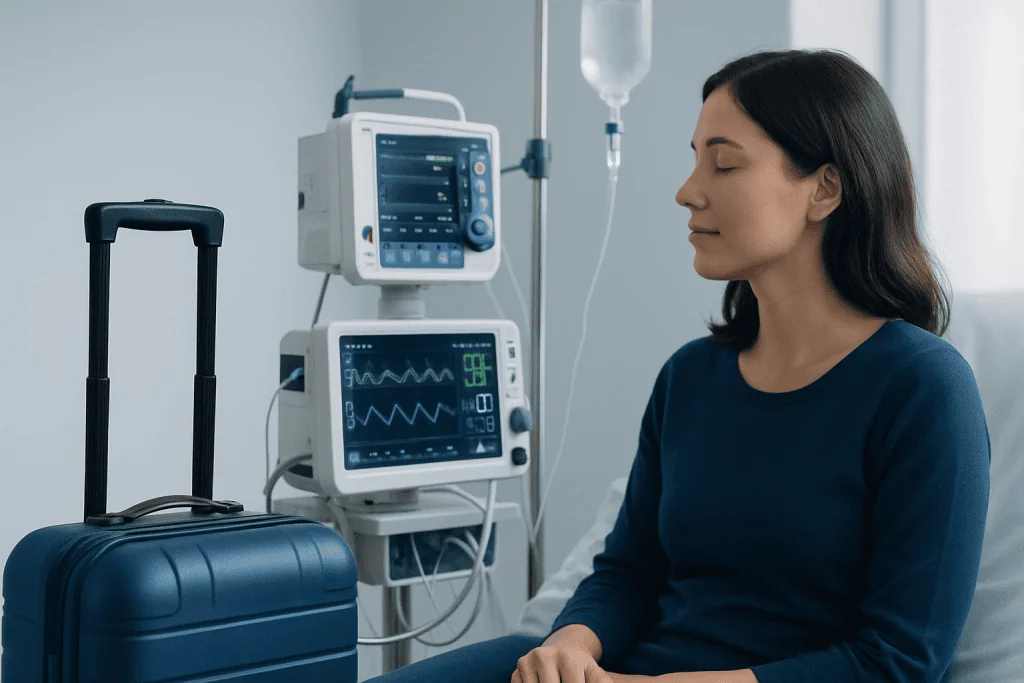
Never pack essential medication or medical documents in checked luggage. Flights can be delayed, bags can be misplaced, and you may need pain relief while you are still at the airport. Keep all medication in its original packaging where possible, and carry your prescription, discharge summary, and any fit-to-fly or medical clearance letter provided by your care team.
Your carry-on should be small enough to manage but complete enough to support you for a full travel day. Include prescribed pain medication, other regular medicines, wound dressings if advised, compression stockings if prescribed, hand sanitizer, tissues, a refillable water bottle, light snacks, and any approved mobility aids. A neck pillow, loose layers, warm socks, and a small cushion can reduce pressure and help you change position more comfortably.
If you have medication that needs temperature control, injections, or special handling, discuss this in advance with your care team and airline. Airport security rules can vary, so written medical documentation is useful. If you are travelling with a companion, divide responsibilities clearly: one person keeps documents accessible, while the other helps with bags, boarding, and reminders.
Time your medication carefully on travel day

Travel days are unpredictable, and waiting until pain is severe can make it harder to control. Follow the schedule given by your doctor rather than improvising. If your prescription says a medicine can be taken before activity, ask whether it is appropriate to take it before leaving for the airport or before boarding, so that walking, security checks, and sitting are easier.
Do not take extra doses, combine medicines, or drink alcohol to relax unless your doctor has specifically confirmed it is safe. Some pain medications can cause sleepiness, dizziness, constipation, nausea, or slower reaction time. These effects matter during travel, especially when you need to walk through the airport, manage stairs, or respond to announcements.
If you feel nauseated or too drowsy after medication, tell your companion, cabin crew, or airport assistance staff. It is better to ask for support early than to struggle silently. Keep a written list of what you have taken and at what time, particularly on long-haul flights or if more than one person is helping you.
Reduce discomfort from sitting, swelling, and limited movement
Sitting in one position for a long time can increase stiffness, swelling, and general discomfort after treatment. Choose loose clothing that does not press on wounds, treated areas, drains, dressings, or swollen limbs. If you have been advised to use compression stockings, put them on as instructed and make sure you understand when to remove them.
When the seatbelt sign is off and it is safe, gentle movement can help. This may include short walks in the aisle, ankle circles, foot pumps, shoulder rolls, or changing position slowly in your seat. Always follow any movement restrictions from your surgeon or treating team, especially after orthopedic, abdominal, spinal, cardiac, or vascular treatment.
Hydration also affects comfort. Sip water regularly unless you have been told to restrict fluids. Try to limit alcohol and be cautious with too much caffeine, as both can affect sleep, hydration, and how you feel with medication. If swelling, pain, or tightness increases suddenly on one side, or you develop chest pain or shortness of breath, seek urgent medical help immediately.
Use airport and airline assistance without hesitation
Many patients underestimate how tiring airports can be after treatment. Long corridors, queues, security checks, and boarding delays can all increase pain before the flight even begins. Request wheelchair assistance, priority boarding, or help with connections in advance if walking long distances may be difficult. These services are common and are there to protect your energy.
Tell the airline ahead of time if you have reduced mobility, recent surgery, a medical device, special seating needs, or medical equipment. Some airlines may ask for a medical information form or clearance letter depending on your condition and timing of travel. Your Acibadem International patient coordinator can guide you on which documents are usually needed, but airline requirements remain the airline’s decision.
At the airport, keep explanations simple and practical: you are recovering from medical treatment and need help avoiding strain. You do not have to share personal details with every staff member. If you need extra time to board, assistance lifting luggage, or a seatbelt extender, ask calmly and early.
Know what is normal, and what should not wait
Some discomfort, tiredness, bruising, swelling, or pulling sensations may be expected depending on your treatment. Your discharge team should explain what is normal for you personally. Write down the warning signs before you leave the hospital, because it is harder to think clearly when you are tired or in pain during travel.
Seek urgent medical attention during travel or after landing if you have severe or worsening pain that is not helped by prescribed medication, chest pain, difficulty breathing, fainting, confusion, heavy bleeding, sudden weakness, new severe headache, fever with feeling very unwell, or sudden swelling and pain in one leg. If you have a wound, urgent signs can include spreading redness, pus, a bad smell, opening of the wound, or bleeding that soaks dressings.
If you are unsure whether a symptom is urgent, treat it seriously and ask for help. Cabin crew can contact medical support during a flight, and airports can arrange emergency assistance. After returning home, contact your local doctor or emergency services for urgent symptoms, and update your Acibadem International follow-up contact when appropriate.
Plan the first 24 hours after landing
The journey does not end when the plane lands. Arrange transport home that allows you to sit comfortably and avoid carrying luggage. If possible, have groceries, water, prescribed medicines, clean bedding, and basic wound-care items ready before you travel. The first night at home should be quiet, simple, and focused on rest.
Continue your medication schedule as instructed, especially if time zones have changed. Set alarms for key medicines and keep a written log until you feel settled. If you are taking strong pain relief, avoid driving, signing important documents, cooking unsupervised, or caring for others until your doctor confirms it is safe.
Make sure your follow-up plan is clear: who reviews your wound, when stitches or dressings need attention if applicable, when you can return to work, and how to share test results or photos if requested. Acibadem International can help arrange remote follow-up communication when suitable, but you should also have local medical support available in your home country in case you need hands-on care.
Step by step
- Confirm you are fit to travel. Before booking or boarding, ask your treating doctor whether your timing is appropriate for flying. Confirm any restrictions related to surgery, anesthesia, wounds, mobility, blood clot risk, or medical devices.
- Get your discharge and medication plan in writing. Ask for clear written instructions in a language you understand, including medication names, doses, timing, and warning signs. Keep a digital copy and a printed copy in your carry-on.
- Speak to the airline early. Request wheelchair assistance, priority boarding, special seating, or medical clearance if needed. Do this before travel day, because last-minute requests may be harder to arrange.
- Prepare your carry-on the day before. Pack medication, prescriptions, documents, wound supplies, snacks, water access, comfort items, and phone chargers. Keep everything you may need during the flight within easy reach.
- Take pain medication as prescribed. Follow the schedule provided by your care team and avoid extra doses unless your doctor has told you to. If you feel overly sleepy, dizzy, nauseated, or confused, ask for help promptly.
- Move safely during the journey. Use airport assistance to conserve energy and walk gently during the flight when it is safe and permitted. In your seat, simple ankle and foot movements may reduce stiffness, if your doctor has not restricted movement.
- Watch for warning signs. Do not ignore severe pain, breathing difficulty, chest pain, heavy bleeding, fainting, or sudden one-sided leg swelling. Ask cabin crew, airport staff, or emergency services for help immediately.
- Rest and reconnect after arrival. Once home, prioritize sleep, hydration, medication timing, and a calm environment. Contact your follow-up team as planned and arrange local medical review if symptoms change or you need in-person care.
Your checklist
- Written discharge summary and follow-up instructions
- Prescription list with medication names, doses, and timing
- Pain medication in original packaging in your carry-on
- Fit-to-fly or medical clearance letter if provided or required
- Wound dressings or care supplies approved by your care team
- Compression stockings or mobility aids if prescribed
- Airline assistance confirmed before travel day
- Comfortable loose clothing and supportive shoes
- Water, light snacks, phone charger, and emergency contacts
- Local doctor or emergency care plan for after you arrive home
Key takeaways
- Plan pain control before discharge, including medication timing for the full door-to-door journey.
- Keep all essential medicines and medical documents in your carry-on, never in checked luggage.
- Use airline and airport assistance to reduce walking, standing, lifting, and stress.
- Gentle movement, hydration, and comfortable clothing can reduce stiffness and swelling during the flight.
- Know your warning signs and seek urgent help for severe pain, breathing difficulty, chest pain, heavy bleeding, or sudden leg swelling.
- Arrange a calm first 24 hours at home and keep both local and Acibadem International follow-up contacts available.
Frequently asked questions
Can I take pain medication before boarding the flight?
Often this may be part of your travel plan, but you should follow your doctor’s specific instructions. Ask before discharge whether a dose before leaving for the airport or before boarding is appropriate for you. Do not take extra doses beyond the prescription to make the flight easier.
Should I tell the airline I recently had treatment?
You should tell the airline if you need assistance, have reduced mobility, require special seating, are carrying medical equipment, or have been advised to obtain clearance. You do not need to share every private medical detail with all staff. A simple explanation and a medical letter, when required, are usually more useful than a long verbal explanation.
What if my pain gets worse during the flight?
First, check your medication schedule and whether you are due for a prescribed dose. Change position gently if allowed, hydrate, and ask cabin crew for help if pain is increasing or you feel unwell. If pain is severe, sudden, or comes with chest pain, breathing difficulty, fainting, bleeding, or confusion, it should be treated as urgent.
Is it safe to sleep after taking pain medication on the plane?
Many people do rest after taking prescribed pain relief, but some medicines can cause excessive drowsiness or dizziness. Use your seatbelt while seated, keep your medication schedule written down, and make sure your companion or cabin crew can check on you if needed. Avoid alcohol, as it can increase sedation and other side effects.
How can I reduce swelling during a long flight?
Follow your doctor’s advice about movement, compression stockings, and fluid intake. If permitted, do ankle circles, foot pumps, and short walks when the seatbelt sign is off. Sudden one-sided leg swelling, calf pain, chest pain, or shortness of breath needs urgent medical attention.
What documents should I carry for pain medicines?
Carry your prescription, discharge summary, and medication in original packaging when possible. If you have controlled medicines, injections, or larger quantities, ask your care team whether an additional medical letter is recommended. Keep printed and digital copies in case airport staff or local clinicians need to review them.
Can Acibadem International help after I return home?
Your international patient contact can guide you on planned follow-up communication, sharing documents, and understanding discharge instructions. For urgent symptoms after you return, contact local emergency services or a local doctor first because you may need immediate in-person assessment. You can then update your Acibadem International team as appropriate.
Add us as a Preferred Source to see more of our trusted health content across Google Search, AI Overviews and Discover.
More Patient Guides

At Acibadem, How We Prepare Your Discharge Papers and Medical Records
Discharge papers and medical records at Acibadem are prepared before you leave, with summaries, prescriptions and follow-up documents for your return home…
8 min read
Returning Home with a PICC Line or Port After Treatment in Turkey
Returning home with a PICC line or port after treatment in Turkey means planning dressings, documents, flights, and follow-up before you travel.
9 min read
Flying Home with a Cast, Brace, or Limited Mobility After Treatment in Turkey
Flying home with a cast, brace, or limited mobility after treatment in Turkey is possible with airline clearance, airport support, and a…
9 min read