

Airport Assistance When Returning Home After Surgery

Airport assistance after surgery helps make the return journey safer and easier by arranging support such as wheelchair service, priority boarding, and help with transfers, luggage, and check-in based on the patient’s condition and airline rules. At Acibadem in Turkey, international patient teams help coordinate these travel needs before discharge and provide guidance on fitness to fly, required documents, medications…
Travelling home after surgery can feel tiring, but the right airport assistance can make the journey calmer, safer and more comfortable. This guide explains what to arrange before you leave the hospital, how to move through the airport, and what to keep close during your flight.
At a glance
- Best time to plan: Before discharge, ideally 48-72 hours before your flight
- Key document: Fit-to-fly or medical clearance note if your doctor advises it
- Most useful support: Wheelchair assistance, porter help and priority boarding when available
- Carry-on essentials: Medicines, wound supplies, reports, snacks, water and emergency contacts
- Who can help: Your care team, airline, airport assistance desk and international patient services
Why airport assistance matters after surgery
After surgery, even a familiar airport can feel more demanding than expected. Walking long distances, standing in queues, lifting luggage, navigating security and sitting for long periods may increase fatigue or discomfort. Airport assistance after surgery is not only for people who cannot walk; it is also useful if you need to conserve energy, avoid strain, reduce infection exposure where possible, or move through the airport with fewer delays.
Your needs may be temporary and very specific. You may be able to walk short distances but not manage a long terminal. You may need help carrying bags because lifting is restricted. You may need extra time at security because you have dressings, mobility aids or medicines. Thinking through these details before travel helps you avoid last-minute stress on the day you fly.
At Acibadem International, international patient services can help you understand what to request from your airline and what documentation to keep ready. The hospital team will also guide you on general recovery precautions, but airport assistance itself is usually coordinated through the airline and airport. The goal is a smooth handover from hospital discharge to your journey home.
Before you book or confirm your return flight

Do not treat your return flight as a fixed deadline until your medical team has reviewed your recovery. The right time to fly depends on the type of surgery, anaesthesia, wound status, mobility, pain control, risk of complications and flight duration. Some patients can travel soon after treatment, while others need more observation or a later departure. Always follow your doctor’s individual advice.
Before confirming the flight, ask your care team whether you need a fit-to-fly note, medical clearance form, special seating, oxygen arrangements, a stretcher service, or an escort. Airlines have their own rules and may require forms to be submitted in advance, especially if you need oxygen, have limited mobility, recently had major surgery, or need medical equipment on board.
When possible, choose flight times and connections that support your recovery. A direct flight may reduce the physical strain of transit, but a longer single flight may not be ideal for everyone. If you need a connection, allow generous transfer time so you are not rushed between gates. Avoid very tight layovers, overnight airport waits and routes that require changing airports.
Requesting wheelchair, porter and priority support
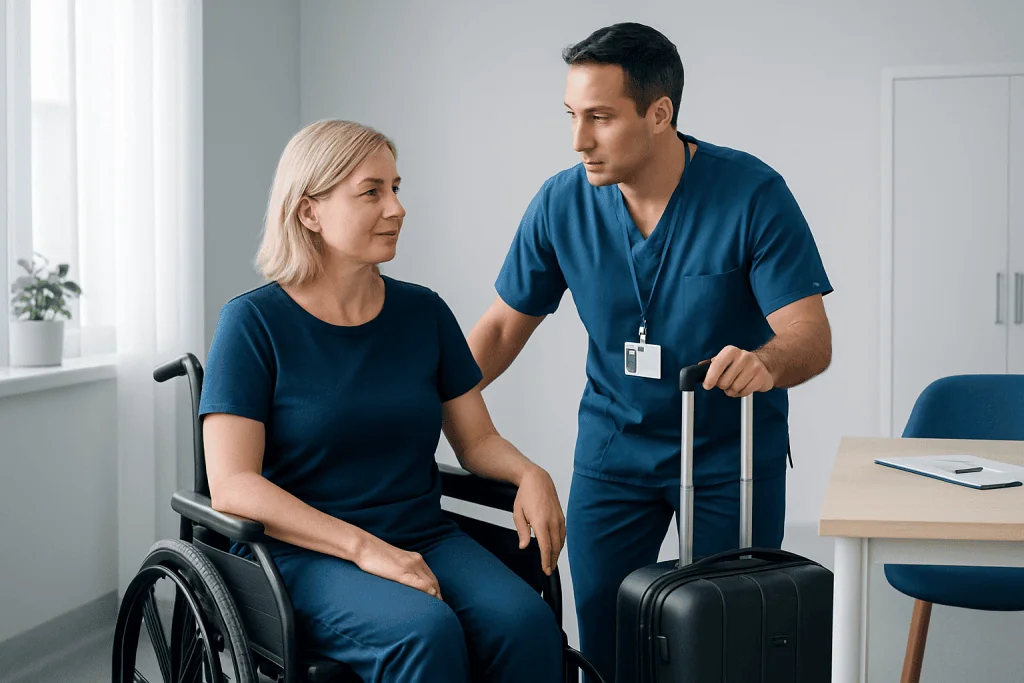
Most airlines and airports offer several levels of mobility assistance. You can request wheelchair support from check-in to the gate, from the aircraft door to baggage claim, or across connecting terminals. Some services include an airport staff member who guides you through security and passport control, depending on local airport procedures and availability.
Make the request as early as possible, ideally when booking the ticket and again 48 hours before departure. If you already have a ticket, contact the airline directly and add special assistance to your booking. Give clear information about what you can and cannot do: whether you can climb aircraft steps, walk to your seat, transfer from a wheelchair, stand in a queue, or carry hand luggage.
Useful services to consider include:
- Wheelchair assistance for long walking distances inside the airport.
- Porter help or luggage support if you are not allowed to lift.
- Priority or early boarding so you can settle without being rushed.
- An aisle seat or seat near the front if your doctor and airline agree it is suitable.
- Assistance during connections, especially in large airports.
Remember that airport assistance teams are not medical escorts. They can help with mobility and navigation, but they cannot provide clinical monitoring, wound care or medicine administration. If you need medical supervision during travel, discuss this separately with your doctor and airline before flying.
Documents to keep within easy reach
Keep your medical and travel documents in your carry-on bag, not in checked luggage. You may need to show them at check-in, security, border control, during a connection, or if you need medical help while travelling. Use a simple folder or clear pouch so you or your companion can find everything quickly.
Your document pack may include your passport, boarding passes, visa or residence documents, discharge summary, fit-to-fly letter if provided, prescription list, implant or device information if relevant, recent test results requested by your doctor, insurance details and emergency contacts. If your medicines include injections, liquids, controlled medications or temperature-sensitive items, ask your care team whether extra documentation is recommended.
If you were treated at Acibadem, your international patient coordinator can help you check that your discharge documents, follow-up instructions and contact information are ready before you leave. If you need translations of key documents, ask early, as translation and administrative processing may take time. Having the correct papers prepared reduces anxiety and avoids unnecessary explanations at the airport.
Packing your carry-on for comfort and safety
Your carry-on should be light enough to manage, but complete enough to support you if your checked luggage is delayed. Pack all prescribed medicines for the journey and a small extra supply, according to your doctor’s advice. Do not place essential medicines, wound supplies or medical documents in checked baggage.
Choose comfort items that reduce strain during the airport and flight. Loose clothing, easy shoes, a supportive pillow, compression garments if prescribed, hygiene items, a phone charger and simple snacks can make a big difference. If you have dressings or drains, ask the nursing team how to protect them during travel and whether you need spare supplies.
Carry-on essentials often include:
- Prescription medicines in original packaging where possible.
- Written medication schedule with doses and times.
- Small wound-care pack if advised by your team.
- Discharge summary and follow-up plan.
- Water bottle to fill after security, unless restricted.
- Light snacks that suit your post-operative diet.
- Phone, charger and international patient contact numbers.
Security rules for liquids and medical items vary by airport and country. Check airline and airport guidance before travel. If you need to carry syringes, gels, special nutrition or larger quantities of liquid medicine, ask your doctor whether a supporting letter is appropriate.
Moving through the airport on departure day
Plan to arrive earlier than you normally would. After surgery, rushing is one of the easiest ways to increase pain, breathlessness, dizziness or anxiety. Extra time lets you check in calmly, confirm assistance, use the restroom, take medicines on schedule and rest before boarding.
At check-in, tell the airline staff that special assistance was requested and confirm how it will work. Ask where the wheelchair or escort will meet you, whether you will be taken through security, and what will happen at the gate. If you have a companion, make sure they know the plan and have copies or photos of key documents.
During security screening, explain calmly if you have dressings, mobility aids, implanted devices or medicines. Do not remove medical supports unless security staff instruct you and it is safe to do so. If you feel unwell at any point, tell airport staff immediately and contact your companion or medical contact. It is better to pause and be assessed than to push through symptoms.
Arrival, connections and the first hours at home
Assistance is just as important when you land. Many patients feel more tired after the flight than they expected, especially after long-haul travel. If you requested arrival wheelchair support, remain seated until cabin crew or assistance staff indicate that they are ready. They will usually help you from the aircraft to immigration, baggage claim and the arrivals area, depending on the airport service.
If you have a connecting flight, confirm at the first check-in that assistance is arranged at each airport. Keep medication timing in mind across time zones and ask your doctor before travel how to handle dose schedules if the journey is long. During layovers, prioritize rest, hydration if permitted, short gentle movement if advised, and avoiding heavy bags.
Once you arrive home, do not schedule demanding errands immediately. Arrange transport from the airport in advance, ideally with enough room for you to sit comfortably. Have a family member, friend or caregiver help with luggage, meals and settling in. Follow your discharge plan and contact your medical team if you notice warning signs such as fever, increasing pain, wound changes, chest pain, shortness of breath, fainting or other symptoms your doctor told you to watch for.
Step by step
- Confirm that you are medically ready to fly. Before finalizing travel, ask your doctor whether your recovery is stable enough for the planned flight. Clarify any restrictions on walking, lifting, sitting duration, compression garments, wound care and medication timing.
- Ask what documentation you need. Request a discharge summary, prescription list and any fit-to-fly or medical clearance document your doctor recommends. Keep both printed and digital copies if possible, especially for international travel.
- Contact your airline for special assistance. Add wheelchair, mobility or boarding assistance to your booking at least 48 hours before departure when possible. Explain your practical limitations clearly, such as no heavy lifting, limited walking distance or inability to climb stairs.
- Prepare your carry-on carefully. Pack medicines, wound supplies, documents, phone charger, comfort items and snacks in a small bag that stays with you. Avoid making the bag heavy, and ask your companion or porter service to handle luggage.
- Arrange transport to and from the airport. Book a vehicle that allows you to sit comfortably and get in and out without strain. If you are leaving from Turkey after treatment at Acibadem, ask international patient services about transfer coordination options.
- Arrive early and check assistance at the counter. Give yourself extra time for check-in, security and rest breaks. At the airline counter, confirm where your wheelchair or support staff will meet you and how assistance will continue to the gate.
- Rest after arrival and follow your aftercare plan. Once home, avoid overexertion and follow the written instructions from your care team. Keep follow-up appointments and contact your doctor promptly if concerning symptoms appear.
Your checklist
- Doctor has confirmed you are fit to travel or advised the safest timing
- Fit-to-fly letter or airline medical form is completed if required
- Wheelchair or special assistance is added to your airline booking
- Airport transfers are arranged at departure and arrival
- Medicines are packed in carry-on luggage with prescriptions
- Discharge summary, follow-up plan and emergency contacts are easy to reach
- You have a plan for luggage, lifting restrictions and porter help
- A companion or receiving family member knows your arrival details
- You understand warning signs and who to contact after you get home
Key takeaways
- Airport assistance after surgery should be planned before discharge, not left until you reach the terminal.
- Your airline usually coordinates wheelchair, boarding and connection support, while your medical team advises on fitness to fly.
- Keep medicines, wound supplies and medical documents in your carry-on bag at all times.
- Arrive early, move slowly and ask for help before discomfort or fatigue becomes a problem.
- International patient teams, such as Acibadem International, can help you organize documents, interpreters and travel-related coordination.
Frequently asked questions
How soon after surgery can I fly home?
There is no single safe timeline for everyone. It depends on your procedure, anaesthesia, wound healing, mobility, risk of complications and flight length. Your surgeon or treating doctor should confirm when travel is appropriate and whether you need a fit-to-fly document.
Who arranges airport wheelchair assistance?
Wheelchair assistance is usually requested through your airline, either during booking or by contacting customer service before travel. The airline then coordinates with the airport assistance team. It is best to request it early and confirm again before departure.
Can airport assistance staff help with my medicines or wound care?
No, airport assistance staff generally help with movement, directions, boarding and sometimes luggage navigation. They do not provide clinical care, administer medicines or monitor your recovery. If you need medical supervision during travel, discuss this with your doctor and airline in advance.
Should I travel with a companion after surgery?
Many patients feel safer and more comfortable with a companion, especially after major surgery, long flights or if mobility is limited. A companion can manage documents, carry bags, help you communicate and notice if you become unwell. Ask your care team whether travelling alone is appropriate for your situation.
What should I do if I feel unwell at the airport?
Stop, sit down and tell airport or airline staff immediately. If you have chest pain, shortness of breath, fainting, severe bleeding, sudden swelling or any symptom your doctor identified as urgent, seek emergency medical help. Do not board a flight if you feel seriously unwell without being assessed.
Can Acibadem International help with my return journey?
Acibadem International patient services can help with practical coordination such as discharge documents, interpreter support, transfer guidance and communication with your care team. Airline medical clearance and airport assistance still need to be arranged according to airline and airport rules. Ask your coordinator early so there is enough time to prepare.
Do I need to tell airport security about my surgery?
You do not need to share private details unless they are relevant to screening. However, you should calmly explain if you have dressings, mobility aids, implanted devices, medical liquids or medicines that require special handling. Carry supporting documents if your care team recommends them.
Add us as a Preferred Source to see more of our trusted health content across Google Search, AI Overviews and Discover.
More Patient Guides

At Acibadem, How We Prepare Your Discharge Papers and Medical Records
Discharge papers and medical records at Acibadem are prepared before you leave, with summaries, prescriptions and follow-up documents for your return home…
8 min read
Returning Home with a PICC Line or Port After Treatment in Turkey
Returning home with a PICC line or port after treatment in Turkey means planning dressings, documents, flights, and follow-up before you travel.
9 min read
Flying Home with a Cast, Brace, or Limited Mobility After Treatment in Turkey
Flying home with a cast, brace, or limited mobility after treatment in Turkey is possible with airline clearance, airport support, and a…
9 min read