

Sharing Turkish Medical Reports with Your Local Doctor

You can share your Turkish medical reports with your local doctor by providing translated discharge summaries, test results, imaging reports, and treatment details in a clear, organized format. At Acibadem in Turkey, international patient services help prepare and coordinate this documentation so follow-up care with your doctor at home is informed and consistent.
After receiving care in Turkey, your local doctor may need clear, complete records to continue your follow-up safely. This guide explains how to organize, translate and share your Turkish medical reports in a way that is practical for both you and your home medical team.
At a glance
- Best time to prepare: Before you leave Turkey, or as soon as your discharge documents are ready
- Key documents: Discharge summary, test results, imaging files, medication list and follow-up plan
- Translation need: Recommended if your local doctor does not read Turkish or English comfortably
- Sharing method: Secure email, patient portal, encrypted link or physical copy, depending on your doctor
- Who can help: Acibadem International patient services can guide record requests and coordination
Why your Turkish medical reports matter after you return home
When you return home after treatment in Turkey, your care does not end at the airport. Your local doctor may need to understand what was assessed, what treatment you received, which medicines were prescribed and what follow-up is recommended. Clear Turkish medical reports help your home medical team avoid duplication, compare new results with previous findings and make informed decisions.
For many international patients, the challenge is not only collecting the documents but making them usable. Reports may be in Turkish, imaging may be stored on a CD or digital link, and medication names may differ from those used in your country. A little preparation can make your first follow-up appointment at home smoother and less stressful.
At Acibadem International, patients treated in JCI-accredited hospitals can usually request support from international patient services for discharge documentation, translation guidance and coordination questions. The goal is simple: you should leave with a practical medical record package that your local doctor can review confidently.
Which documents to collect before leaving Turkey
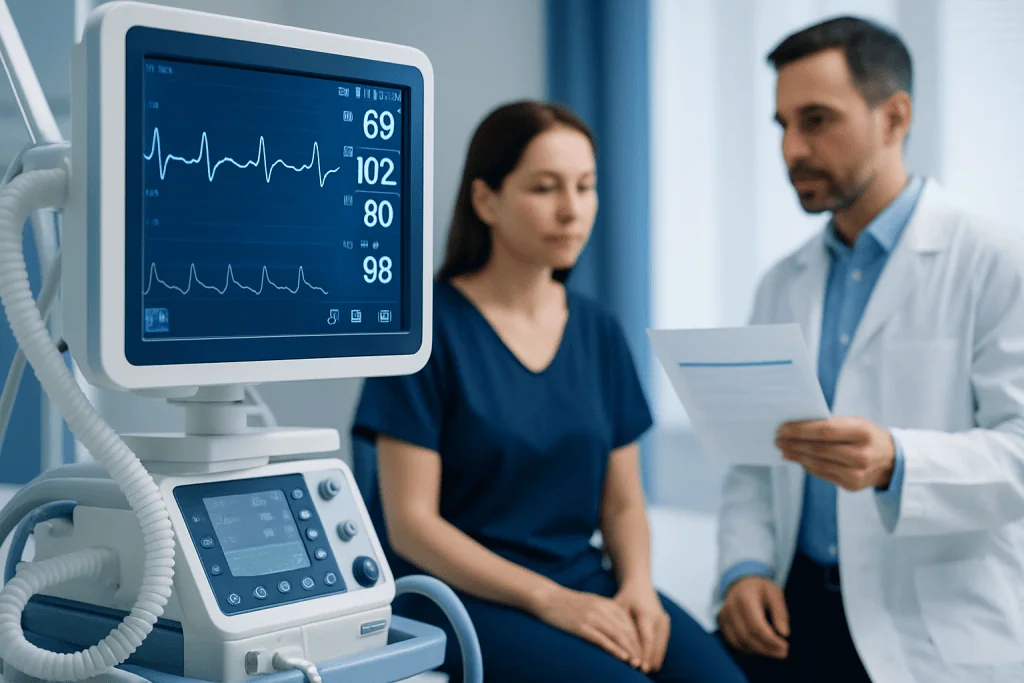
Start with the discharge summary, sometimes called an epicrisis report. This is often the most useful document for your local doctor because it summarizes your diagnosis, treatment course, relevant test results, medications, recommendations and follow-up timing. If you had surgery, procedures, specialist consultations or inpatient care, ask whether these details are included in the final discharge paperwork.
You should also collect laboratory results, pathology reports if applicable, radiology reports and copies of imaging such as MRI, CT, ultrasound or X-ray. Imaging is especially important because your local doctor may want both the written report and the actual image files, commonly provided in DICOM format through a CD, USB drive or secure digital transfer.
Helpful records may include:
- Discharge summary and specialist consultation notes
- Medication list with dose, timing and duration
- Operation or procedure notes, if relevant
- Laboratory and pathology results, including reference ranges
- Radiology reports plus imaging files
- Implant, device or material information, if used
- Follow-up recommendations and warning signs to watch for
Before you travel, check that your name, date of birth and passport number are correct on important documents. Small identity mismatches can create confusion when your local clinic uploads records to its system.
Translation: when it is useful and what to translate first

If your local doctor does not read Turkish, a translation may be necessary. In many cases, English-language summaries are also accepted by international clinics, but requirements vary by country, hospital and insurance provider. It is wise to ask your doctor at home which language they prefer before you invest time or money in translation.
Prioritize translation of the documents that guide ongoing care. The discharge summary, medication list, pathology report, radiology report and follow-up instructions usually matter most. Full translation of every laboratory page may not be necessary if the results are numerical and include standard units, but your doctor may still need key comments or abnormal findings explained.
For official purposes such as insurance claims, disability documentation or transfer to a public health system, you may need a certified or sworn translation. For routine medical review, a clear professional medical translation may be sufficient. Avoid relying only on automated translation for complex medical language, as small wording differences can affect meaning.
If you are unsure, ask Acibadem International patient services what language versions are available and whether they can advise on obtaining translated documentation. They cannot decide what your home system will accept, but they can help you understand what documents are normally issued and how to request them properly.
How to share records securely with your local doctor
Medical information is private, so choose a secure sharing method whenever possible. Many clinics prefer records uploaded through a patient portal, while others accept encrypted email, secure cloud links, USB drives or printed copies. Before sending large imaging files, ask your local doctor or radiology department what format they can open.
For email, avoid sending sensitive documents to a general reception address unless the clinic confirms this is acceptable. If you use a cloud link, set a strong password and an expiration date if the platform allows it. Send the password through a separate channel, such as text message or phone call, rather than in the same email.
For physical copies, keep originals with you and provide copies to your doctor. Imaging CDs can be fragile and may not work on every computer, so if possible, ask for an additional copy or a digital link before leaving Turkey. Store all files in a clearly named folder, such as Turkey Treatment Records, and keep a backup in a secure location.
Making the records easy for your doctor to review
Your local doctor may have limited appointment time, so a well-organized file can make a real difference. Place the discharge summary first, followed by the medication list, follow-up plan, test results, imaging reports and other specialist notes. If documents are in more than one language, keep the original and translation together.
Create a one-page cover note in your own words. Include the dates you were in Turkey, the hospital name, the main reason for treatment, the treatment you received, current medicines and the questions you want answered at your follow-up appointment. This does not replace medical documentation, but it helps your doctor navigate the file quickly.
Be careful not to edit medical reports themselves. If you notice an error, such as a misspelled name or incorrect date, contact the issuing hospital to ask how it can be corrected. Altered documents may be rejected by clinics, insurers or authorities.
When Acibadem International has coordinated your care, you may also have contact details for the international patient team. Keep these details available in case your local doctor needs clarification or wants to request additional information with your consent.
Planning your first follow-up appointment at home
Try to schedule your home follow-up before or soon after you return, especially if your discharge instructions recommend review within a specific timeframe. Tell the clinic that you received treatment abroad and ask whether records should be sent in advance. Some doctors prefer to review complex documents before the appointment.
Bring a current medication list, including medicines started in Turkey and any medicines you were already taking at home. If medication names differ between countries, ask your pharmacist or doctor to compare active ingredients rather than brand names only. Do not stop, restart or combine medicines without medical advice.
Use the appointment to confirm what monitoring is needed, which symptoms should prompt urgent care and whether any tests should be repeated locally. Your Turkish medical reports give your local doctor the starting point, but your ongoing care plan should be adapted to your current condition and your home healthcare system.
Step by step
- Request your complete record package. Before leaving Turkey, ask for the discharge summary, test results, imaging reports, medication list and follow-up instructions. If any reports are still pending, ask how and when they will be sent to you.
- Check personal details and dates. Review your name, date of birth, passport number and treatment dates on key documents. If something is wrong, request correction through the hospital rather than changing the document yourself.
- Ask your local doctor what format they prefer. Some clinics want PDF files by portal, while others prefer printed copies or imaging files on a CD or secure link. Confirm requirements before sending large files or paying for translations.
- Translate the most important documents. Prioritize the discharge summary, follow-up plan, medication list and major diagnostic reports. Use a qualified medical translator when the information is complex or when official acceptance is required.
- Organize files in a logical order. Put the summary first, then current medicines, follow-up recommendations, laboratory results, imaging reports and procedure notes. Name digital files clearly with the date and document type.
- Send records securely and keep proof. Use a patient portal, encrypted email or password-protected link when available. Keep a note of when you sent the records and who confirmed receipt.
- Bring backups to your appointment. Take printed copies or a secure digital backup to your first visit at home. Also bring imaging files if your doctor or radiology department may need to review the actual scans.
Your checklist
- Discharge summary or epicrisis report
- Medication list with dose, timing and duration
- Laboratory results and reference ranges
- Radiology reports and imaging files in an accepted format
- Pathology report, if applicable
- Operation or procedure note, if applicable
- Written follow-up plan and warning signs
- Translation of key documents, if needed
- Secure digital backup and one printed copy
- Contact details for the hospital or international patient team
Key takeaways
- Collect your Turkish medical reports before leaving Turkey whenever possible, especially the discharge summary and follow-up plan.
- Translate the most clinically important documents if your local doctor does not read Turkish or English comfortably.
- Ask your home clinic how they want to receive records before sending large imaging files or sensitive documents.
- Organize your file so your doctor can quickly understand your treatment, medicines and next steps.
- Acibadem International patient services can help guide record requests, interpreter coordination and practical follow-up communication.
Frequently asked questions
Can my local doctor use medical reports written in Turkish?
Some doctors may be able to interpret parts of the report, especially test values, but many will need a translation to understand the clinical details. Ask your local doctor which language and format they prefer. For important decisions, a professional medical translation is safer than relying only on machine translation.
What is the most important document to share after treatment in Turkey?
The discharge summary is usually the most important because it brings together the diagnosis, treatment, medicines and follow-up recommendations. Your doctor may also need test results, imaging reports and procedure notes depending on your condition. If pathology or implant information is relevant, include those as well.
Do I need to send the actual scans or only the radiology report?
Often both are useful. The written radiology report summarizes the findings, but your local specialist may want to review the original images, especially for comparison or planning follow-up. Ask whether they can open DICOM files and how they prefer to receive them.
Can Acibadem International send my records directly to my doctor?
This may be possible in some situations, but your written consent and correct contact details are usually required. International patient services can guide you on the request process and what information is needed. Always confirm receipt with your local doctor, especially if the appointment is soon.
Should I translate every page of my records?
Not always. Start with the discharge summary, medication list, follow-up plan and major diagnostic reports because these usually guide ongoing care. Your local doctor can tell you if additional pages need translation after reviewing the first set.
What if a report is not ready before I fly home?
Ask the hospital when the report is expected and how it will be delivered to you. Make sure your email address, phone number and consent details are correct before you leave. If you were treated through Acibadem International, keep the patient services contact information so you can follow up from home.
Is it safe to email my medical records?
Email can be convenient, but it is not always the most secure option unless encrypted or approved by your clinic. A patient portal, password-protected link or secure hospital transfer may be better. If you must email, confirm the correct address and avoid sending passwords in the same message.
Add us as a Preferred Source to see more of our trusted health content across Google Search, AI Overviews and Discover.
More Patient Guides

At Acibadem, How We Prepare Your Discharge Papers and Medical Records
Discharge papers and medical records at Acibadem are prepared before you leave, with summaries, prescriptions and follow-up documents for your return home…
8 min read
Returning Home with a PICC Line or Port After Treatment in Turkey
Returning home with a PICC line or port after treatment in Turkey means planning dressings, documents, flights, and follow-up before you travel.
9 min read
Flying Home with a Cast, Brace, or Limited Mobility After Treatment in Turkey
Flying home with a cast, brace, or limited mobility after treatment in Turkey is possible with airline clearance, airport support, and a…
9 min read