Non Hodgkin’s Lymphoma Specialist: An Evidence-Based Patient Guide

Non-Hodgkin lymphoma is a group of blood cancers, not one single disease, and treatment depends strongly on the exact subtype. A non hodgkin's lymphoma specialist helps interpret biopsy results, stage the disease, assess risks and discuss treatment choices.
Key Takeaways
- Non-Hodgkin lymphoma is a group of blood cancers, not one single disease, and treatment depends strongly on the exact subtype.
- A non hodgkin's lymphoma specialist helps interpret biopsy results, stage the disease, assess risks and discuss treatment choices.
- Some slow-growing lymphomas can be monitored initially, while aggressive subtypes often need treatment promptly.
- Modern care may include chemotherapy, immunotherapy, targeted medicines, radiation therapy, cellular therapy or stem cell transplantation.
- Many people achieve long remissions, and some types of non-Hodgkin lymphoma may be cured.
- New or persistent swollen lymph nodes, unexplained fever, drenching night sweats or unintentional weight loss should be medically assessed.
A non Hodgkin's lymphoma specialist is usually a hematologist-oncologist with expertise in diagnosing and treating cancers of the lymphatic system. Because non-Hodgkin lymphoma includes many biologically different diseases, specialist review of the biopsy and a tailored treatment plan are important parts of care.
Overview: what does a non Hodgkin's lymphoma specialist do?
A non hodgkin’s lymphoma specialist is generally a hematologist-oncologist: a physician trained in blood disorders and cancer. This specialist confirms the specific lymphoma subtype, determines how far it has spread, explains whether treatment is needed now, and coordinates care with pathologists, radiation oncologists, transplant physicians, radiologists and supportive-care teams.
Non-Hodgkin lymphoma (NHL) begins in lymphocytes, white blood cells that help the immune system fight infection. It can arise in lymph nodes, bone marrow, spleen, blood or organs outside the lymphatic system. There are many subtypes, including slow-growing (indolent) and faster-growing (aggressive) forms; therefore, two people with “NHL” may need very different approaches.
Specialist care is particularly valuable when pathology is uncertain, the lymphoma is uncommon, treatment has not worked as expected, or cellular therapy or transplantation may be considered. A second pathology review or second oncology opinion can help a person understand the diagnosis and available options before beginning treatment.
Symptoms and signs that may lead to evaluation
The most common sign is one or more enlarged lymph nodes, often felt as a painless lump in the neck, armpit or groin. Lymph nodes can also enlarge because of common infections, so a lump does not automatically mean lymphoma. Persistent, enlarging or unexplained swelling deserves assessment by a qualified clinician.
Some people have no symptoms and are diagnosed after imaging or blood tests performed for another reason. Others may develop fatigue, reduced appetite, itching, abdominal fullness, shortness of breath or symptoms related to the location of affected tissue. For example, enlarged nodes in the chest can cause cough or chest pressure.
Clinicians also ask about “B symptoms,” which include unexplained fever, drenching night sweats and unintentional weight loss. These symptoms can occur with a range of medical conditions, but they are relevant when assessing lymphoma and may influence staging and treatment planning.
How specialists establish the diagnosis and stage lymphoma

A specialist begins with a detailed history, physical examination and review of prior scans and laboratory tests. Blood tests may check blood cell counts, kidney and liver function, markers of inflammation and, when appropriate, infections that could affect treatment decisions. These tests support evaluation but cannot identify a lymphoma subtype by themselves.
A tissue biopsy is usually essential. Whenever possible, removal of all or part of a lymph node provides enough tissue for the pathologist to examine cell appearance and perform immunohistochemistry, flow cytometry, chromosome and molecular tests. A needle biopsy may be appropriate in some situations, but additional tissue is sometimes needed to make a reliable diagnosis.
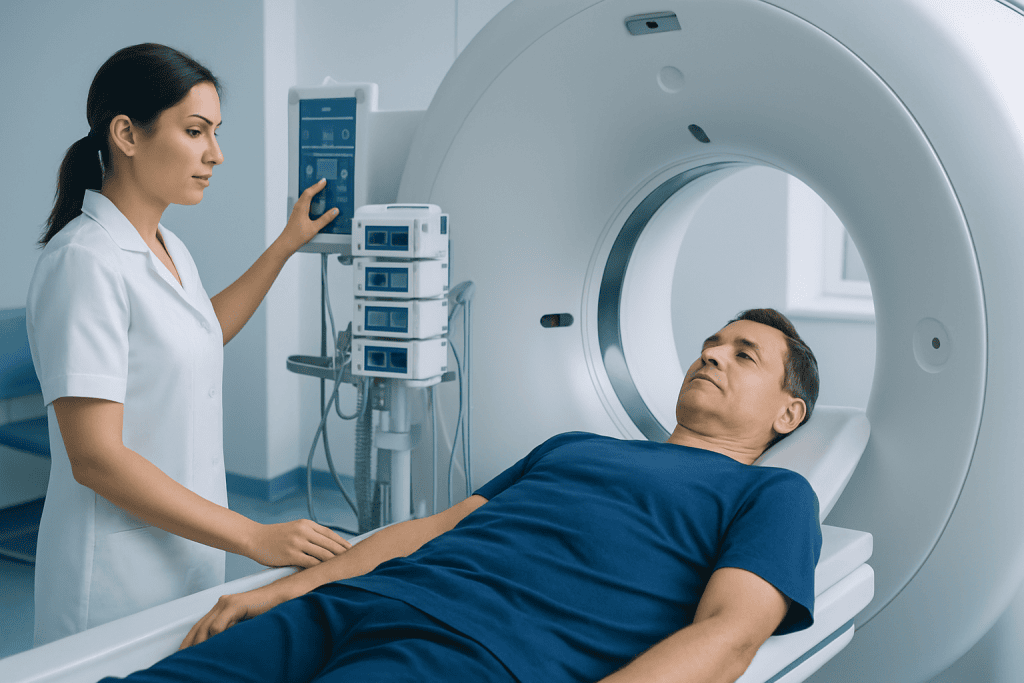
After the subtype is confirmed, staging commonly includes PET-CT or CT imaging and may include a bone marrow examination in selected cases. The specialist combines stage, symptoms, rate of growth, genetic features, general health and personal priorities to recommend a plan. This careful classification is important because treatment should match the lymphoma rather than its name alone.
- Indolent lymphoma: often grows slowly and may not require immediate treatment if it causes no problems.
- Aggressive lymphoma: usually requires timely therapy but can often respond well to curative-intent treatment.
- Relapsed or refractory lymphoma: has returned after treatment or has not responded adequately, and may need a different strategy.
Treatment planning: how lymphoma care works
For some indolent lymphomas, active surveillance, also called watchful waiting, is a safe and evidence-based option. It involves planned appointments, examinations, blood tests and scans when clinically indicated. It is not the same as doing nothing: treatment begins if symptoms develop, organs are affected, blood counts fall or the disease starts growing more quickly.
When treatment is needed, options may include immunotherapy with monoclonal antibodies, chemotherapy, targeted medicines, radiation therapy or combinations of these approaches. Limited-area disease may sometimes be treated with radiation therapy, while more widespread or aggressive disease often needs systemic treatment that travels through the bloodstream.
For lymphoma that returns or does not respond, the specialist may discuss a new drug combination, targeted therapy, antibody-drug conjugates, bispecific antibodies, CAR T-cell therapy, stem cell transplantation or a clinical trial. The most appropriate choice depends on the exact subtype, prior therapies, timing of relapse, overall fitness and treatment goals.
Care is multidisciplinary because treatment decisions may involve pathology review, imaging expertise, radiation planning, infection prevention, fertility counseling, nutrition, mental health support and rehabilitation. Acibadem International’s multidisciplinary specialists and JCI-accredited hospitals provide diagnosis and treatment planning for international patients with lymphoma.
What is the newest treatment for non-Hodgkin's lymphoma?
There is no single newest treatment that is best for every form of non-Hodgkin lymphoma. Recent advances include CAR T-cell therapy, bispecific antibodies and increasingly precise targeted medicines. These treatments use different mechanisms: some help immune cells recognize lymphoma, while others interfere with signals that lymphoma cells need to survive.
CAR T-cell therapy is a personalized cellular treatment used for certain lymphoma types, usually after other treatments have not provided a lasting response. T cells are collected from the person’s blood, modified in a specialized laboratory to recognize lymphoma cells, expanded, and then returned by infusion after preparative treatment. It requires assessment at an experienced center because close monitoring is needed for immune-related side effects.
Bispecific antibodies are medicines that bring a person’s T cells into contact with lymphoma cells. They are being used in selected settings and may be given in step-up doses to lower the risk of early immune reactions. New treatments continue to be evaluated in clinical trials, but “newest” does not necessarily mean safest or most suitable; the right option is determined through subtype-specific specialist advice.
Candidacy, treatment steps, recovery and possible risks
Candidacy for each treatment is individualized. A specialist considers the lymphoma subtype and stage, symptoms, prior treatment, heart, lung, kidney and liver function, infection risk, age, day-to-day functioning and a person’s preferences. Younger age alone is not the deciding factor; overall health and the expected balance of benefit and burden matter more.
Systemic treatment commonly begins with baseline testing, education about side effects and a schedule of outpatient infusions, injections or oral medication. Depending on the regimen, treatment may be given in cycles over several months. Radiation therapy generally involves planning scans followed by short daily treatments on weekdays for a defined period. The care team monitors response through symptoms, examinations, blood tests and imaging at appropriate intervals.
Recovery varies by treatment and by individual. Fatigue, temporary lowering of blood counts, nausea, infections, mouth soreness, neuropathy and changes in appetite can occur with some therapies. Radiation may cause temporary skin changes or fatigue, while location-specific effects depend on the treated area. Cellular therapies and transplantation can require a longer recovery and close follow-up.
Potential benefits include shrinking or eliminating lymphoma, relieving symptoms, extending remission and, for some aggressive lymphomas, cure. Risks are treatment-specific and can include infection, infusion reactions, effects on fertility, heart or nerve complications, and delayed effects. A specialist should explain expected benefits, alternatives, warning signs and the support available before treatment starts.
What is the survival rate for non-Hodgkin's lymphoma at 10 years?
A single 10-year survival figure cannot accurately describe all non-Hodgkin lymphomas. Outcomes differ substantially by subtype, stage, age, general health, molecular characteristics, response to initial therapy and access to appropriate treatment. Population statistics also describe groups of people treated in previous years; they cannot predict one person’s outcome.
Some indolent lymphomas may have long survival times but can relapse repeatedly and require treatment at intervals. Several aggressive lymphomas can be cured with first-line treatment, although some return and need further therapy. Newer treatments can also change outcomes over time, meaning older estimates may not fully reflect current practice.
A lymphoma specialist is the best person to place prognosis in context after reviewing the biopsy, staging information and response to treatment. It can be helpful to ask which prognostic tools apply to the exact subtype, what the goal of treatment is and how response will be measured.
Can you ever get rid of non-Hodgkin's lymphoma?
Yes, some forms of non-Hodgkin lymphoma can be cured, especially certain aggressive subtypes that respond fully to initial therapy. In this context, cure generally means there is no evidence of lymphoma after treatment and it does not return over a long period. Even after successful treatment, follow-up remains important.
Many indolent lymphomas are considered long-term, manageable conditions rather than routinely curable diseases. Treatment can produce deep remissions that last for years, and further treatment may be effective if the lymphoma returns. The language of cure, remission and disease control should be tailored to the exact diagnosis.
Regular follow-up allows the care team to assess recovery, manage late effects and investigate new symptoms without relying on unnecessary testing. People should not assume a new symptom means recurrence, but should report persistent changes so they can be assessed appropriately.
When to seek medical care
Medical evaluation is appropriate for a lymph node that remains enlarged for several weeks, grows over time, feels firm or is accompanied by unexplained fever, drenching night sweats, weight loss, marked fatigue, persistent itching or frequent infections. A clinician can assess common causes, including infections, and decide whether testing or referral is needed.
Prompt medical attention is important for severe shortness of breath, chest pain, facial or neck swelling, confusion, severe weakness, uncontrolled bleeding or a high fever during cancer treatment. These symptoms may have causes other than lymphoma, but they should not be managed by waiting at home.
During treatment, people should follow the care team’s instructions about fever, signs of infection, dehydration, new rashes, severe diarrhea, worsening pain or unexpected symptoms. Contacting the oncology team early can help address complications safely and may prevent treatment delays.
Frequently asked questions
When should someone see a non hodgkin's lymphoma specialist?
A referral is appropriate after a biopsy suggests lymphoma, when lymphoma is strongly suspected, or when a person has a confirmed diagnosis and wants subtype-specific treatment advice. Specialist review is also useful for uncommon lymphomas, relapse, uncertain pathology findings, or consideration of cellular therapy, transplantation or a clinical trial.
What is the best hospital in the US for lymphoma?
There is no single best hospital for every person with lymphoma. A suitable center has hematologist-oncologists experienced in the specific lymphoma subtype, expert hematopathology, access to modern treatments and coordinated supportive care. People may also consider location, insurance arrangements, clinical-trial access and whether a second opinion would be helpful.
Does every person with non-Hodgkin lymphoma need chemotherapy?
No. Some slow-growing lymphomas can be safely monitored until they cause symptoms or meet other criteria for treatment. Other cases may be treated with immunotherapy, targeted medicines, radiation therapy, chemotherapy combinations, cellular therapy or transplantation, depending on the subtype and clinical situation.
How long does non-Hodgkin lymphoma treatment take?
The duration depends on the diagnosis and treatment type. A course of systemic therapy may take several months, while radiation can take a shorter planned period; cellular therapy and transplantation involve additional preparation and follow-up. The specialist can provide a more individualized timeline after staging and treatment selection.
Is a biopsy always needed to diagnose non-Hodgkin lymphoma?
In most cases, yes. A biopsy provides tissue that allows specialists to identify the lymphoma subtype and perform tests that guide treatment. Imaging and blood tests are important, but they usually cannot replace tissue diagnosis.
Can non-Hodgkin lymphoma come back after remission?
It can recur, particularly with some indolent subtypes, but recurrence does not mean that no options remain. The next treatment depends on the lymphoma type, the length of remission, prior therapies and the person’s general health. Some people achieve another long remission with subsequent treatment.
References
- National Cancer Institute
- American Cancer Society
- National Comprehensive Cancer Network
- Leukemia & Lymphoma Society
- World Health Organization
This article is for general information only and is not a substitute for professional medical advice. Please consult a qualified doctor about your individual situation.
Lymphoma in Turkey — costs, top hospitals & a free quote
JCI-accredited · board-certified surgeons · reply within 24h
Add us as a Preferred Source to see more of our trusted health content across Google Search, AI Overviews and Discover.

Medical Oncology Department
Medical treatment of cancer with chemotherapy, immunotherapy and targeted therapies under a multidisciplinary tumor board.
60 specialists in this unit