Acoustic Neuroma Gamma Knife Recovery: A Week-by-Week Timeline

Gamma Knife radiosurgery delivers precisely focused radiation to control an acoustic neuroma without open brain surgery. Temporary tiredness, headache, scalp tenderness, nausea, or balance changes can occur during the first days after treatment.
Key Takeaways
- Gamma Knife radiosurgery delivers precisely focused radiation to control an acoustic neuroma without open brain surgery.
- Temporary tiredness, headache, scalp tenderness, nausea, or balance changes can occur during the first days after treatment.
- Most people resume light daily activities within one to several days, depending on symptoms and their care team’s advice.
- Tumor control is assessed with scheduled MRI scans; a tumor may remain stable or temporarily swell before shrinking.
- Hearing, balance, facial nerve function, and tumor size influence treatment selection and follow-up planning.
- New severe headache, persistent vomiting, sudden neurological changes, or worsening facial weakness need prompt medical assessment.
Acoustic neuroma Gamma Knife recovery is generally much shorter than recovery after open surgery because treatment does not involve an incision. Most people go home the same day and return to many usual activities within a few days, but MRI follow-up is needed over months and years because the tumor responds gradually.
Overview: what recovery after Gamma Knife involves
Acoustic neuroma Gamma Knife recovery usually means a short physical recovery followed by long-term imaging follow-up. Gamma Knife is a form of stereotactic radiosurgery: despite its name, it is not open surgery and does not use a blade. It directs many small beams of radiation at a defined target, aiming to stop or slow the growth of an acoustic neuroma, also called a vestibular schwannoma.
Most patients have treatment as an outpatient and return home on the same day. Some feel well enough to resume calm daily activities within 24 to 72 hours, while others need several days because of fatigue, headache, nausea, or temporary changes in balance. Recovery varies with the tumor’s size and location, symptoms before treatment, the treatment plan, and each person’s general health.
The important longer-term part of recovery is not wound healing but monitoring. Gamma Knife changes tumor cells gradually, so the result is evaluated with MRI scans and clinical examinations over time. The goal is usually durable tumor control while preserving neurological function as much as possible, rather than immediate removal of the tumor.
How Gamma Knife works and who may be a candidate
An acoustic neuroma is a usually noncancerous tumor arising from the vestibular nerve, which carries balance information from the inner ear to the brain. It may affect hearing, balance, facial sensation, or nearby nerves as it grows. For background on the condition, see acoustic neuroma information.
During Gamma Knife radiosurgery, imaging is used to map the tumor precisely. A radiation specialist then designs a plan that concentrates radiation within the tumor while limiting dose to surrounding structures such as the brainstem, cochlea, facial nerve, and trigeminal nerve. The radiation does not make a person radioactive afterward, and there is no surgical incision.
Gamma Knife may be considered for a small-to-medium acoustic neuroma, a tumor that has grown on serial imaging, residual tumor after microsurgery, or a tumor in someone for whom open surgery carries higher risk. It may also be an option when tumor control is preferred over removal. Larger tumors causing substantial pressure on the brainstem or fluid buildup may need another approach, often microsurgery, although decisions are individualized.
Assessment commonly includes MRI with contrast, hearing tests, balance and neurological assessment, review of prior scans, and discussion among neurosurgery, radiation oncology, neuroradiology, and neuro-otology specialists. The most suitable option may be observation with MRI, radiosurgery, microsurgery, or a planned combination of approaches.
What happens on Gamma Knife treatment day

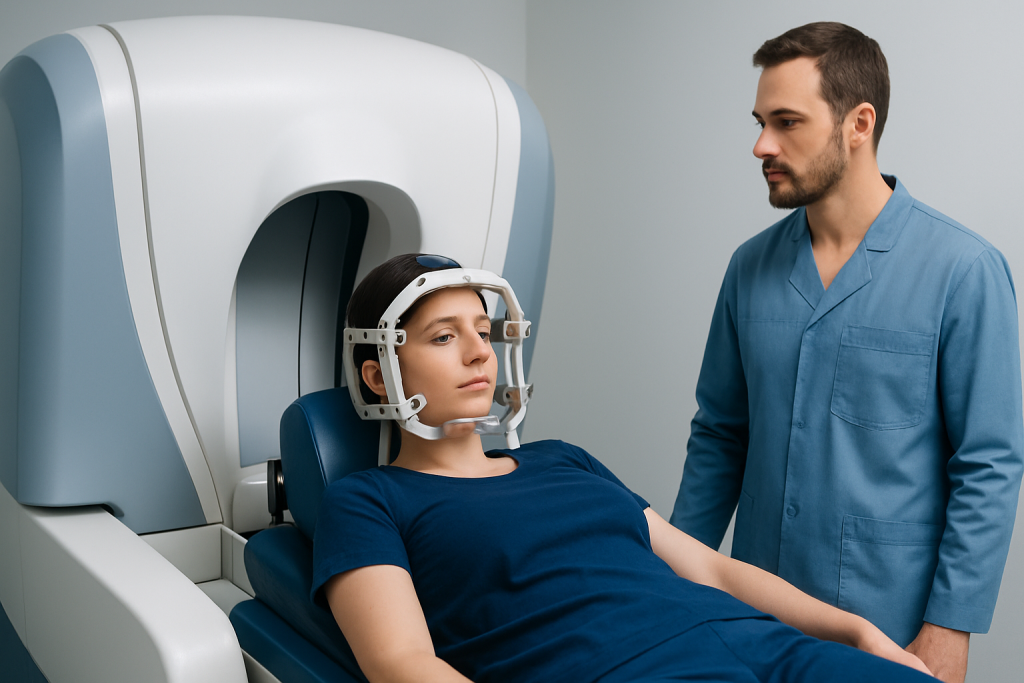
Before treatment, the care team confirms the plan, reviews medicines and allergies, and explains what to expect. Depending on the Gamma Knife system and center protocol, the head may be stabilized with a fitted frame or a custom mask. A frame is typically placed after numbing medicine is used on the scalp; it helps ensure highly accurate positioning.
MRI, CT, and sometimes angiographic or other images may be taken to define the tumor and nearby anatomy. The team uses these images to create a treatment plan. This planning stage can take time, and the overall visit is often longer than the radiation delivery itself.
During treatment, the patient lies on a treatment couch while the machine delivers radiation from multiple angles. The patient is awake, can communicate with the team, and should not feel the radiation. The treatment session may last from minutes to longer, depending on the plan and equipment.
Afterward, the frame or mask is removed and the patient is observed briefly. Mild pressure, tenderness, or small pinpoint scalp marks can occur after frame-based treatment. A responsible adult may be recommended to accompany the patient home, especially if sedation, anxiety medication, or medication for nausea was used. Gamma Knife radiosurgery is planned individually to match the tumor and the person’s clinical needs.
Acoustic neuroma Gamma Knife recovery: a practical timeline
Day of treatment to day 2: Many patients feel tired and may have a mild headache, scalp soreness, nausea, or a sense of imbalance. Rest, fluids, light meals, and medicines recommended by the clinical team can help. Driving, alcohol, strenuous activity, and important work decisions may be best postponed if tiredness, dizziness, or sedating medicines are present.
Days 3 to 7: Most people can gradually return to routine home activities and, if they feel well, desk-based work. Existing hearing loss, tinnitus, unsteadiness, or facial symptoms may not change immediately because Gamma Knife does not physically remove the tumor. Some people notice temporary fluctuation in symptoms, and the care team should be informed of symptoms that are new, significant, or worsening.
Weeks 2 to 6: Physical recovery is often largely complete. Patients can usually increase activity as tolerated, following individualized advice. If balance has been affected by the tumor or treatment, vestibular rehabilitation may be useful. Follow-up appointments review symptoms, medication needs, and the timing of future MRI scans.
Months to years: This is the phase when treatment effect is assessed. MRI scans are commonly scheduled at intervals chosen by the treating team. Early enlargement on imaging can sometimes reflect temporary treatment-related swelling rather than true growth, so specialists interpret scan changes alongside symptoms and earlier images. Long-term surveillance remains important even when the tumor appears stable.
How long does a Gamma Knife take to work?
Gamma Knife begins causing biological changes in the targeted tumor cells at the time of treatment, but its clinical effect is gradual. It is designed primarily to stop or slow further tumor growth, not to produce an immediate change in tumor size or symptoms. This means a person may not feel different soon after treatment, particularly if hearing loss or tinnitus was already present.
Doctors usually judge whether treatment is working through MRI findings over follow-up and by monitoring hearing, balance, facial nerve function, and other symptoms. A stable tumor can be considered a successful outcome because the purpose of radiosurgery is often control rather than complete disappearance.
Symptoms may improve, remain similar, or occasionally fluctuate. Hearing preservation is an important consideration, but hearing can decline over time from the tumor itself, age-related changes, or treatment-related effects. The treating team can explain realistic goals based on tumor size, hearing level before treatment, and imaging features.
How long does it take for a tumor to shrink after a Gamma Knife?
An acoustic neuroma may take many months or longer to shrink after Gamma Knife treatment. Some tumors never shrink substantially but remain the same size, which can still indicate successful control. MRI follow-up is therefore more informative than judging success by immediate symptom changes.
In the first months after radiosurgery, a tumor can appear temporarily larger because of inflammation, internal tissue changes, or swelling. This phenomenon is sometimes called transient enlargement or pseudoprogression. It does not automatically mean that treatment has failed, but it needs careful review by clinicians experienced in acoustic neuroma imaging.
Serial scans provide the clearest picture. The specialist compares each MRI with baseline and previous images, rather than relying on one scan alone. If there is sustained growth, troublesome swelling, or new pressure on nearby structures, the multidisciplinary team may discuss continued observation, medicines for swelling in selected cases, or further treatment.
Benefits, risks, and possible side effects
A key potential benefit of Gamma Knife is tumor control without an incision, general anesthesia, or the recovery period associated with craniotomy. It is typically delivered in one session and may help reduce the need for open surgery. For carefully selected patients, it can offer a balance between controlling growth and protecting nearby nerves and brain structures.
Short-term effects can include fatigue, headache, nausea, scalp tenderness, or mild temporary swelling. Some patients have a short-term increase in dizziness, imbalance, ringing in the ear, or ear fullness. These symptoms should be discussed with the care team, especially if they interfere with eating, walking, work, or sleep.
Less common but important longer-term risks include worsening hearing, persistent balance problems, facial numbness or weakness, trigeminal nerve symptoms, and treatment-related swelling. Serious complications are uncommon but possible. The exact risk profile depends on tumor size, distance from sensitive structures, radiation dose, previous treatments, and pre-existing symptoms.
Before choosing treatment, patients should ask how Gamma Knife compares with observation or microsurgery in their situation. A shared decision should include the likely aim of care, possible effects on hearing and balance, follow-up requirements, and what options remain available if the tumor changes later.
Can an acoustic neuroma grow back after radiation?
After Gamma Knife, an acoustic neuroma can show later growth or persistent growth, although many treated tumors remain controlled long term. Because Gamma Knife does not remove the tumor, doctors usually describe the goal as local tumor control rather than a permanent cure confirmed immediately after treatment.
A change on an early MRI does not always mean the tumor has grown back. Temporary swelling can occur after radiation, so the team looks for patterns across multiple scans and considers symptoms. Continued MRI surveillance is important even when a tumor is stable and the person feels well.
If sustained growth is confirmed, management depends on the tumor’s size, symptoms, prior radiation exposure, hearing status, and overall health. Options may include further observation in selected circumstances, repeat radiosurgery for carefully chosen cases, or microsurgery. The treating specialists can explain the benefits and limitations of each option.
When to seek medical care
Patients should contact their treatment team promptly if headache, nausea, dizziness, balance difficulty, hearing change, facial numbness, or facial weakness is new or clearly worsening after Gamma Knife. The team can advise whether symptoms are expected, whether medication or earlier review is needed, and whether urgent imaging should be arranged.
Urgent medical assessment is appropriate for a sudden severe headache, repeated vomiting, confusion, fainting, new difficulty speaking, new weakness in an arm or leg, severe trouble walking, seizures, or rapidly worsening facial weakness. These symptoms are not specific to Gamma Knife but should be assessed without delay.
Regular follow-up should not be skipped even if recovery is smooth. Acibadem International’s multidisciplinary specialists in neurosurgery, radiation oncology, and neuro-otology support diagnosis, radiosurgery planning, and follow-up for international patients at JCI-accredited hospitals.
Frequently asked questions
How long does it take to recover from gamma knife surgery?
Physical recovery after Gamma Knife is often brief because there is no incision or open surgery. Many people return to light daily activities within one to several days, though fatigue, headache, nausea, or temporary balance symptoms may take longer to settle. The longer recovery process is follow-up with MRI scans to assess tumor control.
Will I lose my hair after Gamma Knife for an acoustic neuroma?
Hair loss is not typical with Gamma Knife treatment for an acoustic neuroma because radiation is focused on a small internal target. In frame-based treatment, small areas of scalp tenderness or tiny marks can occur where the frame was secured. The treating team can explain any skin or scalp effects expected from the individual treatment plan.
Can I drive after Gamma Knife radiosurgery?
Driving should be avoided on the day of treatment if sedating medication was used or if the person has fatigue, dizziness, headache, or balance difficulty. Many patients can drive again when they feel alert and steady, but the timing should follow the care team’s specific advice. A companion is often helpful for the trip home.
Does Gamma Knife improve hearing from an acoustic neuroma?
Gamma Knife is mainly intended to control tumor growth, so it does not reliably restore hearing that has already been lost. Hearing may remain stable in some people, while others may experience gradual decline over time. Baseline hearing, tumor features, and the radiation plan all affect the outlook.
How often are MRI scans needed after Gamma Knife?
MRI follow-up schedules vary by treatment center and individual circumstances. Scans are commonly performed at planned intervals during the first few years and then less often if the tumor remains stable. The specialist may recommend earlier imaging if symptoms change or if a scan requires closer review.
Is temporary tumor swelling after Gamma Knife normal?
A tumor can temporarily appear larger on MRI after radiosurgery because of treatment-related changes and swelling. This does not necessarily mean that the treatment has failed. Specialists assess the trend across serial scans and consider symptoms before deciding whether any action is needed.
References
- National Institute of Neurological Disorders and Stroke
- American Association of Neurological Surgeons
- Congress of Neurological Surgeons
- Radiological Society of North America
- Mayo Clinic
This article is for general information only and is not a substitute for professional medical advice. Please consult a qualified doctor about your individual situation.
Gamma Knife in Turkey — costs, top hospitals & a free quote
JCI-accredited · board-certified surgeons · reply within 24h
Add us as a Preferred Source to see more of our trusted health content across Google Search, AI Overviews and Discover.

Neurology
Diagnosis and treatment of disorders of the brain, spinal cord, nerves and muscles.
51 specialists in this unitMore from the Health Library



Related Specialists

Prof. Dr. Bülent Karabulut
Medical Oncology
Dr. Semra Pehlivan
Acibadem Life Clinical Service
Dr. Ayhan Ulusoy
Orthopedic Surgery & Traumatology
Dr. Ertuğrul Yaltı
General Surgery