Inversion Therapy Contraindications Hypertension Glaucoma: How It Works, Results and What to Expect

Being upside down can raise intraocular pressure, making inversion therapy unsuitable for many people with glaucoma. Inversion may also increase blood pressure and place extra strain on the heart and blood vessels.
Key Takeaways
- Being upside down can raise intraocular pressure, making inversion therapy unsuitable for many people with glaucoma.
- Inversion may also increase blood pressure and place extra strain on the heart and blood vessels.
- Any possible relief of back discomfort is usually temporary, and evidence for long-term benefit is limited.
- A clinician should assess eye disease, blood pressure, heart health, balance, and medications before inversion therapy is considered.
- Sudden eye pain, vision changes, chest symptoms, severe headache, or fainting require prompt medical assessment.
Inversion therapy can temporarily increase pressure in the eyes, head, and circulation, so people with glaucoma, uncontrolled hypertension, certain heart conditions, or retinal disease should generally avoid it unless a doctor specifically advises otherwise. Although some people use inversion tables for short-term back discomfort, they are not a treatment for glaucoma or high blood pressure and should be approached cautiously.
Overview: Why Hypertension and Glaucoma Matter
Inversion therapy involves positioning the body with the head lower than the heart, usually on an inversion table that tilts backward. It is often promoted for stretching the spine or easing back tension. However, the change in body position can temporarily alter pressure within the eyes, head, chest, and blood vessels.
For this reason, inversion therapy contraindications hypertension glaucoma are important to understand before using a table or similar device. People with glaucoma, elevated eye pressure, poorly controlled blood pressure, cardiovascular disease, retinal conditions, or a history of stroke may face greater risk than benefit. A short period of inversion is not automatically safe simply because it feels comfortable.
Back pain has many possible causes, and a proper assessment can help guide safer care. Persistent or severe symptoms may need evaluation for conditions affecting the back and spine, rather than relying on home inversion alone.
How Inversion Therapy Works and What Results to Expect
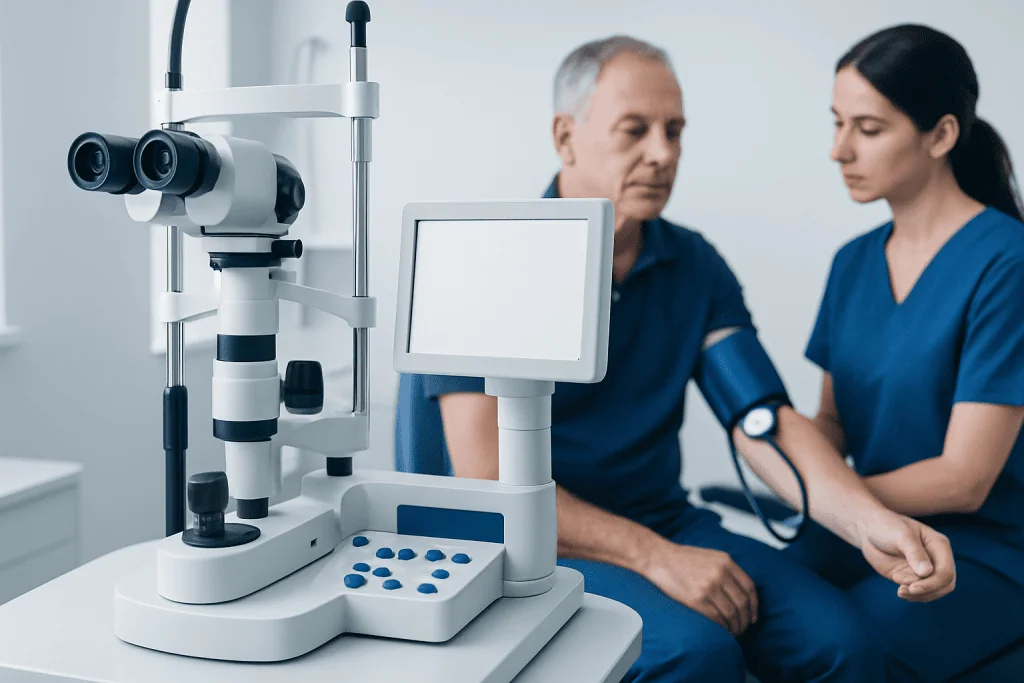
When a person is tilted head-down, gravity changes the distribution of blood and fluid in the body. This position may create a temporary sense of spinal traction or decompression, and some people report reduced muscle tightness or short-lived relief of low back discomfort. The effect is thought to come partly from stretching surrounding tissues and reducing load on the spine while lying supported.
Research does not show that inversion tables reliably provide lasting improvement for most forms of back pain. They do not correct every spinal problem, reverse disc degeneration, or replace a medical evaluation, exercise program, rehabilitation plan, or recommended treatment. People should be cautious about claims that inversion can permanently “realign” the spine or cure chronic pain.
For selected people without relevant medical risks, gentle stretches, structured strengthening, posture changes, and physical therapy may offer safer, more sustainable approaches to movement-related back symptoms. The appropriate approach depends on the diagnosis, symptom pattern, and overall health.
Who Should Avoid Inversion Therapy?

People with glaucoma should generally avoid inversion therapy unless their ophthalmologist gives specific advice. Head-down positioning can rapidly increase intraocular pressure, the pressure inside the eye. In glaucoma, pressure-related stress can contribute to optic nerve damage, and vision loss from this damage cannot usually be restored.
People with hypertension should also seek medical advice before considering inversion, particularly if blood pressure is uncontrolled or if they have coronary artery disease, heart failure, heart rhythm problems, vascular disease, or previous stroke or transient ischemic attack. Inversion can increase blood pressure and may provoke symptoms in susceptible individuals.
Other reasons to avoid or postpone inversion therapy include retinal detachment or other retinal disease, recent eye surgery, severe reflux disease, hiatal hernia, osteoporosis with fracture risk, spinal instability, recent surgery, pregnancy, seizure disorders, inner-ear or balance conditions, and conditions that increase bleeding risk. Medication effects, especially blood pressure medicines, anticoagulants, and drugs that cause dizziness, should also be reviewed by a clinician.
- Do not use inversion therapy to manage glaucoma or high blood pressure.
- Do not begin without medical clearance if there is known eye, heart, brain, or vascular disease.
- Stop immediately if dizziness, nausea, eye pressure, headache, chest discomfort, palpitations, or visual symptoms occur.
What Happens During an Inversion Table Session?
An inversion table typically has a padded board, ankle supports, handles, and a mechanism that allows the user to control the degree of tilt. The person lies on the board, secures the ankles according to the manufacturer’s instructions, and gradually leans backward. The body position changes in response to weight distribution and the selected angle.
If a clinician has confirmed that inversion is appropriate, it should begin at a modest angle rather than full inversion. A first session should be brief, ideally with another adult nearby, and should not be attempted after alcohol, sedating medication, or a heavy meal. The person should return upright slowly and remain standing only after any light-headedness has passed.
There is no universal recovery timeline because inversion is not a medical procedure. Some people may feel a temporary stretch or reduced stiffness immediately afterward, while others experience headache, dizziness, reflux, or worsened pain. Symptoms that persist, recur, or worsen should be assessed rather than managed by increasing the angle or duration.
Benefits, Risks, and Safer Alternatives
The potential benefit of inversion therapy is temporary symptom relief for some people with uncomplicated mechanical back discomfort. It may be experienced as a gentle stretch, but this response varies. Evidence does not establish inversion as a long-term solution for chronic back pain, sciatica, disc disease, or spinal narrowing, and it should not delay appropriate care.
The main safety concern is the rise in pressure within the eyes and circulation during a head-down position. Other possible problems include falls while mounting or dismounting the table, ankle discomfort, muscle strain, dizziness, headaches, reflux, and worsening of existing medical conditions. The greater the angle and the longer the position is maintained, the more relevant these concerns may become.
Safer options may include guided mobility work, core and hip strengthening, walking within tolerance, ergonomic adjustments, heat or cold when appropriate, and clinician-directed rehabilitation. For pain that radiates into a leg, causes weakness, or does not improve, an assessment may identify whether spine surgery or another specialist treatment is relevant; surgery is not routinely needed for most back pain.
Are Inversion Tables Bad for People With Glaucoma?
Inversion tables are generally not recommended for people with glaucoma because head-down positioning can increase intraocular pressure. This increase may occur within minutes and can be significant, particularly at steeper angles. Since glaucoma involves damage to the optic nerve, avoiding avoidable pressure elevation is an important precaution.
Glaucoma includes several conditions, and the level of individual risk depends on the type and severity of disease, current eye pressure, optic nerve findings, previous procedures, and prescribed treatment. Even if glaucoma is stable or treated with eye drops, a person should not assume inversion is safe. Their ophthalmologist can provide advice tailored to their eye health.
People with glaucoma who want to stay active can usually discuss alternatives such as walking, supervised strength training, and non-head-down stretching. Regular eye examinations and adherence to the care plan remain central to protecting vision.
What Is the New Glaucoma Treatment for 2026?
There is no single “new glaucoma treatment for 2026” that is suitable for everyone. Glaucoma care continues to develop through improved eye-drop formulations, sustained-release drug delivery options for selected patients, laser procedures, minimally invasive glaucoma surgery, and more individualized treatment planning. Availability and suitability differ by country, glaucoma type, eye anatomy, and disease stage.
The established goal of treatment remains lowering intraocular pressure enough to protect the optic nerve and preserve remaining vision. This may involve prescription eye drops, laser treatment such as selective laser trabeculoplasty for suitable open-angle glaucoma, or surgery when pressure remains above the person’s target despite other measures.
A person considering new treatment should ask an ophthalmologist about the expected pressure reduction, possible side effects, follow-up needs, and whether the approach is appropriate for their type of glaucoma. Newer does not always mean better for every individual; reliable monitoring is essential.
Does High Eye Pressure Ever Go Away?
High eye pressure, also called elevated intraocular pressure, can sometimes decrease with treatment or after a temporary cause resolves. However, it often requires ongoing monitoring because pressure may rise again without noticeable symptoms. Not everyone with high eye pressure develops glaucoma, but it can increase the risk of optic nerve damage.
Prescription eye drops, laser treatment, and surgical procedures can lower eye pressure. The best option depends on the cause of the pressure rise, the appearance of the optic nerve, visual field testing, corneal thickness, and other individual factors. Treatment plans are adjusted over time based on measured pressure and evidence of disease stability or progression.
High eye pressure cannot be reliably judged by how the eyes feel. Routine eye examinations are important, especially for people with a family history of glaucoma, diabetes, high short-sightedness, prior eye injury, or long-term steroid use.
What Is the Most Commonly Used Inverse Glaucoma Drug?
The phrase “inverse glaucoma drug” is not a standard medical term. If it refers to the most commonly used medication that lowers eye pressure, prostaglandin analogue eye drops are often used as a first-line option for open-angle glaucoma and ocular hypertension. They help improve fluid drainage from the eye and are commonly prescribed once daily, depending on the specific medicine and clinician’s instructions.
Other categories of glaucoma medication include beta-blockers, alpha agonists, carbonic anhydrase inhibitors, and combination drops. The right medicine depends on the glaucoma type, eye pressure target, medical history, other medicines, breathing or heart conditions, pregnancy considerations, and possible side effects.
Glaucoma drops should only be used as prescribed. A person should not stop, share, or change eye medication because their vision seems unchanged, as glaucoma often progresses without early warning symptoms.
When to Seek Medical Care
Prompt medical attention is needed for sudden eye pain, red eye with blurred vision, halos around lights, severe headache, nausea or vomiting, or sudden loss of vision. These symptoms can have several causes, including acute eye-pressure problems, and should not be managed with inversion therapy or home measures.
Urgent assessment is also important for chest pain, shortness of breath, fainting, a new irregular heartbeat, severe headache, weakness on one side of the body, trouble speaking, or new balance problems during or after inversion. People with ongoing back pain should arrange a medical review if pain follows significant trauma, is accompanied by fever or unexplained weight loss, or causes new leg weakness, numbness around the groin, or bladder or bowel changes.
Acibadem International’s multidisciplinary specialists and JCI-accredited hospitals assess eye conditions, cardiovascular risks, and spine symptoms for international patients. A clinician can help determine whether inversion therapy is unsuitable and identify safer treatment or rehabilitation options.
Frequently asked questions
Can a person with controlled hypertension use an inversion table?
Controlled hypertension does not automatically make inversion therapy safe. Being head-down may still raise blood pressure and affect circulation, especially in people with heart or vascular disease. A doctor who knows the person’s blood pressure history and medications should advise before use.
Can inversion therapy cause glaucoma?
Inversion therapy is not known to directly cause glaucoma in a healthy eye. However, it can temporarily raise intraocular pressure, which may be harmful for people who already have glaucoma, ocular hypertension, or other optic nerve risk factors. It is therefore not recommended without ophthalmology advice when these conditions are present.
How long should someone stay inverted?
There is no universally safe duration because suitability depends on health conditions and the angle used. Anyone with glaucoma, high blood pressure, heart disease, retinal disease, dizziness, or balance problems should not decide this independently. If a clinician has approved inversion, starting gently and briefly is generally safer than full or prolonged inversion.
Can inversion therapy lower eye pressure?
No. Inversion therapy tends to increase, not lower, intraocular pressure while a person is head-down. It should never be used as a treatment for glaucoma or ocular hypertension. Eye pressure should be managed through ophthalmologist-guided monitoring and treatment.
What should a person do if they feel eye pressure or dizziness while inverted?
They should return upright slowly, stop the session, and avoid further inversion until they have received medical advice. Eye pain, blurred vision, severe headache, nausea, chest symptoms, or fainting require prompt assessment. Sudden vision loss or severe eye pain should be treated as urgent.
What are safer ways to manage chronic back discomfort?
Many people benefit from an individualized combination of activity, progressive exercise, flexibility work, strengthening, sleep and ergonomic adjustments, and physical therapy. The best plan depends on the cause of pain and any neurological symptoms. A clinician should evaluate persistent pain, pain spreading to the leg, weakness, or numbness.
References
- American Academy of Ophthalmology
- Glaucoma Research Foundation
- American Heart Association
- National Institute of Neurological Disorders and Stroke
- Mayo Clinic
This article is for general information only and is not a substitute for professional medical advice. Please consult a qualified doctor about your individual situation.
Hypertension in Turkey — costs, top hospitals & a free quote
JCI-accredited · board-certified surgeons · reply within 24h
Add us as a Preferred Source to see more of our trusted health content across Google Search, AI Overviews and Discover.
Check your numbers in seconds
BMI, calories, due date, blood pressure and 30+ more clinical calculators — free, instant, doctor-reviewed ranges.

Ophthalmology
Comprehensive eye care from laser vision correction to retina, cornea and cataract surgery.
75 specialists in this unitMore from the Health Library



Related Specialists

Dt. Ayşe Selçuk Bayram
Oral & Dental Health
Dt. Alara Naz Kenir
Oral & Dental Health
Assoc. Prof. Dr. Ali Titiz
Otorhinolaryngology
Dr. Meltem Hüner
Infectious Diseases & Clinical Microbiology