Minimally Invasive Prostate Cancer Treatment: How It Works, Results and What to Expect

Robot-assisted and laparoscopic radical prostatectomy are minimally invasive operations used to remove the prostate for selected localized prostate cancers. Treatment choice is individualized; there is no single best treatment for every person with prostate cancer.
Key Takeaways
- Robot-assisted and laparoscopic radical prostatectomy are minimally invasive operations used to remove the prostate for selected localized prostate cancers.
- Treatment choice is individualized; there is no single best treatment for every person with prostate cancer.
- Recovery commonly includes a short hospital stay, temporary catheter use, gradual return to activity, and follow-up PSA testing.
- Urinary leakage and erectile difficulties can occur after surgery, but rehabilitation and time can support recovery.
- Active surveillance, radiation therapy, focal therapy, and systemic treatments may be more suitable than surgery for some people.
Minimally invasive prostate cancer treatment can include robot-assisted or laparoscopic removal of the prostate and, in selected cases, focused treatments that target cancer while limiting effects on nearby tissues. The most appropriate approach depends on the cancer’s stage and grade, PSA level, imaging findings, general health, and the person’s priorities for cancer control, urinary function, and sexual health.
Overview: How Minimally Invasive Prostate Cancer Treatment Works
Minimally invasive prostate cancer treatment refers most often to surgery performed through several small abdominal incisions rather than one large incision. In a radical prostatectomy, the surgeon removes the prostate gland, usually together with the seminal vesicles, and may remove nearby lymph nodes when there is a meaningful risk that cancer has spread. The procedure can be performed laparoscopically or with robotic assistance, in which the surgeon controls precise instruments from a console.
For many people with cancer confined to the prostate, surgery is one potentially curative option. A minimally invasive approach aims to provide the same cancer-removing operation as open surgery while generally reducing incision size, blood loss, and early postoperative discomfort. It does not mean the procedure is minor: it remains major cancer surgery, and outcomes depend on cancer features, surgical expertise, and individual health.
Minimally invasive care can also describe selected focal treatments that destroy a known area of prostate cancer with energy such as ultrasound or freezing. These techniques are not appropriate for every cancer, because prostate tumors can be multifocal and may not always be fully visible on imaging. A urology and oncology team can explain whether surgery, radiation, active surveillance, focal treatment, or another plan is most appropriate.
Who May Be a Candidate?
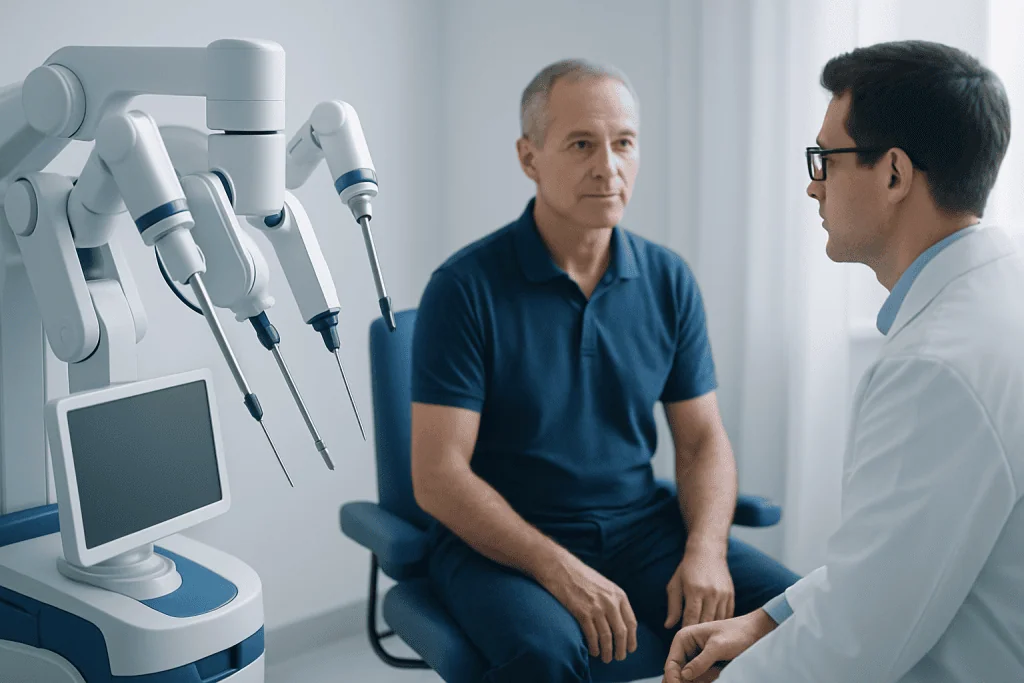
Minimally invasive prostatectomy is commonly considered for people with localized prostate cancer and sufficient overall health for anesthesia and surgery. It may also be considered for carefully selected locally advanced cancers as part of a broader treatment plan. Age alone does not determine candidacy; physical fitness, other medical conditions, life expectancy, cancer risk category, and personal treatment goals all matter.
Before recommending treatment, clinicians review the PSA blood test trend, digital rectal examination, prostate biopsy results, MRI findings, and, when needed, advanced imaging to assess whether cancer may have spread beyond the prostate. The biopsy Grade Group or Gleason score helps estimate how likely the cancer is to grow or spread. These findings guide discussions about the balance between likely benefit and treatment side effects.
Some low-risk cancers may be monitored safely with active surveillance rather than treated immediately. Conversely, people with cancer that has already spread to distant organs usually need systemic treatment, often alongside other therapies, rather than prostate surgery alone. People with significant heart, lung, bleeding, or anesthesia risks may need additional assessment or may be better served by a nonsurgical option.
- Potential candidates usually have cancer thought to be contained within or near the prostate.
- Baseline urinary and sexual function should be discussed before treatment, as they affect recovery expectations.
- Previous pelvic surgery, radiation, or severe obesity can make surgery more complex but do not automatically rule it out.
The Procedure: Step by Step

Preparation begins with a preoperative review, which may include blood tests, anesthesia assessment, medication planning, and instructions about eating, drinking, and bowel preparation if needed. Medicines that affect bleeding should only be stopped or adjusted under guidance from the prescribing clinician and surgical team. The operation is performed under general anesthesia.
During robot-assisted or laparoscopic surgery, the surgeon makes several small incisions in the lower abdomen and inserts a camera and specialized instruments. The prostate and seminal vesicles are carefully separated from the bladder, urethra, nerves, and muscles involved in urinary control. When it is safe from a cancer-control standpoint, the surgeon may use nerve-sparing techniques to help preserve erectile function.
After the prostate is removed, the bladder is reconnected to the urethra. A urinary catheter is placed to protect this connection while it heals. Lymph nodes may be removed for testing if indicated by the cancer’s risk profile. The removed tissue is examined by a pathologist, whose report provides important information about the final stage, surgical margins, and whether additional treatment or closer monitoring may be needed.
People considering surgery can discuss robotic prostatectomy with a urologic surgeon, including how the approach applies to their specific biopsy and imaging findings. The most suitable technique is the one that can safely achieve the planned cancer treatment while respecting the person’s overall circumstances and preferences.
Benefits, Risks and Expected Results
The main goal of radical prostatectomy is complete removal of clinically significant cancer that is localized to the prostate or nearby tissues. For appropriately selected patients, surgery can offer long-term cancer control. It also provides detailed pathology information that can clarify the true extent and aggressiveness of the disease, helping the team plan follow-up care.
Compared with open surgery, minimally invasive techniques often involve smaller incisions and may support earlier mobility and shorter hospitalization. However, cancer outcomes and functional recovery should not be judged by incision size alone. The surgeon’s experience, the quality of preoperative assessment, and careful follow-up are important parts of care.
Potential risks include bleeding, infection, blood clots, injury to nearby organs, anesthesia complications, narrowing at the bladder-urethra connection, and the need for further treatment if PSA later rises. The two most important longer-term quality-of-life concerns are urinary incontinence and erectile dysfunction. Their likelihood and duration vary according to age, baseline function, nerve-sparing feasibility, cancer extent, and individual healing.
After successful prostate removal, PSA should fall to a very low or undetectable level. Regular PSA testing is used to monitor recovery and identify a possible biochemical recurrence early. A detectable or rising PSA does not automatically mean widespread cancer, but it should be assessed promptly by the treating team because additional radiation, hormone therapy, or other care may sometimes be recommended.
Recovery Timeline and Daily Life After Surgery
Most patients begin walking soon after surgery to support circulation and bowel function. The length of hospital stay varies by the procedure, medical needs, and recovery progress, but many people go home within a short period. Tiredness, abdominal soreness, bruising around incisions, constipation, and temporary discomfort from the catheter can occur during the first days.
The catheter generally remains in place for a period determined by the surgeon while the connection between the bladder and urethra heals. Patients receive instructions on catheter care, hydration, wound care, showering, activity limits, driving, and warning signs. Heavy lifting, strenuous exercise, and sexual activity are usually postponed until the team confirms it is safe to resume them.
Urinary control typically improves gradually over weeks to months. Pelvic-floor muscle exercises, ideally learned before surgery and continued afterward as advised, can help many patients regain control. Sexual recovery may take longer and can continue to improve over months or longer; options such as oral medicines, vacuum devices, injections, or other penile rehabilitation strategies may be discussed when appropriate.
Support from a partner, family member, continence specialist, sexual-health clinician, and cancer nurse can make recovery more manageable. Acibadem International’s multidisciplinary specialists and JCI-accredited hospitals diagnose and treat prostate cancer for international patients, coordinating urology, oncology, imaging, pathology, rehabilitation, and follow-up where needed.
What Is the Most Successful Treatment for Prostate Cancer?
There is no single most successful treatment for every person with prostate cancer. Success means different things depending on the situation: curing a localized cancer, controlling a higher-risk cancer, slowing advanced disease, preserving urinary and sexual function, or maintaining quality of life. The best plan is based on cancer stage, Grade Group, PSA, imaging, health status, and the person’s values.
For localized cancer, active surveillance, surgery, and radiation therapy can all be appropriate options, depending on risk level. Active surveillance may avoid or delay treatment side effects for low-risk cancers while using regular PSA tests, imaging, and sometimes repeat biopsy to watch for change. Surgery or radiation is more often recommended when cancer is clinically significant or more likely to progress.
For advanced prostate cancer, treatment may include hormone therapy, chemotherapy, targeted medicines, radiopharmaceuticals, or radiation directed at particular sites, often in combination. A multidisciplinary discussion helps ensure that the chosen plan addresses both cancer control and the person’s day-to-day wellbeing.
What Is the 2 Week Rule for Prostate Cancer?
The “2 week rule” is not a universal medical rule stating that prostate cancer must be treated within two weeks. In some healthcare systems, it refers to an urgent referral pathway designed to help people with concerning symptoms, examination findings, or test results see a specialist promptly, often within about two weeks. It is a pathway for assessment, not a deadline for starting surgery.
Most prostate cancers develop slowly enough that there is time for careful testing, review of pathology, imaging when needed, and an informed conversation about options. At the same time, a new concerning finding should not be ignored. Timely urology assessment is important, especially with a very high or rapidly rising PSA, abnormal examination, persistent bone pain, unexplained weight loss, or symptoms suggesting urinary blockage.
People who have already received a prostate cancer diagnosis should ask their clinical team how urgently treatment is needed in their individual case. Higher-grade, higher-stage, or symptomatic cancers may require more prompt planning than low-risk cancers being managed with active surveillance.
Do Men Have to Wear Diapers After Prostate Surgery?
Some men have temporary urine leakage after prostate surgery and may choose absorbent pads or protective underwear during recovery. This is common because the urinary control system needs time to adapt after the prostate is removed. The amount of leakage varies widely: some people regain control quickly, while others need more time and support.
Most patients do not need long-term “diapers,” and the preferred products are usually discreet continence pads or protective underwear selected for the level of leakage. Pelvic-floor exercises, bladder habits, maintaining a healthy weight, and follow-up with a continence specialist can help. Persistent leakage should be discussed with the urologist because additional non-surgical and surgical treatments may be available.
It is helpful to plan ahead by bringing pads to the catheter-removal appointment and arranging practical support at home if needed. Continence recovery should be assessed over time rather than judged by the first days after catheter removal.
What Is the Best Minimally Invasive Prostate Surgery?
Robot-assisted radical prostatectomy is a widely used minimally invasive prostate operation for localized prostate cancer. It provides the surgeon with magnified three-dimensional visualization and instruments designed for precise movement. Conventional laparoscopic radical prostatectomy is another minimally invasive option and can also be effective in experienced hands.
The best operation is not automatically the newest technology or the procedure with the smallest incisions. It is the approach that is appropriate for the individual cancer, performed by a suitably trained team, with a clear plan for nerve preservation when safe, lymph-node assessment when indicated, complication prevention, and long-term PSA follow-up.
Patients can ask their surgeon about expected cancer control, complication rates, recovery support, experience with the proposed technique, and how baseline urinary and sexual function may affect outcomes. A second opinion may be helpful when treatment choices are complex or when a person would like additional confidence in their decision.
When to Seek Medical Care
A person should arrange medical assessment for persistent urinary changes, such as difficulty starting urination, a weak stream, frequent urination, blood in urine or semen, or new pelvic discomfort. These symptoms are often caused by noncancerous conditions, including benign prostate enlargement or infection, but they still deserve evaluation. Early assessment can clarify the cause and guide appropriate care.
Urgent medical attention is needed for inability to pass urine, heavy bleeding in the urine, fever with urinary symptoms, severe pain, new leg weakness, or loss of bowel or bladder control. These symptoms can have several causes and should be assessed without delay.
After prostate surgery, patients should contact their surgical team promptly for fever, worsening pain, redness or drainage from incisions, chest pain, shortness of breath, leg swelling, inability to manage the catheter, very heavy bleeding, or a sudden reduction in urine drainage. Clear postoperative instructions and scheduled follow-up are important parts of safe recovery.
Frequently asked questions
Is minimally invasive prostate cancer treatment a cure?
For selected people with localized prostate cancer, surgery or other definitive treatment may be intended to cure the disease. Whether cure is likely depends on the cancer’s stage, grade, PSA level, and pathology findings. Ongoing PSA monitoring is still necessary after treatment.
How long does robotic prostate cancer surgery take?
Operating time varies with anatomy, cancer extent, whether lymph nodes are removed, and the surgical approach. The care team can provide a more individualized estimate before surgery. Time in the operating room also includes anesthesia preparation and recovery-room care.
How painful is recovery from minimally invasive prostate surgery?
Pain is usually managed with a planned combination of medications and activity guidance. Small incisions may reduce wound discomfort compared with open surgery, but patients can still experience abdominal soreness, fatigue, and catheter-related discomfort. Pain that is severe, worsening, or accompanied by fever should be reported to the clinical team.
Can erectile function return after prostate surgery?
Erectile function can recover after surgery, particularly when nerve-sparing surgery is possible and erectile function was good before treatment. Recovery is variable and may take many months or longer. Sexual-health rehabilitation options can be discussed with the urologist.
Will prostate cancer return after surgery?
Some cancers can recur after surgery, which is why PSA testing is performed regularly. A rising PSA requires assessment but does not by itself describe where cancer is located or what treatment will be needed. Effective additional treatments may be available depending on the situation.
Can minimally invasive surgery be used if prostate cancer has spread?
Surgery is usually not the main treatment for cancer that has spread to distant parts of the body. Treatment commonly focuses on systemic therapies, with radiation or surgery used in selected circumstances. Decisions should be made with a multidisciplinary cancer team.
References
- National Cancer Institute
- American Cancer Society
- European Association of Urology
- American Urological Association
- National Comprehensive Cancer Network
This article is for general information only and is not a substitute for professional medical advice. Please consult a qualified doctor about your individual situation.
Minimally Invasive in Turkey — costs, top hospitals & a free quote
JCI-accredited · board-certified surgeons · reply within 24h
Add us as a Preferred Source to see more of our trusted health content across Google Search, AI Overviews and Discover.

Robotic Surgery
Robot-assisted procedures across urology, gynecology and general surgery for greater precision and faster recovery.