Orthobiologics Treatment: How It Works, Results and What to Expect

Orthobiologics are biologic materials used to support tissue repair and reduce symptoms in selected orthopedic conditions. Platelet-rich plasma is among the most commonly used orthobiologic options; other approaches may use bone marrow or adipose-derived materials.
Key Takeaways
- Orthobiologics are biologic materials used to support tissue repair and reduce symptoms in selected orthopedic conditions.
- Platelet-rich plasma is among the most commonly used orthobiologic options; other approaches may use bone marrow or adipose-derived materials.
- Evidence is strongest for some conditions and still limited or evolving for others, so treatment should be individualized.
- Most injections are outpatient procedures performed with imaging guidance when appropriate.
- Recovery usually includes a gradual rehabilitation plan, and improvement may take weeks to months.
- Insurance coverage and out-of-pocket costs vary widely by treatment, condition and healthcare system.
Orthobiologics treatment uses substances from the body, such as blood components or bone marrow cells, to support the healing environment in injured or painful muscles, tendons, ligaments, joints and bones. Results vary by diagnosis, the specific product used and rehabilitation, so a specialist assessment is important before treatment.
Orthobiologics Treatment: How It Works
Orthobiologics treatment is an area of regenerative orthopedics that uses naturally occurring biological substances to support the body’s repair processes. These treatments may be considered for certain musculoskeletal problems involving tendons, ligaments, cartilage, muscles, joints or bone. The goal is not to create an entirely new joint or instantly reverse long-standing tissue damage; rather, it is to improve the local healing environment and, in some people, reduce pain and improve function.
The best-known option is platelet-rich plasma (PRP). A small amount of a patient’s blood is processed to concentrate platelets, which contain signaling proteins involved in healing. The concentrated sample can then be injected into a selected area. Other approaches may use bone marrow aspirate concentrate or tissue-derived cell preparations. The terminology can be confusing, and products marketed as “stem cell” treatments are not all equivalent; their preparation, regulation, evidence base and intended use can differ substantially.
Orthobiologics are usually used alongside a broader care plan rather than as a replacement for diagnosis, activity modification, physical therapy, medication when appropriate or surgery when clearly indicated. Platelet-rich plasma (PRP) treatment may be discussed when a clinician believes it is suitable for the person’s condition and treatment goals.
Conditions That May Be Considered and Who Is a Good Candidate
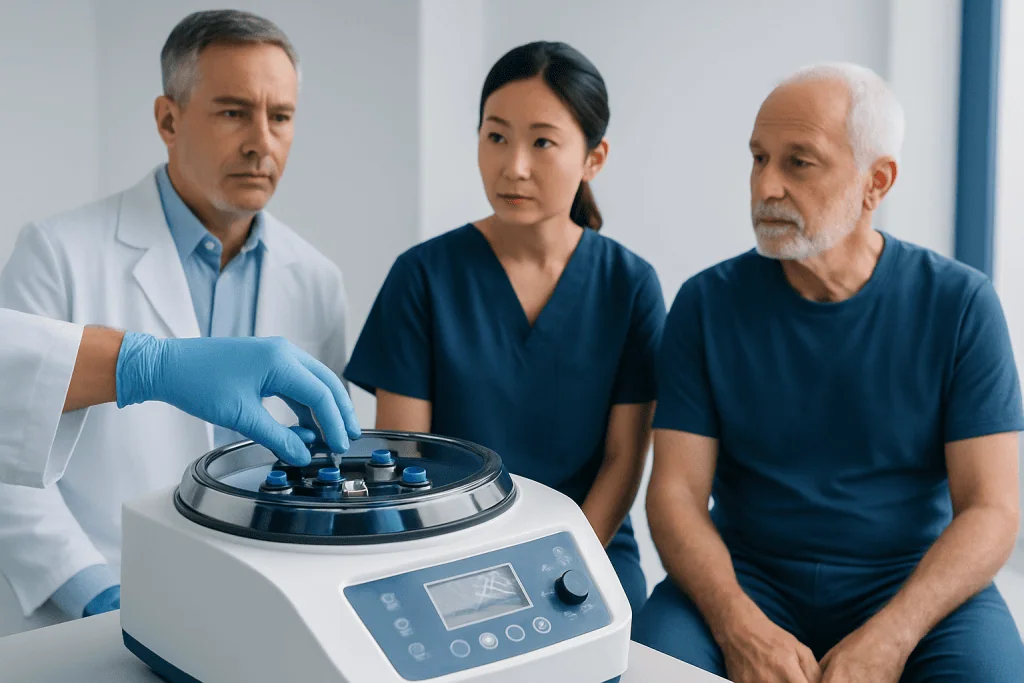
Orthobiologics may be considered for carefully selected people with persistent musculoskeletal symptoms that have not improved sufficiently with standard non-surgical care. Examples can include some forms of tendon disease, such as tennis elbow; selected <a href="https://acibademinternational.com/diseases/knee-osteoarthritis/”>knee osteoarthritis cases; certain ligament or muscle injuries; and delayed bone healing in specialist settings. Suitability depends on the exact diagnosis, severity of tissue damage, symptoms, overall health and the person’s expectations.
A good candidate for regenerative orthopedics generally has a clearly established diagnosis, realistic goals and willingness to follow a rehabilitation plan. They may have ongoing pain or reduced function despite appropriate conservative measures, but not necessarily have advanced structural damage requiring a different approach. Imaging findings alone do not determine candidacy; clinicians also consider examination results, daily limitations and response to prior treatment.
Orthobiologics may not be appropriate for everyone. Active infection, some bleeding disorders, poorly controlled medical conditions, certain cancers or blood disorders, and use of medicines that affect clotting may change whether a procedure can be performed safely. Pregnancy, significant anemia and severe joint destruction also require individualized medical advice. A specialist may discuss established care options for related concerns, including knee osteoarthritis, before recommending an injection-based procedure.
- Persistent symptoms despite supervised rehabilitation or other first-line care
- A diagnosis supported by clinical assessment and, when needed, imaging
- Ability to participate in post-procedure activity modification and physiotherapy
- Understanding that response is variable and improvement is usually gradual
What Happens During an Orthobiologics Procedure
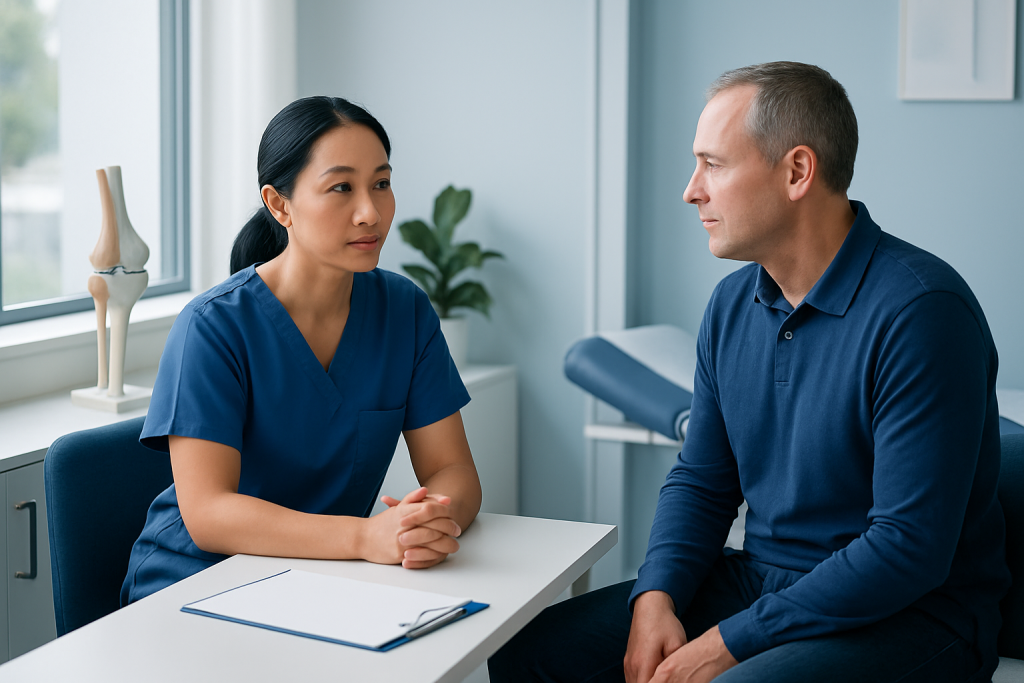
Before treatment, an orthopedic specialist reviews symptoms, medical history, medicines, allergies and relevant scans or laboratory tests. The clinician explains the proposed product, expected benefits, alternatives and potential risks. Some medicines or supplements may need adjustment before the procedure, but patients should never stop prescribed medication without instruction from their treating clinician.
For PRP, blood is drawn from a vein, usually in the arm, and placed in a centrifuge. This separates blood components and produces a platelet-containing preparation. For bone marrow aspirate procedures, a clinician obtains a small sample, commonly from the pelvic bone, using local anesthetic and sterile technique. The sample is processed according to the planned treatment protocol.
The prepared material is injected into the target tissue or joint. Ultrasound or X-ray guidance may be used to improve placement accuracy, particularly for deeper joints or smaller structures. The procedure is typically performed on an outpatient basis. Local anesthetic may be used, although technique differs by body area and treatment type. Patients are usually observed briefly and then go home with individualized aftercare instructions.
Orthobiologics are only one possible part of orthopedic care. Depending on the diagnosis, a clinician may recommend physical therapy and rehabilitation to restore movement, strength and confidence with daily activities after an injection.
Expected Results and Recovery Timeline
Recovery after orthobiologics treatment varies with the treated area, the underlying condition, the injection method and the person’s general health. Mild soreness, stiffness or a temporary increase in discomfort may occur during the first few days. This can reflect irritation from the procedure and, in some cases, the intended local inflammatory response. The care team may recommend relative rest, ice when appropriate and a gradual return to usual activities.
Many people begin gentle movement soon after treatment, but strenuous loading, impact activity or sport may need to be limited for a period advised by the clinician. Rehabilitation is often introduced or progressed in stages. For tendon problems, this may include a structured strengthening program; for knee symptoms, it may focus on mobility, thigh strength and movement control. Following these instructions is an important part of achieving the best possible result.
Improvement is generally not immediate. Some patients notice changes over several weeks, while tissue recovery and functional gains may continue over months. Others have limited or no meaningful improvement. Research findings differ across conditions and products, and orthobiologics should not be presented as a guaranteed cure. Follow-up appointments help assess progress and determine whether further rehabilitation, another treatment or a different approach is appropriate.
For people with joint pain, a care plan may also include weight management where relevant, exercise guidance and other non-surgical options. If symptoms are caused by significant injury or advanced disease, orthopedic surgery may sometimes be the more suitable option after specialist evaluation.
Benefits and Risks of Regenerative Orthopedics
Potential benefits of orthobiologics include a minimally invasive treatment approach, use of a patient’s own biological material in many procedures and the possibility of reduced pain or improved function in selected conditions. When an autologous product is used, meaning it comes from the patient, the risk of an immune reaction is generally low. These potential advantages must be balanced against uncertainty in results and variation in scientific evidence.
What are the risks of regenerative orthopedics? Risks include temporary pain, swelling, bruising, bleeding, skin or tissue irritation and fainting related to blood collection or injection. Infection is uncommon when proper sterile technique is used but remains a possible risk with any invasive procedure. Injections near nerves, blood vessels, tendons or joints also carry location-specific risks, which are reduced but not eliminated with experienced technique and imaging guidance.
There may also be risks related to choosing an unsuitable treatment. Delaying effective care for a fracture, infection, severe tendon rupture, nerve compression or advanced joint disease can worsen outcomes. Patients should be cautious about broad claims that a product can regrow cartilage, cure arthritis or replace proven treatment. A qualified orthopedic specialist can explain whether the expected benefit is supported for a particular diagnosis and whether alternatives may be more appropriate.
Cost and Insurance Coverage
How much does orthobiologics cost? There is no single price because costs depend on the country, clinic, type of orthobiologic product, body area treated, imaging guidance, laboratory processing, number of injections and follow-up care. A consultation is the most reliable way to receive an itemized estimate tailored to the proposed treatment plan. Patients should ask what is included and whether rehabilitation, imaging or additional procedures are billed separately.
Are orthobiologics covered by insurance? Coverage varies considerably by insurer, country, plan and clinical indication. Many insurers consider some orthobiologic injections investigational or do not routinely cover them, while coverage may be possible in limited circumstances. Patients should contact their insurer before treatment and ask the clinic for the procedure name, diagnosis code or supporting documentation needed for a coverage inquiry.
Cost should not be the only factor in decision-making. It is helpful to compare the expected value of treatment with the strength of evidence for the specific condition, alternative options, anticipated recovery requirements and the clinician’s experience. A responsible consultation includes a discussion of uncertainty as well as potential benefits.
When to Seek Medical Care
People should seek prompt medical assessment for severe pain after an injury, an inability to bear weight or use a limb, visible deformity, a sudden loss of strength, numbness, fever, redness that is spreading, or a hot and markedly swollen joint. These symptoms can indicate conditions that need urgent evaluation and should not be managed with elective injection treatment alone.
Medical review is also appropriate when joint, tendon or muscle pain persists beyond a reasonable period of self-care, recurs repeatedly, limits work or sleep, or prevents normal exercise and daily activities. A clinician can identify potentially treatable causes and recommend appropriate imaging or referral when necessary.
After an orthobiologic procedure, patients should contact their treating team if they develop worsening pain beyond the expected early recovery period, fever, drainage from an injection site, rapidly increasing swelling, new weakness or other concerning symptoms. Acibadem International’s multidisciplinary specialists and JCI-accredited hospitals evaluate and treat musculoskeletal conditions for international patients, with care plans guided by individual diagnosis and goals.
Frequently asked questions
What is orthobiologics treatment?
Orthobiologics treatment uses biological materials to support healing in selected musculoskeletal conditions. Examples include platelet-rich plasma made from a person’s blood and certain bone marrow-derived preparations. The treatment is usually combined with rehabilitation and other evidence-based orthopedic care.
Who is a good candidate for regenerative orthopedics?
A good candidate has a clear orthopedic diagnosis, symptoms that continue despite appropriate first-line care and realistic expectations about outcomes. The person also needs to be able to follow the recommended recovery and rehabilitation plan. A specialist should assess medical history, medications and the severity of the condition before recommending treatment.
How much does orthobiologics cost?
Costs vary according to the product used, treatment location, body area, imaging guidance, facility and follow-up requirements. There is no universal price for orthobiologics treatment. Patients should request a written estimate that explains what services are included.
Are orthobiologics covered by insurance?
Insurance coverage varies by plan, country and diagnosis, and many plans do not routinely cover certain orthobiologic procedures. Patients should check with their insurer before booking treatment. The treating clinic can usually provide the procedure and diagnosis information needed for a coverage inquiry.
What are the risks of regenerative orthopedics?
Possible risks include temporary pain, swelling, bruising, bleeding and infection at the injection site. Risks also depend on the body area being treated and the specific procedure. A careful assessment, sterile technique and image guidance when appropriate can help reduce risk.
How long does it take to recover after an orthobiologic injection?
Many people can return home the same day, but activity restrictions and rehabilitation differ by condition and injection site. Short-term soreness can occur, while meaningful improvement may take weeks or months. The clinician’s aftercare instructions should guide the timing of work, exercise and sport.
References
- American Academy of Orthopaedic Surgeons
- U.S. Food and Drug Administration
- National Institute for Health and Care Excellence
- International Society for Cellular Therapy
- World Health Organization
This article is for general information only and is not a substitute for professional medical advice. Please consult a qualified doctor about your individual situation.
Joint and spine care in Turkey — expert assessment & treatment
JCI-accredited · board-certified surgeons · reply within 24h
Add us as a Preferred Source to see more of our trusted health content across Google Search, AI Overviews and Discover.