Best Flatback Syndrome Surgeon Beverly Hills: An Evidence-Based Patient Guide

Flatback syndrome is a loss of normal lumbar curve that can make standing upright difficult and tiring. The right specialist is typically an orthopedic spine surgeon or neurosurgeon with fellowship training and experience in adult spinal deformity.
Key Takeaways
- Flatback syndrome is a loss of normal lumbar curve that can make standing upright difficult and tiring.
- The right specialist is typically an orthopedic spine surgeon or neurosurgeon with fellowship training and experience in adult spinal deformity.
- Surgery is not the first option for everyone; symptoms, alignment, nerve involvement and response to nonsurgical care guide decisions.
- Evaluation should include a detailed examination, standing full-spine imaging and a review of prior operations and health conditions.
- Complex reconstruction can improve posture and function for selected patients but involves meaningful recovery time and risks.
For people searching for the best flatback syndrome surgeon in Beverly Hills, the most useful approach is to look beyond a single name and choose a fellowship-trained spinal deformity specialist with relevant experience, transparent communication and access to multidisciplinary care. Flatback syndrome may be managed with rehabilitation and pain care, while selected patients benefit from carefully planned reconstructive spine surgery.
Overview: Choosing a Flatback Syndrome Surgeon
The search for the best flatback syndrome surgeon Beverly Hills patients can consult should focus on qualifications and fit rather than rankings or advertising claims. Flatback syndrome is a spinal alignment condition in which the lower back loses part of its usual inward curve. As the body tries to compensate, a person may lean forward, bend the knees or tilt the pelvis to look straight ahead and remain balanced.
Many people first notice difficulty standing or walking for long periods, back fatigue, pain, or a feeling that they are pitched forward. The condition can occur with age-related spinal changes, but it is also seen after previous spinal fusion when the spine heals in an alignment that does not support comfortable upright posture.
Assessment and treatment are individualized. A spine surgeon experienced in adult spinal deformity works with the patient to identify the source of symptoms, determine whether nerves are affected, and discuss nonsurgical and surgical options in a balanced way. A second opinion can be particularly helpful when a large reconstructive operation is being considered.
Symptoms, Causes and When to Seek Medical Care
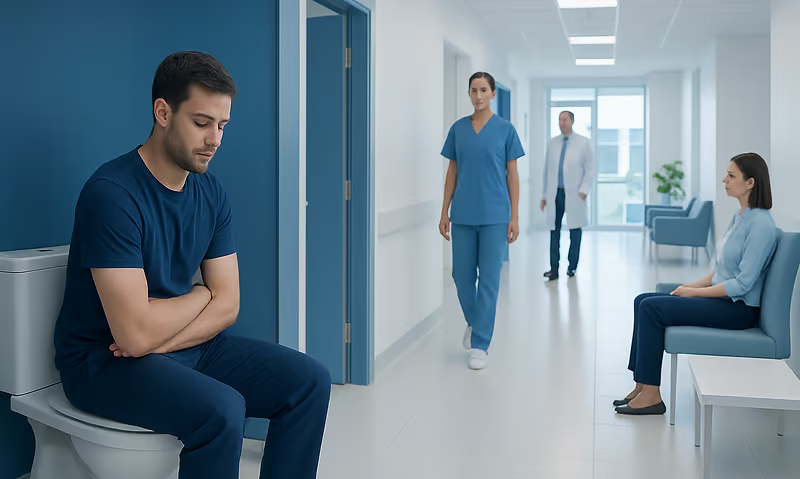
Symptoms vary according to the degree of imbalance and whether arthritis, narrowing around spinal nerves, or prior surgery is present. Typical concerns include persistent low-back pain, fatigue when standing, a forward-stooped posture, tight hip or thigh muscles, and the need to use a walking aid or rest frequently. Some people also have leg pain, numbness, weakness or changes in walking when nerve roots are compressed.
Common contributors include degeneration of the spinal discs and joints, vertebral compression fractures, osteoporosis, inflammatory spinal disease, and previous fusion surgery. In postoperative flatback, the loss of lumbar lordosis may be related to the level or position of prior fusion, changes in adjacent spinal segments, or gradual changes in the bones and soft tissues over time.
When to seek medical care: A medical evaluation is appropriate for ongoing pain, worsening stooped posture, reduced walking tolerance, leg symptoms, or difficulty performing usual activities. Urgent assessment is needed for new loss of bladder or bowel control, numbness around the groin or inner thighs, rapidly worsening weakness, fever with severe back pain, or back pain after a significant injury.
Although posture exercises may be useful for general conditioning, they cannot always correct a structural spinal imbalance. A clinician can help distinguish flatback syndrome from other causes of back and leg symptoms and recommend suitable next steps.
How to Find the Best Back Surgeon
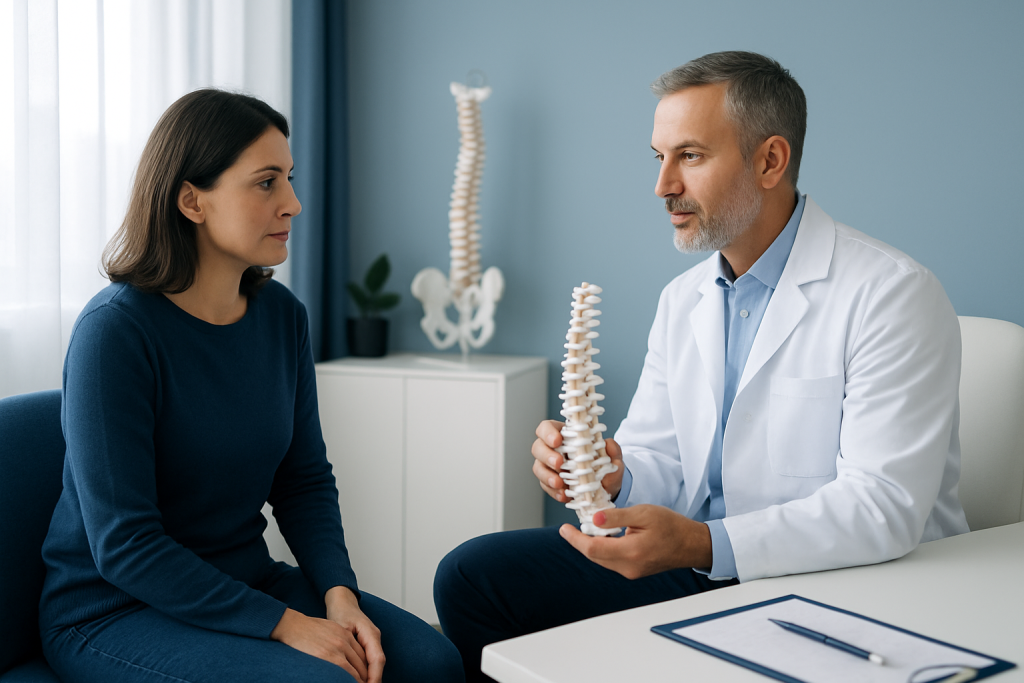
To find the best back surgeon for a suspected complex alignment problem, patients can begin by looking for an orthopedic spine surgeon or neurosurgeon who has completed focused spine fellowship training and regularly treats adult spinal deformity. General spine expertise is valuable, but flatback reconstruction may require specific experience with sagittal alignment, revision surgery, osteotomy techniques and long spinal fusions.
During consultation, helpful questions include how often the surgeon treats cases similar to the patient’s, which nonsurgical options remain reasonable, why a particular procedure is proposed, and what outcomes and limitations are realistic. The surgeon should review imaging in understandable terms, explain alternatives, and invite questions about recovery, potential complications and the role of rehabilitation.
It is also sensible to consider the care setting. Complex surgery may involve spine surgeons, anesthesiologists, neurologic monitoring professionals, pain specialists, rehabilitation clinicians, internists and bone-health specialists. Access to these services can support planning before surgery and coordinated follow-up afterward.
Credentials, board certification where applicable, hospital privileges, communication style and a willingness to obtain or welcome a second opinion are practical selection factors. Online ratings may reflect service experiences, but they do not by themselves measure suitability for an individual’s anatomy, medical needs or surgical complexity.
Diagnosis and Surgical Candidacy
Diagnosis begins with a medical history and physical examination. The clinician assesses posture, ability to stand upright, gait, hip and knee compensation, leg strength, sensation and reflexes. It is important to describe prior spine procedures, current medications, smoking or nicotine exposure, fractures, bone-health history and conditions such as diabetes or heart disease that may affect treatment planning.
Standing full-length spine X-rays are central to assessment because they show alignment while the person is upright. The care team may measure pelvic position, the natural curves of the spine and the degree to which the head and torso are balanced over the pelvis. MRI or CT scanning can identify nerve compression, prior fusion status, arthritis, bone quality concerns or other structural factors.
Surgical candidacy is based on more than an X-ray finding. Surgery may be considered when disabling symptoms and functional limitation continue despite appropriate nonsurgical treatment, when imbalance is substantial, or when nerve compression causes significant symptoms. The expected benefit must be weighed carefully against overall health, bone density, nutritional status, frailty, previous surgeries and the patient’s ability to participate in recovery.
Before major reconstruction, clinicians may recommend strengthening, optimization of bone health, management of anemia or other medical issues, smoking cessation and a review of medications. These measures can reduce preventable risk and improve readiness for surgery.
How Flatback Syndrome Surgery Works
The purpose of surgery is to restore a more balanced spinal alignment, relieve pressure on affected nerves when present, and create a stable construct that supports function. The exact operation differs widely. Some patients need decompression of narrowed nerve spaces and limited fusion, while others require revision of a previous fusion or reconstruction across multiple spinal levels.
When the spine is stiff or markedly out of alignment, the surgeon may use osteotomy techniques, in which carefully planned bone cuts allow the spine to be repositioned. Interbody implants may be placed between vertebrae to restore height and help recreate lumbar curvature. Screws, rods and bone graft material are used to stabilize the corrected alignment while fusion develops.
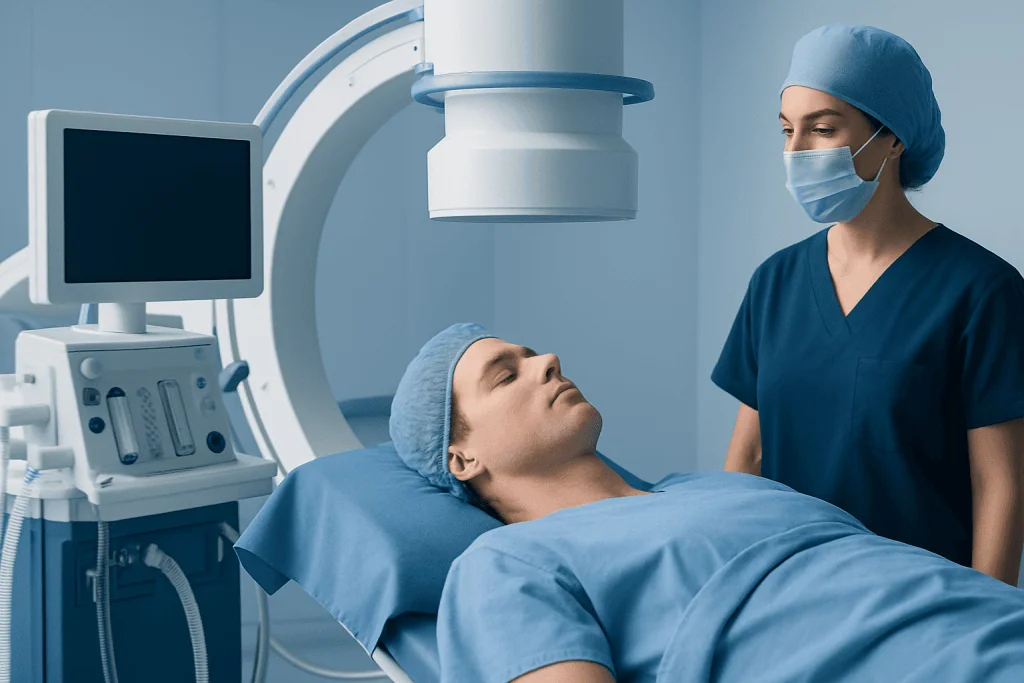
A typical pathway includes preoperative imaging and medical assessment, anesthesia planning, the operation with nerve monitoring when appropriate, and a hospital stay for pain control and early mobilization. The length of surgery, incision approach and hospitalization depend on the severity of deformity, number of levels involved, prior operations and the selected technique.
Potential benefits include improved ability to stand upright, better walking tolerance, reduced pain related to imbalance and improved quality of life. Risks can include bleeding, infection, blood clots, nerve injury, spinal fluid leak, implant problems, failure of bone fusion, adjacent-level degeneration, persistent symptoms and the need for further surgery. A surgeon should explain how these risks apply to the individual case.
Recovery Timeline, Rehabilitation and Self-Care
Recovery after flatback reconstruction is gradual. In the first days after surgery, the focus is on safe movement, breathing exercises, pain management, wound care and walking with assistance as advised. Some patients require inpatient rehabilitation, while others continue recovery at home with family support and outpatient physical therapy.
During the first several weeks, activity is usually advanced in stages. Walking is commonly encouraged, but lifting, bending, twisting and high-impact activity may be limited. Follow-up visits and imaging allow the team to monitor wound healing, alignment, implants and early fusion progress. A brace may be recommended in selected cases.
Many people notice progress over months rather than days. Bone fusion can take many months, and endurance, flexibility and confidence with movement may continue improving over a year or longer. The recovery plan should be tailored to the operation, age, baseline fitness, bone quality and any neurologic symptoms.
For people not having surgery, self-care may include a clinician-guided exercise program, physical therapy, pacing of activities, healthy sleep habits, weight management when appropriate and treatment for osteoporosis or other contributing conditions. Avoiding nicotine is important because it can impair bone healing and fusion success.
Who Is the Best Spine Surgeon in Beverly Hills?
There is no objective, universally recognized single “best” spine surgeon in Beverly Hills for every person with flatback syndrome. The best fit is a qualified surgeon whose training, experience and treatment philosophy match the individual’s condition, prior surgery history, health status and personal goals.
For complex flatback, patients may prioritize fellowship training in spine surgery, a substantial clinical focus on adult spinal deformity and revision procedures, clear explanation of alignment goals, and a hospital team equipped for complex perioperative care. Reviewing more than one expert opinion can help a person understand whether recommendations are consistent and whether surgery is truly indicated.
Patients seeking care internationally may wish to ask about coordination of imaging review, pre-travel planning, inpatient rehabilitation and follow-up arrangements. Acibadem International’s multidisciplinary specialists and JCI-accredited hospitals diagnose and treat complex spinal conditions for international patients, with treatment decisions based on individualized clinical evaluation.
Who Is the Billionaire Spine Surgeon? What Is the Best Rated Hospital for Spinal Surgery?
The phrase “billionaire spine surgeon” is not a clinical credential and does not identify a reliable standard for selecting care. A surgeon’s personal wealth, public profile or media attention does not indicate whether a proposed treatment is appropriate. Patients are better served by reviewing relevant training, board certification, deformity experience, communication and the hospital’s ability to manage complex surgery safely.
Similarly, there is no single best rated hospital for spinal surgery that applies to every patient. Hospital ratings may use different methods and may not reflect a center’s experience with adult spinal deformity, revision fusion, intensive care, infection prevention, rehabilitation or multidisciplinary medical optimization.
When comparing hospitals, patients can ask whether the institution routinely performs complex spinal reconstruction, has specialists in anesthesia and perioperative medicine, provides intraoperative neuromonitoring where indicated, and offers rehabilitation and follow-up services. The most appropriate setting is one that can meet the patient’s specific clinical and practical needs.
Frequently asked questions
What is flatback syndrome?
Flatback syndrome is a loss of the normal inward curve of the lower spine, known as lumbar lordosis. This can shift the body forward and make standing upright or walking for extended periods difficult. It may develop from age-related spinal changes or after previous spinal fusion surgery.
Does everyone with flatback syndrome need surgery?
No. Many people begin with nonsurgical care such as physical therapy, activity modification, pain management and treatment of contributing conditions, including osteoporosis when present. Surgery is generally considered when symptoms and functional limits remain substantial or when spinal imbalance and nerve compression require correction.
How can a patient evaluate a surgeon for flatback syndrome?
Patients can ask about fellowship training, experience with adult spinal deformity and revision surgery, and the surgeon’s approach to nonsurgical options. They should also ask for a clear explanation of the proposed procedure, expected recovery, potential risks and alternatives. A second opinion is reasonable before extensive reconstruction.
How long does recovery from flatback surgery take?
Early recovery and walking begin in the hospital and continue over the first weeks at home or in rehabilitation. Functional recovery commonly progresses over several months, while spinal fusion and endurance improvements may take a year or longer. The timeline depends on the complexity of surgery and the person’s overall health.
Can physical therapy correct structural flatback syndrome?
Physical therapy can improve strength, flexibility, conditioning, movement confidence and pain management. However, it may not fully correct a fixed structural alignment problem, especially after a prior fusion or with significant spinal degeneration. A spine specialist can explain what improvement is realistic without surgery.
What symptoms require urgent evaluation for back problems?
Urgent medical assessment is important for new bladder or bowel control problems, numbness in the groin region, rapidly progressing leg weakness, fever with severe back pain, or severe pain after significant trauma. These symptoms can have causes that require prompt diagnosis and treatment.
References
- American Academy of Orthopaedic Surgeons
- Scoliosis Research Society
- National Institute of Arthritis and Musculoskeletal and Skin Diseases
- National Institute of Neurological Disorders and Stroke
- American Association of Neurological Surgeons
This article is for general information only and is not a substitute for professional medical advice. Please consult a qualified doctor about your individual situation.
Joint and spine care in Turkey — expert assessment & treatment
JCI-accredited · board-certified surgeons · reply within 24h
Add us as a Preferred Source to see more of our trusted health content across Google Search, AI Overviews and Discover.