Zig Zag Lines in Vision No Headache Treatment: How It Works, Results and What to Expect

Visual zig zag patterns that gradually spread and resolve within about an hour can be a migraine aura, even when no headache follows. A first-time, sudden, one-eye, persistent, or recurrent visual disturbance needs prompt medical assessment to exclude retinal or neurological causes.
Key Takeaways
- Visual zig zag patterns that gradually spread and resolve within about an hour can be a migraine aura, even when no headache follows.
- A first-time, sudden, one-eye, persistent, or recurrent visual disturbance needs prompt medical assessment to exclude retinal or neurological causes.
- There is no procedure that immediately stops every visual aura; treatment is individualized after an eye and medical evaluation.
- Trigger management, regular sleep and meals, hydration, and preventive migraine treatment may reduce recurrent episodes.
- New visual loss, weakness, speech difficulty, severe dizziness, or a curtain-like shadow over vision requires urgent emergency care.
Zig zag lines in vision without a headache are often caused by a migraine aura without headache, also called silent migraine. Treatment focuses on making sure the visual symptoms are not due to an eye or neurological emergency, identifying triggers, and considering preventive care when episodes are frequent or disruptive.
Overview: What Treatment Means for Zig Zag Lines Without Headache
Zig zag lines in vision no headache treatment begins with identifying the cause rather than automatically treating the symptom as migraine. A visual aura without headache is a common explanation when shimmering, flashing, jagged, or expanding patterns develop gradually in both visual fields and then clear completely, usually within 5 to 60 minutes. However, similar symptoms can occasionally come from problems affecting the retina, eye circulation, brain circulation, or other parts of the visual system.
When a clinician confirms migraine aura without headache, treatment is usually not a procedure. It may include education, trigger reduction, a plan for episodes, and preventive treatment if attacks are frequent, prolonged, or significantly affect daily life. A specialist may also review medicines and health conditions that could influence the choice of treatment.
The priority is to distinguish a temporary aura from symptoms that need urgent care. A detailed history, vision assessment, and sometimes neurological evaluation help make this distinction safely.
How Visual Aura Without Headache Works
A migraine aura is thought to involve a temporary wave of altered electrical and chemical activity across the outer layer of the brain, called cortical spreading depression. When it affects areas that process vision, a person may notice bright zig zags, shimmering arcs, flickering spots, geometric shapes, wavy lines, or a growing blind area. These symptoms may be noticeable with either eye covered because the source is usually the brain rather than one eye itself.
Some people have migraine aura followed by head pain, nausea, or sensitivity to light and sound. Others have aura alone. This is often called migraine aura without headache or silent migraine. It can occur in people with a past history of migraine and can also begin later in life, which is one reason a first episode should be medically reviewed.
A retinal migraine is different and uncommon. It generally causes temporary symptoms in one eye only. Sudden one-sided visual loss, a shower of new floaters, flashes with a dark curtain, or vision that does not return normally should not be assumed to be migraine and needs urgent eye assessment.
Who May Need Evaluation and Be a Candidate for Treatment

People may be considered for migraine-focused care after a clinician has assessed their symptoms and excluded concerning alternatives. A typical aura tends to build gradually, may move or expand across vision, and resolves fully. The clinician will ask whether the disturbance was truly in both visual fields or limited to one eye, how long it lasted, whether it has happened before, and whether there were associated neurological symptoms.
Preventive treatment may be discussed when visual auras occur often, interfere with work, driving, reading, or quality of life, last longer than expected, or happen alongside other migraine symptoms. Treatment decisions also consider age, pregnancy plans, blood pressure, heart and vascular history, other medicines, and the possibility of medication side effects.
Evaluation may involve an ophthalmologist, neurologist, neuro-ophthalmologist, or primary care clinician. People with risk factors for stroke or vascular disease, such as smoking, high blood pressure, diabetes, high cholesterol, or a prior transient ischemic attack, may need a more detailed assessment. Depending on the presentation, clinicians may also evaluate related migraine symptoms and other possible neurological conditions.
What Happens During Diagnosis and Treatment Planning
There is no single test that confirms every migraine aura. The process usually starts with a careful symptom history and examination. Patients may be asked to describe the pattern, timing, spread, duration, affected eye or eyes, and any headache, numbness, weakness, speech changes, dizziness, or nausea. Keeping a diary of episodes can provide useful information.
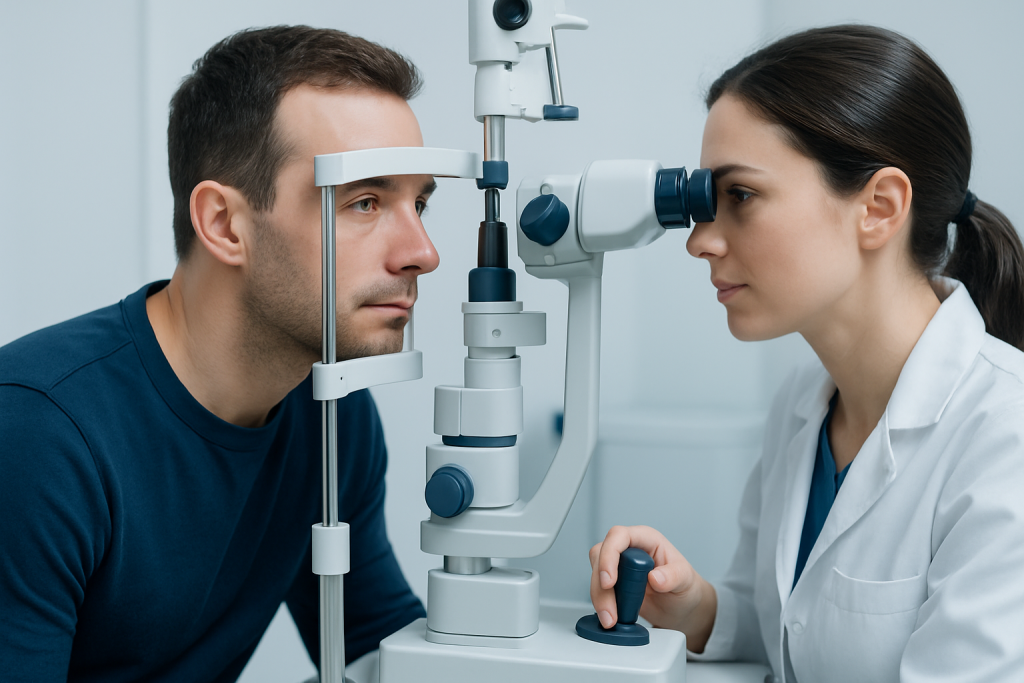
An eye examination may include checking vision, eye pressure, pupils, eye movements, and the back of the eye after dilation. If a retinal condition is suspected, the eye specialist may use imaging or other retinal tests. A neurological examination may assess strength, sensation, coordination, speech, and visual fields.
Brain imaging, vascular imaging, heart testing, or blood tests are not needed for every person with a typical, established aura pattern. They may be recommended for a first or atypical event, symptoms starting later in adulthood, persistent deficits, a major change in a known pattern, or features that could suggest a transient ischemic attack or another disorder. The results guide a tailored plan rather than a routine procedure.
Treatment Options: Episode Care and Prevention
For an isolated, typical visual aura that resolves fully, reassurance and observation may be all that is required after appropriate evaluation. During an episode, it is sensible to stop potentially hazardous activities such as driving, operating machinery, or climbing. Resting in a calm, dim environment and allowing the visual symptoms to pass can be helpful.
There is limited evidence that a medicine taken after a visual aura begins will reliably stop it. If headache or other migraine symptoms follow, a clinician may recommend an acute migraine plan appropriate for that person. Medication should not be started solely on the basis of online information, especially for people with cardiovascular disease, pregnancy, or possible stroke-like symptoms.
For repeated, troublesome episodes, a clinician may consider preventive migraine treatment. Options may include medicines used for migraine prevention, selected supplements where appropriate, and treatment of contributing conditions such as poor sleep, anxiety, or high blood pressure. The most suitable approach depends on the individual and should be reviewed over time for benefit and tolerability.
Care may involve coordinated eye and neurology assessment. Acibadem International’s multidisciplinary specialists and JCI-accredited hospitals evaluate visual and neurological symptoms for international patients when further assessment or treatment planning is needed.
Recovery Timeline, Benefits, and Possible Risks
A typical visual aura usually improves on its own within minutes and clears within one hour. There is generally no recovery period after the episode, although some people feel tired, mentally slowed, or sensitive to light afterward. If visual changes persist, recur repeatedly over a short period, or leave a continuing blind spot, medical reassessment is important.
The potential benefit of a structured treatment plan is fewer episodes, less disruption, and greater confidence about when symptoms are likely to be migraine and when urgent evaluation is needed. Lifestyle measures can be particularly useful because they carry low risk and may improve general wellbeing as well as migraine control.
Preventive medicines can have side effects and may not be suitable for everyone. Depending on the medication, these can include tiredness, dizziness, changes in mood, stomach symptoms, changes in weight, or effects on blood pressure. A clinician should explain expected benefits, possible harms, interactions, and follow-up needs before treatment begins.
Prevention and Self-Care Between Episodes
Not every visual aura has an identifiable trigger, and people should not blame themselves for episodes. Still, a consistent routine can reduce susceptibility for some individuals. Useful habits include regular sleep, regular meals, adequate fluids, gradual physical activity, and stress-management practices that are realistic and sustainable.
A symptom diary can help identify patterns involving missed meals, dehydration, alcohol, excess or withdrawal from caffeine, bright or flickering light, prolonged screen use, hormonal changes, emotional stress, or changes in sleep. Rather than avoiding many things unnecessarily, it is usually more helpful to look for repeatable personal associations and discuss them with a clinician.
- Record the date, duration, visual pattern, and whether symptoms were in one eye or both visual fields.
- Note sleep, food intake, hydration, stress, medicines, and any headache or neurological symptoms.
- Use regular breaks during close visual work and ensure glasses or contact lens prescriptions are up to date.
- Avoid driving until vision is completely normal.
When to Seek Medical Care
Anyone experiencing zig zag lines or other new visual symptoms for the first time should arrange timely medical assessment, particularly if they are over age 50 or have vascular risk factors. A clinician can determine whether the pattern is consistent with migraine aura and whether an eye examination or urgent testing is needed.
Emergency care is needed for sudden vision loss, a dark curtain or shadow over vision, new flashes with many floaters, symptoms in one eye only that do not quickly resolve, or visual symptoms lasting more than one hour. Emergency assessment is also important if visual changes occur with facial drooping, weakness, numbness on one side, trouble speaking, confusion, fainting, severe imbalance, or a sudden severe headache.
People with previously diagnosed migraine aura should still seek review if the usual pattern changes, episodes become much more frequent, symptoms last longer, or recovery is incomplete. Prompt assessment helps ensure that new symptoms are not mistakenly attributed to migraine.
Frequently asked questions
Can zig zag lines in vision happen without a headache?
Yes. A migraine aura can occur without a headache and may cause shimmering zig zags, flashing patterns, blind spots, or wavy lines. Because other eye and neurological conditions can cause visual changes, a first or unusual episode should be assessed by a clinician.
Is there a treatment that stops zig zag vision lines immediately?
There is no treatment that reliably stops every visual aura once it has begun. Typical episodes often settle on their own within 5 to 60 minutes. A clinician can advise whether acute migraine treatment or preventive treatment is appropriate based on the full pattern of symptoms.
Are zig zag lines in one eye a migraine aura?
Typical migraine aura usually affects both visual fields, even though it may feel as if it is in one eye. Symptoms that remain when one eye is covered and disappear when the other is covered may be coming from the eye itself. New one-eye symptoms need prompt assessment, especially if there is loss of vision, a curtain-like shadow, flashes, or floaters.
How long should visual migraine symptoms last?
A typical migraine visual aura develops gradually and lasts from about 5 to 60 minutes. Symptoms that are sudden, persistent, or longer than one hour should be evaluated urgently. The same applies if vision does not fully return to normal.
Can stress or screen time trigger visual aura without headache?
Stress, disrupted sleep, dehydration, skipped meals, bright light, and prolonged visual work may contribute to migraine episodes in some people. Triggers vary widely, and screen time is not the cause for everyone. A diary can help identify individual patterns without making unnecessary restrictions.
When are zig zag lines in vision an emergency?
Emergency care is appropriate for sudden or persistent vision loss, a dark curtain over vision, new weakness, numbness, speech difficulty, confusion, severe dizziness, or a sudden severe headache. These symptoms may indicate conditions other than migraine and should be assessed without delay.
References
- American Migraine Foundation
- American Academy of Ophthalmology
- National Institute of Neurological Disorders and Stroke
- Mayo Clinic
- International Headache Society
This article is for general information only and is not a substitute for professional medical advice. Please consult a qualified doctor about your individual situation.
Explore treatments in Turkey — costs, top hospitals & a free quote
JCI-accredited · board-certified surgeons · reply within 24h
Add us as a Preferred Source to see more of our trusted health content across Google Search, AI Overviews and Discover.
Check your numbers in seconds
BMI, calories, due date, blood pressure and 30+ more clinical calculators — free, instant, doctor-reviewed ranges.