Infertility Evaluation: Tests for Women and Men Before Treatment

Infertility evaluation usually involves both partners, because female and male factors can occur alone or together. The first step is a detailed medical history, physical examination, and review of menstrual cycles, sexual health, medications, and previous pregnancies.
Key Takeaways
- Infertility evaluation usually involves both partners, because female and male factors can occur alone or together.
- The first step is a detailed medical history, physical examination, and review of menstrual cycles, sexual health, medications, and previous pregnancies.
- Common female tests include ovulation assessment, hormone blood tests, pelvic ultrasound, and evaluation of the fallopian tubes and uterus.
- Common male tests include semen analysis, physical examination, hormone testing when needed, and sometimes genetic or imaging tests.
- Testing should be individualized; not every person needs every test before starting treatment.
- Early evaluation is especially important for women over 35, irregular cycles, known pelvic disease, recurrent miscarriage, or suspected male fertility problems.
Infertility evaluation is a step-by-step medical assessment used to identify factors that may make conception difficult for a woman, a man, or both partners. A clear diagnosis helps couples choose the most appropriate treatment, from lifestyle changes and medication to assisted reproductive techniques such as IVF.
Overview
Infertility evaluation is the medical process used to understand why pregnancy has not occurred after regular, unprotected intercourse. In general, evaluation is recommended after 12 months of trying for women under 35, and after 6 months for women aged 35 or older. It may begin earlier if there are known concerns such as irregular menstrual cycles, previous pelvic infection, endometriosis, recurrent miscarriage, or a history of testicular surgery or chemotherapy.
The goal is not simply to label a couple as infertile. The purpose is to identify treatable factors, estimate the chance of natural conception, and select the safest and most effective next step. Some couples may need only timing guidance or medication to support ovulation, while others may benefit from intrauterine insemination, surgery, or in vitro fertilization.
Because conception depends on eggs, sperm, fallopian tubes, the uterus, hormones, and timing, both partners are usually evaluated. Testing is typically organized in stages so that simple, high-yield assessments are done first, followed by more specialized tests only when indicated.
When Infertility Testing Is Recommended
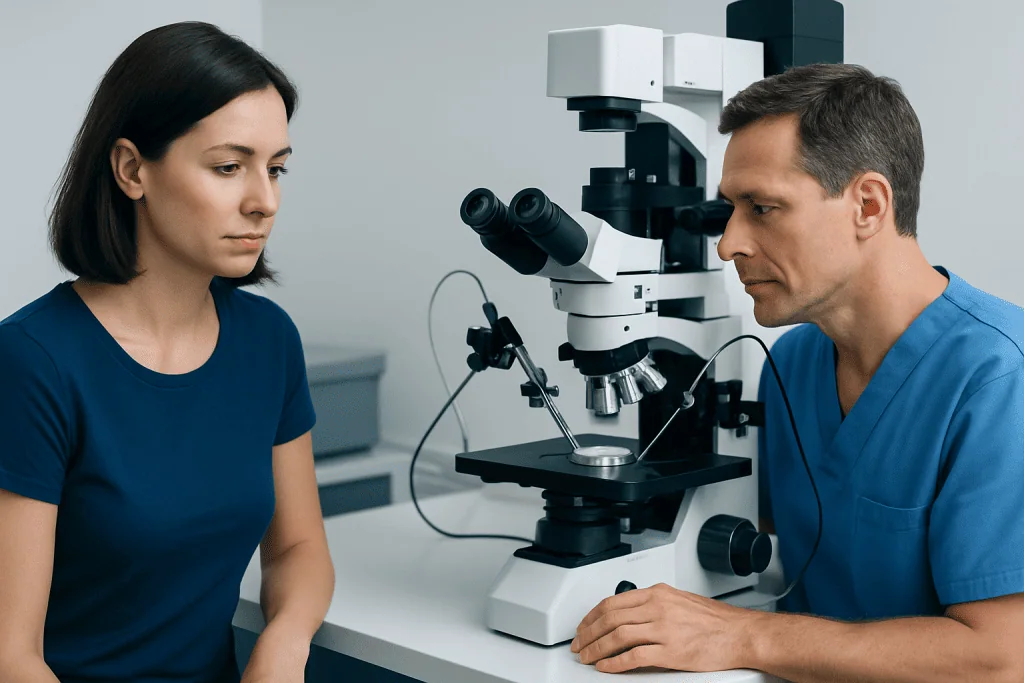
Many couples need several months to conceive, even when there is no medical problem. However, waiting too long can delay helpful care, especially when age or known health conditions may reduce fertility. A clinician may recommend starting evaluation sooner if pregnancy has not occurred within the expected time frame or if symptoms suggest ovulation, tubal, uterine, or sperm-related issues.
Earlier assessment is commonly advised in situations such as absent or very irregular periods, severe menstrual pain, a history of pelvic inflammatory disease, known endometriosis, previous ectopic pregnancy, repeated pregnancy loss, or prior abdominal or pelvic surgery. Men should also be assessed promptly if there is a history of undescended testicles, testicular injury, varicocele, erectile or ejaculation problems, hormonal disorders, or exposure to chemotherapy, radiation, anabolic steroids, or certain toxins.
Infertility evaluation can also be useful before treatment begins, even when the couple plans to proceed directly to assisted reproduction. Understanding ovarian reserve, sperm quality, uterine health, and any infection or genetic risk helps the care team design a personalized treatment plan and reduce avoidable delays.
First Consultation: History and Physical Examination

The first infertility appointment usually focuses on a detailed medical and reproductive history. For women, the doctor asks about menstrual cycle length and regularity, ovulation signs, pain, bleeding patterns, previous pregnancies, miscarriages, pelvic infections, surgeries, thyroid disease, and medications. For men, the history includes puberty, previous pregnancies with any partner, sexual function, testicular conditions, infections, surgeries, occupational exposures, and medication or supplement use.
Lifestyle factors are reviewed in a nonjudgmental way because they can influence fertility and treatment outcomes. These include smoking, alcohol intake, recreational drug use, body weight changes, intense exercise, sleep, stress, nutrition, and heat exposure around the testes. The clinician may also ask how often intercourse occurs and whether ovulation predictor kits or cycle tracking have been used.
A physical examination may include measurement of weight and blood pressure, assessment for signs of hormonal imbalance, and a pelvic examination when appropriate. In men, the examination may assess testicular size, the presence of varicocele, and signs of hormonal or anatomical problems. The information gathered at this visit guides which tests are most relevant.
Female Fertility Tests
Female fertility testing looks at ovulation, ovarian reserve, the uterus, and the fallopian tubes. Ovulation may be assessed through menstrual history, mid-luteal progesterone testing, urine ovulation kits, or ultrasound monitoring. Regular cycles often suggest ovulation, but testing may be useful when cycles are irregular or treatment planning requires confirmation.
Hormone blood tests may include anti-Müllerian hormone, follicle-stimulating hormone, estradiol, luteinizing hormone, thyroid-stimulating hormone, and prolactin. These tests help assess ovarian reserve, ovulatory function, and endocrine conditions that may affect fertility. Ovarian reserve tests estimate the likely response to ovarian stimulation; they do not precisely predict whether a person can become pregnant naturally.
Pelvic ultrasound is a common imaging test used to examine the ovaries, uterus, and endometrial lining. It can identify ovarian cysts, fibroids, polyps, features of polycystic ovary syndrome, or a low antral follicle count. Depending on the findings, the doctor may recommend additional imaging or procedures.
Evaluation of the fallopian tubes and uterine cavity may be done with hysterosalpingography, saline infusion sonography, hysteroscopy, or laparoscopy in selected cases. These tests can detect blocked tubes, uterine adhesions, polyps, fibroids that distort the cavity, or signs of endometriosis. The choice depends on symptoms, medical history, and whether assisted reproductive treatment is being considered.
Male Fertility Tests
Male fertility testing usually begins with semen analysis because it is noninvasive and provides important information. A semen sample is evaluated for volume, sperm concentration, total sperm count, motility, and morphology. Because results can vary, a repeat semen analysis may be recommended if the first test is abnormal or borderline.
Preparation instructions for semen analysis are important. The laboratory may ask for a specific period of abstinence before the sample and for the sample to be delivered within a defined time. Fever, recent illness, medications, alcohol use, heat exposure, and stress can temporarily affect sperm quality, so the doctor interprets results in context.
If semen analysis shows significant abnormalities, further evaluation may include hormone tests such as testosterone, follicle-stimulating hormone, luteinizing hormone, and prolactin. A urologist or andrology specialist may assess for varicocele, obstruction, infection, ejaculation disorders, or hormonal causes. In selected cases, scrotal ultrasound, genetic testing, or specialized sperm tests may be considered.
It is important to recognize that an abnormal semen analysis does not always mean pregnancy is impossible. Many male fertility issues can be addressed with lifestyle changes, treatment of underlying conditions, surgery in selected cases, or assisted reproductive techniques such as intrauterine insemination, IVF, or intracytoplasmic sperm injection.
Additional Tests Before Treatment
Before fertility treatment, doctors may recommend general health and safety tests for one or both partners. These can include blood type, complete blood count, immunity to rubella or varicella, thyroid testing, screening for sexually transmitted infections, and tests for hepatitis, HIV, or other infections according to local guidelines. These tests protect the health of the patient, partner, pregnancy, and laboratory team.
Genetic testing may be discussed in specific circumstances. Carrier screening can identify inherited conditions that may affect future children, while karyotype testing may be considered after recurrent pregnancy loss or very low sperm counts. Genetic counseling helps couples understand what the results mean and what reproductive options may be available.
Some people may also need preconception evaluation with other specialists. For example, people with diabetes, thyroid disease, autoimmune disease, heart disease, kidney disease, epilepsy, or a history of cancer treatment may benefit from optimizing health before pregnancy. Medication review is also important because some medicines can affect fertility, fetal development, or pregnancy safety.
Not every test is necessary for every couple. A good infertility evaluation balances thoroughness with avoiding unnecessary procedures. The most appropriate plan depends on age, duration of trying, symptoms, previous results, and the type of treatment being considered.
How Results Guide Treatment Options
After the evaluation, the doctor reviews the results with the couple and explains the likely contributing factors. Some diagnoses are straightforward, such as anovulation, blocked fallopian tubes, uterine polyps, low sperm concentration, or severe motility problems. In other cases, no clear cause is found; this is called unexplained infertility, and treatment may still be effective.
Treatment options vary widely. Ovulation disorders may be managed with lifestyle changes, treatment of thyroid or prolactin problems, or ovulation-inducing medication. Uterine polyps, some fibroids, adhesions, or certain tubal problems may require procedures. Male factor infertility may be managed through medical treatment, surgery for selected conditions, or assisted reproductive techniques.
Assisted reproduction is chosen based on the couple’s diagnosis and priorities. Intrauterine insemination may be considered when at least one tube is open and sperm parameters are suitable. IVF may be recommended for blocked tubes, severe male factor infertility, reduced ovarian reserve, advanced reproductive age, some cases of endometriosis, or when other treatments have not worked.
The results also help set realistic expectations. Fertility treatment can involve emotional, physical, financial, and logistical decisions. Clear counseling allows couples to compare options, understand potential benefits and limitations, and proceed with a plan that fits their medical needs and values.
Preparation, Self-Care, and When to See a Doctor
Couples can support fertility evaluation by bringing previous medical records, surgery reports, semen analysis results, hormone tests, ultrasound reports, and details of prior fertility treatments. Tracking menstrual cycles, ovulation test results, and the timing of intercourse can also be helpful. A list of medications, supplements, and relevant family history should be shared with the clinician.
General self-care can improve overall reproductive health, although it cannot correct every cause of infertility. Helpful steps may include stopping smoking, limiting alcohol, avoiding recreational drugs and anabolic steroids, aiming for a healthy weight, managing chronic conditions, taking folic acid before pregnancy when advised, and reducing excessive heat exposure to the testes. Couples should avoid starting hormones, fertility supplements, or internet-based treatments without medical guidance.
A doctor should be consulted if pregnancy has not occurred after 12 months of trying, or after 6 months if the woman is 35 or older. Earlier care is appropriate with irregular or absent periods, known endometriosis, prior pelvic infection, recurrent miscarriage, previous cancer treatment, suspected male fertility problems, or significant sexual dysfunction. Acibadem International’s multidisciplinary specialists and JCI-accredited hospitals provide infertility evaluation and treatment planning for international patients, including coordinated assessment for both partners.
Frequently asked questions
What is included in an infertility evaluation?
An infertility evaluation usually includes a medical history, physical examination, female fertility tests, and male fertility tests. Common tests include hormone blood work, pelvic ultrasound, fallopian tube assessment, and semen analysis. The exact plan depends on age, symptoms, cycle pattern, previous pregnancies, and how long the couple has been trying.
Should both partners be tested for infertility?
Yes, both partners are usually evaluated because fertility depends on egg quality, ovulation, sperm quality, fallopian tubes, and the uterus. Male and female factors can occur separately or together. Testing both partners early can prevent delays and help the doctor choose the most appropriate treatment.
Is semen analysis enough to check male fertility?
Semen analysis is the main first test for male fertility, but it may not be the only test needed. If results are abnormal, the doctor may recommend a repeat test, hormone testing, physical examination by a urologist, ultrasound, or genetic testing in selected cases. Results should be interpreted with medical history and timing factors such as recent fever or medication use.
Do normal fertility test results mean everything is fine?
Normal results are reassuring, but they do not always explain why pregnancy has not occurred. Some couples are diagnosed with unexplained infertility when standard tests do not identify a clear cause. Treatment options may still be available, including ovulation induction, intrauterine insemination, or IVF depending on individual circumstances.
Are infertility tests painful?
Most infertility tests, such as blood tests, ultrasound, and semen analysis, are not painful or involve only mild discomfort. Some uterine or fallopian tube tests may cause cramping for a short time. The care team should explain what to expect, how to prepare, and whether any pain relief is appropriate.
Can lifestyle changes improve fertility before treatment?
Lifestyle changes can support reproductive health and may improve the chance of treatment success for some people. Stopping smoking, limiting alcohol, avoiding recreational drugs, maintaining a healthy weight, and managing chronic illnesses are commonly recommended. However, lifestyle changes cannot treat all causes of infertility, so medical evaluation should not be delayed when testing is indicated.
When should a couple consider IVF after infertility testing?
IVF may be considered when testing shows blocked fallopian tubes, severe male factor infertility, reduced ovarian reserve, advanced reproductive age, certain endometriosis-related factors, or when other treatments have not resulted in pregnancy. It may also be recommended after an individualized review of the couple's goals and medical findings. A fertility specialist can explain the benefits, limitations, and alternatives.
References
- World Health Organization
- American Society for Reproductive Medicine
- European Society of Human Reproduction and Embryology
- National Institute for Health and Care Excellence
- American College of Obstetricians and Gynecologists
This article is for general information only and is not a substitute for professional medical advice. Please consult a qualified doctor about your individual situation.
Infertility in Turkey — costs, top hospitals & a free quote
JCI-accredited · board-certified surgeons · reply within 24h
Add us as a Preferred Source to see more of our trusted health content across Google Search, AI Overviews and Discover.
Check your numbers in seconds
BMI, calories, due date, blood pressure and 30+ more clinical calculators — free, instant, doctor-reviewed ranges.

IVF & Reproductive Health
Assisted reproduction and fertility treatments tailored to each couple.